
Why HMS (Hydrated Mica Suspension) is essential for ISO Class L battery fires
The recent adoption of Class L in ISO (ISO 3941:2026) formally recognises that lithium-ion battery fires behave differently from traditional fire classes — they are electrochemical in origin, can produce very high local temperatures, toxic venting gases, rapid cell-to-cell propagation (thermal runaway) and recurrent re-ignition risk. This shift compels us to move from “generalist” extinguishing approaches to agents engineered to interrupt the specific physics and chemistry of a failing cell.
Why conventional agents fall short
Foam, dry chemical, CO₂ and water mist each have valuable roles in conventional fires, but they were not designed to stop energy released from inside a sealed electrochemical cell. Key failure modes of Li-ion fires — internal heat generation, venting of flammable/toxic gases, and cell-to-cell heat propagation — demand an extinguishing solution that simultaneously:
- rapidly removes heat from the cell surface and neighbouring cells,
- physically isolates cells to prevent oxygen/fuel exchange, and
- chemically/thermally stabilises surfaces to prevent re-ignition.
How HMS works — the method (concise, science-based)
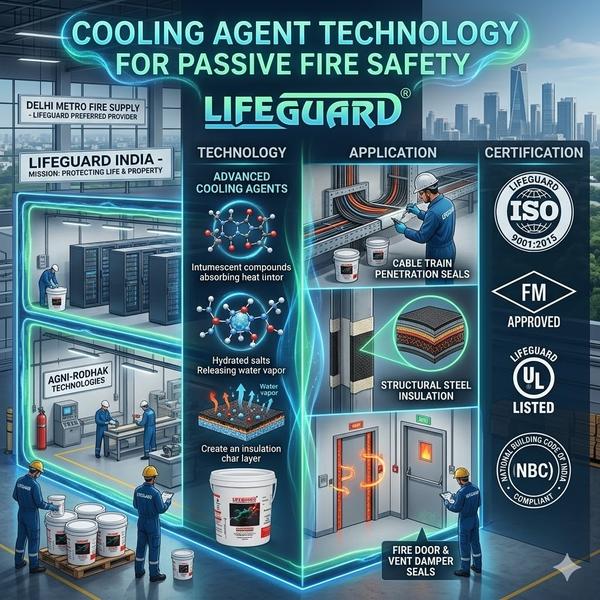
- Rapid cooling through endothermic action. HMS contains hydrated mineral phases that release bound water when heated. This endothermic dehydration absorbs large amounts of heat directly at the cell interface, lowering local temperatures and slowing the self-accelerating reaction inside the cell.
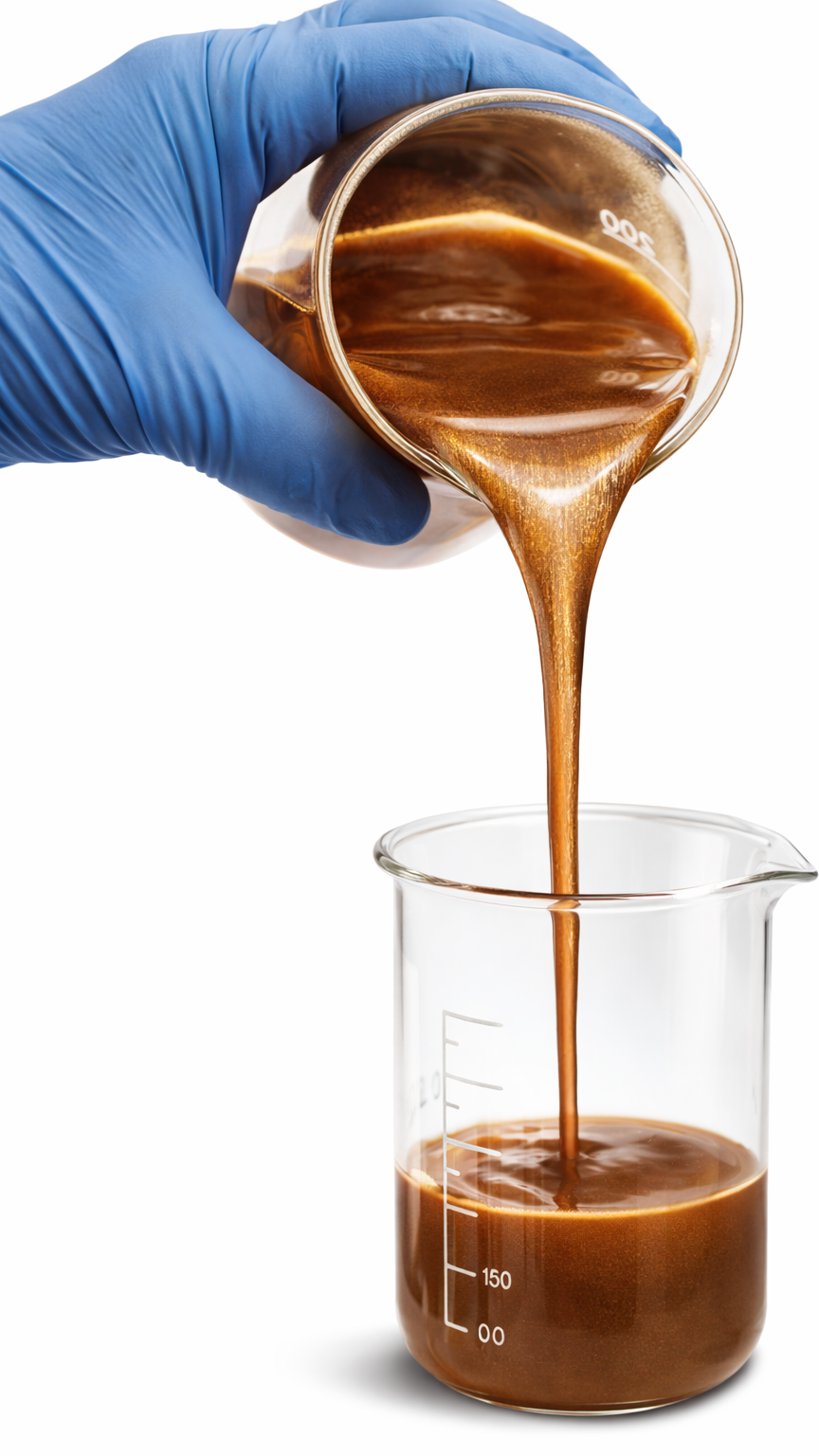
- Penetrative wetting and vent-encapsulation. The suspension’s rheology is tuned to wet casing surfaces and penetrate cell vent pathways; when it contacts vent gases and hot surfaces it forms a conformal, glass-like / ceramic-forming residue that seals vents and blocks further oxygen ingress and combustible vapour escape.
- Thermal insulation barrier. After dehydration the residue forms an insulating, low-thermal-conductivity layer across the cell surface and between adjacent cells. This physical barrier interrupts heat transfer and so prevents propagation of thermal runaway from one cell to the next.
- Long-dwell suppression to prevent re-ignition. The mineral residue remains adherent and non-combustible, providing minutes to hours of protection while temperatures subside and post-extinguishment monitoring/ventilation occur — critical because Li-ion systems can re-ignite long after initial suppression.
- Electrically non-conductive and chemically compatible. HMS chemistry is formulated to avoid electrical bridging and corrosive by-products, permitting safe use near modules, racks and control electronics when applied by trained crews or engineered delivery systems.
Practical benefits on the ground
- Stops propagation rather than merely quenching visible flame.
- Reduces toxic and flammable venting by encouraging controlled vent capture and cooling.
- Enables safer post-event handling because cells are cooled and venting reduced, lowering risks to responders.
- Integrates with engineered suppression systems (nozzle, deluge, or portable units) for both retrofits and new-build BESS/EV service solutions.
KEYNOTE
As lithium-ion systems proliferate across industry and infrastructure, compliance with ISO 3941:2026’s Class L classification means specification of suppressants must be based on mechanism — not tradition. HMS (Hydrated Mica Suspension) is purpose-built to address the three core demands of Class L incidents: absorb internal energy, isolate/reactive surfaces, and prevent thermal propagation and re-ignition. For manufacturers, facility owners and fire professionals, specifying an agent that interrupts the cell-level failure pathway is no longer optional — it is a safety imperative.