Choosing extinguishers by floor area or buying one ABC model for every room can leave critical hazards uncovered. Use a hazard survey, fire-class match, coverage plan and verification checklist to specify equipment that people can reach, operate and maintain before a small fire becomes a major incident.
Key takeaways
- Survey each area’s fuel, fire load, electrical exposure and access routes.
- Match Class A, B, C, D or F hazards to the correct extinguishing medium.
- Compare rating, discharge time, range, rechargeability and operating temperature.
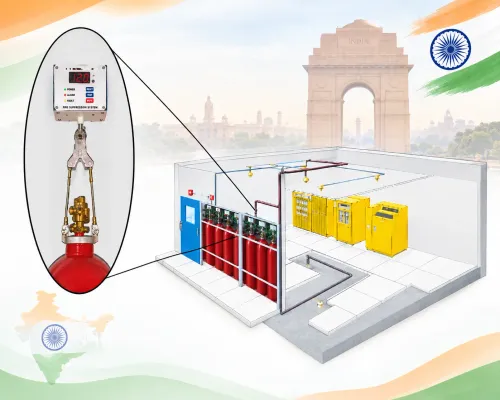
- Treat portable extinguishers as first-response equipment, not a replacement for fixed systems.
Start with a Hazard Survey, Not an ABC Order
Assign each area its own extinguisher selection after a hazard survey; do not specify ABC units for the entire building. The decision depends on the fuel, expected fire size, electrical exposure, occupancy, fire load, ceiling height and access routes.
A Class A or B rating comes from a standard fire test, not from cylinder size, and a higher rating is not automatically better if staff cannot carry or position the unit safely.
- Map each room and process: offices, warehouses, workshops, plant rooms, kitchens, parking areas and electrical rooms.
- Record the fuel class and fire load, including stacked commodities, packaging, solvents, gases, cooking oil and metal dust.
- Check occupancy and response: visitors need simple, accessible equipment; trained staff may handle more specialised units.
- Mark heat, freezing, corrosion, outdoor exposure, obstructions and the travel distance allowed by the adopted local code.
- Treat sprinklers and fixed systems as separate protection. Portable units do not replace systems designed for high-piled storage, flammable-liquid processes or energy-storage installations.
| Area or hazard | Selection decision | Critical limit |
|---|---|---|
| Office or storage | Class A-rated water, foam or powder unit | Match the rating to fire size and travel distance |
| Solvent or LPG area | Class B-rated agent compatible with the liquid or gas | A high B number does not suit every solvent |
| Energised panel | Non-conductive agent with an appropriate A or B rating | Class C indicates electrical suitability, not extinguishing capacity |
| Commercial kitchen | Listed wet-chemical extinguisher beside fixed suppression | ABC powder may allow hot oil to reignite |
| Metal-processing area | Agent specifically listed for the metal | Standard ABC units can worsen a combustible-metal fire |
Match the Fire Class to the Extinguishing Medium
Choose the agent for the fuel, not the cylinder label. Class A covers paper, wood, textiles and many plastics; water, foam and suitable dry powder work, with water providing the cooling that prevents re-ignition.
Class B covers flammable liquids such as diesel, petrol, paints and solvents. Foam, dry chemical powder and carbon dioxide can work, but match the agent to the liquid and expected fire size. A high Class B rating does not make a unit suitable for every solvent or deep-fat fryer.
Class C fire extinguishers explained in the India standards context require care: IS 2190 uses Class C for flammable gases, while electrical equipment is an additional hazard marking rather than a fuel class. Use dry powder or another electrically safe agent for energised equipment, then isolate the power when safe.
CO2 suits electrical panels and small liquid fires but gives little cooling.
| Hazard | Suitable media | Selection limit |
|---|---|---|
| Class A ordinary combustibles | Water, foam, dry powder | Water gives the strongest cooling |
| Class B flammable liquids | Foam, dry powder, CO2 | Match agent and test rating to the liquid |
| Class C gases | Dry powder | Shut the gas supply if safe |
| Energised electrical equipment | CO2, dry powder, clean agent | De-energise before tackling the fire |
| Class D metals | Metal-specific dry powder | Identify the metal and process |
| Cooking oil and grease | Wet chemical | Use with the fixed kitchen system |
Class D fire extinguishers are not interchangeable: magnesium, sodium, titanium and aluminium require different powders. Specify the metal, particle size and process conditions. Never substitute an ordinary ABC unit for wet chemical protection at a fryer; it can knock down flames without preventing hot-oil re-ignition.
Calculate Coverage, Spacing and Access Area by Area
A floor-area calculation alone will undercount extinguishers. Calculate each fire zone separately, then use the larger result from rated extinguisher coverage, permitted travel distance and access to the hazard.
- Draw the route from every point where a fire could start to the nearest suitable extinguisher. Measure the actual walking path around racks, machinery, partitions and locked doors; this is the travel distance, not a straight-line radius.
- Split offices, warehouses, workshops, kitchens, parking areas, plant rooms and electrical rooms into separate zones. Add units where a wall, mezzanine, process barrier or security door interrupts access.
- Select the unit’s certified Class A or Class B rating for the fuel and fire size. Do not treat cylinder volume as extinguisher coverage.
- Place units along exit routes, at stair and corridor approaches, and beside—not inside—rooms that could become inaccessible during a fire. Keep them visible, unobstructed and reachable without entering a high-risk area.
- For office fire extinguisher placement, position suitable units near exits and shared corridors, away from desks, storage piles and electrical panels that could block retrieval.
- In rack aisles, workshops and loading areas, check every aisle and blind end. One unit at the entrance cannot cover a long or segregated aisle.
- Count additional units for kitchens, flammable-liquid stores, battery charging points and electrical rooms; these hazards need compatible agents, not simply more ABC units.
Confirm the final extinguisher spacing, signage, mounting height and travel-distance limit against the adopted edition of IS 2190, the building’s fire NOC and the authority having jurisdiction. Record the calculation and inspection points on the site plan.
Compare Extinguisher Performance Before You Buy
A larger cylinder does not automatically deliver better protection. Compare the certified fire rating, discharge duration, agent effect, residue, operator weight and access route; a high rating is useless if staff cannot reach the fire quickly or control the unit.
| Extinguisher | Compare performance by | Buying limitation |
|---|---|---|
| Dry chemical powder | Class A, B and C ratings, knockdown speed and discharge reach | Leaves residue, obscures visibility and provides little battery-cell cooling |
| Water | Class A rating, cooling capacity and operator handling | Water vs foam extinguisher: water cools deeply, while foam adds a surface blanket for some liquid fires; neither belongs on energised electrical equipment |
| Foam | The listed Class B liquid, application method and re-ignition resistance | A high Class B number does not cover every solvent or cooking oil |
| CO2 | Discharge reach, horn design and ventilation conditions | In the dry chemical powder vs CO2 choice, CO2 leaves no residue but gives weaker cooling and rapid re-ignition risk outdoors |
| Clean agent | Residue-free discharge, enclosure volume and exposure limits | Treat “safe for lithium batteries” as incomplete without chemistry, state of charge, pack size, enclosure and re-ignition test details |
| Wet chemical | Listed cooking-oil test, cooling and re-ignition control | Specify a wet-chemical extinguisher for kitchens alongside the fixed suppression system, not as its replacement |
Ask United Fire Equipment Pvt Ltd for the complete extinguisher-and-agent listing, test rating and intended hazard rather than accepting a component certificate. For metal fires, specify the metal, form and process: Class D powders are not interchangeable, and the wrong powder can intensify the reaction.
Related products
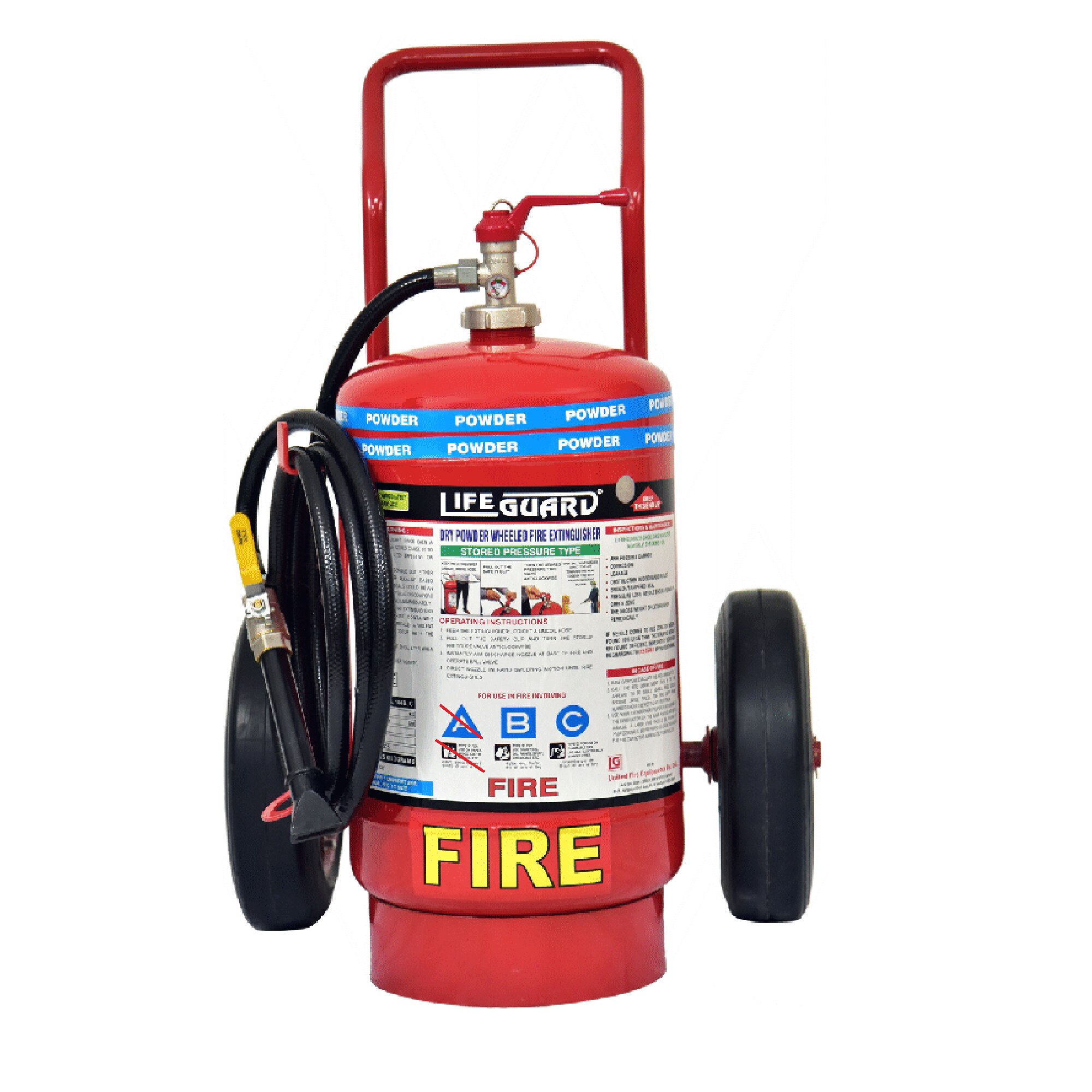 | Fire Extinguisher Services Lg-1225bc 25kg Stored Pressure ₹20770 The LG-1225BC 25kg Stored Pressure Fire Extinguisher is designed for effective fire suppression in commercial and industrial environments. |
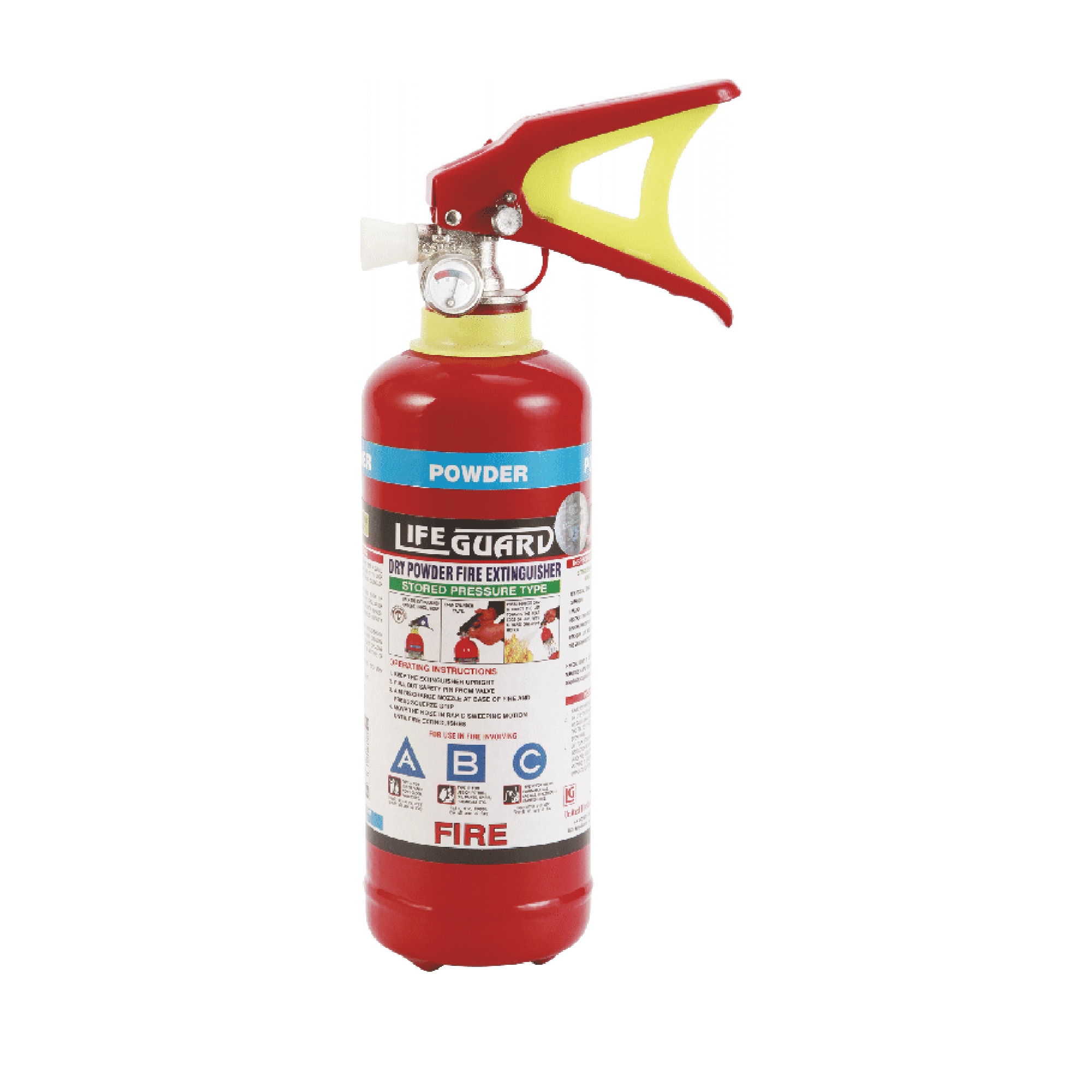 | Fire Extinguisher Services Lg-121 Abc 1kg ₹2270 The Fire Extinguisher LG-121 ABC 1kg is a compact and reliable safety device, ideal for tackling Class A, B, and C fires. |
Verify Compliance, Serviceability and the Limits of Portable Units
Do not accept a cylinder because its gauge reads green. Require documentary proof that the complete extinguisher-and-agent configuration meets IS 15683, carries BIS certification where applicable, and has a recognized testing laboratory listing—not merely a certificate for its valve, powder or cylinder.
Your purchase file should include:
- Manufacturer’s model, serial number, manufacture date, fire rating, agent type and fill quantity.
- Operating temperature range and suitability for wash-down areas, corrosive atmospheres, freezers, outdoor cabinets or electrical rooms.
- Test certificates, batch or lot number, instructions, warranty terms and the service provider’s authorization.
- A site asset register showing location, rating, serial number and next due dates.
- Records of monthly inspection, annual maintenance and hydrostatic test, with defects closed by date and technician name.
Monthly inspection must confirm access, signage, pressure or weight, pin and seal, hose, nozzle, corrosion and physical damage. Annual maintenance requires more than signing the inspection tag: open, clean and assess the unit according to the manufacturer’s instructions.
Track hydrostatic test intervals by extinguisher type and cylinder history; replace a unit with leakage, severe corrosion, damaged threads or an unreadable label.
A portable unit is the wrong control when a fire can outgrow hand-held attack before occupants reach it. Use fixed detection and suppression for protected machinery, deep-seated storage, large flammable-liquid hazards, process gas releases, spray booths and high-rack warehouses.
Specify metal-specific Class D powder for the identified metal and process; one powder is not safe for every burning metal.
Frequently asked questions
Why should you survey each area before choosing extinguishers?
Fuel type, expected fire size, electrical exposure, occupancy, fire load, ceiling height and access routes differ by area. A single ABC specification can leave specialised hazards underprotected.
Which extinguishing medium matches each fire class?
Use water-based units for ordinary Class A combustibles, foam or dry chemical for suitable Class B liquid fires, nonconductive agents for energised electrical equipment, dry powder for combustible metals, and wet chemical for commercial cooking-oil fires. Confirm the extinguisher label matches the hazard.
How do you calculate extinguisher coverage and spacing?
Map hazards and travel paths floor by floor, then use the extinguisher rating, hazard level, room layout and required access distance to set locations. Keep units visible, unobstructed and close to exits or hazard points without placing them inside likely fire zones.
What should you compare before buying commercial extinguishers?
Compare the tested fire rating, agent type, discharge duration, discharge range, operating temperature, cylinder construction, pressure indication, recharge options and service support. A larger cylinder is not automatically the better choice if staff cannot move or operate it.
What are the limits of portable fire extinguishers?
Portable units support trained first response to a small, contained fire with a clear escape route. They do not replace sprinklers, hydrants, detection, suppression systems or emergency procedures when the fire is spreading, producing heavy smoke or involving hazardous materials.
Related products
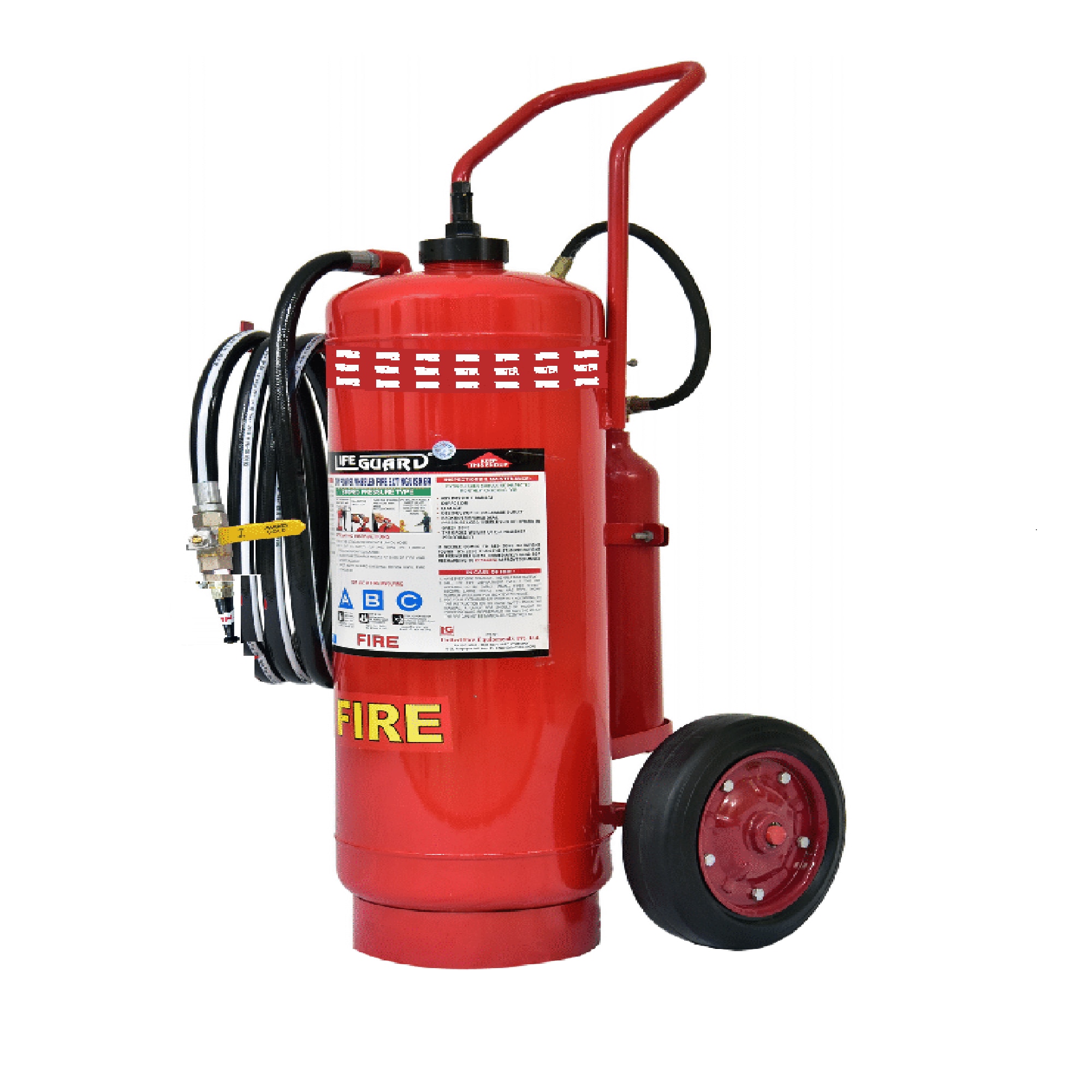 | Fire Extinguisher Services Lg-3045 Water 45ltr Outer Co2 ₹29200 The LG-3045 Water 45L Fire Extinguisher with Outer CO2 is designed for efficient fire suppression. |
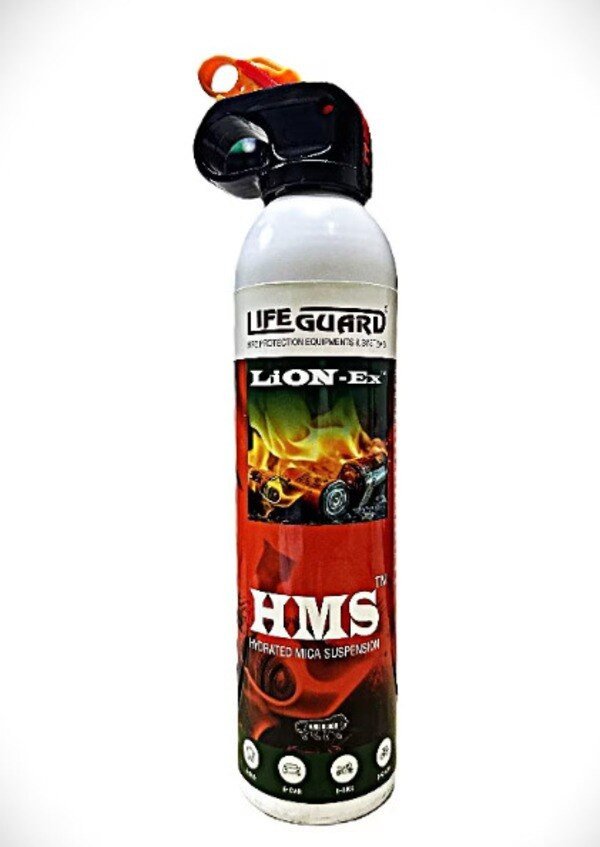
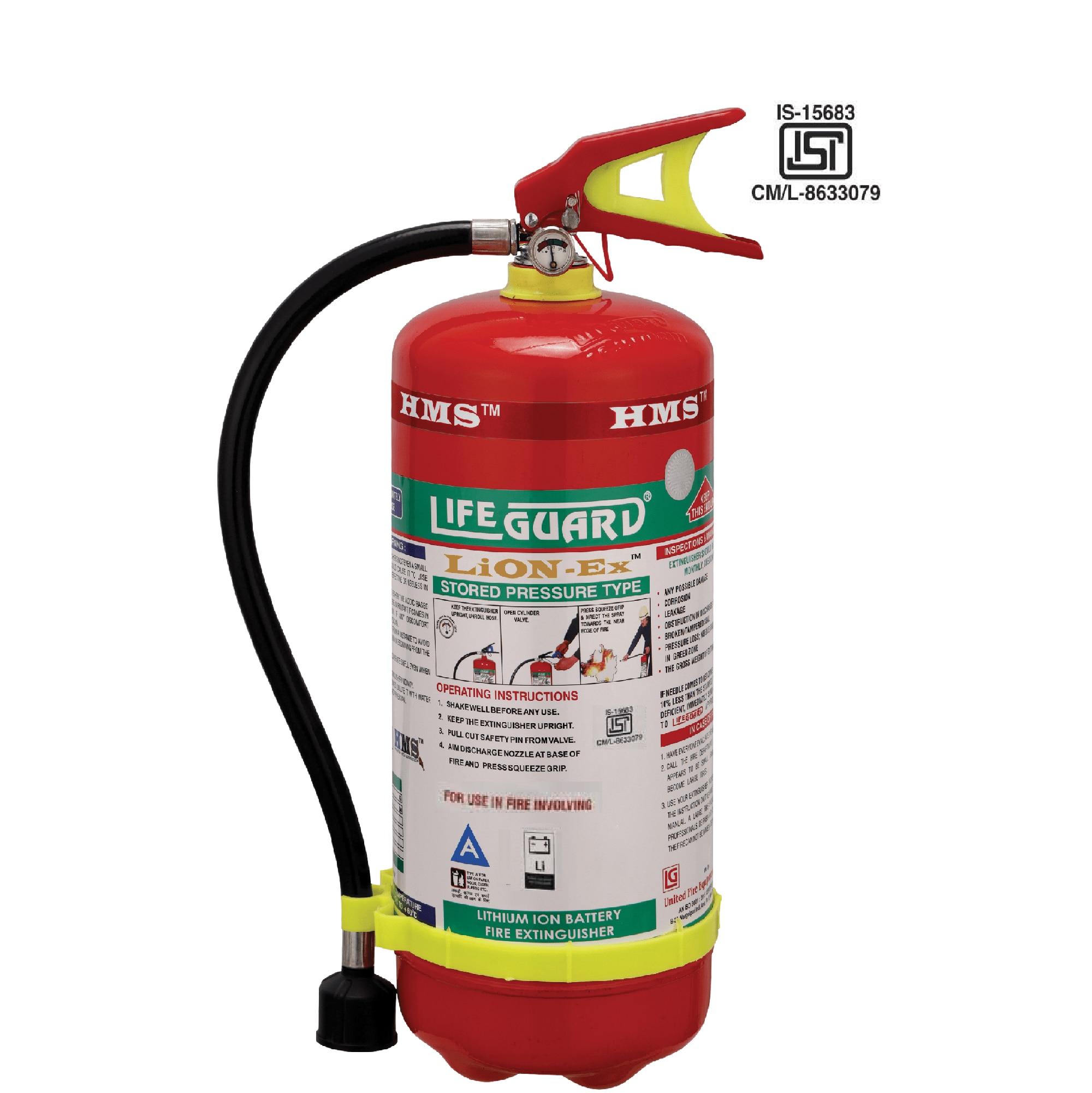 | Lithium Ion Fire Extinguisher LiON-Ex 6 Liters Lithium Battery Fire Extinguisher ₹58500 LiON-Ex Fire Extinguisher for Lithium Ion Battery fire, capacity 6 liters. |