A suitable extinguisher depends on the material burning, the way the fire can spread, the person expected to use the equipment and the time required to reach it. By the end, you will be able to map hazards by work area, compare extinguishing media and ratings, calculate practical coverage and decide when portable equipment must give way to wheeled, fixed or automatic protection.
Key takeaways
- Map fuels, ignition sources, fire spread routes, and exposed workers first.
- Match the extinguishing agent to the fuel and whether equipment remains energized.
- Compare fire ratings, capacity, handling effort, and access—not cylinder size alone.
- Combine portable extinguishers with detection, alarms, sprinklers, or suppression systems when needed.
Map the Fire Hazards Before You Choose Equipment
Start with the fuel, not the extinguisher. A fire hazard assessment should inspect each area for combustible material, ignition sources, oxygen, fire spread routes and the people exposed. Record the normal process and the credible worst case: a spill, overheated motor, damaged battery or energized panel.
| Area | Dominant hazard | What to look for |
|---|---|---|
| Office | Class A fires | Paper, cardboard, furniture, waste bins and overloaded power strips |
| Warehouse | Class A or B fires | Packaging, plastics, pallets, stored liquids, forklifts and charging stations |
| Kitchen | Cooking-oil fire | Deep-fat fryers, grease deposits and hot extraction ducts |
| Workshop | Class B fires or metal fire | Solvents, paints, fuel, welding, magnesium, sodium or titanium swarf |
| Generator room | Class B fires | Diesel or petrol leaks, fuel lines, hot exhausts and lubrication oil |
| Electrical or server room | Class C fires | Energized switchgear, panels, battery-backed systems and cable insulation |
| Charging bay or battery store | Lithium-ion battery fire | Damaged packs, swelling, heat, smoke, unusual odour and tightly packed cells |
Do not label every electrical incident a Class C fire and stop there. Identify the material burning after power isolation, because cables and plastics create a Class A hazard while energized equipment creates an electrical fire safety hazard.
Treat a lithium-ion battery fire separately: note battery format, state of charge, pack damage, spacing and access for sustained cooling, since flame knockdown may not stop thermal runaway or re-ignition.
- Walk the process from receiving to storage, use and waste.
- Ask what can leak, overheat, react or remain energized.
- Mark mixed hazards separately instead of choosing equipment for the most visible flame.
Match the Extinguishing Agent to the Material and Fire Behaviour
Use water for paper, wood, cloth and other ordinary combustibles; use foam for many flammable-liquid fires; and choose a specialist agent when the fuel or fire behaviour demands it. The wrong medium can spread burning liquid, energise an electrical fault, or suppress flames while dangerous heat remains.
| Hazard | Suitable medium | Critical limitation |
|---|---|---|
| Ordinary combustibles | Water extinguisher | Do not use on energized equipment or burning liquids. |
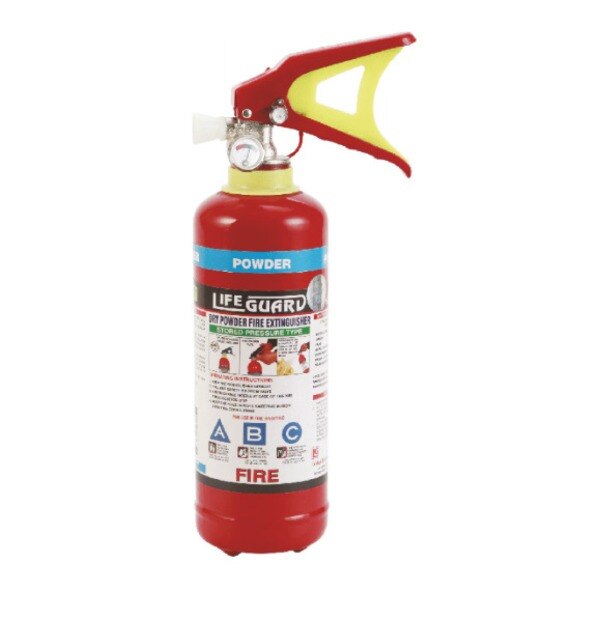
| Flammable liquids | Foam extinguisher or listed dry chemical powder | Confirm the foam’s listing, concentrate compatibility, application rate and PFAS restrictions; foam types are not interchangeable. |
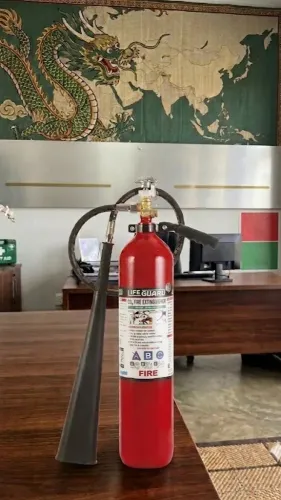
| Electrical equipment | Carbon dioxide extinguisher, also called a CO2 extinguisher | Isolate power first. CO2 leaves no residue but provides little cooling, so hot components can reignite. |
| Cooking oils and fats | Wet chemical extinguisher Class K | Its cooling and saponification action matters; a Class B agent or CO2 discharge is not an automatic substitute. |
| Combustible metals | Class D extinguisher | Match the powder to the specific metal. Magnesium, sodium, titanium and lithium metal require hazard-specific listings. |
| Lithium-ion batteries | Lithium-ion battery fire extinguisher with water-based cooling capability | Flame knockdown is not thermal-runaway control. Sustained cooling, isolation and monitoring are needed because cells can reignite. |
A dry chemical powder or CO2 extinguisher can hide a lithium-ion battery’s continuing heat behind extinguished flames. For battery rooms, charging areas and damaged EVs, add detection, ventilation, separation and post-incident monitoring; an extinguisher alone is not a complete control.
Compare Fire Ratings, Capacity and Real-World Usability
Choose by tested performance, not agent name or cylinder size alone. A fire extinguisher rating shows the fire size the unit defeated in a standardised test; it does not tell you how long it runs or whether an operator can control it.
Compare the Class A rating or Class B rating with the hazard, then check weight, reach and handling.
| Measure | What to compare | Why it matters |
|---|---|---|
| Fire extinguisher rating | Class A rating for ordinary combustibles; Class B rating for flammable liquids | A larger agent charge does not guarantee a higher tested rating. |
| Extinguisher capacity versus weight? | Agent quantity against total operating weight | A heavy cylinder can slow response, stair access and aiming. |
| Discharge duration | Continuous discharge time at the stated operating conditions | A short burst can empty the unit before the fire is fully covered. |
| Throw range | Effective stream distance from the nozzle | Insufficient reach forces the user dangerously close to heat or smoke. |
| Equipment format | Portable extinguisher or wheeled fire extinguisher | Wheeled units carry more agent and run longer, but need clear routes and trained handling. |
Ask for the listing or test certificate, discharge duration, throw range and operating weight—not just “9 kg” or “ABC.” Test the grip, hose, pin and trolley route with gloves and protective clothing. A technically higher-rated unit is the wrong choice if your crew cannot move, aim or recharge it quickly.
Calculate Coverage, Placement and Inspection Requirements
Count extinguishers by hazard, rating and maximum route—not by putting one unit in every room. For Class A hazards, OSHA’s baseline is at least one 2-A extinguisher per 3,000 sq ft (279 m²), arranged within a 22.9 m fire extinguisher travel distance.
Class B coverage depends on hazard level and extinguisher rating; Class C follows the underlying Class A or B hazard.
Use OSHA extinguisher spacing and verify every route on a floor plan:
- Keep Class A and Class D hazards within 22.9 m, Class B hazards within 15.2 m, and Class K cooking hazards within 9.1 m.
- Place units along exits, corridors and hazard approaches, never behind stored goods, locked doors or machinery. Maintain clear fire extinguisher signage and access.
- Apply the extinguisher mounting height rule: units weighing 18.1 kg or less have tops no higher than 1.53 m; heavier units have tops no higher than 1.07 m. Keep every bottom at least 102 mm above the floor.
- Complete a monthly inspection: confirm the extinguisher is present, accessible, sealed, pressure-indicated correctly and free from damage or corrosion.
- Arrange annual extinguisher maintenance by a competent technician, and retain its record for one year after the last entry or for the shell, cylinder or extinguisher’s life, whichever is shorter.
A failed monthly check removes the unit from service until corrected. Recalculate coverage after walls, equipment or stored materials change; a new obstruction can turn a compliant route into an excessive travel distance.
Choose Between Portable Equipment and Building-Wide Fire Protection
A portable extinguisher is for immediate intervention, not a complete building strategy. Choose the portable versus wheeled extinguisher when a fire could exceed handheld capacity, the hazard covers a large floor area, or operators cannot safely approach with a small unit. Wheeled units need clear routes and trained users.
| Option | What it adds | When it applies |
|---|---|---|
| Portable extinguisher | First attack on a small, accessible fire | Offices, vehicles, workshops and localised equipment hazards |
| Wheeled extinguisher | More agent and longer discharge | Large flammable-liquid risks, workshops, warehouses and outdoor plant |
| Fire hose reel | Sustained water application by trained occupants | Buildings with ordinary combustibles and a safe water supply |
| Fire hydrant system | High-flow firefighting for larger incidents | Industrial buildings, warehouses and sites requiring fire-service connection |
| Detection and alarm | Earlier warning and evacuation | Occupied areas, battery rooms, charging areas and concealed spaces |
| Automatic sprinkler system NFPA 13 | Automatic control across the protected area | Select by occupancy, commodity, storage height, rack geometry and design density |
| Fixed fire suppression system | Engineered protection for a specific hazard | Data rooms, process equipment, paint booths or enclosed machinery |
High-piled storage fire protection cannot be selected from a general-purpose sprinkler label; plastics, rack layout and ceiling height can change the NFPA 13 design. EV charging bay fire safety and battery storage fire protection also require detection, ventilation, isolation and post-incident monitoring because thermal runaway can reignite after flames disappear.
Ask United Fire Equipment Pvt Ltd, or another fire safety equipment supplier, to document the hazard assessment, hydraulic design, inspection plan and emergency procedures before you approve a system.
Related products
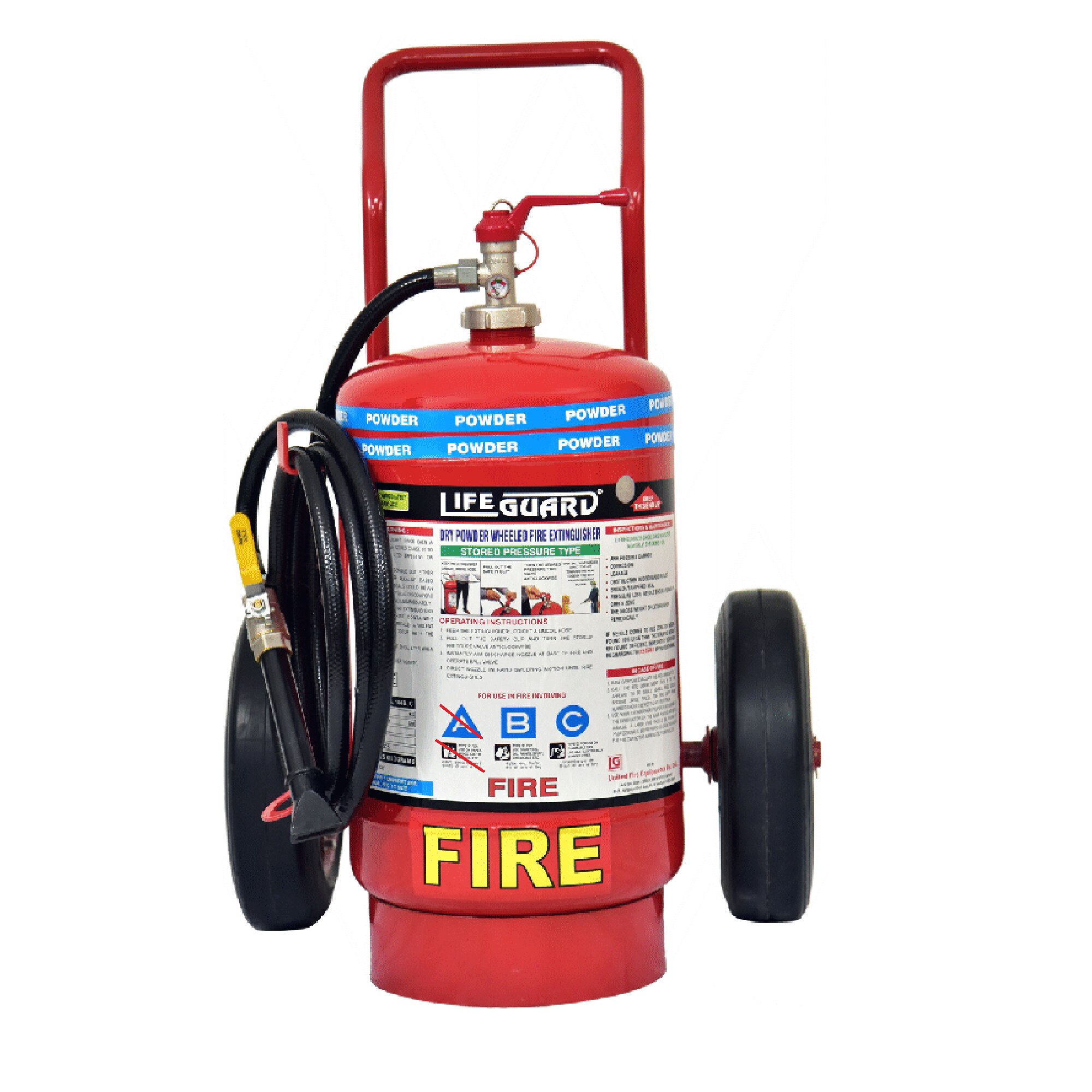 | Fire Extinguisher Services Lg-1225bc 25kg Stored Pressure ₹20770 The LG-1225BC 25kg Stored Pressure Fire Extinguisher is designed for effective fire suppression in commercial and industrial environments. |
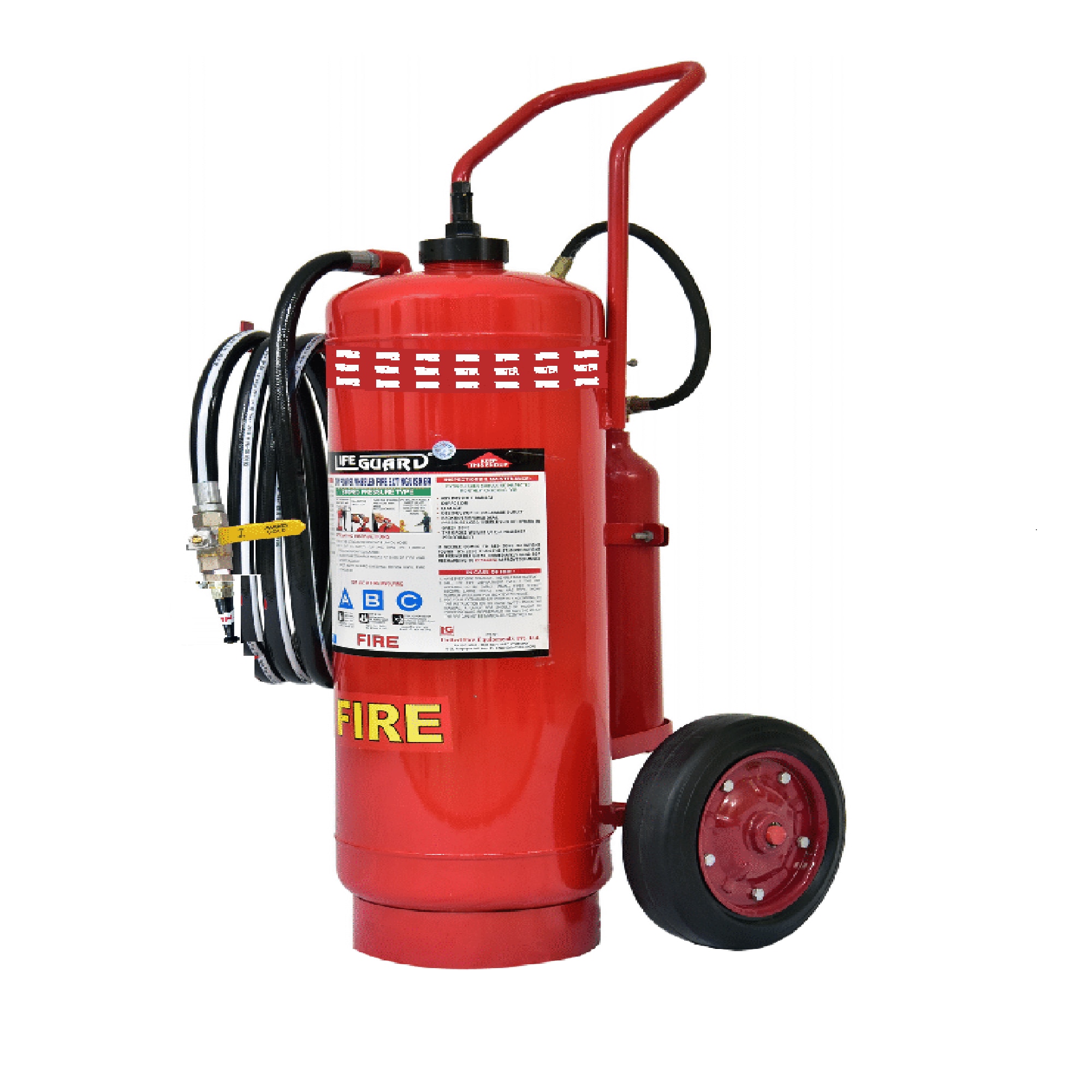 | Fire Extinguisher Services Lg-3045 Water 45ltr Outer Co2 ₹29200 The LG-3045 Water 45L Fire Extinguisher with Outer CO2 is designed for efficient fire suppression. |
Frequently asked questions
What should you assess before choosing workplace fire safety equipment?
Inspect each area for combustible materials, ignition sources, oxygen, fire spread routes, exposed people, normal processes, and credible worst cases such as spills, overheated motors, damaged batteries, or energized panels.
How do you match an extinguisher to a fire hazard?
Identify the fuel and fire behaviour first. Choose equipment rated for ordinary combustibles, flammable liquids, gases, cooking oils, energized electrical equipment, or lithium-ion batteries as applicable, and confirm the agent will not create an additional hazard.
Which fire extinguisher specifications should you compare?
Compare the fire rating, agent type, capacity, discharge duration, operating range, handling weight, access requirements, and suitability for the people expected to use it.
How do you plan extinguisher coverage and placement?
Map travel routes, hazard locations, obstructions, exit paths, and mounting points. Place equipment where occupants can reach it quickly without passing through the fire, then define inspection, servicing, tagging, and replacement records.
When are portable extinguishers not enough?
Use building-wide protection when a fire could spread faster than people can respond, threaten many occupants, involve concealed spaces, or exceed portable equipment limits. Consider detection, alarms, emergency lighting, sprinklers, hydrants, fixed suppression, and dedicated battery or process protection.
Related products
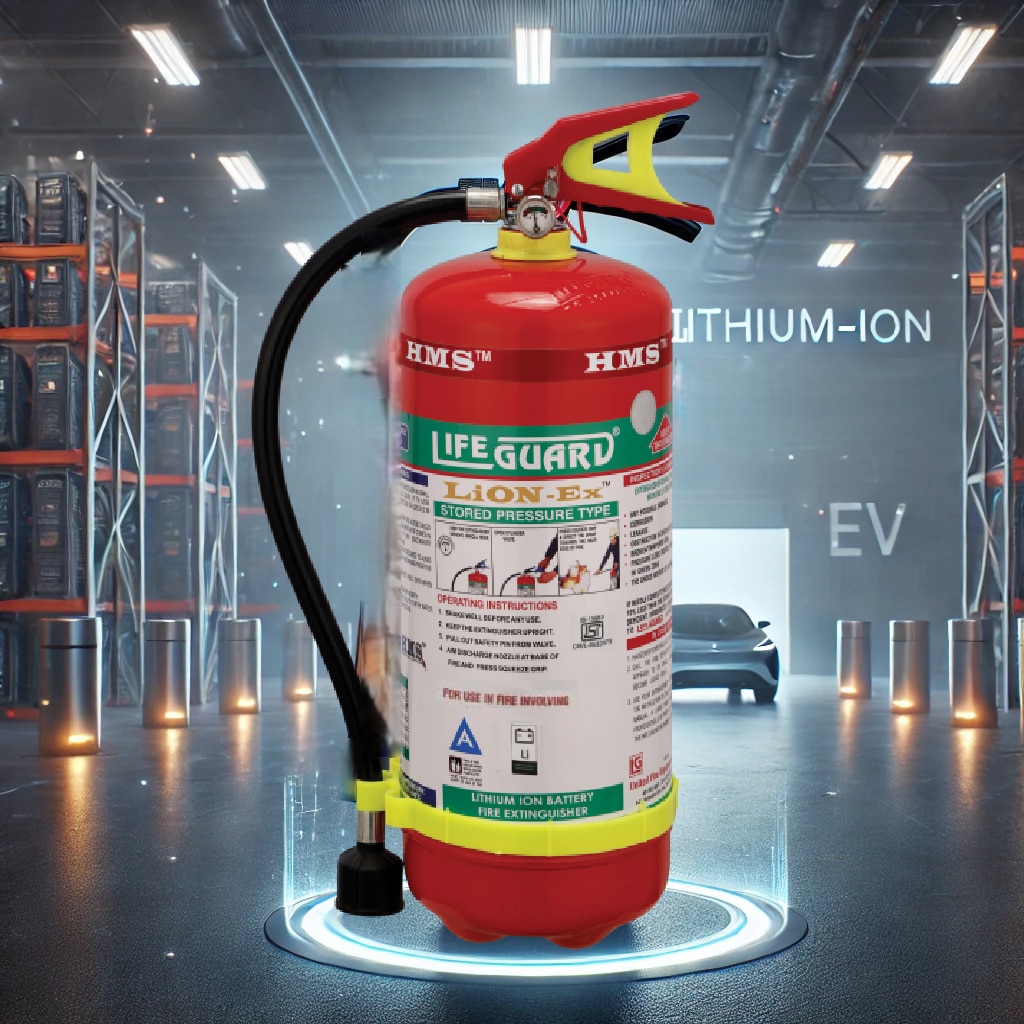 | EV FIRE EV FIRE EXTINGUISHER ₹54000 Lifeguard EV Fire Extinguisher Manufacturer – Complete Safety for Electric Vehicles The future of mobility is electric. |
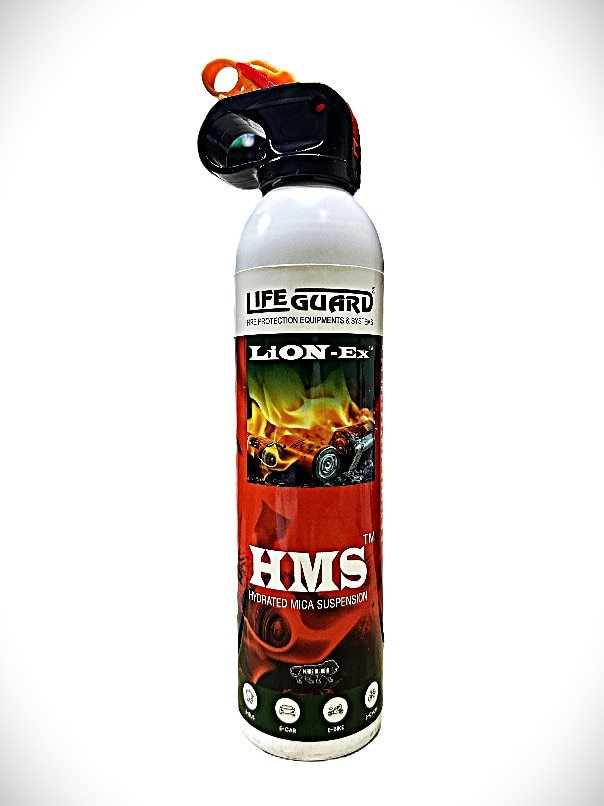 | Lithium Ion Fire Extinguisher EV Battery fire extinguisher ₹4500 Lifeguard EV Fire Extinguisher Manufacturer – Complete Safety for Electric Vehicles The future of mobility is electric. |
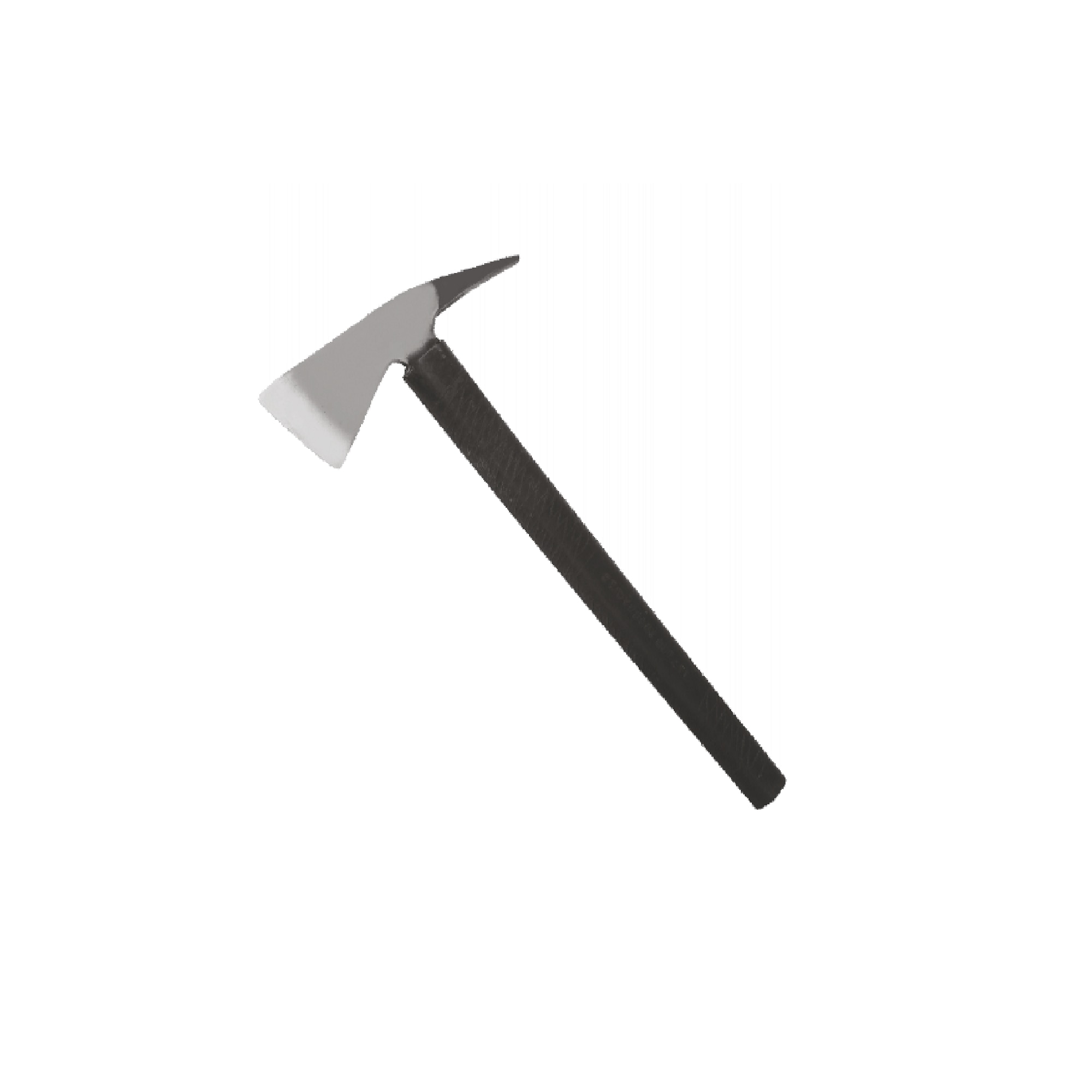 | Evacuation System LG-538 FIRE MAN AXE ₹4000 FIRE MAN AXE- ISI MARKED DULY TESTED AT 20000 VOLTS |
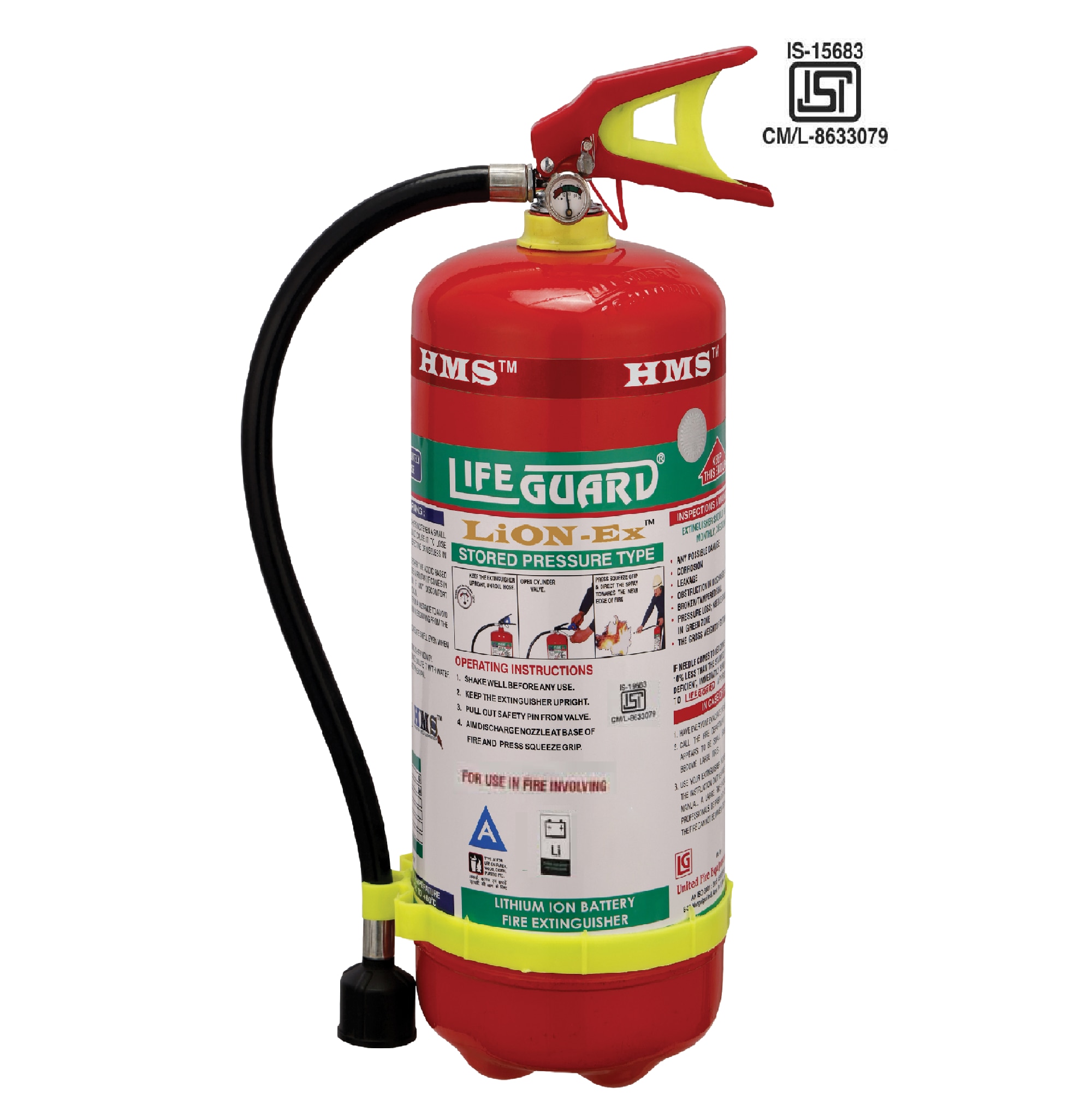 | Lithium Ion Fire Extinguisher LiON-Ex 9 Liters Lithium Fire Extinguisher ₹72000 LiON-Ex Fire Extinguisher for Lithium Ion Battery fire, capacity 9 liters filled with HMS agent, duly ISI marked, tested as per IS : 15683. |