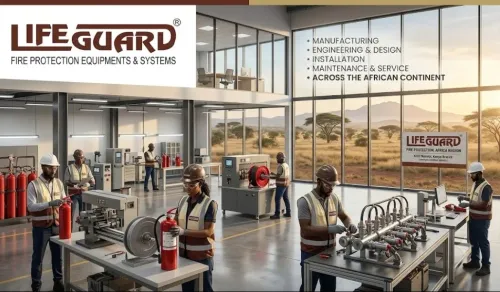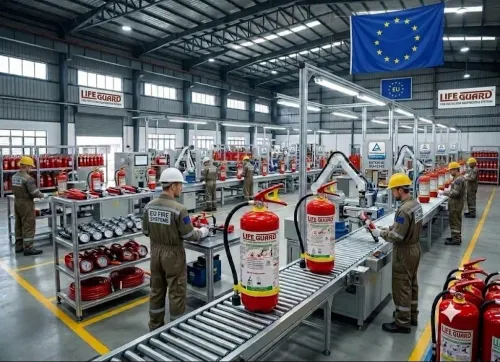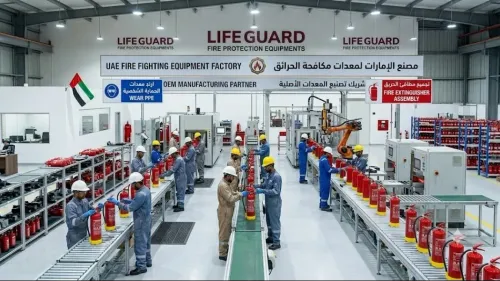
Manufacturing Plant Fire Protection Company Africa | LIFEGUARD®
Industrial Fire Protection Solutions for Manufacturing Plants Across Africa
Manufacturing plants are essential to Africa’s industrial growth, supporting sectors such as automotive components, food processing, pharmaceuticals, chemicals, textiles, cement, mining-related manufacturing, engineering, plastics, packaging, and consumer goods. These facilities often operate with machinery, electrical installations, combustible materials, flammable liquids, industrial processes, and large storage areas that require carefully planned fire safety measures.
LIFEGUARD®, a fire safety brand associated with United Fire Equipments Pvt. Ltd., provides fire safety equipment for industrial and commercial applications. With experience in fire safety equipment manufacturing since 1991, LIFEGUARD® supports organisations seeking suitable firefighting equipment for manufacturing facilities, factories, industrial warehouses, production units, and other commercial infrastructure.
For businesses searching for a manufacturing plant fire protection company in Africa, effective protection begins with understanding the risks specific to each facility. The type of manufacturing process, materials handled, building construction, electrical infrastructure, occupancy, and local regulatory requirements all influence the selection of fire protection equipment and systems.
LIFEGUARD® can be considered for fire safety equipment requirements for projects serving African markets, subject to product availability, destination-country regulations, technical specifications, certification requirements, and confirmed export and supply arrangements.
Why Fire Protection Is Essential for African Manufacturing Plants
Industrial fire incidents can cause serious injuries, damage machinery, interrupt production, destroy inventory, and affect supply chains. In facilities operating around the clock, even a limited fire can lead to costly downtime and operational disruption.
Manufacturing plants across Africa may encounter fire hazards associated with:
- Electrical panels, motors, transformers, cable installations, and control equipment.
- Flammable liquids, fuels, lubricants, paints, solvents, and process chemicals.
- Packaging materials, plastics, paper, textiles, and combustible raw materials.
- Hot-work activities, welding, cutting, furnaces, ovens, and industrial heating.
- Production machinery, hydraulic systems, and overheating equipment.
- Warehouses containing raw materials, work-in-progress stock, and finished products.
- Battery charging stations, lithium-ion batteries, and energy storage equipment.
- Combustible dust in specific manufacturing and processing operations.
The right fire protection strategy combines risk assessment, suitable firefighting equipment, detection and alarm provisions, emergency planning, maintenance, and employee training. Portable extinguishers are an important first-response measure, but they do not replace fixed fire protection systems where those systems are required.
LIFEGUARD® Fire Protection Equipment for Manufacturing Plants
Different manufacturing environments require different types of fire safety equipment. LIFEGUARD® offers fire safety equipment options that can be evaluated according to the facility's hazards, technical requirements, and project specifications.
1. Industrial Fire Extinguishers
Fire extinguishers provide an initial response option for trained personnel when a fire is small, the extinguisher is suitable for the fire class, and it is safe to intervene. The correct type, rating, capacity, and location must be determined by a competent assessment.
Depending on the application and product specifications, options may include:
- ABC dry chemical powder extinguishers: For suitable risks involving ordinary combustible materials and certain flammable liquids or gases, subject to the extinguisher's approved rating and instructions.
- Carbon dioxide (CO₂) extinguishers: For appropriate electrical and flammable-liquid fire risks. CO₂ presents an asphyxiation hazard in confined or poorly ventilated spaces.
- Water-based extinguishers: For suitable Class A fires involving ordinary combustible materials, where water is appropriate.
- Mechanical foam extinguishers: For compatible combustible-material and certain flammable-liquid risks, subject to product limitations and environmental requirements.
- Specialised extinguishers: For specific hazards such as combustible metals, commercial cooking oils, or lithium-ion battery applications, where the equipment is designed and validated for the intended use.
Fire extinguishers may be considered for production floors, workshops, electrical service areas, utility rooms, stores, loading bays, and warehouse spaces following a site-specific risk assessment.
2. Industrial Fire Suppression Systems
Some manufacturing operations require fixed or automatic fire suppression in addition to portable extinguishers. These systems are designed around a defined hazard and may include detection, control equipment, agent storage, discharge piping, nozzles, alarms, interlocks, and manual release arrangements.
Potential applications include selected:
- Industrial machinery and process enclosures.
- Electrical and control rooms.
- Critical technical installations.
- Enclosed production equipment.
- Special-hazard areas identified through a fire risk assessment.
System selection should consider the fuel involved, enclosure integrity, ventilation, operating temperatures, personnel exposure, and the possibility of fire spreading to adjacent areas. A qualified fire protection designer should establish the appropriate system configuration and confirm its suitability for the project.
3. Gas-Based and Clean-Agent Fire Suppression
Certain manufacturing plants contain sensitive electronics, automation equipment, instrumentation, and control systems that may be vulnerable to water discharge. For suitable enclosed hazards, an engineered gas-based or clean-agent suppression system may be considered.
Possible applications include selected electrical rooms, technical enclosures, control rooms, and other areas where the risk assessment supports this approach.
The choice of suppression agent must account for fire performance, personnel safety, environmental considerations, enclosure conditions, applicable standards, and local authority requirements. Design provisions may include alarms, evacuation arrangements, pressure relief where required, and procedures for re-entry after discharge.
No single gaseous agent is appropriate for every industrial hazard. Agent selection and system design should be based on the actual fire scenario and verified project requirements.
4. Electrical and Control Room Fire Protection
Electrical faults, overheating, damaged insulation, and overloaded circuits can create ignition risks in manufacturing plants. Protection planning should address the electrical installation, combustible materials nearby, and the consequences of equipment failure.
Areas to assess include:
- Main electrical rooms and distribution boards.
- Motor control centres and switchgear.
- PLC, SCADA, and automation control rooms.
- Transformers and power distribution equipment.
- Cable trenches, cable basements, and service shafts.
- Instrumentation and process-control enclosures.
A suitable protection strategy may involve approved fire extinguishers, detection and alarm provisions, electrical maintenance, safe isolation procedures, and engineered suppression for selected enclosed spaces. Equipment must be suitable for the specific electrical hazard and installed in accordance with applicable requirements.
5. Fire Protection for Manufacturing Machinery
Production machinery can contain hot surfaces, moving components, lubricants, hydraulic fluids, electrical drives, and process materials that increase fire risk. Machine-specific fire protection may be needed where a fire could spread quickly or interrupt critical production.
Depending on the equipment and risk assessment, measures may include appropriate extinguishers, fire detection, localised suppression, emergency shutdown interfaces, and safe access for response personnel.
Protection should be designed around the machine's construction, operating conditions, internal compartments, and potential fire scenarios rather than applying a standard solution to every machine.
6. Warehouse and Raw Material Fire Protection
Manufacturing plants frequently store packaging, raw materials, spare parts, chemicals, work-in-progress stock, and finished products. These materials can increase the fire load and influence the speed at which a fire spreads.
Warehouse fire protection planning should consider:
- Material type, quantity, and storage configuration.
- Rack height and aisle layout.
- Separation between storage and production activities.
- Electrical equipment and other ignition sources.
- Access routes for emergency personnel.
- Suitable extinguisher placement and identification.
- The need for detection, alarms, hydrants, sprinklers, or other fixed systems.
The final design should account for the storage arrangement, building characteristics, commodity hazards, and applicable local requirements.
7. Fire Protection for Lithium-Ion Batteries and Battery Charging Areas
Factories using electric forklifts, battery-powered equipment, lithium-ion battery packs, or battery energy storage systems should evaluate the particular risks associated with the battery chemistry and installation.
Lithium-ion battery incidents can involve thermal runaway, intense heat, hazardous gases, fire propagation, and reignition. Conventional extinguishers should not automatically be assumed to stop thermal runaway inside a battery pack.
A suitable safety plan may include battery-specific risk assessment, charging controls, detection, separation and isolation, emergency response procedures, and specialised cooling or containment provisions where their suitability has been established.
Industries Across Africa That May Require Manufacturing Plant Fire Protection
LIFEGUARD® fire safety equipment can be evaluated for a range of manufacturing and industrial applications across African markets, subject to project requirements and confirmed supply arrangements.
Automotive and Automotive Component Manufacturing
Automotive plants may involve assembly lines, electrical systems, lubricants, paints, plastics, battery systems, and finished-vehicle storage. Fire protection should be tailored to each process and storage zone.
Food Processing and FMCG Manufacturing
Food production and consumer-goods facilities may include processing machinery, packaging materials, electrical installations, cold storage, and heating or cooking processes. Each area should be assessed for its specific fire hazards.
Pharmaceutical and Healthcare Product Manufacturing
Pharmaceutical facilities may contain processing equipment, laboratories, packaging operations, utilities, and controlled production environments. Fire protection planning should consider personnel safety, equipment sensitivity, and operational requirements.
Chemical and Process Manufacturing
Chemical facilities can present complex hazards involving flammable liquids, gases, reactive materials, and chemical incompatibility. A competent assessment should determine appropriate firefighting agents, fixed systems, hazardous-area controls, and emergency procedures.
Textile and Garment Manufacturing
Textile factories may contain fibres, fabrics, packaging, electrical equipment, and dust-generating operations. Suitable protection should consider combustible stock, ignition control, housekeeping, and emergency access.
Plastics, Rubber, Paper and Packaging
These industries may handle combustible raw materials and large volumes of finished goods. Fire protection planning should account for the quantity and arrangement of stored materials, process temperatures, dust hazards, and fire spread potential.
Engineering, Metalworking and Industrial Equipment Manufacturing
Engineering workshops may involve welding, cutting, grinding, machining, lubricants, compressed gases, and hot surfaces. Appropriate extinguishers, hot-work controls, housekeeping, and safe storage practices are important elements of a complete fire safety strategy.
Cement, Mining-Related and Heavy Industrial Operations
Heavy industrial facilities can include conveyors, electrical installations, workshops, fuel storage, lubricants, control rooms, and maintenance areas. Protection should be based on the specific plant configuration, process hazards, and applicable engineering standards.
How to Select a Manufacturing Plant Fire Protection Company in Africa
Selecting a fire protection equipment provider requires more than comparing product prices. Buyers should assess technical suitability, documentation, compliance, supply capability, and the requirements of the installation location.
Understand the Facility's Fire Risks
Identify the production processes, combustible materials, electrical installations, machinery, chemical storage, and other potential ignition sources. A documented fire risk assessment helps define the required protection.
Confirm Product Suitability
Verify the extinguisher type, fire rating, capacity, operating range, agent compatibility, and installation requirements. For suppression systems, confirm the design basis, detection and control arrangements, and suitability for the protected hazard.
Verify Certification and Local Compliance
Check whether the exact product meets the relevant national standards and certification requirements. Confirm any necessary approvals from the local fire authority, insurer, project consultant, or other responsible body.
Certification in one country should not be assumed to establish compliance in another. Requirements differ among African countries and may also vary by project, industry, and facility type.
Evaluate Export and Delivery Requirements
For cross-border procurement, confirm product availability, export documentation, packaging, shipping arrangements, delivery timelines, and the responsibilities of the supplier and importer. Import duties and local product registration requirements should be checked for the destination country.
Confirm Installation, Commissioning and Maintenance Scope
A buyer should establish who will design, install, commission, test, inspect, and maintain the equipment. If local installation or after-sales support is required, the responsible provider and scope of service should be confirmed before an order is placed.
Fire Protection Planning for New and Existing Manufacturing Plants
New Industrial Projects
Fire protection should be considered early in the design of a new manufacturing facility. Coordination among the owner, architect, process consultant, electrical designer, fire protection engineer, and local authority helps align fire safety provisions with the building layout and production process.
Existing Factory Upgrades
Existing facilities may need to review extinguisher placement, equipment condition, fire detection, emergency routes, storage practices, and changes in production. A risk-based review can help identify gaps and prioritise improvements.
Plant Expansion and Modernisation
New production lines, additional machinery, increased storage, or changes in raw materials can alter the fire risk. Fire protection arrangements should be reassessed when significant operational or structural changes occur.
Inspection, Maintenance and Employee Training
Fire safety equipment must remain accessible, serviceable, and suitable for the hazards it protects. Facilities should maintain inspection and service records in line with applicable standards and manufacturer instructions. Employees should also receive appropriate training on alarms, evacuation, emergency reporting, and safe extinguisher use.
Why Consider LIFEGUARD® for Manufacturing Plant Fire Protection Equipment?
Experience in Fire Safety Equipment Manufacturing
United Fire Equipments Pvt. Ltd., associated with the LIFEGUARD® brand, has been involved in fire safety equipment manufacturing since 1991. The company focuses on firefighting equipment for industrial and commercial applications.
Product Options for Different Industrial Hazards
Manufacturing facilities have different fire risks. LIFEGUARD® equipment options can be assessed for suitable applications based on the required product specifications, fire ratings, and project conditions.
Documentation and Technical Evaluation
Industrial projects may require technical data sheets, product specifications, certification details, inspection documentation, and maintenance information. Availability and applicability should be confirmed for the exact product and project.
Project-Based Supply Considerations
For enquiries from African markets, buyers should share the destination country, required equipment, project specifications, and delivery expectations. Product availability, export arrangements, local compliance, and any installation or maintenance support must be confirmed for the individual enquiry.
Frequently Asked Questions
1. What does a manufacturing plant fire protection company provide?
A fire protection provider may supply fire extinguishers, detection and alarm equipment, fixed suppression systems, and other fire safety products or services. The exact scope depends on the provider's capabilities and the project's technical requirements.
2. Which fire extinguishers are suitable for manufacturing plants?
The suitable extinguisher depends on the fuel and fire classification. ABC dry powder, CO₂, water-based, foam, and specialised extinguishers may be appropriate for different hazards. Selection should follow the product's approved ratings and the facility's risk assessment.
3. Can LIFEGUARD® supply fire protection equipment for projects in Africa?
LIFEGUARD® equipment may be considered for projects serving African markets, subject to product availability, destination-country requirements, export arrangements, and the confirmed scope of supply. Contact United Fire Equipments Pvt. Ltd. with the project details to discuss the enquiry.
4. Are Indian fire safety certifications valid throughout Africa?
Not automatically. Certification and approval requirements vary by destination country, product category, and project. Buyers should verify the applicable national standards, import requirements, and local fire authority approvals before procurement.
5. Does a manufacturing plant need an automatic fire suppression system?
The requirement depends on the plant's fire hazards, building design, process, occupancy, applicable regulations, and insurer or project requirements. Some areas may require engineered fixed systems in addition to portable extinguishers.
6. What details should be shared when requesting a quotation?
Provide the destination country and city, type of industry, plant layout or protected area, hazards, equipment specifications, required certifications, quantity, delivery timeline, and whether installation or maintenance is required.
7. How should industrial fire protection equipment be maintained?
Inspection, servicing, testing, and replacement should follow applicable standards, statutory requirements, and manufacturer instructions. Facilities should retain maintenance records and ensure that equipment remains accessible and ready for use.
Contact LIFEGUARD® for Manufacturing Plant Fire Protection Enquiries in Africa
If your organisation is evaluating fire safety equipment for a manufacturing plant, industrial warehouse, production facility, or engineering project in Africa, contact LIFEGUARD® by United Fire Equipments Pvt. Ltd. to discuss the application and relevant product requirements.
United Fire Equipments Pvt. Ltd.
Manufacturer of ISI Certified Fire Safety Equipment
Phone: 8048034226
Email: ufe126@gmail.com | info@lifeguardindia.in
Website: www.lifeguardindia.in
Share your destination country, project specifications, required equipment, and compliance requirements to help determine suitable product options and the scope of supply. Product certifications, export availability, delivery terms, and local installation support should be confirmed for the specific project.
SEO Metadata
SEO Title: Manufacturing Plant Fire Protection Company Africa | LIFEGUARD®
Meta Description: Explore LIFEGUARD® fire safety equipment for manufacturing plants across Africa. Discover industrial fire extinguishers and application-specific protection options.
Suggested URL Slug:
/manufacturing-plant-fire-protection-company-africa/
Primary SEO Keyword:
Manufacturing plant fire protection company Africa
Secondary SEO Keywords:
- Manufacturing plant fire protection Africa
- Industrial fire protection company Africa
- Factory fire protection equipment
- Manufacturing plant fire safety equipment
- Industrial fire extinguisher manufacturer
- Fire protection equipment for factories
- Industrial fire suppression systems
- Factory firefighting equipment
- Industrial fire safety solutions Africa
- Fire safety equipment for manufacturing plants
Suggested Image Alt Text:
- LIFEGUARD fire protection equipment for manufacturing plants in Africa
- Industrial fire extinguishers for factory fire safety
- Fire safety equipment for African manufacturing facilities
- Industrial fire suppression equipment for production plants
- Fire protection solutions for industrial warehouses
On-Page SEO Recommendations
- Use the primary keyword naturally in the page title, H1, opening paragraph, selected subheadings, and conclusion.
- Link internally to relevant LIFEGUARD® pages for fire extinguishers, industrial fire suppression, factory fire safety, warehouse fire protection, and contact enquiries.
- Use authentic product and facility images with descriptive filenames and accurate alt text.
- Add a project enquiry form that captures the destination country, industry, application, quantity, required certification, and delivery expectations.
- Create country-specific landing pages only when they contain genuinely useful local information, verified compliance details, and relevant supply arrangements.
- Avoid claiming local African offices, nationwide installation coverage, or specific country approvals unless these have been verified.
- Publish only current, product-specific certification details and technical claims supported by the relevant documentation.
Keywords