Manufacturing Plant Fire Protection OEM Manufacturer Africa | LIFEGUARD®
Industrial Fire Safety Equipment and OEM Solutions for African Manufacturing Industries
Africa's manufacturing sector continues to develop across automotive components, food processing, pharmaceuticals, chemicals, mining-related industries, textiles, plastics, electronics, metal fabrication, engineering, cement, and building materials. As industrial facilities expand, the need for reliable fire protection equipment becomes increasingly important for protecting employees, machinery, raw materials, finished products, and critical infrastructure.
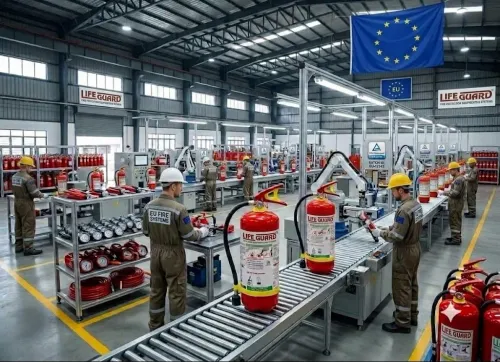
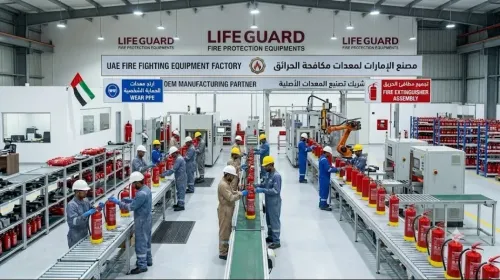
LIFEGUARD®, a brand of United Fire Equipments Pvt. Ltd. (UFEPL), India, is a manufacturer of fire safety equipment with manufacturing experience dating back to 1991. The company manufactures firefighting equipment, including fire extinguishers, and supports selected industrial fire suppression requirements through authorized channel arrangements.
For businesses searching for a manufacturing plant fire protection OEM manufacturer in Africa, LIFEGUARD® welcomes enquiries from importers, distributors, industrial procurement teams, engineering contractors, system integrators, and private-label businesses seeking suitable fire safety products for manufacturing facilities.
With a focus on product specifications, manufacturing requirements, technical documentation, and application-specific equipment selection, LIFEGUARD® aims to support industrial fire protection procurement for African markets, subject to product availability, export arrangements, and destination-country compliance requirements.
Manufacturing Plant Fire Protection OEM Manufacturer for African Industries
Original Equipment Manufacturer (OEM) partnerships are an important part of the industrial fire safety supply chain. OEM customers may require firefighting equipment manufactured to agreed specifications, products for distribution under an approved brand arrangement, or equipment suitable for integration into broader fire protection projects.
For African buyers, choosing a manufacturing plant fire protection OEM manufacturer involves evaluating manufacturing capabilities, product quality, applicable certifications, technical support, packaging, delivery requirements, and regulatory compliance.
LIFEGUARD® welcomes enquiries for OEM cooperation involving suitable firefighting equipment and related product categories. The scope of any arrangement depends on the required product, technical feasibility, branding requirements, certification conditions, and commercial agreement.
OEM Fire Safety Equipment Requirements
Depending on the product and project, OEM requirements may include:
- Product specifications: Equipment type, capacity, materials, performance ratings, and accessories.
- Private-label arrangements: Evaluation of permitted branding, labels, packaging, and accompanying documentation.
- Quality assurance: Appropriate manufacturing inspections, testing, and product identification.
- Technical documentation: Applicable product data sheets, operating instructions, maintenance information, and conformity documents.
- Regulatory compliance: Evaluation of the standards and certifications required in the destination country.
- Supply planning: Agreement on quantities, lead times, packaging, shipping, and delivery terms.
- Long-term cooperation: Potential supply relationships with importers, distributors, contractors, and industrial buyers.
OEM production, private-label branding, and customization are subject to confirmation for each product. Any certification or approval must apply to the actual equipment and configuration being supplied.
Why Manufacturing Plants in Africa Need Reliable Fire Protection
Industrial facilities can face fire hazards from electrical faults, overheating machinery, welding operations, flammable liquids, combustible dust, fuel systems, packaging materials, and high-temperature production processes.
In manufacturing environments, a fire can spread rapidly between machinery, storage areas, utilities, and connected production lines. The consequences may include equipment damage, production interruptions, supply-chain delays, and risks to personnel.
A comprehensive fire protection strategy begins with a hazard assessment and may include portable fire extinguishers, wheeled firefighting equipment, detection and alarm systems, sprinkler installations, fixed suppression systems, and emergency response arrangements.
Key Objectives of Industrial Fire Protection
- Protect employees and support safe evacuation procedures.
- Provide appropriate firefighting equipment for identified hazards.
- Reduce the potential impact of fire on machinery and production infrastructure.
- Address risks involving raw materials, packaging, and finished goods.
- Support operational resilience and business continuity planning.
- Help procurement teams evaluate applicable technical and regulatory requirements.
- Establish suitable inspection, maintenance, and emergency preparedness arrangements.
The correct equipment depends on the fire class, materials present, operating environment, occupancy, and applicable standards.
Industrial Fire Protection Products for Manufacturing Plants
1. ABC Dry Chemical Powder Fire Extinguishers
ABC dry chemical powder fire extinguishers are used for compatible fire risks involving ordinary combustibles, flammable liquids, and flammable gases, subject to the product's classification and rating.
Potential applications include:
- General manufacturing areas
- Industrial workshops
- Assembly and packaging units
- Selected maintenance facilities
- Appropriate warehouse areas
- Designated utility spaces
The required capacity, extinguishing rating, powder specification, and certification should be determined by the facility's fire risk assessment.
LIFEGUARD® manufactures fire extinguishers and related firefighting equipment for suitable industrial applications.
2. Carbon Dioxide (CO₂) Fire Extinguishers
CO₂ fire extinguishers may be suitable for selected energized electrical equipment and compatible flammable-liquid hazards. They are often considered where avoiding powder residue is important.
Potential applications include electrical panels, control cabinets, instrumentation areas, and compatible industrial electrical installations.
Carbon dioxide presents an asphyxiation risk in confined spaces and provides limited cooling for some combustible materials. Equipment selection must account for occupancy, ventilation, fire classification, and the possibility of re-ignition.
3. Water-Based Fire Extinguishers
Water-based extinguishers can be appropriate for specified Class A fires involving ordinary combustible solids, such as paper, cardboard, and textiles.
Their use must be restricted to compatible fire hazards. Standard water extinguishers must not be used on energized electrical equipment or materials that react dangerously with water.
Specialized water mist equipment requires separate evaluation according to its tested application and approval scope.
4. Foam Fire Extinguishers
Foam extinguishers may be suitable for selected fires involving ordinary combustible materials and compatible flammable liquids.
Potential applications include designated workshops and liquid-handling areas where the selected foam product is appropriate for the hazard.
The extinguishing agent, equipment rating, and application must be verified. Environmental restrictions on particular foam formulations should also be considered for African export markets.
5. Wheeled and Trolley-Mounted Fire Extinguishers
Wheeled extinguishers can be considered for selected industrial environments where greater extinguishing capacity or longer discharge capability is required.
Potential applications include large workshops, compatible liquid-handling areas, industrial maintenance facilities, and designated process areas.
The appropriate extinguishing agent and capacity depend on the anticipated fire hazard, mobility requirements, and relevant product standards.
6. Clean Agent and Gas-Based Fire Suppression Systems
Clean agent systems may be appropriate for selected enclosed electrical rooms, control centres, industrial data facilities, and other sensitive equipment installations.
Depending on the system, the configuration may include suppression cylinders, detection devices, control panels, release mechanisms, discharge piping, nozzles, alarms, and monitoring components.
LIFEGUARD® can support enquiries for selected gas suppression solutions through its authorized channel partnership arrangements. The specific product, OEM scope, availability, approvals, and suitability for the destination market must be confirmed before procurement.
7. Automatic Fire Suppression for Industrial Machinery
Industrial machinery can contain ignition sources such as electrical components, hot surfaces, lubricants, hydraulic fluids, and moving parts.
For compatible equipment, targeted suppression systems may be considered for enclosed machinery or designated compartments.
Potential applications include:
- CNC machines and machine tools
- Industrial electrical cabinets
- Automated production machinery
- Selected hydraulic power units
- Process equipment enclosures
- Specialized manufacturing machinery
The suppression agent, detection arrangement, and discharge configuration must be selected according to the specific machine, fire hazard, and operating conditions.
OEM Fire Protection Solutions for Different African Manufacturing Sectors
Automotive and Engineering Manufacturing
Automotive component manufacturers and engineering plants may operate welding equipment, cutting machines, robotic production lines, electrical installations, hydraulic systems, and lubricant-handling equipment.
Fire protection planning should address the hazards associated with each process, including combustible materials, electrical risks, and flammable-liquid operations.
Food Processing and Beverage Manufacturing
Food processing plants may contain cooking equipment, packaging machinery, refrigeration systems, electrical installations, combustible packaging, and oils or fats.
Fire protection requirements depend on the process, the materials handled, hygiene considerations, and the equipment's operating environment.
Pharmaceutical and Chemical Manufacturing
Pharmaceutical and chemical plants may handle flammable solvents, reactive substances, combustible dust, sensitive production equipment, and electrical infrastructure.
The selected suppression method must consider chemical compatibility, the risk of hazardous reactions, storage conditions, ventilation, and the consequences of production contamination.
Mining-Related Industries and Mineral Processing
Mining-related manufacturing and processing facilities may contain conveyors, motors, hydraulic equipment, electrical rooms, workshops, and fuel-handling installations.
Fire protection equipment should be selected for the actual hazards while considering dust, vibration, corrosion, temperature variations, and maintenance access.
Textile, Garment, Paper, and Packaging Plants
Textile and packaging facilities can contain substantial quantities of combustible raw materials and finished products. Machinery, electrical installations, dust accumulation, and storage arrangements may create additional fire risks.
The fire protection strategy should consider detection coverage, evacuation, portable extinguishers, and any fixed protection required under the applicable regulations.
Plastics, Rubber, and Polymer Manufacturing
Plastic and rubber processing may involve heated equipment, combustible raw materials, electrical machinery, lubricants, and finished-product storage.
The fire protection strategy should be based on the specific polymer, process temperature, material inventory, storage configuration, and potential smoke hazards.
Cement, Steel, and Building Materials Manufacturing
Heavy industrial facilities may operate high-temperature processes, conveyors, motors, electrical equipment, and fuel-handling systems.
Fire protection planning should account for operational heat, dust, vibration, access constraints, and the risks associated with individual production processes.
LIFEGUARD® as an OEM Fire Safety Equipment Manufacturing Partner
LIFEGUARD® is a fire safety brand of United Fire Equipments Pvt. Ltd., India, with manufacturing experience dating back to 1991.
The company focuses on firefighting equipment for industrial, commercial, institutional, and infrastructure applications. Its portfolio includes fire extinguishers and specialized firefighting equipment, with selected gas suppression solutions available through authorized channel arrangements.
Manufacturing Experience
LIFEGUARD® has manufactured ISI-marked firefighting equipment since 1991, subject to the applicable product certification and licence scope.
OEM and Private-Label Enquiries
Importers, distributors, fire protection contractors, and industrial equipment businesses can enquire about potential OEM supply arrangements, permitted branding, product specifications, and packaging requirements.
The availability of private-label production and customization must be confirmed for the particular product and order.
Quality and Technical Documentation
OEM buyers should establish clear requirements for inspection, testing, product traceability, operating instructions, and conformity documentation.
Applicable certificates and test reports should be verified for the specific model and configuration rather than assumed to cover the entire product portfolio.
Industrial Application Support
Product selection should reflect the hazard classification, protected asset, operating conditions, and applicable fire safety standards.
International Supply Enquiries
LIFEGUARD® welcomes enquiries from African importers, distributors, industrial operators, procurement teams, and engineering contractors interested in suitable fire protection products.
Export capability, shipment arrangements, minimum order quantities, delivery lead times, local representation, warranty terms, and after-sales support should be confirmed for each destination and project.
Manufacturing Plant Fire Protection Across African Markets
LIFEGUARD® welcomes enquiries from businesses in industrial and manufacturing markets across Africa.
South Africa: Manufacturing facilities, engineering plants, mining-related industries, and industrial warehouses.
Nigeria: Consumer goods manufacturing, industrial estates, food processing, and selected petrochemical-related operations.
Kenya: Manufacturing units, pharmaceutical production, food processing, and logistics facilities.
Egypt: Industrial manufacturing, textiles, chemicals, engineering, and food production.
Ghana: Industrial facilities, manufacturing units, processing plants, and mining-related operations.
Morocco: Automotive manufacturing, electronics, textiles, aerospace-related production, and engineering.
Tanzania: Manufacturing, food processing, industrial storage, and packaging facilities.
Ethiopia: Industrial parks, textile and garment manufacturing, and processing facilities.
Zambia and Zimbabwe: Engineering, mining-related industries, manufacturing, and industrial processing.
Uganda and Rwanda: Manufacturing units, food processing, packaging, and commercial-industrial facilities.
The technical requirements, import conditions, product conformity documentation, local approvals, and availability of support services must be verified for the destination country.
OEM Manufacturing Process for African Fire Protection Buyers
A structured OEM process helps customers define their requirements before commercial commitments are made.
Step 1: Define the Product Requirement
Specify the required equipment category, capacity, intended application, operating conditions, and destination market.
Step 2: Submit Technical Specifications
Provide product drawings, performance requirements, applicable standards, requested certifications, and relevant project specifications.
Step 3: Evaluate Manufacturing Feasibility
Review the product configuration, materials, accessories, labelling, packaging, inspection requirements, and documentation.
Step 4: Confirm Regulatory Requirements
Identify the destination country's fire safety regulations, product conformity requirements, import rules, and any necessary third-party approvals.
Step 5: Finalize Commercial Terms
Agree on quantities, pricing, production lead times, payment terms, inspection arrangements, packaging, shipping, and warranty conditions.
Step 6: Confirm Documentation and Delivery
Verify the agreed equipment configuration and the documents required to accompany the shipment.
This process supports informed purchasing decisions and helps identify regulatory or technical requirements early in the project.
Fire Safety Standards and Regulatory Compliance in Africa
Fire protection regulations differ between African countries and may also vary according to the facility's occupancy, industry, size, and fire risk.
Depending on the application, buyers may need to consider national building codes, fire safety regulations, industry-specific requirements, environmental rules, and approvals from the relevant authorities.
Some project specifications may reference recognized international standards, including:
- NFPA 10 for portable fire extinguishers
- NFPA 2001 for clean agent fire extinguishing systems
- NFPA 12 for carbon dioxide fire extinguishing systems
- NFPA 11 for foam systems
- Other applicable standards for detection, alarms, sprinklers, and specialized suppression equipment
The appropriate standard and edition must be determined for the actual project. International standards do not automatically replace national regulations or local authority requirements.
Similarly, an ISI mark on an eligible product does not automatically establish approval in every African market or certify an entire installed fire suppression system.
Before procurement, customers should verify product certification, test reports, technical documentation, import conditions, and the approvals required in the destination country.
Frequently Asked Questions (FAQs)
1. What does a manufacturing plant fire protection OEM manufacturer do?
An OEM manufacturer produces or supplies specified firefighting equipment and may support agreed product configurations, branding, packaging, or private-label arrangements. The available services depend on manufacturing capability, product certification, technical feasibility, and regulatory requirements.
2. Does LIFEGUARD® accept OEM enquiries from African buyers?
LIFEGUARD® welcomes OEM enquiries from African importers, distributors, contractors, and industrial buyers. Product availability, private-label options, customization, quantities, and commercial arrangements must be confirmed for each requirement.
3. Which fire protection products are suitable for manufacturing plants?
Depending on the hazard, suitable products may include ABC powder extinguishers, CO₂ extinguishers, water-based extinguishers, foam extinguishers, wheeled equipment, and appropriately engineered fixed suppression systems.
The correct equipment must be selected according to the fire risk and applicable standards.
4. Can LIFEGUARD® supply private-label fire extinguishers?
Private-label arrangements may be evaluated for selected products, subject to confirmation of manufacturing capability, branding permissions, certification conditions, labelling requirements, and applicable regulations.
5. Are ISI-certified fire extinguishers automatically approved across Africa?
No. Indian certification does not automatically establish conformity with the requirements of every African country. Buyers should verify local product standards, certification requirements, import conditions, and authority approvals.
6. What information is needed for an OEM quotation?
Provide the destination country, product type, required capacity, technical specifications, estimated order quantity, annual demand if known, branding requirements, applicable standards, and requested documentation.
7. Does LIFEGUARD® offer fixed fire suppression systems?
Selected gas suppression solutions can be accessed through authorized channel arrangements. The specific system, configuration, technical scope, approvals, and availability must be confirmed for the intended application.
Contact LIFEGUARD® for Manufacturing Plant Fire Protection OEM Enquiries in Africa
If you are searching for a manufacturing plant fire protection OEM manufacturer in Africa, an Indian fire safety equipment manufacturer, or a potential OEM supply partner for industrial firefighting products, contact LIFEGUARD® to discuss your requirements.
United Fire Equipments Pvt. Ltd. welcomes enquiries from African distributors, importers, industrial procurement teams, engineering contractors, fire protection businesses, and private-label buyers seeking suitable firefighting equipment for manufacturing and industrial applications.
LIFEGUARD® — United Fire Equipments Pvt. Ltd.
Manufacturer of ISI Certified Fire Safety Equipment
- Phone: 8048034226
- Email: ufe126@gmail.com
- Email: info@lifeguardindia.in
- Website: www.lifeguardindia.in
LIFEGUARD® — Supporting industrial fire safety through manufacturing experience, suitable firefighting equipment, and application-specific fire protection solutions.
Contact our team to discuss OEM requirements, product specifications, documentation, and potential supply arrangements for African industrial markets.
SEO Metadata for LIFEGUARD® Website
SEO Title: Manufacturing Plant Fire Protection OEM Manufacturer Africa | LIFEGUARD®
Meta Description: Looking for a manufacturing plant fire protection OEM manufacturer in Africa? Explore LIFEGUARD® fire safety equipment, industrial fire extinguishers, and OEM enquiries for manufacturing facilities.
Suggested URL Slug: /manufacturing-plant-fire-protection-oem-manufacturer-africa/
Primary SEO Keyword:
- Manufacturing plant fire protection OEM manufacturer Africa
Secondary SEO Keywords:
- Manufacturing plant fire protection Africa
- Industrial fire protection OEM manufacturer Africa
- Factory fire protection equipment supplier Africa
- Fire safety equipment OEM manufacturer
- Industrial fire extinguisher manufacturer Africa
- Manufacturing plant fire safety equipment
- OEM firefighting equipment manufacturer India
- Private label fire extinguishers manufacturer
- Industrial fire protection equipment exporter India
- Fire protection solutions for manufacturing plants Africa
- Factory fire extinguisher supplier Africa
- Industrial firefighting equipment for export
- Fire suppression equipment supplier Africa
- Fire safety products manufacturer India
Suggested H1: Manufacturing Plant Fire Protection OEM Manufacturer in Africa
Suggested H2 Headings:
- Manufacturing Plant Fire Protection OEM Manufacturer for African Industries
- Industrial Fire Protection Products for Manufacturing Plants
- OEM Fire Protection Solutions for African Manufacturing Sectors
- LIFEGUARD® as an OEM Fire Safety Equipment Manufacturing Partner
- Manufacturing Plant Fire Protection Across African Markets
- OEM Manufacturing Process for African Fire Protection Buyers
- Contact LIFEGUARD® for OEM Fire Protection Enquiries
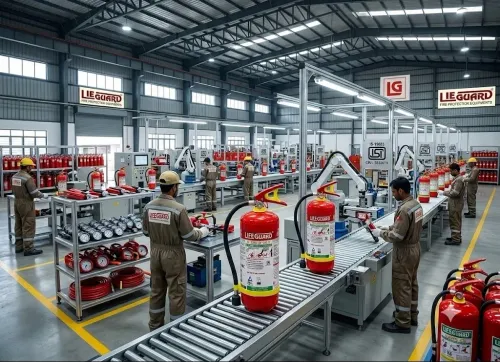
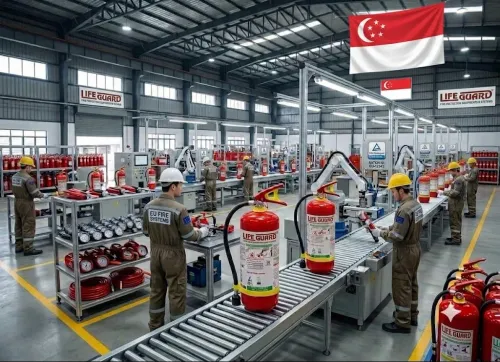
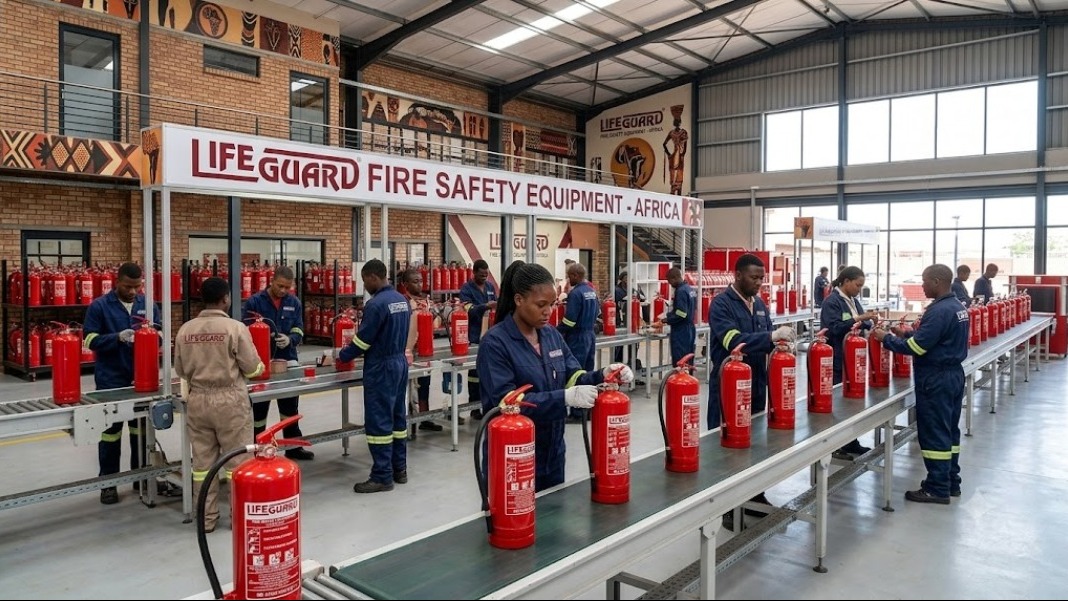
Suggested Image Alt Text: LIFEGUARD® industrial fire protection equipment and OEM solutions for manufacturing plants across Africa
Recommended SEO Implementation
- Include the primary keyword naturally in the page title, H1, introduction, and meta description.
- Create dedicated product pages for relevant fire extinguishers, industrial fire safety equipment, and applicable suppression systems.
- Link this page to product specifications, applicable certification information, and the contact page.
- Add original product photographs, technical specifications, and verified manufacturing information.
- Create country-specific pages only where useful localized content and genuine market information can be provided.
- Clearly distinguish Indian manufacturing, OEM enquiries, authorized-channel suppression products, and export availability.
- Avoid unsupported claims about African offices, local distributors, product approvals, private-label manufacturing capabilities, or guaranteed export services.
Publishing note: This page is optimized for SEO and general industrial fire safety information. Before publication, confirm the OEM scope, export arrangements, available products, certifications, and destination-country requirements. Product selection and installed system design should be verified by qualified fire protection professionals.
Clarify Africa-based versus India-based manufacturingShorten repetitive sections for SEO
Keywords