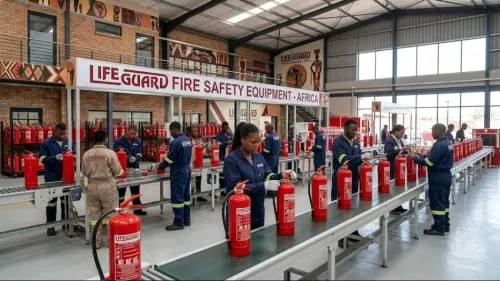
Manufacturing Plant Fire Safety Equipment OEM Manufacturer Africa | LIFEGUARD®
Reliable OEM Fire Safety Equipment Manufacturing for Industrial Projects Across Africa
Africa's industrial and manufacturing sectors are experiencing growing demand for reliable fire safety equipment to protect production facilities, industrial machinery, employees, warehouses, and critical infrastructure. From automotive assembly plants and metal fabrication workshops to chemical processing facilities, textile mills, food processing units, mining-related industries, pharmaceutical factories, and large-scale manufacturing complexes, fire protection is an essential part of industrial risk management.
Manufacturing plants face a wide range of fire hazards, including electrical faults, overheating machinery, welding operations, combustible dust, flammable liquids, fuel storage, chemical processes, and combustible raw materials. These hazards require appropriately selected fire safety equipment, dependable supply arrangements, and compliance with the standards applicable to each project and destination country.
LIFEGUARD®, manufactured by United Fire Equipments Pvt. Ltd. (UFEPL), is an Indian fire safety equipment brand with manufacturing experience dating back to 1991. The company manufactures ISI-certified fire safety equipment within its applicable certification scope and offers products for industrial, commercial, institutional, and infrastructure applications.
For distributors, procurement companies, industrial contractors, and project suppliers searching for a manufacturing plant fire safety equipment OEM manufacturer in Africa, LIFEGUARD® offers an opportunity to explore an India-based manufacturing and supply partnership, subject to product availability, agreed OEM arrangements, export terms, and the regulatory requirements of the destination country.
What Is OEM Fire Safety Equipment Manufacturing?
Original Equipment Manufacturer (OEM) arrangements enable businesses to source products from an established manufacturing partner under mutually agreed technical and commercial conditions. Depending on the agreement, products may be supplied under the manufacturer's brand, through an approved private-label arrangement, or according to specified product configurations.
For African fire safety distributors and industrial procurement businesses, OEM manufacturing can support product portfolio development, procurement planning, and access to manufacturing capabilities without the need to establish an entire production facility independently.
An OEM fire safety equipment programme may cover:
- Fire extinguisher models and capacities
- Agreed product specifications and performance requirements
- Product identification, branding, and packaging
- Applicable certification and testing documentation
- Manufacturing quality assurance and batch traceability
- Export packaging and shipment documentation
- Product manuals and technical data sheets
- Commercial arrangements for recurring orders
- Project-specific supply requirements
The precise OEM scope must be agreed in writing. Private-label rights, intellectual property, product modifications, minimum order quantities, exclusivity, certification responsibilities, and delivery schedules should be established before production begins.
LIFEGUARD® can be evaluated by African businesses seeking an India-based fire safety equipment manufacturing partner for industrial and commercial applications.
Comprehensive OEM Fire Safety Equipment for Manufacturing Plants
Manufacturing facilities require different extinguishing technologies depending on the materials handled, production processes, electrical installations, storage configuration, and potential ignition sources.
LIFEGUARD® offers a range of fire safety equipment that can be evaluated against the needs of OEM buyers, industrial procurement teams, and project contractors.
1. OEM ABC Dry Powder Fire Extinguishers
ABC dry chemical powder fire extinguishers are commonly used for specified fires involving ordinary combustible solids, flammable liquids, and flammable gases, subject to the product's certified fire rating and limitations.
These extinguishers may be considered for:
- Manufacturing floors and production lines
- Industrial workshops and engineering facilities
- Warehouses and packaging areas
- Assembly and maintenance departments
- Selected utility and equipment areas
- General industrial premises
For OEM procurement, buyers should specify the required capacity, fire rating, extinguishing agent, operating pressure, temperature range, labelling, and destination-country conformity requirements.
The selected product must be suitable for the intended hazard and must not be treated as a universal solution for every type of industrial fire.
2. OEM CO₂ Fire Extinguishers
Carbon dioxide fire extinguishers are often considered for selected electrical installations and certain flammable-liquid hazards. They discharge CO₂ without leaving conventional powder residue, which can be beneficial for particular technical applications.
Potential applications include:
- Electrical control rooms
- Switchgear and motor control centres
- Industrial automation areas
- Electronic testing facilities
- Selected machinery installations
- Technical rooms with appropriate ventilation and safety provisions
CO₂ can create a serious asphyxiation hazard in confined spaces. Product selection, installation, and use must account for personnel safety, ventilation, the characteristics of the fire, and the limitations of the extinguishing medium.
3. Water-Based and Water Mist Fire Extinguishers
Water-based extinguishers can be suitable for specified fires involving ordinary combustible materials, while water mist equipment may be appropriate for particular applications supported by relevant testing and certification.
Potential applications may include selected production areas, packaging facilities, and other locations where the product is suitable for the identified hazard.
For OEM supply, buyers should confirm the exact model, fire rating, intended use, operating specifications, and applicable approvals. Conventional water-based extinguishers must not be used on energized electrical equipment or other hazards for which water is unsuitable.
4. OEM Foam Fire Extinguishers
Foam fire extinguishers may be suitable for certain flammable-liquid fires, depending on the extinguishing agent and product approval.
Potential industrial applications include selected facilities handling fuels, oils, paints, solvents, and other compatible flammable liquids.
The extinguishing agent must be compatible with the specific fuel and operating environment. Chemical compatibility, environmental requirements, electrical hazards, and any special process risks should be assessed before selecting a foam-based product.
5. Trolley-Mounted Fire Extinguishers for Large Industrial Facilities
Large manufacturing plants and industrial storage facilities may require higher-capacity, wheeled fire extinguishers for designated high-risk areas.
Depending on the product configuration, trolley-mounted equipment may be considered for:
- Large engineering workshops
- Industrial production facilities
- Selected process and utility areas
- Warehouses and material handling zones
- Industrial maintenance facilities
- Other areas identified through fire risk assessment
OEM buyers should consider extinguishing capacity, fire rating, mobility, accessibility, operator training, and the intended application when specifying trolley-mounted equipment.
6. Fire Suppression Equipment for Specialized Industrial Applications
Some manufacturing hazards require engineered fire suppression rather than portable extinguishers alone. These may include selected electrical enclosures, control rooms, sensitive technical installations, and specialized industrial equipment.
Depending on the identified hazard, appropriate solutions may involve gaseous suppression, water mist, foam, or other engineered technologies.
LIFEGUARD® also supports gas-based suppression applications through its authorized distribution relationship for Kidde fire suppression solutions. Specific product configurations, project availability, and certification requirements should be confirmed for each enquiry.
Fixed suppression systems must be designed by qualified professionals based on the hazard assessment, enclosure conditions, detection arrangements, personnel safety, and applicable standards.
OEM Fire Safety Equipment for Different Manufacturing Industries Across Africa
Africa includes diverse manufacturing sectors with distinct operational conditions and fire protection requirements. OEM product selection should reflect the intended industry, destination market, and project specifications.
Automotive and Engineering Manufacturing
Automotive assembly and engineering facilities may involve welding stations, machining equipment, lubricants, electrical systems, and combustible packaging materials. A suitable fire safety plan may combine portable extinguishers with detection, alarms, and fixed systems where required.
Mining-Related and Heavy Industrial Facilities
Mining support workshops, mineral processing facilities, metal fabrication plants, and heavy engineering operations may contain electrical equipment, hydraulic oils, fuel storage, and high-temperature machinery.
Equipment selection should consider the fire load, operating environment, accessibility, maintenance conditions, and hazards associated with the particular process.
Chemical and Pharmaceutical Manufacturing
Chemical and pharmaceutical plants may handle solvents, process chemicals, combustible materials, and specialized production equipment.
The correct extinguishing agent must be selected according to the materials involved, chemical compatibility, hazardous-area classification, and applicable emergency response procedures.
Textile, Garment and Packaging Industries
Textile mills and garment factories may contain fabric, fibres, packaging materials, electrical machinery, and combustible dust. Plastic and packaging facilities may have substantial combustible raw material and finished-product storage.
These facilities require a fire safety strategy that addresses combustible loading, housekeeping, electrical hazards, storage arrangements, and appropriate extinguishing equipment.
Food and Beverage Manufacturing
Food processing facilities may involve cooking operations, packaging lines, electrical equipment, refrigeration systems, and combustible storage materials.
Different areas may require different extinguishing media. Cooking-oil hazards require suitable Class F or locally recognized equivalent protection where applicable.
Electronics and Electrical Equipment Manufacturing
Electronics factories may contain sensitive instruments, automation equipment, electrical control panels, and testing facilities. Appropriate extinguishers and engineered suppression may be required for selected technical spaces.
The final solution should balance effective fire control, equipment protection, and personnel safety.
Battery Manufacturing and Energy Storage
Lithium-ion battery manufacturing and energy storage installations present specialized hazards involving thermal runaway, re-ignition, heat propagation, and potentially hazardous gases.
These applications require dedicated fire risk assessment and battery-specific protection measures, which may include detection, cooling, suppression, isolation, and containment. Conventional portable extinguishers alone may not adequately control a developed battery thermal runaway incident.
Private-Label and Customized OEM Fire Safety Equipment
African distributors and industrial suppliers may wish to develop their own product portfolios through a suitable OEM manufacturing arrangement.
Depending on the product, available manufacturing capabilities, applicable certifications, and the agreed contract, a proposed programme may include the following elements.
Private-label branding: Agreed product names, labels, packaging, and identification, where permitted by the applicable certification and regulatory framework.
Product specifications: Selection of suitable capacities, extinguishing agents, operating characteristics, and available configurations.
Technical documentation: Relevant data sheets, operating instructions, test documentation, and conformity certificates.
Export packaging: Packaging and shipment preparation appropriate to the product and destination market.
Quality assurance: Agreed inspection criteria, batch identification, traceability, and product acceptance requirements.
Recurring supply planning: Commercial arrangements for forecast-based orders and repeat procurement.
Not all changes to product design, labelling, or branding are permitted under every certification. Proposed modifications must be reviewed before production to ensure that certification validity and destination-country acceptance are not compromised.
Quality Assurance and Certification for African OEM Buyers
African countries have different regulatory frameworks, import procedures, and product conformity requirements. OEM buyers must identify the requirements applicable to the exact destination country and project before finalizing procurement.
Important considerations include:
- Destination-country requirements: Identify the relevant national standards, conformity assessment procedures, and fire authority requirements.
- Product certification: Verify the certificate holder, model, capacity, manufacturing site, validity, and approved scope.
- Performance specifications: Confirm the required fire rating, discharge performance, operating pressure, temperature range, and other relevant parameters.
- OEM branding permissions: Check whether the proposed branding and private-label arrangement is permitted.
- Testing and inspection: Establish whether factory inspections, third-party testing, or pre-shipment inspections are required.
- Import and export documentation: Confirm the documents needed for customs clearance, product registration, and project approval.
- Maintenance and servicing: Determine the availability of local inspection, refilling, spare parts, and technical support.
- Tender compliance: Ensure that the products meet the purchaser's technical specifications and documentation requirements.
Important: ISI certification relates to the applicable Indian certification scheme and does not automatically guarantee acceptance in every African country. Requirements may differ between markets, including South Africa, Kenya, Nigeria, Ghana, Egypt, Morocco, Tanzania, Uganda, and other destinations.
Buyers should verify the relevant local approvals and applicable standards before placing orders.
Why Consider LIFEGUARD® as an OEM Fire Safety Equipment Manufacturing Partner?
United Fire Equipments Pvt. Ltd. manufactures LIFEGUARD® fire safety equipment and has operated in the fire safety sector since 1991.
Key considerations for OEM buyers include:
- Established manufacturing experience: A long-standing presence in the fire safety equipment industry.
- ISI-certified product range: Manufacturing of ISI-certified fire safety equipment within the applicable certification scope.
- Multiple extinguisher categories: Product options that can be evaluated for different industrial and commercial applications.
- Industrial application coverage: Equipment suitable for assessment across manufacturing plants, warehouses, workshops, utilities, and infrastructure facilities.
- Technical documentation: Relevant product information and certification documentation can be reviewed against project requirements.
- Potential export collaboration: African businesses can enquire about product availability, export feasibility, and proposed OEM supply arrangements.
- Project-oriented procurement: Specifications and documentation can be evaluated against tender and purchaser requirements.
Private-label capability, minimum order quantities, exclusivity, delivery schedules, and specific export terms must be confirmed directly with UFEPL for the intended order.
Benefits of Exploring an India-Based OEM Supply Partnership
African distributors, industrial procurement companies, and project contractors may evaluate Indian manufacturing partners as part of their sourcing strategies.
A suitable partnership can provide a framework for:
- Developing a fire safety equipment product portfolio
- Planning recurring procurement and inventory
- Agreeing on product specifications and packaging
- Coordinating technical documentation and traceability
- Organizing export shipments and delivery schedules
- Supporting distributor and project-supply requirements
- Building longer-term commercial relationships
The overall sourcing decision should consider total landed cost, transport, import duties, conformity assessment, inventory requirements, local servicing, and delivery lead times rather than purchase price alone.
Fire Safety Equipment for Manufacturing Plant Projects Across Africa
Manufacturing plants require a coordinated fire protection strategy that addresses both portable equipment and any necessary fixed systems.
Depending on the hazard assessment, building configuration, and local regulations, a complete fire protection plan may incorporate fire extinguishers, fire detection and alarms, hydrants, hose reels, sprinklers, emergency lighting, fire safety signage, and engineered suppression systems.
LIFEGUARD® equipment can be evaluated for procurement programmes involving:
- New manufacturing plant construction
- Factory expansion and modernization
- Industrial warehouse development
- Engineering and fabrication facilities
- Electrical and utility installations
- Production line upgrades
- Industrial maintenance and replacement programmes
- Commercial and infrastructure developments
Each proposed product should be matched to the project's fire risk assessment, specifications, and applicable approval requirements. Fixed systems should be designed and commissioned by suitably qualified professionals.
How to Request an OEM Fire Safety Equipment Quotation
For an efficient technical and commercial evaluation, African OEM buyers should provide the following details when contacting the manufacturer:
- Destination country and delivery location
- Required fire extinguisher types and capacities
- Quantity by product category
- Applicable product standards and certifications
- Manufacturer branding or proposed private-label requirements
- Packaging and labelling specifications
- Required technical documents and inspection procedures
- Expected delivery schedule
- Shipment terms and intended commercial arrangement
- Whether the enquiry concerns a project, distribution business, or recurring procurement
Providing these details helps establish whether the proposed products and supply arrangements are suitable for the intended market.
Frequently Asked Questions (FAQs)
1. Who is a manufacturing plant fire safety equipment OEM manufacturer for Africa?
LIFEGUARD®, manufactured by United Fire Equipments Pvt. Ltd. in India, is a fire safety equipment brand that African buyers can evaluate for industrial procurement and potential OEM supply discussions. Suitability depends on product availability, agreed commercial arrangements, and destination-country requirements.
2. Can African distributors source OEM fire extinguishers from India?
African distributors can explore sourcing arrangements with Indian fire safety equipment manufacturers. Before procurement, they should confirm product specifications, export availability, certification requirements, import procedures, and any private-label permissions.
3. Does LIFEGUARD® manufacture ISI-certified fire safety equipment?
Yes. LIFEGUARD® is manufactured by United Fire Equipments Pvt. Ltd., which manufactures ISI-certified fire safety equipment within its applicable certification scope. The certificate and approved product details should be verified for the specific model.
4. Can OEM fire extinguishers be supplied under a distributor's own brand?
Private-label supply may be possible where the manufacturer agrees to the arrangement and the applicable certification and regulatory framework permits it. Branding, certification responsibilities, product identification, and commercial terms must be agreed in advance.
5. Which fire extinguishers are suitable for manufacturing plants?
ABC dry powder, CO₂, water-based, water mist, and foam extinguishers may be appropriate for different hazards. The correct selection depends on the fuel, fire classification, equipment, and product approval. Specialized hazards such as combustible metals and lithium-ion batteries may require dedicated protection.
6. Are Indian ISI-certified products automatically approved throughout Africa?
No. Product acceptance varies by country, product category, applicable standard, and project requirements. Buyers must confirm the required conformity assessment, local approvals, and documentation for the destination market.
7. What should an OEM buyer confirm before placing an order?
Buyers should verify the technical specification, product certification, approved manufacturing scope, branding permissions, quantities, pricing, lead times, shipping arrangements, documentation, and local service requirements.
Contact LIFEGUARD® for OEM Fire Safety Equipment Enquiries
For manufacturing plant fire safety equipment, OEM supply discussions, industrial procurement, and export-related enquiries, contact:
United Fire Equipments Pvt. Ltd. (UFEPL)
LIFEGUARD® – Manufacturer of ISI-Certified Fire Safety Equipment
Phone: 8048034226
Email: ufe126@gmail.com | info@lifeguardindia.in
Website: www.lifeguardindia.in
African distributors, industrial buyers, project contractors, procurement companies, and fire protection professionals can contact LIFEGUARD® to discuss product requirements, specifications, export feasibility, and potential OEM arrangements.
Conclusion: OEM Fire Safety Equipment Manufacturing for Africa
Choosing a manufacturing partner for fire safety equipment requires careful evaluation of product quality, conformity, manufacturing capabilities, certification scope, export documentation, and long-term supply arrangements.
With manufacturing experience dating back to 1991, LIFEGUARD® by United Fire Equipments Pvt. Ltd. offers a range of fire safety equipment that African industrial buyers can evaluate for manufacturing plants, warehouses, workshops, and commercial facilities.
For businesses searching for a manufacturing plant fire safety equipment OEM manufacturer in Africa, LIFEGUARD® provides an opportunity to explore an India-based manufacturing and export partnership aligned with the intended product specifications and destination-market requirements.
LIFEGUARD® — Fire Safety Equipment Manufacturing for Industrial, Commercial and Manufacturing Plant Applications.
SEO Keywords
Manufacturing plant fire safety equipment OEM manufacturer Africa, OEM fire extinguisher manufacturer Africa, fire safety equipment OEM supplier Africa, private label fire extinguishers Africa, industrial fire safety equipment manufacturer Africa, fire extinguisher OEM manufacturer India, manufacturing plant fire safety equipment supplier Africa, industrial fire protection equipment OEM, fire safety equipment exporter to Africa, OEM fire safety products for distributors, ABC fire extinguisher manufacturer, CO₂ fire extinguisher manufacturer, industrial fire suppression equipment, fire safety equipment supplier South Africa, fire safety equipment supplier Kenya, fire safety equipment supplier Nigeria, fire safety equipment supplier Ghana, LIFEGUARD fire safety equipment, United Fire Equipments Pvt. Ltd.
Keywords