Manufacturing Plant Fire Safety Equipment OEM Manufacturer Europe | LIFEGUARD®
Trusted OEM Manufacturer of Fire Safety Equipment for Manufacturing Plants in Europe
Manufacturing plants are vital to Europe's industrial economy, supporting automotive engineering, pharmaceuticals, chemicals, food processing, electronics, textiles, machinery, metal fabrication, renewable energy, and advanced manufacturing. As industrial facilities adopt automated production lines, sophisticated electrical systems, robotics, and high-capacity processing equipment, effective fire safety becomes essential for protecting employees, machinery, inventory, infrastructure, and business continuity.
LIFEGUARD®, a fire safety brand of United Fire Equipments Pvt. Ltd. (UFEPL), India, is an established fire safety equipment manufacturer with a manufacturing history dating back to 1991. The company develops and manufactures fire safety equipment for industrial, commercial, and institutional applications and can be approached for OEM manufacturing enquiries relating to manufacturing plant fire safety equipment for European markets.
As a manufacturing plant fire safety equipment OEM manufacturer serving international project requirements, LIFEGUARD® focuses on product manufacturing, specification-based enquiries, and potential OEM supply arrangements subject to product capabilities, technical agreements, certification requirements, and destination-market regulations.
Whether you are an industrial equipment distributor, fire safety brand, EPC contractor, procurement company, engineering consultant, or manufacturing plant operator, LIFEGUARD® can be considered for discussions concerning OEM fire extinguisher manufacturing, industrial firefighting equipment, and project-specific fire safety product requirements.
Manufacturing Plant Fire Safety Equipment OEM Manufacturer in Europe
Europe's manufacturing sector operates under demanding expectations for occupational safety, product quality, environmental responsibility, and regulatory compliance. Industrial facilities must evaluate fire hazards associated with production machinery, electrical installations, combustible materials, flammable liquids, battery systems, and specialized manufacturing processes.
OEM manufacturing provides businesses with an opportunity to source equipment from an established manufacturer under an agreed product specification, quality framework, and commercial arrangement. Depending on the product and agreement, an OEM arrangement may cover manufacturing to customer specifications, approved branding, packaging, documentation, and defined inspection requirements.
LIFEGUARD® welcomes enquiries from European companies exploring potential OEM manufacturing arrangements for fire safety equipment intended for manufacturing plants, factories, warehouses, industrial estates, and production facilities.
Potential customer markets include Germany, France, Italy, Spain, the Netherlands, Belgium, Poland, Sweden, Denmark, Austria, Switzerland, Finland, Norway, and other European countries. Every proposed supply arrangement must be evaluated against the requirements of the destination market and the exact product being supplied.
What Is OEM Fire Safety Equipment Manufacturing?
Original Equipment Manufacturer (OEM) arrangements involve manufacturing products according to an agreed commercial and technical framework. In the fire safety industry, OEM projects may involve the production of specified fire extinguishers or related equipment for a customer that markets, distributes, or incorporates the products into a broader offering.
Depending on the agreement, OEM manufacturing may include:
- Manufacturing according to approved technical specifications.
- Product configuration and capacity selection.
- Agreed branding, labels, and packaging, where permitted.
- Defined quality inspection and testing procedures.
- Product documentation and traceability requirements.
- Agreed production quantities and delivery schedules.
- Customer-specific packaging or identification requirements.
- Documentation needed for the relevant certification and conformity assessment process.
OEM branding does not automatically transfer a manufacturer's certification or authorize a product to carry a certification mark. Any private-label or OEM arrangement must preserve the applicable certification, manufacturer identification, conformity assessment, and legal obligations for the intended market.
LIFEGUARD® invites qualified OEM enquiries to discuss product scope, technical requirements, commercial feasibility, and applicable compliance requirements.
OEM Fire Safety Equipment Portfolio for Manufacturing Plants
Manufacturing facilities require different types of firefighting equipment depending on the materials handled, processes performed, equipment installed, and fire hazards identified. LIFEGUARD® offers product categories that can be evaluated for relevant OEM and industrial supply enquiries.
1. ABC Dry Powder Fire Extinguishers
ABC dry powder fire extinguishers are commonly used for suitable Class A, B, and C fire hazards, subject to the product's approved fire rating and the fire classification applicable in the destination market.
Potential applications include:
- General manufacturing and assembly plants.
- Engineering workshops and maintenance areas.
- Selected industrial storage facilities.
- Production support areas.
- Suitable utility and equipment locations.
OEM discussions may address extinguisher capacity, operating mechanism, cylinder specifications, performance requirements, labelling, packaging, and production documentation. All configurations remain subject to manufacturing capability and the required product approvals.
2. Carbon Dioxide (CO₂) Fire Extinguishers
CO₂ fire extinguishers are commonly considered for selected energized electrical equipment and flammable-liquid fire hazards. Depending on their approved specifications, they may be suitable for certain control rooms, instrumentation areas, electrical installations, and industrial technical spaces.
OEM project requirements may involve cylinder capacity, valve assemblies, discharge components, operating instructions, markings, and relevant conformity documentation.
CO₂ extinguishers are not suitable for every industrial fire risk. Their use in enclosed areas requires particular attention to asphyxiation hazards, and their limitations on deep-seated combustible materials must be considered.
3. Water Mist Fire Extinguishers
Water mist technology can be suitable for selected fire hazards when the specific product has been tested and approved for the intended application.
Manufacturing plants may consider water mist equipment for certain combustible-material risks and specialized applications where its documented performance is appropriate.
OEM enquiries can address product configuration, capacity, performance specifications, intended fire classes, packaging, and applicable certification requirements.
4. Foam Fire Extinguishers
Foam fire extinguishers can be suitable for certain ordinary combustible and flammable-liquid fire risks. Selection depends on the foam formulation, compatibility with the materials present, product ratings, and the relevant safety requirements.
Potential industrial applications include selected maintenance workshops, liquid-handling operations, and other suitable manufacturing environments.
For European OEM projects, environmental considerations, chemical restrictions, agent composition, labelling obligations, and the product's approved fire performance should be evaluated before finalizing specifications.
5. Wheeled and Trolley-Mounted Fire Extinguishers
Large production facilities and industrial sites may require higher-capacity mobile extinguishers for specific hazards.
Potential applications include selected industrial workshops, large storage areas, loading facilities, and production environments where wheeled equipment is appropriate.
OEM enquiries may cover capacity, mobility, construction, hose and nozzle configuration, operating arrangements, product markings, and relevant inspection requirements.
6. Specialized Fire Safety and Suppression Equipment
Some manufacturing plants require equipment beyond portable and wheeled extinguishers. Depending on the application, the overall protection strategy may include:
- Fixed fire suppression systems.
- Clean-agent and gaseous suppression systems.
- Fire detection and alarm equipment.
- Water-based fire protection systems.
- Fire hose reels and hydrant equipment.
- Emergency fire safety signage.
- Specialized protection for electrical infrastructure and battery-related hazards.
These systems may require separate engineering, integration, installation, commissioning, and maintenance arrangements. The scope of any OEM manufacturing or supply proposal should clearly identify which products and services are included.
OEM Manufacturing Solutions for European Industrial Sectors
Automotive and Vehicle Component Manufacturing
European automotive plants and component manufacturers operate robotic assembly lines, welding stations, paint processes, electrical systems, and automated production machinery. OEM fire safety equipment can be evaluated for suitable plant-wide applications, workshops, maintenance facilities, and storage areas.
Product selection must reflect the specific hazards associated with the manufacturing process, including flammable liquids, electrical equipment, and combustible materials.
Pharmaceutical and Chemical Manufacturing
Pharmaceutical and chemical facilities may contain solvents, chemical processing equipment, specialized ventilation systems, and controlled production environments. Fire safety equipment must be selected with consideration for chemical compatibility, hazardous-area classification, and the potential consequences of a fire or chemical reaction.
OEM manufacturing specifications should identify the required performance, materials, labelling, documentation, and compliance obligations for each product.
Electronics and Electrical Equipment Manufacturing
Electronics production facilities may contain sensitive instrumentation, electrical panels, testing equipment, automated production machinery, and technical rooms.
Depending on the identified hazards, portable extinguishers may be complemented by detection systems and engineered fixed suppression. Equipment selection should be guided by the intended application rather than assuming that a single extinguishing agent is suitable for all electrical environments.
Food and Beverage Manufacturing
Food processing plants may involve cooking equipment, packaging materials, refrigeration systems, electrical installations, and combustible dust hazards. OEM product requirements should account for the actual production environment, applicable hygiene considerations, and the documented suitability of the selected equipment.
Textile, Paper, and Packaging Industries
Textile mills, paper processing facilities, packaging plants, and garment factories can contain substantial quantities of combustible materials. Appropriate firefighting equipment should be selected alongside suitable storage arrangements, fire detection, emergency access, and any required fixed fire protection.
Battery, EV, and Energy Technology Manufacturing
European battery and electric vehicle supply chains introduce specialized risks involving lithium-ion cells, battery assembly, charging, and energy storage systems.
These applications require dedicated risk assessments addressing thermal runaway, reignition, smoke, toxic gases, and potential propagation between battery units. Conventional portable extinguishers alone should not be treated as a complete battery fire protection strategy.
OEM enquiries for battery-related applications should clearly define the hazard, performance objective, test evidence, and intended use of the proposed equipment.
OEM Fire Safety Equipment Manufacturing for European Quality Requirements
European customers often require documented product performance, consistent manufacturing processes, traceability, and conformity with applicable legislation and harmonized standards.
For OEM manufacturing projects, the relevant compliance pathway depends on the product category, intended use, and destination market.
Key considerations include:
Product performance: Verify the applicable fire rating, operating requirements, pressure specifications, and product test evidence.
European conformity: Determine whether the product falls under applicable European legislation and which conformity assessment procedures apply. CE marking should only be used when legally applicable and properly supported.
Recognized standards: Establish the relevant EN standards, European harmonized standards, or other technical specifications required for the exact product.
Quality assurance: Agree on production controls, inspection plans, acceptance criteria, traceability, and documentation requirements.
OEM identification: Define manufacturer details, customer branding, model references, serial identification, labels, and instructions without compromising legal or certification obligations.
Environmental compliance: Assess relevant chemical restrictions, packaging requirements, waste obligations, and other environmental requirements applicable to the product and market.
Import and distribution: Confirm the responsibilities of the manufacturer, importer, distributor, and other economic operators under the applicable regulations.
European fire safety and product requirements can vary by equipment category. For example, a fire extinguisher may be subject to requirements different from those applicable to a fixed suppression system or a fire alarm component.
LIFEGUARD® encourages customers to share their required standards and technical specifications early in the OEM enquiry process so that feasibility and documentation needs can be evaluated before commercial commitments are made.
Why Consider LIFEGUARD® as an OEM Fire Safety Equipment Manufacturer?
United Fire Equipments Pvt. Ltd. has manufactured fire safety equipment under the LIFEGUARD® brand since 1991.
For European buyers exploring OEM opportunities, the following areas can form the basis of a technical and commercial evaluation:
Established Manufacturing Experience
LIFEGUARD® has a manufacturing background dating back to 1991, supporting enquiries for fire safety equipment used in industrial, commercial, and institutional applications.
Product-Focused Manufacturing Capabilities
OEM enquiries can be evaluated against the company's available product range, manufacturing capabilities, approved configurations, and customer specifications.
Specification-Based Discussions
Customers can submit technical data sheets, drawings, tender specifications, capacity requirements, applicable standards, and quality requirements for preliminary evaluation.
Branding and Packaging Requirements
Where technically and legally permissible, OEM projects may consider agreed branding, product identification, and packaging requirements under a formal arrangement.
Documentation and Quality Requirements
Product documentation, inspection records, test evidence, and relevant certification information can be discussed according to the selected product and the documentation available.
International Business Enquiries
LIFEGUARD® welcomes enquiries from European importers, distributors, industrial procurement companies, fire safety brands, and project contractors interested in evaluating manufacturing and supply opportunities.
Important: European OEM manufacturing, private-label arrangements, export availability, minimum order quantities, and certification eligibility must be confirmed individually. No specific European approval or OEM authorization should be assumed without supporting documentation.
OEM Manufacturer vs. Fire Safety Equipment Supplier: Understanding the Difference
An OEM manufacturer produces equipment according to an agreed manufacturing and technical framework. A supplier may procure and deliver equipment manufactured by another company, while a distributor generally markets and sells products through an authorized or independent sales channel.
For European businesses seeking a manufacturing partner, it is important to establish whether the project requires:
- OEM production under an agreed product specification.
- Private-label products, where legally and technically permitted.
- Supply of established LIFEGUARD®-branded products.
- Bulk industrial procurement.
- Project-specific equipment supply.
- A distribution or commercial partnership.
Clearly defining the intended arrangement helps establish responsibilities for product certification, branding, testing, documentation, importation, warranty, and after-sales support.
LIFEGUARD® welcomes enquiries to determine whether a proposed European project is suitable for OEM manufacturing, branded product supply, or another mutually agreed commercial arrangement.
How to Start an OEM Manufacturing Enquiry
European businesses interested in manufacturing plant fire safety equipment can help accelerate the evaluation process by sharing the following information:
- Product category: ABC powder, CO₂, foam, water mist, wheeled extinguishers, or another specified product.
- Technical specifications: Required capacity, fire rating, materials, operating pressure, and configuration.
- Applicable standards: Required EN standards, certification schemes, national requirements, and project-specific specifications.
- Branding requirements: LIFEGUARD® branding, approved OEM branding, or another proposed arrangement.
- Estimated order quantity: Initial order, recurring demand, and expected annual volumes.
- Destination country: Country of import, intended distribution territory, and relevant market requirements.
- Quality and documentation: Required inspection plans, test reports, certificates, traceability, and product documentation.
- Commercial requirements: Expected delivery schedule, packaging, warranty expectations, and other contractual conditions.
Following an initial review, manufacturing feasibility, certification requirements, commercial terms, and potential supply arrangements can be discussed.
Frequently Asked Questions (FAQs)
1. Who is an OEM manufacturer of fire safety equipment for manufacturing plants in Europe?
LIFEGUARD®, a fire safety brand of United Fire Equipments Pvt. Ltd., India, is an established fire safety equipment manufacturer that welcomes OEM enquiries. The suitability of individual products for European OEM projects depends on manufacturing capabilities, specifications, and applicable regulatory requirements.
2. Does LIFEGUARD® offer OEM fire extinguisher manufacturing?
LIFEGUARD® welcomes enquiries regarding potential OEM fire extinguisher manufacturing arrangements. Branding, product configuration, minimum order quantities, production feasibility, and certification requirements must be confirmed for the specific proposal.
3. Can European companies request private-label fire extinguishers?
European companies may enquire about private-label arrangements, subject to technical feasibility, contractual agreement, and applicable product certification and legal requirements. Branding cannot be used to bypass mandatory conformity assessment or manufacturer identification obligations.
4. Which fire safety equipment can be considered for OEM manufacturing?
Potential enquiries may include ABC dry powder extinguishers, CO₂ extinguishers, foam extinguishers, water mist extinguishers, wheeled extinguishers, and other products within the manufacturer's available range. Specific models and capabilities should be confirmed directly.
5. Are LIFEGUARD® products automatically approved for the European market?
No. European market suitability must be verified for each product against the applicable legislation, standards, conformity assessment procedures, and certification requirements. Indian certification alone does not automatically establish European market conformity.
6. What information is needed for an OEM quotation?
Customers should provide the product specification, required quantity, destination country, applicable standards, branding requirements, documentation needs, and delivery expectations. These details help establish manufacturing feasibility and commercial scope.
7. Can OEM manufacturing be arranged for large industrial projects?
Large-project enquiries can be submitted for evaluation. Production capacity, technical suitability, order quantities, inspection requirements, delivery commitments, and project documentation must be agreed before order confirmation.
Contact LIFEGUARD® for OEM Fire Safety Equipment Manufacturing
Are you looking for a manufacturing partner for fire safety equipment intended for European manufacturing plants, industrial facilities, warehouses, and production sites?
Contact LIFEGUARD® to discuss OEM manufacturing enquiries, industrial fire extinguisher requirements, product specifications, and potential international supply arrangements.
United Fire Equipments Pvt. Ltd. (UFEPL)
LIFEGUARD® — Manufacturer of ISI Certified Fire Safety Equipment
Phone: 8048034226
Email: ufe126@gmail.com | info@lifeguardindia.in
Website: www.lifeguardindia.in
For OEM enquiries, please share your product specifications, target market, expected order quantities, required certifications, and branding requirements.
LIFEGUARD® — Fire Safety Equipment Manufacturing Experience Since 1991.
SEO Metadata for LIFEGUARD® Website
SEO Title: Manufacturing Plant Fire Safety Equipment OEM Manufacturer Europe | LIFEGUARD®
Meta Description: Explore OEM fire safety equipment manufacturing enquiries with LIFEGUARD® for European manufacturing plants, including industrial fire extinguishers and product-specific supply options.
Suggested URL Slug: /manufacturing-plant-fire-safety-equipment-oem-manufacturer-europe/
Primary Focus Keyword: Manufacturing Plant Fire Safety Equipment OEM Manufacturer Europe
Secondary SEO Keywords:
- Fire safety equipment OEM manufacturer Europe
- Manufacturing plant fire safety equipment manufacturer Europe
- OEM fire extinguisher manufacturer Europe
- Industrial fire extinguisher OEM manufacturer
- Fire safety equipment private label manufacturer Europe
- OEM firefighting equipment manufacturer
- Industrial fire safety equipment OEM supplier Europe
- Fire extinguisher contract manufacturing
- Manufacturing plant firefighting equipment manufacturer
- OEM fire protection equipment for factories
- Fire extinguisher manufacturer for European distributors
- LIFEGUARD® OEM fire safety equipment
Suggested H1: Manufacturing Plant Fire Safety Equipment OEM Manufacturer in Europe
Suggested H2 Structure:
- OEM Fire Safety Equipment Manufacturing for European Industry
- OEM Fire Safety Equipment Portfolio for Manufacturing Plants
- OEM Manufacturing Solutions for European Industrial Sectors
- European Product Standards and Certification Requirements
- Why Consider LIFEGUARD® as an OEM Manufacturer?
- OEM Manufacturer vs. Fire Safety Equipment Supplier
- How to Start an OEM Manufacturing Enquiry
- Frequently Asked Questions
- Contact LIFEGUARD® for OEM Fire Safety Equipment Manufacturing
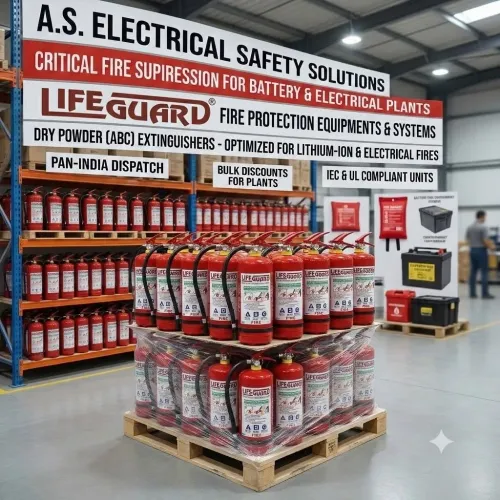
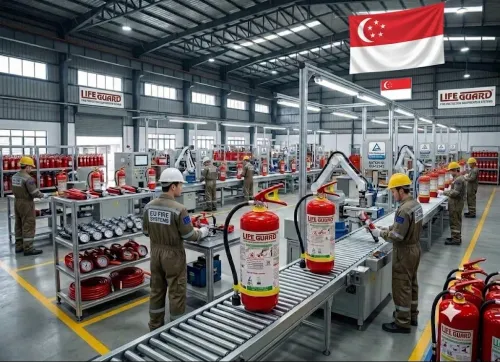
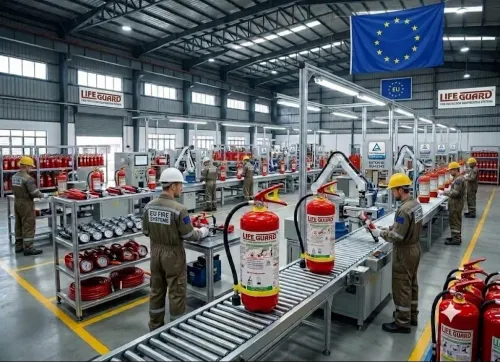
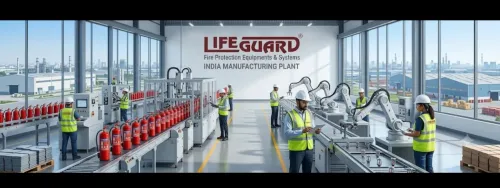
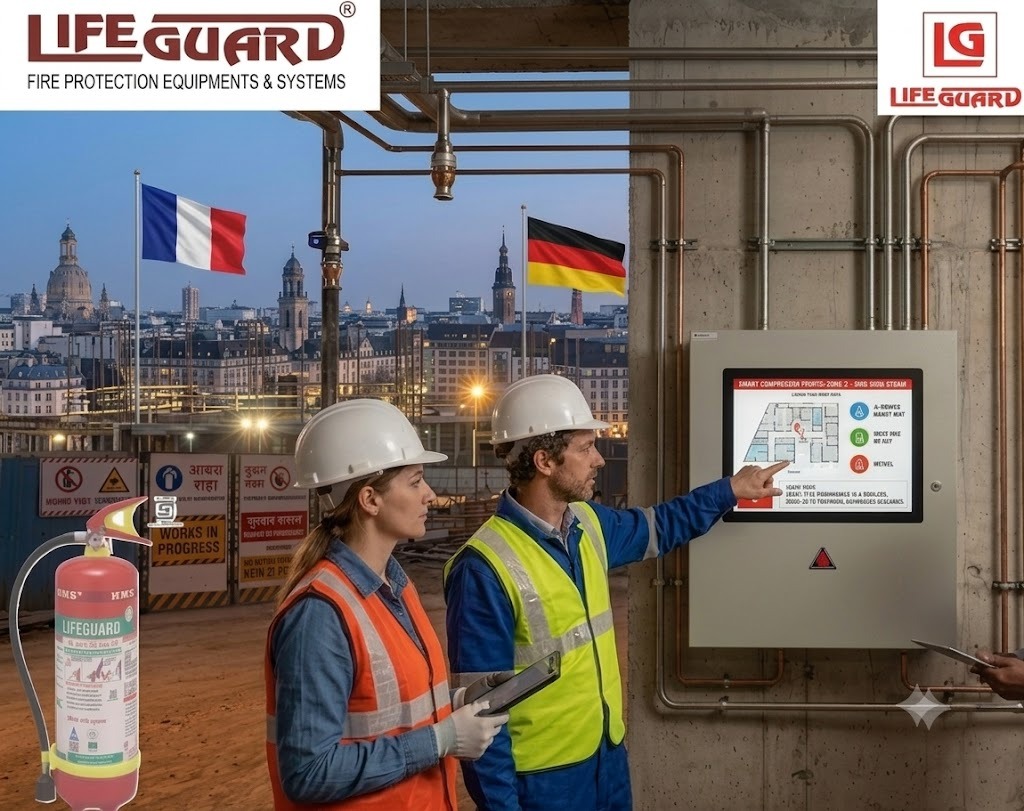
Suggested Image Alt Text: LIFEGUARD® fire safety equipment manufacturing for OEM industrial fire extinguisher and manufacturing plant applications in Europe.
Recommended Internal Links:
- Fire Extinguishers
- ABC Dry Powder Fire Extinguishers
- CO₂ Fire Extinguishers
- Foam Fire Extinguishers
- Water Mist Fire Extinguishers
- Wheeled Fire Extinguishers
- Industrial Fire Safety Equipment
- Fire Suppression Systems
- OEM Manufacturing Enquiries
- Contact LIFEGUARD®
SEO Implementation Recommendations
- Use the primary keyword naturally in the page title, H1, introduction, one or two subheadings, and conclusion.
- Create separate, useful landing pages for OEM fire extinguisher manufacturing, private-label manufacturing, and industrial fire safety equipment rather than repeating identical content across pages.
- Add internal links to relevant product pages and technical documentation.
- Publish only verified claims about manufacturing capabilities, certifications, European approvals, and OEM services.
- Include original product photographs, relevant technical documentation, and a clear enquiry form to improve buyer confidence and qualified lead generation.
- Avoid keyword stuffing and unsupported claims such as “EU approved” or “CE certified” unless they are substantiated for the exact product and applicable regulatory framework.
Keywords