Manufacturing Plant Fire Safety Equipment OEM Manufacturer in Africa | LIFEGUARD®
LIFEGUARD® – Industrial Fire Safety Equipment OEM Manufacturer for African Markets
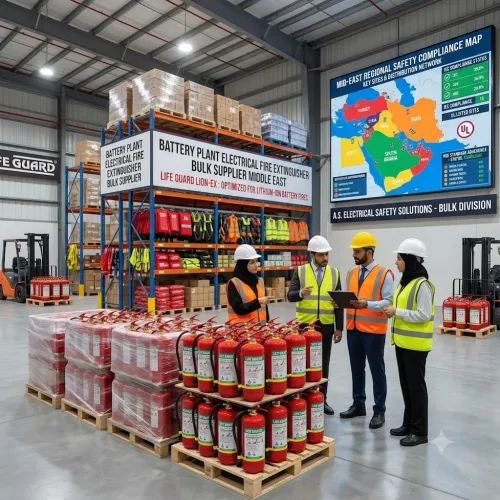
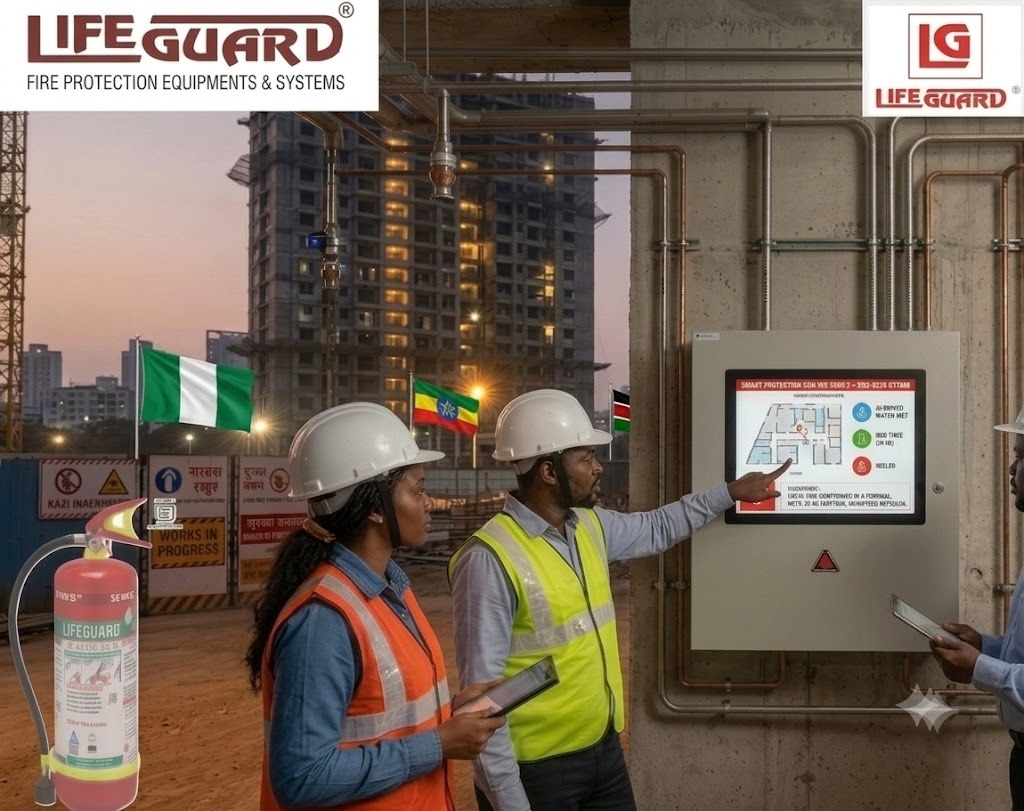
Africa's manufacturing sector is experiencing growing demand for dependable industrial infrastructure, modern production facilities and comprehensive workplace safety solutions. Industries such as automotive, mining, oil and gas, petrochemicals, pharmaceuticals, food processing, textiles, cement, steel, plastics, electronics and engineering depend on reliable fire safety equipment to protect personnel, machinery, raw materials, finished products and critical operations.
Manufacturing plants face diverse fire hazards, including electrical faults, overheating machinery, combustible packaging, flammable liquids, fuel storage, chemical processing and high-temperature industrial operations. Selecting suitable fire safety equipment is therefore essential for improving emergency preparedness, reducing potential fire-related losses and supporting operational continuity.
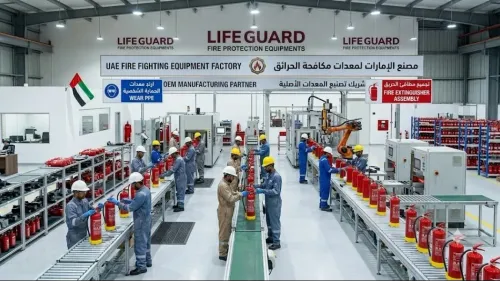
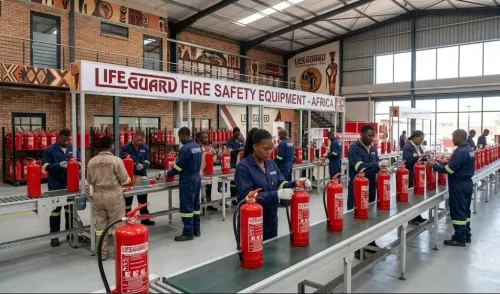
LIFEGUARD®, manufactured by United Fire Equipments Pvt. Ltd. (UFEPL), India, is a fire safety equipment brand serving industrial fire safety requirements. As a manufacturer of ISI-certified fire safety equipment, UFEPL offers manufacturing capabilities for firefighting products and supports project-oriented requirements for industrial customers, procurement teams, EPC contractors and channel partners.
For companies searching for a manufacturing plant fire safety equipment OEM manufacturer in Africa, LIFEGUARD® provides an opportunity to explore manufacturer-direct product sourcing, OEM-related manufacturing discussions and industrial fire safety equipment requirements, subject to the agreed scope, technical specifications, branding arrangements and destination-country compliance.
OEM Fire Safety Equipment Manufacturing for African Industries
Original Equipment Manufacturer (OEM) sourcing enables businesses to work directly with manufacturers for products developed or supplied according to agreed specifications, commercial arrangements and applicable quality requirements.
For African importers, distributors, industrial procurement companies, fire safety contractors and project developers, working with an experienced fire safety equipment manufacturer can support product standardisation, procurement planning and long-term supplier relationships.
LIFEGUARD® welcomes enquiries concerning manufacturing plant fire safety equipment and potential OEM-related requirements. The precise OEM scope—including private labelling, branding, packaging, product customisation and manufacturing quantities—should be confirmed directly with United Fire Equipments Pvt. Ltd.
Potential OEM-related product categories include:
- Portable industrial fire extinguishers.
- Dry chemical powder fire extinguishers.
- Carbon dioxide fire extinguishers.
- Suitable water-based and foam fire extinguishers.
- Trolley-mounted industrial fire extinguishers.
- Specialised firefighting equipment for selected industrial hazards.
- Fire suppression equipment and project-specific solutions, subject to product scope.
All products must be specified and supplied according to the applicable product standards, approved design, testing requirements and regulatory conditions of the destination market.
Industrial Fire Extinguishers for Manufacturing Plants in Africa
Fire extinguishers are a fundamental element of industrial fire safety planning. Manufacturing facilities need appropriate extinguishers positioned according to identified hazards, accessibility requirements, equipment ratings and applicable fire safety regulations.
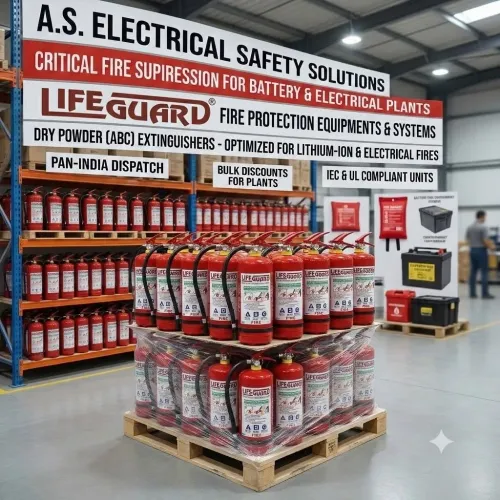
LIFEGUARD® manufactures fire safety equipment for a range of applications, with product selection dependent on the particular model and its certified capabilities.
1. ABC Dry Chemical Powder Fire Extinguishers
ABC dry chemical powder extinguishers are commonly used for compatible Class A, B and C fire risks, subject to the product's tested rating and applicable classification.
Potential applications include:
- General manufacturing and production areas.
- Industrial workshops and maintenance facilities.
- Warehouses containing compatible combustible materials.
- Selected utility areas and equipment rooms.
- Industrial premises requiring multipurpose portable extinguishers.
For African OEM buyers, the product specification should define the required capacity, extinguishing rating, cylinder construction, operating pressure, temperature range, labelling and certification requirements.
2. CO₂ Fire Extinguishers
Carbon dioxide extinguishers are suitable for specified flammable-liquid and energised electrical-equipment fire risks. They may be considered for appropriate electrical installations, control rooms and industrial equipment areas.
OEM procurement discussions should cover the required capacity, cylinder specifications, discharge components, operating conditions and applicable approvals.
CO₂ extinguishers should not be treated as universally suitable for every industrial fire. Their use in confined spaces requires particular caution because carbon dioxide can create a serious asphyxiation hazard.
3. Water-Based Fire Extinguishers
Water-based extinguishers are designed for compatible ordinary combustible materials. Depending on the product technology, specialised water mist or other water-based systems may be suitable for additional applications where supported by testing and certification.
They can be considered for selected manufacturing areas, workshops and storage facilities, provided that the fire classification, electrical risks and material compatibility have been assessed.
4. Mechanical Foam Fire Extinguishers
Foam extinguishers may be appropriate for selected flammable-liquid hazards and compatible Class A applications.
They can be considered for certain industrial processing facilities, maintenance areas and fuel-handling environments, subject to the approved extinguishing agent and its compatibility with the particular fuel.
5. Trolley-Mounted Fire Extinguishers
Trolley-mounted extinguishers provide greater extinguishing-agent capacity for selected large industrial areas. They may be specified for warehouses, manufacturing workshops, industrial maintenance areas and certain high-risk zones.
OEM requirements may include cylinder capacity, trolley design, mobility, hose configuration, discharge performance, operating conditions and product-specific compliance documentation.
OEM Fire Suppression Equipment for Manufacturing Facilities
Industrial fire suppression requirements differ according to the production process, combustible materials, equipment layout and consequences of a fire. Some applications require portable extinguishers, while others need engineered automatic detection and suppression systems.
LIFEGUARD® can be approached for discussions concerning specialised fire suppression equipment and industrial project requirements within its confirmed product and service scope.
Potential applications include:
- Manufacturing machinery and production equipment.
- Electrical control rooms and selected switchgear installations.
- Server rooms and sensitive electronic equipment spaces.
- Generator rooms and industrial utilities.
- Selected flammable-liquid handling facilities.
- Battery manufacturing and battery energy storage installations.
- Enclosed equipment spaces requiring engineered suppression.
Depending on the hazard, suitable protection may involve water-based systems, foam systems, dry chemical systems or clean-agent suppression.
OEM purchasers should verify whether a requirement concerns the manufacture of individual suppression products, supply of a complete engineered system, private-label supply or project integration. These activities involve different responsibilities, documentation and technical requirements.
Customised OEM Fire Safety Equipment for Industrial Applications
Manufacturing plants across Africa vary considerably in their production processes, building layouts, environmental conditions and regulatory requirements. A product suitable for one facility may not be appropriate for another.
OEM product specifications should therefore be agreed before manufacturing and procurement.
Key parameters may include:
Product capacity and configuration: Required extinguisher capacity, cylinder construction, operating pressure, discharge hose, valve assembly and accessories.
Extinguishing agent: Appropriate agent type, quantity, compatibility and tested fire classification.
Operating environment: Applicable ambient temperature range, humidity, corrosion exposure, storage conditions and industrial environment.
Product identification: Brand name, model identification, instructions, warning labels, batch traceability and manufacturing information, subject to applicable labelling rules.
Packaging requirements: Carton specifications, export packing, handling instructions and shipment protection.
Quality documentation: Applicable drawings, technical datasheets, inspection records, test reports and certificates.
Regulatory compliance: Applicable destination-country requirements and acceptance by the relevant authorities, project consultants or end users.
Any customisation must remain consistent with the approved product design and applicable certification. Changes to the agent, cylinder, valve, operating pressure, discharge components or other safety-critical features may require additional testing or approval.
Why African Distributors and Industrial Buyers Consider OEM Manufacturing
OEM sourcing can offer several commercial and operational advantages when the manufacturing arrangement is properly defined.
Manufacturer-Direct Procurement
Working directly with a manufacturer can improve communication regarding specifications, production planning, documentation and order requirements. Commercial benefits depend on order quantities, product complexity, logistics and the agreed terms.
Consistent Product Specifications
An agreed product specification can support consistency across repeated orders and help distributors manage product ranges for industrial customers.
Branding and Private-Label Opportunities
Some OEM arrangements involve products supplied under the buyer's brand. Private labelling, logo placement, packaging and associated documentation must be expressly agreed and must comply with certification and regulatory requirements.
Bulk and Project-Based Orders
Manufacturing plant projects may require equipment in multiple capacities and configurations. OEM discussions can address forecast quantities, approved product models, delivery schedules and documentation for specific procurement packages.
Technical Documentation
Industrial buyers frequently require technical datasheets, test reports, product certificates and operation or maintenance instructions. Documentation should be verified for the exact product model and intended market.
Long-Term Supplier Relationships
A defined OEM agreement can establish expectations for product quality, production lead times, order acceptance, inspection, warranties, packaging and after-sales responsibilities.
These benefits depend on the commercial arrangement and the manufacturer's confirmed capabilities; they should not be assumed without a project-specific agreement.
Fire Safety Equipment for Different Manufacturing Industries in Africa
Automotive and Engineering Manufacturing
Automotive and engineering facilities may involve welding, machining, paint application, lubricants, electrical systems and combustible packaging. Fire safety equipment should be selected for each identified hazard and supported by suitable detection and emergency response arrangements.
Mining and Mineral Processing
Mining-related manufacturing, mineral processing and associated industrial workshops may contain electrical equipment, conveyors, lubricants, fuel storage and maintenance facilities. Protection requirements depend on the site environment, machinery, fire load and applicable mining and industrial safety regulations.
Oil, Gas and Petrochemical Industries
Facilities handling hydrocarbons, flammable liquids, process gases and chemicals require detailed fire risk assessment. Equipment may include suitable extinguishers, approved foam solutions, detection systems and engineered suppression, depending on the application.
Equipment for hazardous locations must meet the relevant technical and approval requirements.
Food and Beverage Manufacturing
Food processing plants require protection for production machinery, electrical installations, packaging materials, refrigeration utilities and specialised thermal-process areas. Extinguishing agents must be compatible with the particular fire hazard and operational environment.
Pharmaceutical and Chemical Manufacturing
Pharmaceutical and chemical facilities may handle solvents, reactive substances and sensitive production equipment. Fire safety planning must account for chemical compatibility, material safety data, ventilation and the potential consequences of different extinguishing agents.
Textile, Paper and Packaging Manufacturing
Textiles, paper products and packaging materials can create significant combustible fire loads. Suitable equipment, detection, automatic suppression where required, storage controls and emergency procedures should be considered together.
Electronics and Battery Manufacturing
Electronics production, battery assembly, testing and energy storage may involve electrical and thermal hazards. Lithium-ion battery incidents require a battery-specific risk assessment, including consideration of thermal runaway, cooling, propagation prevention and specialised suppression or containment measures.
LIFEGUARD® OEM Manufacturing and Supply for African Markets
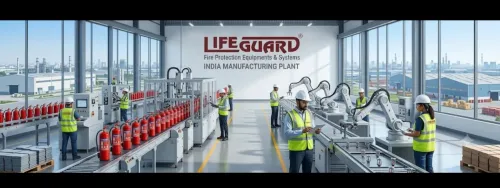
LIFEGUARD® is manufactured by United Fire Equipments Pvt. Ltd. in India. The company has been manufacturing fire safety equipment since 1991 and offers ISI-certified firefighting products within the scope of the relevant product certifications.
Company credentials include ISO 9001:2015 and ISO 45001:2018 management system certifications, subject to their current validity and certified scope.
For prospective African OEM buyers, importers, distributors and industrial project procurement teams, the following points should be discussed directly with UFEPL:
- Exact product models and technical specifications.
- OEM manufacturing or private-label requirements.
- Minimum order quantities and production capacity.
- Brand and packaging arrangements.
- Product certification and destination-market compliance.
- Inspection and quality documentation.
- Pricing, payment terms and production lead times.
- Export packaging, shipping and delivery arrangements.
- Warranty, spare parts and after-sales responsibilities.
Important compliance note: Indian ISI certification does not automatically establish product approval in African countries. Requirements can differ across South Africa, Nigeria, Kenya, Egypt, Morocco, Ghana and other markets. Buyers must verify the applicable national standards, conformity assessment, import requirements and local authority approvals before placing orders.
OEM branding must not imply that an unapproved product holds a certification or approval that does not cover that specific model and configuration.
Manufacturing Plant Fire Safety Equipment OEM Manufacturer Serving Africa
LIFEGUARD® can be considered for OEM-related sourcing enquiries and industrial fire safety equipment requirements across African markets, subject to confirmed manufacturing scope and export arrangements.
South Africa
Potential applications include automotive production, mining-related industries, metal fabrication, engineering, packaging and industrial warehouses. Product specifications and approvals should be checked against applicable South African regulations and SANS standards.
Nigeria
Manufacturing plants, food processing facilities, industrial estates, chemical-related operations and warehouses may require suitable fire extinguishers and specialised fire protection equipment. Compliance with Nigerian requirements must be established for each project.
Kenya
OEM sourcing enquiries may cover manufacturing, packaging, industrial workshops, warehouses and processing facilities. Applicable Kenyan standards and project-specific approvals should be verified.
Egypt
Industrial applications may include textile production, engineering, food processing, chemicals and manufacturing infrastructure. Equipment selection should account for the facility's fire risks and relevant Egyptian requirements.
Morocco
Automotive supply chains, manufacturing parks, engineering facilities and logistics infrastructure may require a range of industrial fire safety products. Product acceptance and export arrangements should be confirmed for each project.
LIFEGUARD® can also be approached regarding potential OEM requirements for Ghana, Tanzania, Uganda, Ethiopia, Zambia, Botswana and other African markets. Country coverage, delivery capabilities and local service arrangements should be confirmed rather than assumed.
How to Select the Right OEM Fire Safety Equipment Manufacturer in Africa
Industrial procurement teams should evaluate manufacturers using clear technical and commercial criteria.
- Manufacturing capability: Confirm whether the manufacturer produces the requested product or sources it from another supplier.
- Product certification: Verify certificates against the exact model, manufacturing site and applicable standard.
- Quality assurance: Review the quality control process, inspection arrangements and relevant test documentation.
- OEM scope: Define whether the arrangement includes manufacturing, private labelling, packaging or customised product specifications.
- Minimum order quantities: Confirm MOQ, order quantities, production capacity and repeat-order lead times.
- Regulatory compliance: Check destination-country requirements and project-specific approvals before shipment.
- Commercial terms: Agree pricing, payment conditions, delivery terms, warranty and responsibilities for rejected or nonconforming products.
- Export documentation: Confirm the required commercial invoice, packing list, certificates and shipping documentation.
- After-sales support: Establish responsibilities for technical queries, replacement parts, servicing and product maintenance.
- Contractual clarity: Document ownership of branding, specifications, drawings, approved changes and quality acceptance criteria.
A well-defined OEM agreement can help reduce misunderstandings and establish clear responsibilities between the manufacturer, distributor and end customer.
Frequently Asked Questions
1. Who is a manufacturing plant fire safety equipment OEM manufacturer for Africa?
LIFEGUARD®, manufactured by United Fire Equipments Pvt. Ltd. in India, is a potential manufacturer to contact for industrial fire safety equipment and OEM-related enquiries. The availability of specific OEM services, private labelling and export supply must be confirmed directly with the company.
2. What fire safety equipment can be considered for OEM sourcing?
Potential categories include ABC powder extinguishers, CO₂ extinguishers, compatible water-based and foam extinguishers, trolley-mounted extinguishers and selected specialised fire safety products. The actual OEM range depends on manufacturing capability, approved models and project requirements.
3. Can African distributors request private-label fire extinguishers?
Private-label supply may be discussed as part of an OEM enquiry. The manufacturer and buyer must agree on branding, product configuration, packaging, certification responsibilities and regulatory compliance. Private labelling must not misrepresent the original manufacturer or product approvals.
4. What information is needed for an OEM quotation?
Buyers should provide the destination country, product types, capacities, required standards, estimated quantities, branding requirements, packaging specifications, documentation needs and preferred delivery schedule. These details help establish the appropriate technical and commercial scope.
5. Are LIFEGUARD® ISI-certified products automatically approved throughout Africa?
No. ISI certification relates to the applicable Indian standard and certified product. Additional national conformity assessments, certifications or approvals may be required depending on the destination country and project.
6. Can OEM fire safety equipment be supplied for large manufacturing projects?
Bulk and project-based requirements can be discussed with United Fire Equipments Pvt. Ltd. Production quantities, lead times, export feasibility, inspection requirements and commercial conditions need to be confirmed for each order.
7. Why should buyers work directly with a fire safety equipment manufacturer?
Direct engagement can simplify technical communication, product specification review, production planning and documentation coordination. The actual benefits depend on the product, order size, export arrangements and agreed commercial terms.
Contact LIFEGUARD® for OEM Fire Safety Equipment Enquiries
For OEM manufacturing discussions, industrial fire extinguisher requirements, private-label enquiries and project-based fire safety equipment sourcing for African markets, contact:
United Fire Equipments Pvt. Ltd.
LIFEGUARD® – Manufacturer of ISI Certified Fire Safety Equipment
Phone: 8048034226
Email: ufe126@gmail.com | info@lifeguardindia.in
Website: www.lifeguardindia.in
Contact the LIFEGUARD® team with your product specifications, estimated order quantities, destination country and OEM requirements to discuss potential manufacturing and export arrangements.
SEO Metadata
SEO Title: Manufacturing Plant Fire Safety Equipment OEM Manufacturer Africa | LIFEGUARD®
Meta Description: Looking for a manufacturing plant fire safety equipment OEM manufacturer in Africa? Explore LIFEGUARD® industrial fire extinguishers and OEM sourcing enquiries with United Fire Equipments Pvt. Ltd., India.
Suggested URL Slug: /manufacturing-plant-fire-safety-equipment-oem-manufacturer-africa/
Primary Keyword: Manufacturing Plant Fire Safety Equipment OEM Manufacturer Africa
Secondary Keywords:
- Fire safety equipment OEM manufacturer Africa
- Industrial fire extinguisher OEM manufacturer Africa
- Manufacturing plant fire safety equipment manufacturer Africa
- Private label fire extinguisher manufacturer Africa
- Industrial fire safety equipment supplier Africa
- OEM fire extinguisher manufacturer India for Africa
- Firefighting equipment OEM supplier Africa
- Industrial fire protection equipment manufacturer Africa
- Bulk fire extinguisher supplier for African markets
- Manufacturing plant fire safety equipment exporter Africa
Suggested Image Alt Text:
- LIFEGUARD manufacturing plant fire safety equipment OEM manufacturer for Africa
- Industrial fire extinguishers for manufacturing plants in African markets
- OEM fire safety equipment manufacturing for industrial applications
- Firefighting equipment manufacturer in India for African industrial projects
Recommended Internal Links:
- Industrial Fire Extinguishers
- Fire Suppression Systems
- Industrial Fire Protection Solutions
- Fire Safety Equipment
- Lithium-Ion Battery Fire Protection
- Contact LIFEGUARD®
SEO Strategy: Target the primary keyword in the page title, H1, introduction, meta description and URL. Use secondary keywords naturally in relevant headings and supporting paragraphs. Strengthen the page with original manufacturing photographs, verified technical specifications, relevant product certification details and a clear OEM enquiry pathway. Avoid claiming confirmed private-label capabilities, destination-country approvals or export services unless these have been verified by UFEPL.
Keywords