https://updates.lifeguardindia.in/products/lg-611a-wsm-200-kg-with-collar-cable/13
Warehouse Clean Agent Suppression Solutions Europe
Modern warehouses across Europe are becoming increasingly automated, technology-driven, and dependent on high-value inventory, electrical infrastructure, control systems, and specialized storage environments. These facilities require fire protection solutions that can respond rapidly to fire risks while minimizing damage to equipment, inventory, and operations. LIFEGUARD® provides advanced warehouse clean agent suppression solutions for Europe, engineered for applications where traditional water-based fire suppression may not be suitable or where protection of sensitive assets is a priority.
Clean agent fire suppression systems use gaseous extinguishing agents to suppress fire without leaving water, foam, or powder residues. This makes them particularly suitable for enclosed and critical areas containing electrical and electronic equipment. NFPA identifies electrical and electronic hazards, control rooms, and other high-value enclosed assets among applications that can be suitable for clean agent systems, subject to system limitations and appropriate design.
Advanced Clean Agent Fire Suppression for European Warehouses
Warehouses can contain a combination of combustible materials, packaging, electrical equipment, automation systems, conveyor systems, battery-powered equipment, server infrastructure, and high-value inventory. A fire in one critical area can interrupt warehouse operations and create significant business losses.
LIFEGUARD® warehouse clean agent suppression solutions are developed to provide engineered fire detection, rapid system activation, controlled agent discharge, alarm interfaces, and coordinated fire protection for suitable enclosed hazards.
Depending on the application, clean agent systems can be considered for:
- Automated warehouse control rooms
- Electrical and MCC rooms
- PLC and automation rooms
- Server and IT rooms
- Data and communication rooms
- Security and monitoring rooms
- Electrical switchgear rooms
- Battery and energy-storage related enclosures, subject to hazard-specific engineering
- High-value equipment rooms
- Machinery and process-control enclosures
- Archive and document storage areas
- Specialized enclosed storage environments
The suitability of clean-agent protection should always be determined through a hazard assessment, enclosure evaluation, agent selection, and applicable design standard.
Why Choose Clean Agent Suppression for Warehouses?
Traditional water-based systems are highly effective for many warehouse hazards, but certain enclosed spaces and sensitive equipment may require an alternative extinguishing medium. Clean agents are electrically non-conductive and, where appropriately designed, can suppress fire without leaving conventional extinguishing-media residues.
Key benefits can include:
1. Rapid Fire Suppression
Clean agent systems are designed for rapid discharge into a protected enclosure following detection and system activation. Early detection combined with engineered agent discharge can help limit fire development and reduce potential damage to critical assets.
2. No Conventional Water Damage
For electrical, electronic, control, and other sensitive installations, avoiding water discharge can be an important consideration. Clean agents leave little or no residue after discharge, reducing post-fire cleanup requirements compared with powder or foam systems.
3. Protection of High-Value Assets
European warehouses increasingly depend on automation, robotics, electronic controls, networking, and computerized inventory management. A suitable clean agent system can provide dedicated protection for these critical enclosed assets.
4. Electrically Non-Conductive Extinguishing Medium
Clean agent systems are particularly relevant where an electrically non-conductive extinguishing medium is required or desirable.
5. Reduced Operational Disruption
For suitably designed applications, clean agent suppression can help limit damage to protected equipment and facilitate faster recovery following a fire event.
LIFEGUARD® Warehouse Clean Agent Suppression System
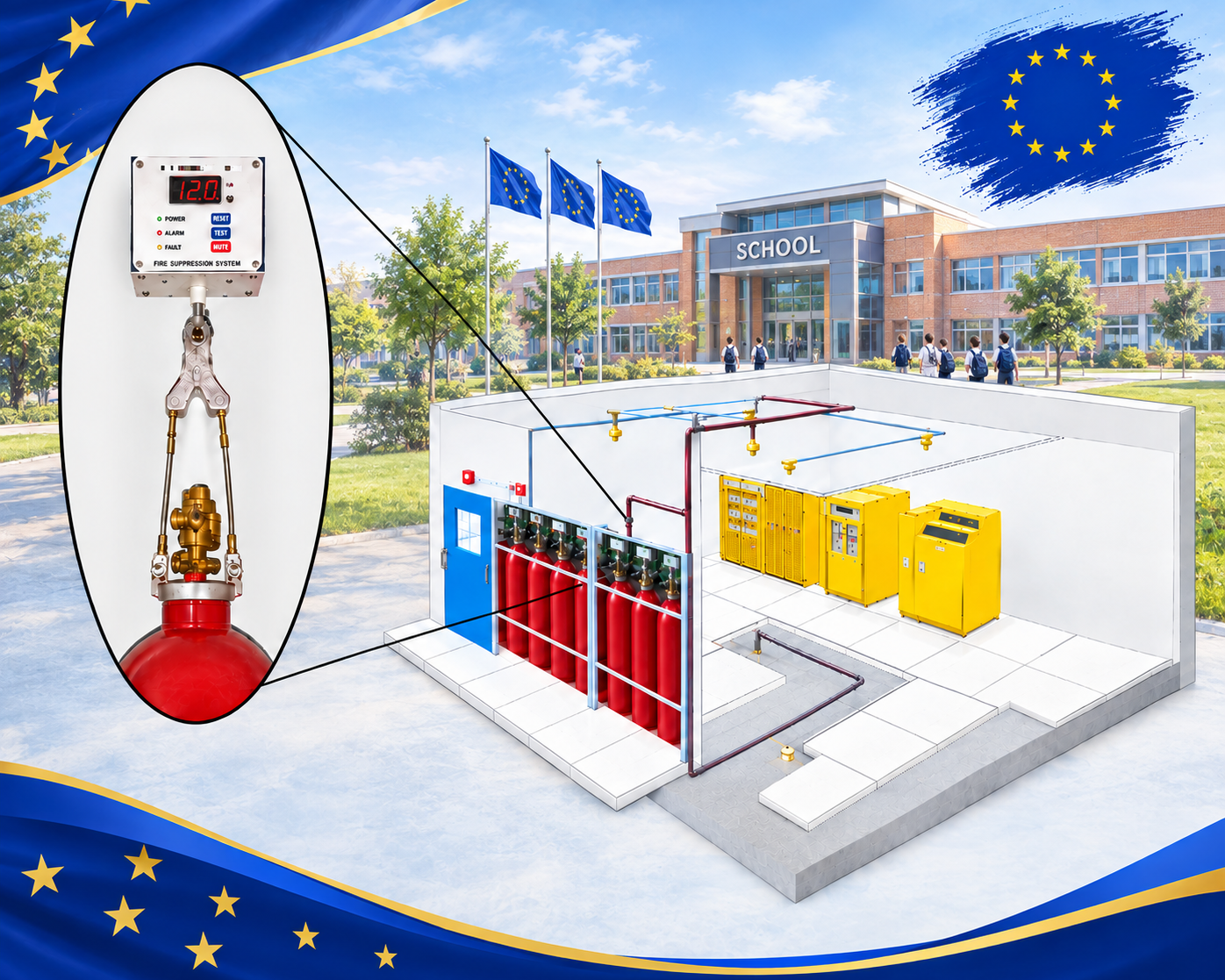
LIFEGUARD® can provide an integrated approach to warehouse fire protection, combining detection, control, agent storage, piping, discharge nozzles, alarms, and system interfaces.
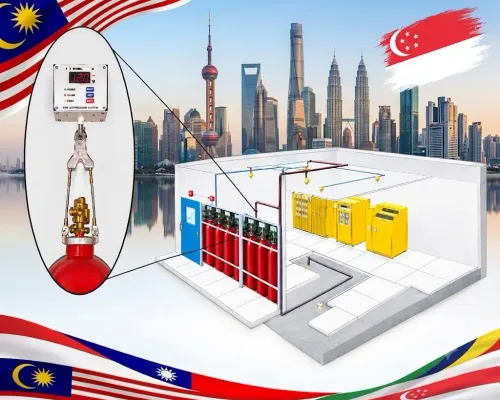
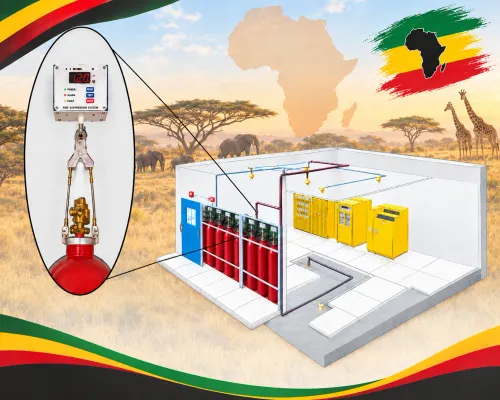
A typical engineered system may incorporate:
- Clean agent storage cylinders
- Agent discharge piping
- Engineered discharge nozzles
- Automatic fire detection
- Addressable or conventional releasing control panel
- Manual release station
- Abort switch where applicable
- Audible and visual alarm devices
- Pressure monitoring
- Low-pressure or supervisory monitoring
- HVAC shutdown interface
- Electrical equipment shutdown interface
- Fire alarm system integration
- Emergency power arrangements
- Room integrity considerations
- Warning and safety signage
The exact configuration depends on the protected volume, hazard classification, agent, enclosure characteristics, occupancy, and applicable local requirements.
Clean Agent Selection for European Applications
Different clean agents have different physical, environmental, concentration, storage, and application characteristics. Agent selection should therefore be based on the specific hazard rather than using a single solution for every warehouse.
Potential technologies may include:
FK-5-1-12 clean agent systems — suitable for selected enclosed applications where rapid fire suppression and protection of sensitive assets are required, subject to the applicable system listing, design requirements, and regulatory considerations.
Inert gas systems — systems using agents such as nitrogen, argon, or inert-gas blends may be considered for appropriate enclosed hazards. NFPA documentation identifies IG-01, IG-100, IG-55 and IG-541 among inert-gas designations used for clean-agent applications.
Agent selection should consider fire type, enclosure volume, required design concentration, personnel occupancy, discharge characteristics, pressure relief, storage requirements, environmental considerations, and applicable European regulations.
European Standards and Regulatory Considerations
For projects in Europe, clean agent suppression systems should be engineered in accordance with the standards and regulatory requirements applicable to the country and project.
EN 15004 is an important European framework for fixed firefighting systems using gaseous extinguishing agents. European regulatory material references EN 15004-1 and the applicable parts of the EN 15004 series for gaseous fire-extinguishing systems.
Project specifications may also reference NFPA 2001, particularly for international projects, multinational facilities, or specifications that adopt NFPA requirements. NFPA 2001 addresses design, installation, inspection, testing, maintenance, and safety considerations for clean agent extinguishing systems.
European projects also need careful consideration of environmental legislation governing fluorinated gases. EU Regulation 2024/573 applies to specified fluorinated greenhouse gases and products or equipment containing or relying upon them, with requirements relating to placing on the market, containment, recovery, emissions, and other controls.
Accordingly, the selected extinguishing agent should be reviewed against the current requirements applicable to the project location and application.
Warehouse Fire Detection and Automatic Suppression
A clean agent suppression system is most effective when integrated with an appropriate detection and releasing strategy.
A typical sequence can include:
Step 1 – Fire Detection:
Smoke, heat, aspirating, or other approved detection technologies identify developing fire conditions.
Step 2 – Alarm:
The releasing panel activates audible and visual warning devices and provides signals to the building fire alarm system.
Step 3 – Pre-Discharge Sequence:
Where required, system logic initiates a time delay, equipment shutdowns, HVAC isolation, damper control, and other programmed interfaces.
Step 4 – Agent Release:
Following confirmation and completion of the programmed release sequence, the clean agent is discharged through engineered nozzles.
Step 5 – Fire Suppression:
The agent achieves the required design concentration within the protected enclosure and suppresses the fire.
Step 6 – Post-Discharge Monitoring:
The protected area can be inspected, ventilated where appropriate, and the system restored by qualified personnel.
Clean Agent Solutions for Automated Warehouses
Automation is transforming European logistics facilities. Automated storage and retrieval systems, conveyor systems, robotics, warehouse management systems, scanners, control panels, and industrial networks can introduce additional electrical and electronic fire risks.
LIFEGUARD® can develop dedicated clean agent protection concepts for suitable enclosed areas associated with automated warehouse infrastructure, including:
- Automation control rooms
- PLC rooms
- Electrical control cabinets
- MCC rooms
- Server rooms
- Network rooms
- Equipment enclosures
- Control panels
- Monitoring stations
- Critical electrical infrastructure
For open warehouse storage containing diverse commodities, clean agent total-flooding protection is not automatically appropriate. NFPA specifically notes limitations for general cargo and certain dry-cargo applications because of the possibility of deep-seated fires and variations in commodities and storage arrangements.
This makes professional hazard assessment particularly important before selecting clean-agent protection for a warehouse.
Engineering Approach by LIFEGUARD®
LIFEGUARD® approaches warehouse fire protection as an engineered system rather than a one-size-fits-all product.
The design process can include:
- Site and hazard assessment
- Protected-volume calculation
- Fire-risk identification
- Agent selection
- Design concentration determination
- Cylinder sizing
- Pipe-network engineering
- Nozzle selection and positioning
- Detection and releasing logic
- Room integrity assessment
- Pressure-relief considerations
- HVAC and electrical interlocking
- Alarm and BMS/fire alarm integration
- Testing and commissioning
- Inspection and maintenance planning
This engineering-led methodology helps ensure that the system is aligned with the characteristics of the protected hazard.
Warehouse Clean Agent Suppression Supplier Europe
As a fire safety solutions brand, LIFEGUARD® supports the development of clean agent fire suppression solutions for industrial, commercial, infrastructure, and mission-critical applications.
Our solutions can be configured for projects requiring:
- Automatic clean agent fire suppression
- Gas-based fire extinguishing
- Electrical room protection
- Control room fire protection
- Data and server room protection
- Automation system protection
- Critical equipment protection
- Integrated fire detection and suppression
- Fire alarm and BMS interfaces
- Engineered total-flooding systems
For European projects, the final system configuration should be reviewed against the relevant national regulations, applicable European standards, project specifications, environmental requirements, and authority requirements.
Why LIFEGUARD® for Warehouse Fire Protection?
LIFEGUARD® combines fire protection equipment, engineering capabilities, system integration, testing, commissioning, and after-sales support to address specialized fire safety requirements.
Our approach focuses on:
Engineered Protection: Solutions developed around the actual hazard and enclosure.
Sensitive Asset Protection: Clean agent technologies for appropriate electrical and electronic applications.
Integrated Systems: Detection, releasing, alarms, shutdowns, and building interfaces can be coordinated as one fire protection solution.
Standards-Based Design: Projects can be developed around applicable EN, NFPA, ISO, and project-specific requirements.
Lifecycle Support: Inspection, maintenance, testing, system servicing, and technical support are important components of reliable fire protection.
Applications Across Europe
LIFEGUARD® warehouse clean agent suppression solutions can be considered for suitable applications across European markets, including:
Germany | France | Italy | Spain | Netherlands | Belgium | Poland | Sweden | Denmark | Norway | Finland | Austria | Switzerland | Ireland | Portugal | Czech Republic | Romania | Hungary | Greece and other European markets
Each country and project can have specific fire safety, environmental, installation, certification, and authority requirements. Therefore, system design and documentation should be adapted to the individual project.
Protect Critical Warehouse Infrastructure with LIFEGUARD®
A warehouse fire protection strategy should extend beyond conventional storage areas and consider the critical infrastructure that enables modern logistics operations. Clean agent suppression can provide an effective option for suitably enclosed, high-value, electrical, electronic, and control-related hazards where residue-free fire suppression is required.
LIFEGUARD® provides engineered warehouse clean agent suppression solutions for European projects, helping consultants, EPC contractors, system integrators, facility owners, logistics operators, and industrial organizations develop application-specific fire protection systems.
From hazard assessment and system design to equipment supply, installation support, testing, commissioning, and maintenance, LIFEGUARD® can support the complete clean agent fire suppression lifecycle.
Choose LIFEGUARD® for Warehouse Clean Agent Fire Protection Solutions
For warehouse operators and project developers seeking clean agent suppression solutions in Europe, LIFEGUARD® offers application-focused fire protection systems designed around the specific requirements of the protected environment.
LIFEGUARD® – Advanced Fire Safety Solutions for Critical Infrastructure, Warehouses and Industrial Facilities.
Keywords