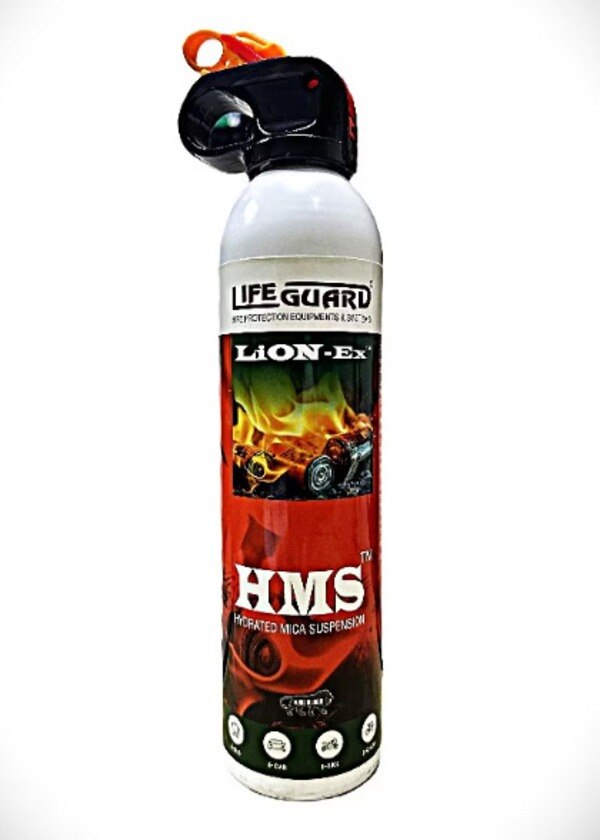
An EV battery can keep producing heat and flammable gas after visible flames disappear, so ordinary flame knockdown does not prove the incident is over. By the end, you will know how to recognise thermal runaway, choose a safer response, judge when a portable extinguisher is unsuitable and plan for reignition after the first attack.
Key takeaways
- Thermal runaway begins inside a cell before flames become visible.
- Treat battery-pack fires as heat-management incidents, not ordinary vehicle fires.
- Use a portable extinguisher only when it matches the fire and escape conditions.
- Check for heat, damaged cells and re-ignition after flames disappear.
Thermal runaway starts inside a cell, not at the visible flame
Thermal runaway is a self-heating failure that begins inside a cell. When decomposition generates heat faster than the cell can release it, temperature rises sharply, triggering more decomposition, combustible gas and sometimes flame. Heat can then spread from cell to cell through a module or pack.
Triggers include an internal short circuit, a damaged separator, physical impact, manufacturing defects, high ambient temperature and overcharging an EV battery. Crash damage can leave a latent failure that appears hours later, even when the pack looks intact and meets a battery safety standard such as UL 2580.
Watch for these signs:
| Sign | What it can indicate | Why it matters |
|---|---|---|
| Rapidly rising pack or module temperature | Internal self-heating | The visible fire may be smaller than the battery event |
| Swelling, hissing or popping | Gas generation and pressure release | A cell may be close to venting |
| White or grey smoke, or a sharp electrolyte odour | Venting electrolyte and decomposition products | The gases can ignite or harm people |
| Flames that return after knockdown | Unchecked heat inside cells | Surface flame control has not stopped thermal runaway |
| Heat spreading across modules | Cell-to-cell propagation | The incident is expanding inside the pack |
A cool exterior does not prove stability: sealed cells can remain hot while thermal imaging misses concealed heat. Treat repeated reignition, rising temperatures or new venting as an active battery emergency, not an ordinary vehicle fire.
A battery-pack fire is not the same as an ordinary vehicle fire
An EV battery fire changes the tactic because the visible flame may be only the outer symptom. Heat from one failed cell can drive cell-to-cell propagation through a battery module, spread across the battery pack, and continue after exterior flames are knocked down.
| Level | What happens | Firefighting implication |
|---|---|---|
| Cell | Internal damage creates heat, gas and pressure | Expect hidden heating and delayed venting |
| Battery module | Multiple cells share structure and thermal paths | A local failure can spread beyond the first cell |
| Battery pack | Modules, cables and barriers sit behind the vehicle body | Use sustained cooling, stand-off distance and temperature checks |
| Vehicle | The pack remains alongside tyres, plastics and high-voltage systems | Control the surrounding fire without cutting orange cables; follow the vehicle emergency-response guide |
A small exterior flame does not prove a small battery event. Pack construction, state of charge, chemistry, spacing, barriers, cooling paths and the failed cell’s location determine how quickly the fire grows, so two EVs can require different tactics.
Treat a battery pack fire as both a fire and an electrical-energy incident. A device that suppresses flame without cooling the pack does not address propagation; responders also need controls for toxic, flammable off-gases and later isolation.
UL 9540A describes propagation testing for energy-storage systems, not EV firefighting certification, while UL 2580 compliance does not eliminate crash-damage or latent-failure risks.
What to do first—and when a portable extinguisher is the wrong tool
A burning EV demands distance before suppression. Treat smoke, hissing, venting and flammable battery gases as an active hazard: raise the alarm, move people away and upwind, keep others out, and call emergency services.
Do not touch the vehicle, orange cables or damaged pack; high-voltage battery safety is not established by switching off the 12-volt system.
1. Give responders the vehicle make, model, location and visible symptoms. They can use the vehicle emergency-response guide to identify isolation points, lifting limits and battery hazards.
2. Establish an exclusion zone and keep clear of smoke and runoff. Hydrogen fluoride and other toxic combustion products require professional respiratory protection, ventilation and scene control.
3. Leave firefighting to trained responders when the pack is hot, flames emerge from underneath, violent venting occurs, or the vehicle repeatedly reignites. An extinguisher that knocks down visible flame does not cool concealed cells.
4. Use a portable extinguisher only for a small, accessible fire away from the battery pack, such as a limited fire in cabin trim, and only if you are trained, have a clear escape route and emergency services are being called.
Responders need sustained cooling, not a guessed water quantity: pack size, damage, access and state of charge determine the application. They also need thermal monitoring and a post-fire isolation plan, because a battery can remain energized and reignite after flames disappear. Never cut high-voltage cables or approach a sealed pack because its surface feels cooler.
Choose protection by cooling capability, access and evidence—not the label alone
A credible EV battery fire extinguisher must do more than knock down flames. Ask for test evidence showing sustained battery cooling, access to a partially shielded pack, safe high-voltage stand-off and control of reignition—not just a product label.
| Capability | Evidence to request | What failure it reveals |
|---|---|---|
| Flame control | Test record identifying the battery type, state of charge and application | The agent suppresses visible fire but leaves burning cells |
| Battery cooling | Measured temperature reduction, application duration and cooling method | Heat remains inside cells and drives thermal runaway propagation |
| Propagation control | Results from a representative pack or module, not only an open flame pan | Cell-to-cell spread continues behind the enclosure |
| Reignition control | Hold time, repeat-ignition observations and post-application temperature data | Flames return after the first discharge |
Read the fire-extinguishing agent technical data sheet for discharge time, operating range, electrical limitations, residue, runoff and respiratory hazards. Water-based systems often provide the heat removal needed for battery cooling; dry chemical, foam or carbon dioxide can extinguish external flames without cooling the pack sufficiently.
UL 9540A evaluates thermal-runaway fire propagation in energy-storage systems; it is not an EV firefighting certification. United Fire Equipment Pvt Ltd can help a buyer examine agent documentation and test scope rather than treating “lithium” on the label as proof.
Confirm pack access, toxic-gas controls, temperature monitoring and a post-fire isolation plan before selecting the system.
Related products
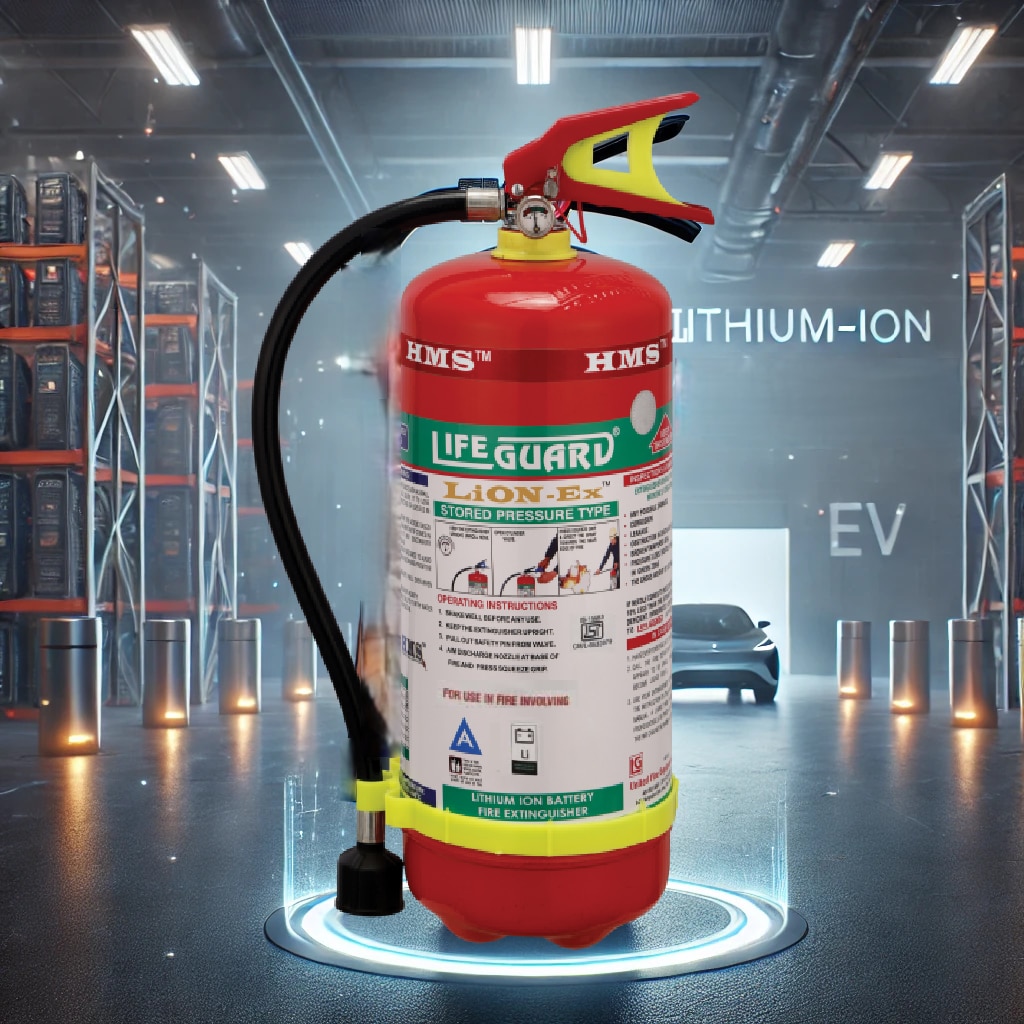 | EV FIRE EV FIRE EXTINGUISHER ₹54000 Lifeguard EV Fire Extinguisher Manufacturer – Complete Safety for Electric Vehicles The future of mobility is electric. |
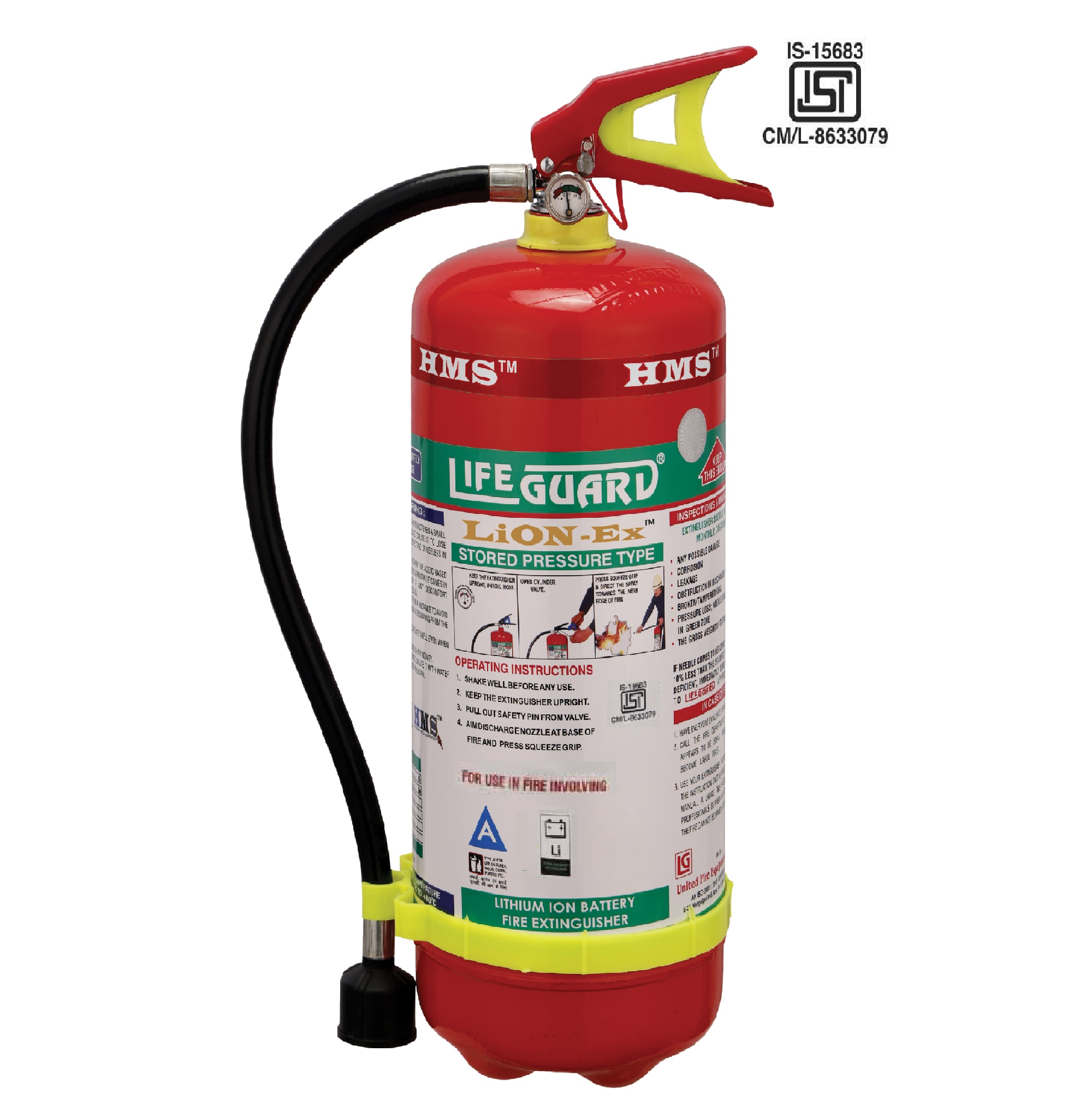 | Lithium Ion Fire Extinguisher LiON-Ex 9 Liters Lithium Fire Extinguisher ₹72000 LiON-Ex Fire Extinguisher for Lithium Ion Battery fire, capacity 9 liters filled with HMS agent, duly ISI marked, tested as per IS : 15683. |
The incident continues after the flames disappear
Flames down is not the same as the battery being safe. Damaged cells can retain heat, vent flammable gas, or fail later, creating EV battery reignition without a new external cause.
Keep people away and establish post-fire battery isolation from buildings, other vehicles and combustible materials. Follow the vehicle manufacturer’s emergency-response guide; do not cut orange high-voltage cables, and do not assume that disconnecting the 12-volt system has de-energised the traction battery.
Use thermal imaging to identify hot cells, modules or pack areas and continue checks for renewed temperature rise, smoke, hissing, venting and odour. Record readings, times and visible changes so the next decision is based on a trend rather than a single cool-looking surface.
- Maintain a controlled exclusion zone until the battery has cooled and the responsible authority or manufacturer’s guidance permits movement.
- Arrange trained recovery and transport personnel who understand high-voltage isolation and damaged-pack handling.
- Treat renewed heating, gas release or smoke as an active incident; withdraw and reassess cooling and isolation.
Compliance documents answer different questions:
| Document | What it tells you | What it cannot prove |
|---|---|---|
| Vehicle emergency-response guide | Isolation points, hazards and recovery instructions | That a damaged pack is electrically safe |
| UL 2580 | Battery safety and abuse-related evaluation | That crash damage cannot cause thermal runaway |
| UL 9540A | Thermal-runaway propagation testing for energy-storage systems | EV firefighting performance or product suitability |
A device that suppresses flame without sustained cooling does not resolve the principal post-fire risk.
Frequently asked questions
Where does thermal runaway begin in an EV battery?
It begins inside a battery cell when heat generation exceeds heat release, causing decomposition, combustible gas and possible flame.
Why is an EV battery-pack fire different from an ordinary vehicle fire?
Heat can spread from one cell to another through a module or pack, creating a prolonged thermal event after visible flames appear.
When is a portable extinguisher the wrong tool for an EV battery fire?
It is the wrong tool when it cannot cool the affected cells, the fire is spreading through the pack, or using it would expose you to unacceptable escape risk.
What must you check after the flames disappear?
Continue monitoring for residual heat, damaged cells and re-ignition because the incident can continue after visible flames end.
Related products
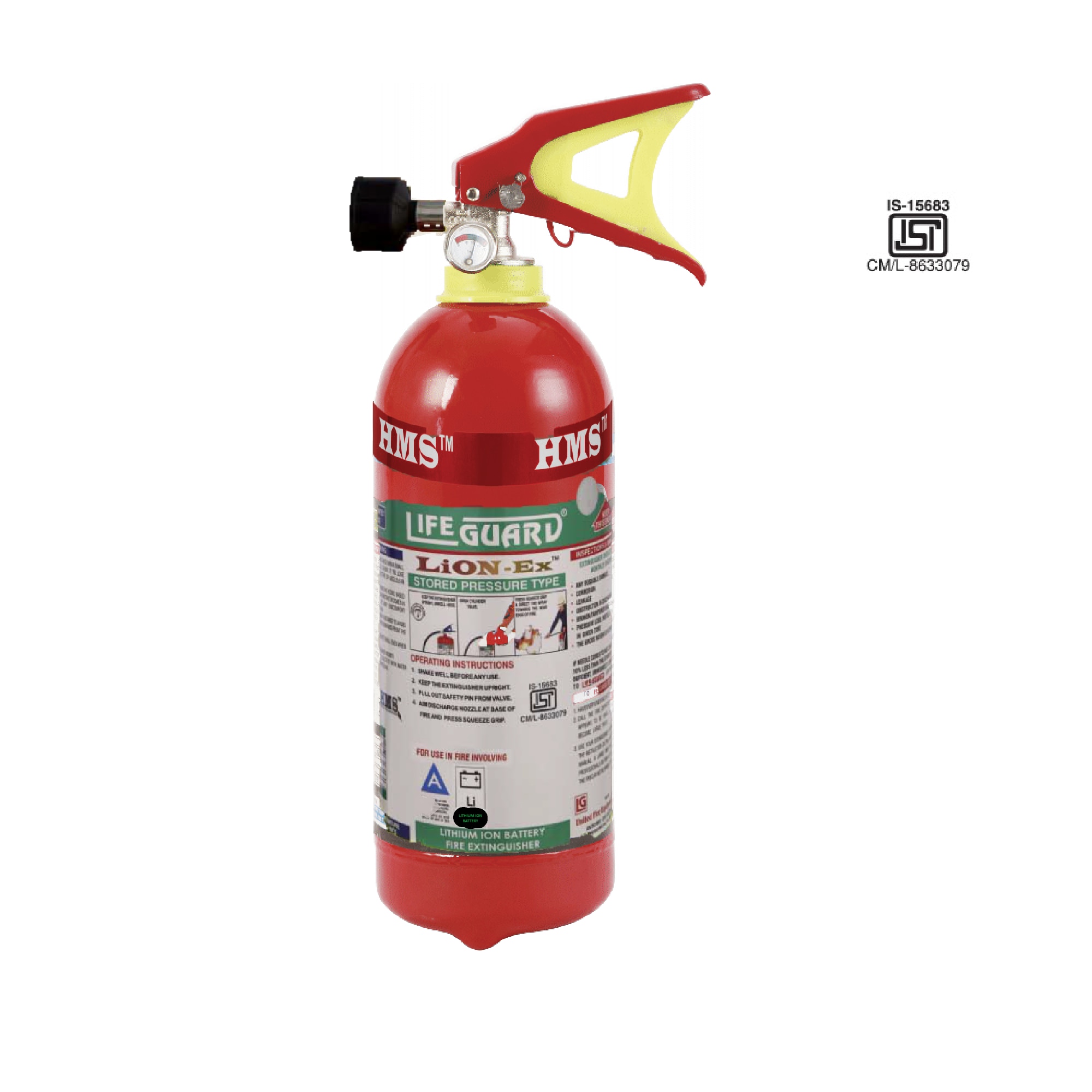 | Lithium Ion Fire Extinguisher LiON-Ex 2 litres ₹18000 LiON-Ex Fire Extinguisher for Lithium Ion Battery fire, capacity 2ltrs. filled with HMS agent, duly ISI marked, tested as per IS : 15683. |
 | Lithium Ion Fire Extinguisher LiON-Ex ₹6500 Fire Extinguisher for Lithium Ion Battery fire, capacity 500 ml filled with HMS agent, duly tested as per IS : 15683. |
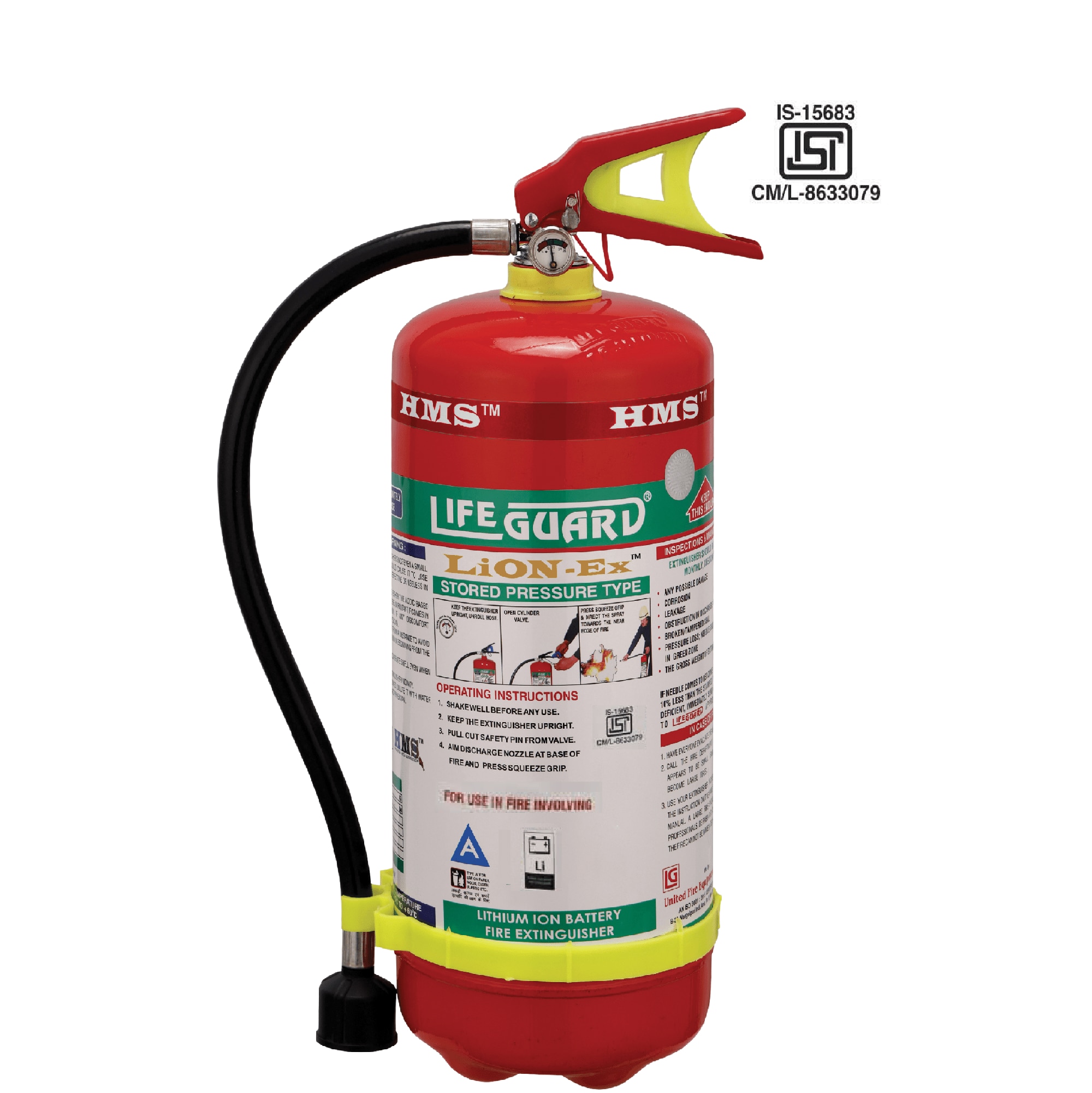 | Lithium Ion Fire Extinguisher LiON-Ex 6 Liters Lithium Battery Fire Extinguisher ₹58500 LiON-Ex Fire Extinguisher for Lithium Ion Battery fire, capacity 6 liters. |
 | Lithium Ion Fire Extinguisher LION-Ex 1 Liter ₹10000 LiON-Ex Fire Extinguisher for Lithium Ion Battery fire, capacity 1 Liter filled with HMS agent, duly tested as per IS : 15683. |