A fire man axe fails its purpose when staff cannot reach it, open its cabinet, carry it through the escape route or use it safely at the obstruction. You will be able to identify practical access failures, select a storage arrangement for your building type and test whether a nominated responder can retrieve the tool without delaying the alarm or evacuation.
Key takeaways
- Keep the axe visible, reachable and free from stored goods or locked doors.
- Do not strike live electrical equipment with a fireman axe.
- Test removal during evacuation drills, not only through register checks.
- Record the mount location, access route and drill result.
When an axe is present but still unavailable
An axe is unavailable when a person cannot locate and remove it immediately without entering avoidable danger.
Fire man axe access problems in Delhi include a cabinet locked without an immediately available key, storage behind a security counter, concealment inside a fire-control room, cartons or retail stock blocking it, mounting behind a tenant partition, absence from its marked location, or placement beyond a turnstile.
An equipment register proves only that someone recorded the tool as installed. It does not prove that a person can find it under smoke, crowding, poor lighting or a power failure, open its cabinet, and carry it to the intended door, shutter or gate.
Test the route in those conditions; a register entry cannot reveal a missing axe, damaged handle, corroded head, blocked floor space or an inaccessible key.
A fireman axe is forcible-entry and rescue equipment, not the primary means of evacuating occupants. A commercial emergency evacuation system in Delhi depends on compliant exits, fire doors, alarms, emergency lighting, exit signs and clear escape routes.
In a mixed-use building, compare later-installed shutters, rolling grilles, parking gates, glass partitions and security doors with the approved route. Do not assume they form part of it: a new barrier can leave the approved escape path physically unusable.
Where to mount the axe so people can find it and reach it
Mount the fire man axe on the safe side of the area it may serve, where a responder can see and reach it without entering smoke or fire. Do not place it beyond a locked fire door, turnstile or security gate, or allow the cabinet to reduce the required escape width.
Check the location from the normal approach route, not from the cabinet itself. The axe should remain identifiable in smoke and power failure through durable, high-contrast marking and emergency or photoluminescent identification.
Mount it at a reachable height, keep the door swing and corridor clear, and protect it from advertising, tenant partitions, shelving and stored goods.
- Test the route during normal lighting and emergency lighting.
- Keep the cabinet outside the door swing and clear floor area.
- Prevent later fit-outs, shutters, grilles and stock from hiding or blocking it.
- Assign access to a trained responder rather than treating the axe as self-service equipment.
| Option | Access benefit | Failure to prevent |
|---|---|---|
| Open wall bracket | Fastest removal and clear visibility | Theft, misplacement or accidental injury |
| Glass-front cabinet | Protects the tool while displaying it | Use safe glazing and control unauthorised access |
| Break-glass release | Provides controlled access without a key | Keep replacement glass available and test the release |
| Locked cabinet | Restricts handling | Accept it only when the trained user has the key or immediate release |
A loose axe can disappear, be moved during trading or injure someone. A projecting cabinet creates its own commercial evacuation equipment access failure by narrowing the route or leaving broken glass at floor level.
These controls address fire man axe access problems in delhi before a changed layout turns a marked location into an unreachable one.
Why electrical testing does not authorise anyone to strike live equipment
A 20,000-volt electrical test proves only that the axe passed a tool test under stated test conditions. It does not provide electrical isolation, arc-flash protection or permission to strike a live distribution board, battery cabinet, charging system or cable installation.
Fire man axe access problems in Delhi become dangerous when a labelled tool is mistaken for electrical-rescue equipment.
- Trigger the building alarm and call 112 first. Then follow the approved commercial emergency evacuation system in Delhi and keep occupants away from the electrical hazard.
- Assign one person to raise the alarm and call for help; floor wardens direct occupants to exits; security controls access and keeps people out of the hazard zone.
- Let the maintenance team’s responsible competent person arrange electrical isolation and lockout. Only a trained, assigned responder should consider forcible entry after those procedures are complete.
- Let the trained fire team retrieve the axe only when the emergency plan calls for it. Do not send an untrained employee to fetch or use it.
Do not retrieve the axe through a smoke-filled lift lobby, along a blocked route, through a locked fire door or past an obstruction that requires untrained occupants to enter danger.
A fireman axe is forcible-entry and rescue equipment, not a substitute for fire alarms, compliant exits, fire doors, emergency lighting, exit signs or clear escape routes.
How to test access during a drill instead of checking a register
A named responder, not an equipment register, must prove that the axe is reachable. The facilities or fire-safety lead records the date, location, inspector and result for each inspection.
1. Check presence, head and handle damage, handle retention, corrosion, cabinet damage, glass or release condition, seal status, signage, emergency lighting, mounting security and clear floor space. Record the corrective action for every failure.
2. From the normal approach, the nominated responder locates the axe, identifies it under emergency lighting, opens or releases the cabinet, removes it without injury, passes through the route and reaches the intended door, shutter or gate.
3. Record blocked corridors, stored goods, crowding, locked doors, lift dependence, security-office access, changed tenant layouts and any need to cross another floor. A route that creates a commercial evacuation equipment access failure has failed the drill.
4. Repeat the test during normal operation, night conditions, a simulated alarm and power-failure lighting. Test while the building is occupied; access that depends on lifts, security staff, unlocked doors or normal lighting has not been demonstrated.
A route beyond a turnstile, inside a security office or behind a locked fire door is not emergency access unless the approved plan gives the assigned responder immediate access.
This is the practical test for a fire man axe for access failure commercial emergency evacuation system in Delhi: reach, release, remove and complete the route—not merely show that the tool exists.
How to choose and document an axe arrangement for the building
Choose the axe arrangement by target, responder and access route—not by model label alone. One general-purpose axe is not automatically suitable for light interior doors, steel shutters, laminated glazing, reinforced doors, electrical cabinets or vehicle structures. Forcing the wrong tool can waste time, damage the axe and create falling-glass or secondary-fire hazards.
| Target | Procurement decision | Failure if mismatched |
|---|---|---|
| Light interior door | Confirm forcible-entry suitability | Damaged door or wasted effort |
| Steel shutter or reinforced door | Specify a tool and tactic designed for that barrier | Axe damage without access |
| Laminated glazing | Use a controlled glazing method, not blind striking | Falling glass and injury |
| Electrical cabinet or vehicle structure | Follow the approved specialist response plan | Energised services, fire or entrapment risk |
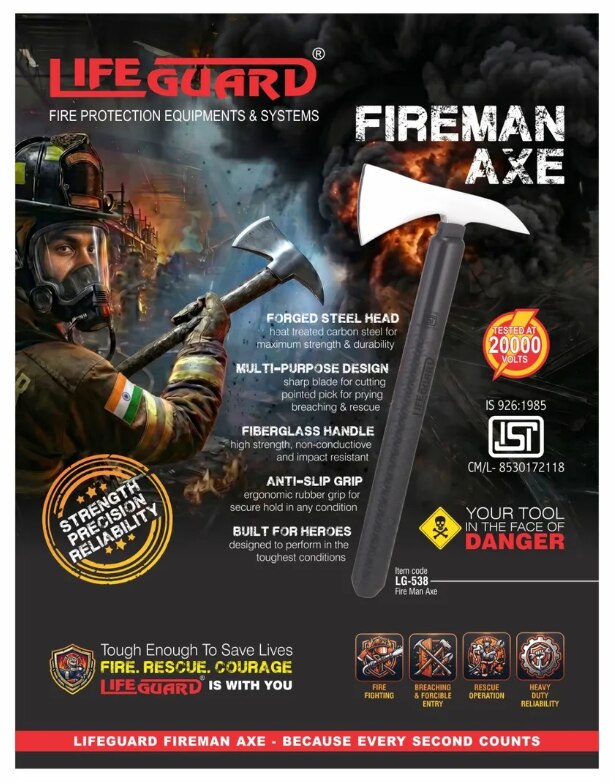
For an LG 538 fire man axe in Delhi, request a traceable manufacturer datasheet stating head and handle materials, dimensions, mass, handle retention, corrosion protection, inspection criteria and evidence for every claimed standard or marking.
“Fire man axe for access failure commercial emergency evacuation system in Delhi” describes a use case, not proof that a model suits a shutter.
A catalogue photograph or model number does not establish Delhi Fire Service acceptance, Indian Standard conformity or target suitability. United Fire Equipment Pvt Ltd can be compared with other suppliers on the completeness of that product record, not on a label alone.
Acceptance paperwork must name the storage location, trained responsible user, release method, inspection interval and corrective-action deadline. Record the cabinet, route and practical-access drill with the purchase.
Related product
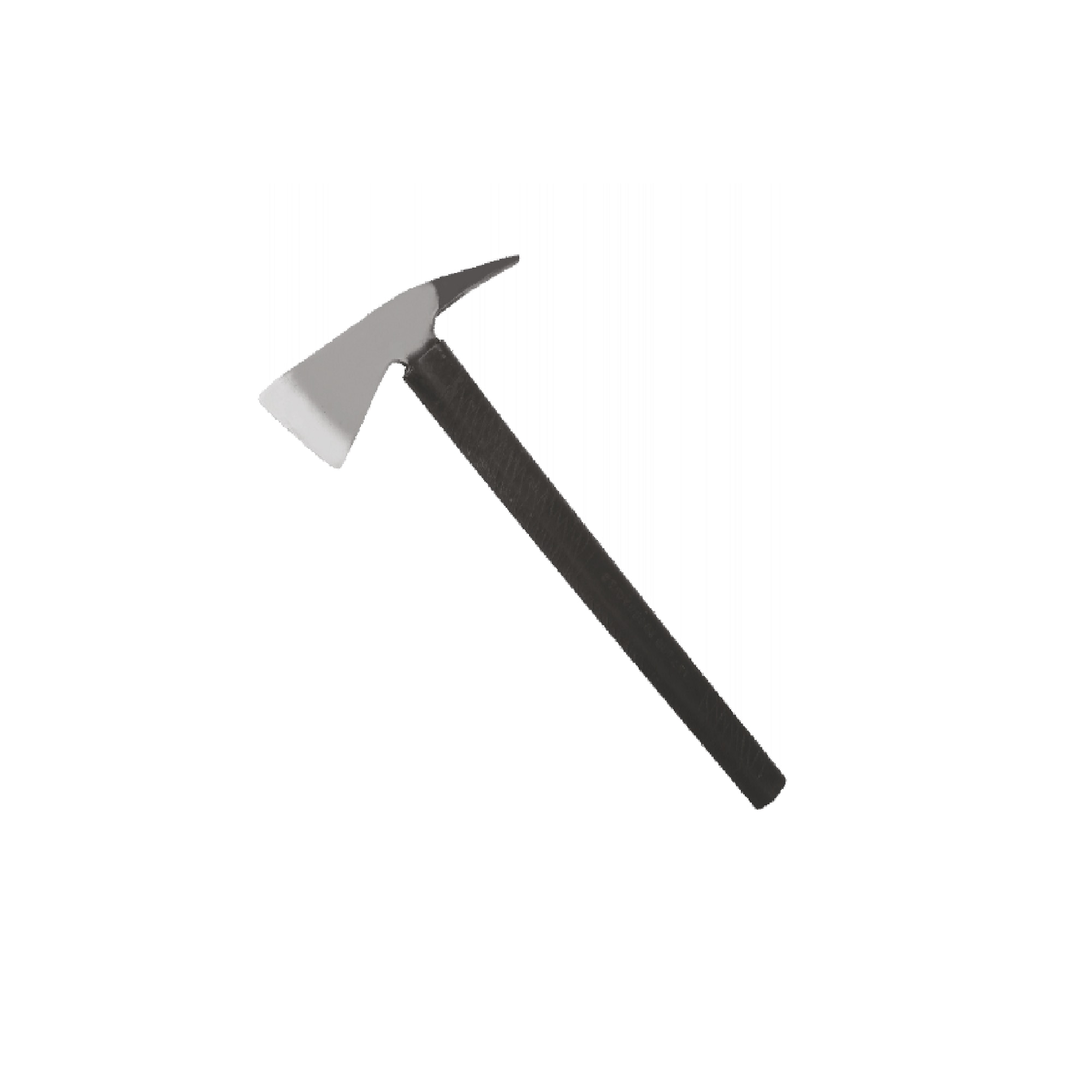 | Evacuation System ₹4000 FIRE MAN AXE- ISI MARKED DULY TESTED AT 20000 VOLTS View product → |
Frequently asked questions
When is a fireman axe considered unavailable during a commercial evacuation?
It is unavailable when a person cannot locate and remove it immediately without entering avoidable danger, moving obstacles or bypassing an access restriction.
Where should you mount a fireman axe in a Delhi commercial building?
Mount it in a visible, clearly marked position along a known access route, where stored goods, vehicles, doors and crowd movement cannot block removal.
Can electrical testing authorise someone to strike live equipment with a fireman axe?
No. Electrical testing does not make it safe or authorise anyone to strike live equipment. Treat live electrical equipment as an electrical hazard and follow the building's isolation and emergency procedures.
How should you test fireman axe access during a drill?
Ask a designated person to locate and remove the axe while the route is in its normal operating condition, then record the time, obstruction, access problem and corrective action.
Keywords