
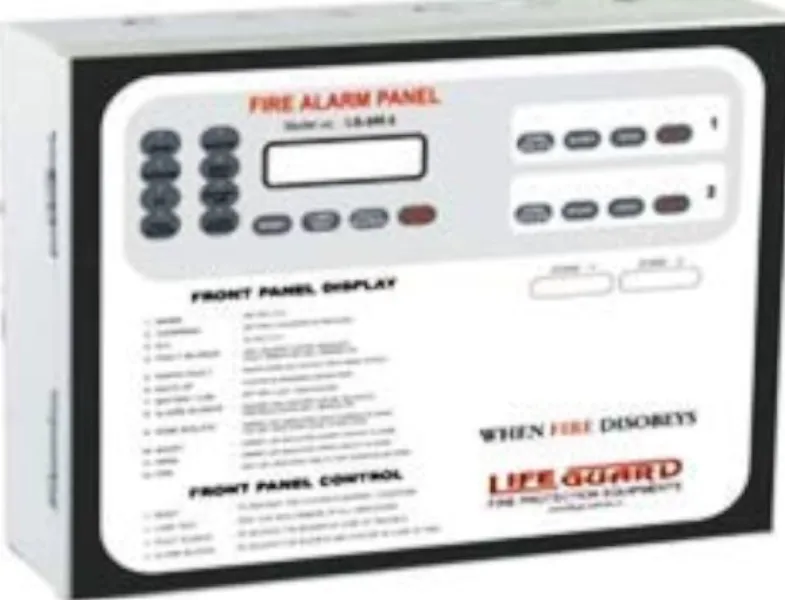
Large buildings can contain hundreds of detectors, manual call points, modules, plus alarm devices. When a fire signal appears, facility teams need more than a general warning. They need useful information about where the event has occurred.
An Addressable Fire Alarm System can identify individual field devices through unique addresses, helping personnel locate alarm events plus faults with greater precision. This capability makes addressable technology particularly relevant to hotels, hospitals, commercial complexes, factories, warehouses, educational facilities, plus large institutional premises.
Device-Level Identification Improves Visibility
In a conventional arrangement, an alarm may identify a general zone.
Addressable technology can provide more specific device information, depending upon system configuration.
This can help facility personnel identify the location associated with
- Smoke detection
- Heat detection
- Manual alarm activation
- Device fault
- Module status
- System trouble
Faster location identification can support quicker investigation plus emergency response.
Check System Capacity
The control panel should support the number of devices required for the current building plus reasonable future expansion.
A project that begins with limited occupancy may expand later.
Additional floors, renovated areas, new rooms, plus operational changes can increase device requirements.
Planning some expansion capacity can reduce unnecessary system replacement later.
Examine Device Compatibility
Not every detector, module, sounder, plus accessory is automatically compatible with every addressable panel.
The system should be designed using approved compatible components.
Compatibility matters for communication, fault supervision, alarm reporting, plus reliable system operation.
Facility managers should avoid uncontrolled component substitutions during maintenance.
Review Cause-Effect Programming
Modern fire alarm systems can perform much more than activate sounders.
Depending upon building requirements, the control system may interact with
- Suppression systems
- Fire pumps
- Smoke control equipment
- HVAC shutdown
- Dampers
- Access control
- Elevators
- Emergency systems
- Building management functions
The relationship between an input plus the required output is often described through programmed cause-effect logic.
This logic should be clearly documented plus thoroughly tested during commissioning.
Consider Building Operations
Hospitals require different alarm management from warehouses.
Hotels contain sleeping occupants. Industrial facilities may have high noise levels. Commercial buildings can have large numbers of visitors unfamiliar with evacuation routes.
System design should reflect these operational conditions.
Alarm devices, visual indicators, zoning, control interfaces, plus response procedures need to suit the occupants plus environment.
Fault Monitoring Is Valuable
A fire alarm system should not only detect fire. It should also help identify conditions that may affect reliability.
Addressable systems can provide detailed fault information depending upon system capabilities.
Maintenance personnel can use this information to investigate device problems, communication faults, wiring issues, plus other abnormalities.
Ignoring recurring faults can gradually reduce system reliability.
Commissioning Needs Detailed Testing
Installation completion is not the same as operational readiness.
Commissioning should verify devices, addresses, alarm indications, sounders, interfaces, control logic, power supplies, plus relevant emergency functions.
Testing should confirm that displayed device information matches actual physical locations.
Incorrect labels can cause confusion during an emergency.
Maintenance Should Reflect Building Changes
Renovations can create major problems for fire alarm coverage.
New partitions, ceilings, storage arrangements, plus room functions can change detector suitability.
Dust from construction can also affect devices.
Any significant modification should prompt a fire alarm review.
United Fire Equipment Pvt Ltd works with fire protection systems suited to commercial plus industrial applications across Delhi.
When selecting an Addressable Fire Alarm System, businesses should evaluate more than panel features. Capacity, compatible devices, location identification, cause-effect programming, fault supervision, commissioning, future expansion, plus maintenance support all influence long-term performance.
The purpose of an addressable system is not simply to provide more technology. It is to give building teams clearer information at the moment when quick, accurate decisions matter most.
Keywords






