
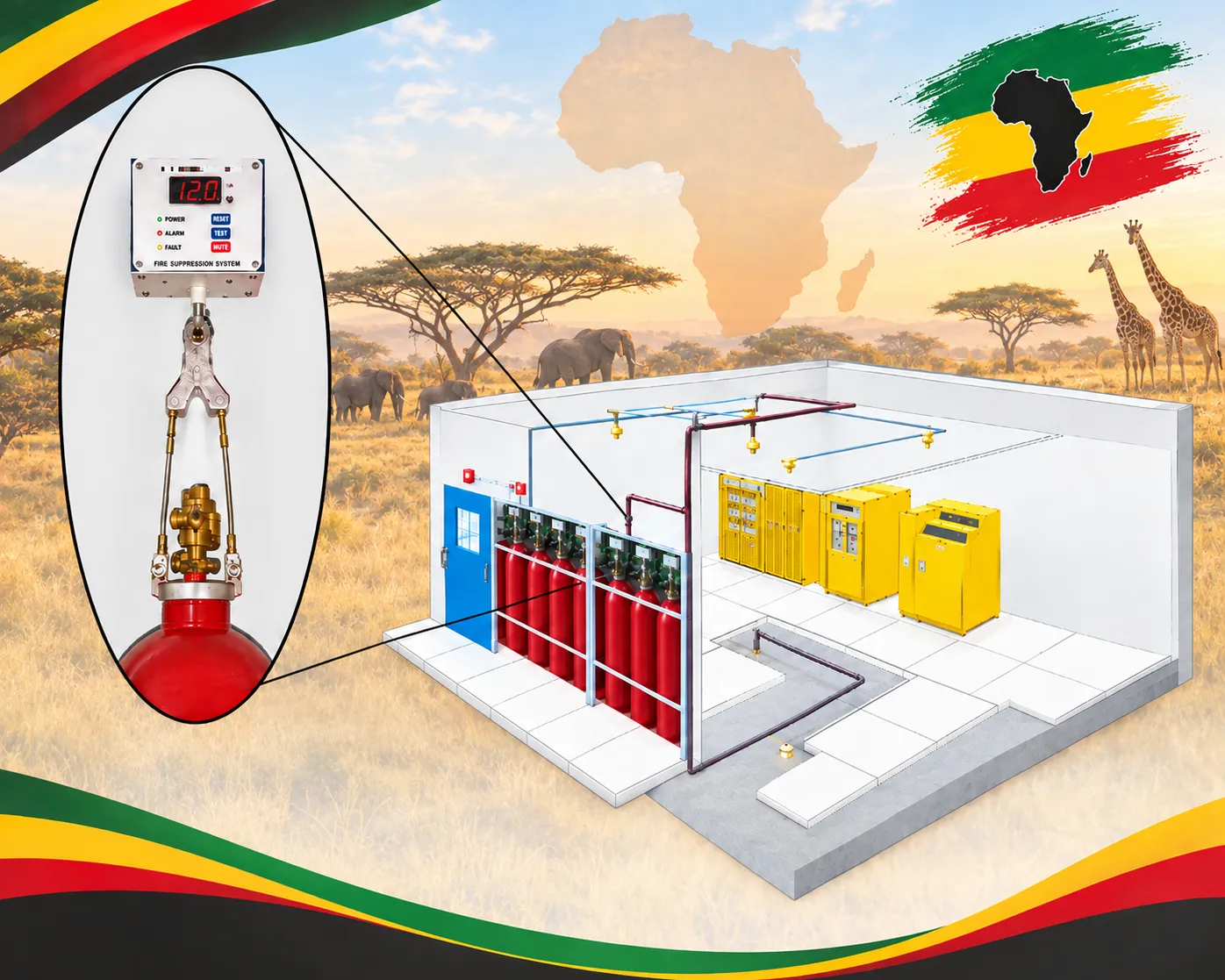
Airport Automatic Suppression System Provider Africa
LIFEGUARD® – Airport Fire Protection & Automatic Suppression Solutions for African Aviation Infrastructure
Airports are among the most complex and continuously operating facilities in the world. Passenger terminals, aircraft hangars, cargo facilities, aviation fuel areas, control rooms, radar stations, electrical rooms, data centres, baggage handling systems, kitchens, warehouses and utility areas each present different fire hazards. A professionally engineered airport automatic suppression system is therefore essential for protecting people, aircraft-support infrastructure, mission-critical equipment and airport operations.
LIFEGUARD® provides engineered fire protection and automatic fire suppression solutions for airport and aviation infrastructure, with systems selected according to the specific hazard, protected enclosure, equipment sensitivity, occupancy, applicable standards and requirements of the local Authority Having Jurisdiction (AHJ).
International aviation guidance recognizes the special fire-safety characteristics of airports, including terminal buildings, aircraft hangars, fuel-servicing operations and airport rescue and firefighting facilities. (ICAO)
Airport Automatic Fire Suppression Systems
An automatic suppression system detects a developing fire and initiates a predefined suppression response with minimal dependence on manual intervention. Depending on the hazard, the system may use clean agent, water mist, sprinkler, foam or other engineered extinguishing technologies.
For airports, suppression systems may be integrated with:
- Fire detection and alarm systems
- Addressable fire alarm panels
- Smoke and heat detectors
- Aspirating smoke detection
- Clean-agent releasing panels
- Manual release stations
- Abort switches
- Audible and visual alarms
- HVAC shutdown
- Damper control
- Electrical equipment shutdown
- Generator and UPS interfaces
- Access-control and door interfaces
- Building Management Systems (BMS)
- Central monitoring systems
This integrated approach is particularly important where fire protection equipment must interact with other airport systems. For example, an Airports Company South Africa project specification for O.R. Tambo International Airport includes fire detection, suppression, monitoring, control and system integration as part of the fire-protection upgrade. (eTenders)
LIFEGUARD® Airport Fire Suppression Solutions Africa
LIFEGUARD® can support airport projects with application-specific fire protection solutions for critical areas such as:
1. Airport Terminal Buildings
Passenger terminals contain high occupant loads, electrical installations, retail areas, food outlets, baggage systems and extensive building services.
Fire protection may include:
- Automatic sprinkler systems
- Fire detection systems
- Clean-agent systems for sensitive rooms
- Water-mist systems for specialized hazards
- Fire alarm and evacuation interfaces
- Fire extinguishers and hose-reel systems
- Integrated monitoring and control
The final system configuration should be established through the project's fire-risk assessment, applicable building regulations and AHJ requirements.
2. Airport Data Centres & Server Rooms
Modern airports depend heavily on IT infrastructure. Server rooms, network rooms, communication rooms and data centres require rapid fire detection and suppression while minimizing damage to sensitive electronic equipment.
Clean-agent fire suppression can be considered for appropriately designed enclosed electronic environments because the extinguishing agent can suppress fire without introducing the quantities of water associated with conventional sprinkler discharge.
Typical system components include:
- High-sensitivity smoke detection
- Clean-agent cylinders
- Releasing control panel
- Automatic detection
- Manual release switch
- Abort switch
- Audible/visual pre-discharge alarm
- Discharge indication
- Pressure monitoring
- HVAC shutdown interface
- Room integrity considerations
A current Kenyan Civil Aviation Authority specification for automatic suppression at aviation radar facilities specifically calls for an automatic clean-agent system that is electrically non-conductive and suitable for sensitive electronics, with automatic operation, manual release/abort functions and redundancy for critical components. (KCAA | Kenya Civil Aviation Authority)
3. Airport Radar & Air Navigation Facilities
Radar stations and air-navigation facilities contain highly sensitive electronic and communication equipment. A fire in these areas can potentially interrupt critical aviation-support functions.
LIFEGUARD® can provide engineered suppression concepts for:
- Radar equipment rooms
- Communication rooms
- UPS rooms
- Power rooms
- Navigation equipment rooms
- Control equipment rooms
- Technical shelters
For these applications, clean-agent suppression can be considered where the hazard analysis and room conditions support its use.
Kenya's 2026 Civil Aviation Authority specification for radar facilities at multiple airports illustrates the type of requirement encountered in African aviation projects: rapid automatic suppression, protection of sensitive electronics, non-conductive extinguishing agents and manual release/abort provisions. (KCAA | Kenya Civil Aviation Authority)
4. Aircraft Hangar Fire Suppression
Aircraft hangars represent a specialised fire-protection environment because of their large volumes, aircraft structures and potential presence of aviation fuels, lubricants and other combustible materials.
Depending on the hangar classification and fire-risk assessment, engineered solutions may include:
- Foam fire suppression
- Water-based suppression
- Detection systems
- Deluge systems
- Hydrant systems
- Fire pumps
- Portable firefighting equipment
- Manual and automatic release systems
International fire-protection requirements commonly reference NFPA 409 for aircraft hangars, while the exact design requirements depend on the hangar classification and applicable local regulations. (ICC Codes)
5. Airport Electrical & UPS Rooms
Electrical rooms, transformer areas, switchgear rooms, battery rooms and UPS facilities require carefully selected fire protection because electrical equipment can present ignition and energy-storage hazards.
Depending on the application, LIFEGUARD® solutions may incorporate:
- Clean-agent suppression
- Water-mist technology
- Automatic detection
- Localized suppression
- Fire alarm integration
- Emergency shutdown interfaces
- Manual release facilities
The suppression technology should be selected based on the equipment, enclosure, electrical characteristics, fire load and applicable engineering requirements.
6. Airport Cargo & Warehousing Facilities
Airport cargo facilities handle diverse materials and can contain packaging, plastics, textiles, machinery and other combustible commodities.
Potential fire-protection systems include:
- Automatic sprinkler systems
- Detection and alarm systems
- Water-based suppression
- Specialized suppression systems
- Fire hydrants
- Fire pumps
- Portable fire extinguishers
- Smoke-control and emergency interfaces
The final design should consider commodity classification, storage arrangement, storage height and local fire regulations.
7. Airport Kitchen & Food-Service Areas
Airport kitchens present additional hazards from cooking oils, grease, cooking equipment and ventilation systems.
Specialized kitchen fire suppression systems can provide automatic protection for:
- Commercial cooking equipment
- Exhaust hoods
- Grease filters
- Exhaust ducts
- Fryers
- Griddles
- Cooking ranges
A properly engineered kitchen system can be integrated with fuel/electrical shut-off and fire alarm systems.
8. Airport Fuel & Aviation Support Areas
Fuel handling and storage are among the specialised fire hazards associated with aviation facilities. Fire protection must account for flammable and combustible liquids, ignition sources, fuel-transfer activities and operational procedures.
Applicable systems may include:
- Foam suppression
- Hydrant systems
- Fire-water systems
- Detection and alarm
- Portable extinguishers
- Emergency shutdown systems
- Firefighting equipment
Airport fire protection requirements should always be developed around the specific fuel hazard and applicable aviation and fire-safety standards. NFPA aviation guidance identifies aircraft fuel servicing and related airport fire hazards as specialised areas requiring dedicated consideration. (ICAO)
Automatic Suppression for Airport Critical Infrastructure
Beyond passenger terminals, LIFEGUARD® can support protection concepts for:
Airport AreaPotential Fire ProtectionData CentreClean Agent / DetectionServer RoomClean Agent / DetectionRadar RoomClean AgentUPS RoomClean Agent / Water MistElectrical RoomWater Mist / Clean AgentControl RoomClean AgentCommunication RoomClean AgentAirport KitchenKitchen SuppressionAircraft HangarFoam / Water-Based SystemsCargo WarehouseSprinkler / Specialized SystemsGenerator RoomWater Mist / Specialized SuppressionBattery/ESS RoomApplication-specific suppressionTechnical RoomClean Agent / Water MistFuel-Related AreaFoam / Water-Based Protection
The appropriate technology must be determined through project-specific engineering and applicable regulations.
Airport Fire Suppression System Design & Engineering
Airport projects require more than simply supplying extinguishing equipment. The suppression system should be engineered around the actual hazard and integrated into the airport's wider fire-safety architecture.
LIFEGUARD® project support can include:
Risk Assessment → System Selection → Engineering Design → Equipment Supply → Installation Support → Testing → Commissioning → Training → Maintenance
Important engineering considerations include:
- Hazard classification
- Room volume
- Fire load
- Occupancy
- Detection method
- Agent selection
- Nozzle layout
- Cylinder sizing
- Pipe network
- Pressure calculations
- Room integrity
- HVAC interface
- Electrical shutdown
- Alarm sequencing
- Manual release
- Abort functionality
- Emergency procedures
- System monitoring
- Maintenance accessibility
Airport Automatic Suppression System Standards
Airport fire-protection projects may reference a combination of international standards, national regulations, airport-specific specifications and AHJ requirements.
Depending on the application, specifications may reference standards such as:
- NFPA 13 – Sprinkler Systems
- NFPA 20 – Fire Pumps
- NFPA 25 – Inspection, Testing and Maintenance
- NFPA 72 – Fire Alarm and Signaling
- NFPA 2001 – Clean Agent Fire Extinguishing Systems
- NFPA 409 – Aircraft Hangars
- NFPA 415 – Airport Terminal Buildings
- NFPA 407 – Aircraft Fuel Servicing
- Applicable SANS standards
- Applicable national fire regulations
- ICAO aviation safety requirements
- Airport-specific engineering specifications
ICAO material concerning airport fire safety references standards and guidance relating to airport terminal buildings, aircraft fuel servicing, aircraft hangars and airport rescue and firefighting. (ICAO)
In South Africa, for example, airport operators may have their own detailed fire-detection and gaseous-suppression standards and guidelines. ACSA documentation describes the objective of standardising fire detection and gaseous suppression approaches across its airports. (eTenders)
Airport Automatic Suppression System Provider for Africa
LIFEGUARD® can support airport fire-protection requirements across African markets, including projects in:
- South Africa
- Kenya
- Nigeria
- Ghana
- Tanzania
- Uganda
- Ethiopia
- Rwanda
- Zambia
- Zimbabwe
- Botswana
- Namibia
- Mozambique
- Angola
- Morocco
- Egypt
- Algeria
- Tunisia
- Senegal
- Côte d'Ivoire
- Cameroon
- Other African markets
Each project should be evaluated according to the country's statutory requirements, airport operator specifications, AHJ requirements and applicable international standards.
Why Choose LIFEGUARD® for Airport Fire Protection?
Application-Specific Engineering
Airport facilities contain different hazards. LIFEGUARD® approaches suppression according to the particular application rather than applying a single technology to every area.
Multiple Suppression Technologies
Depending on the project, solutions can incorporate:
- Clean Agent
- Water Mist
- Sprinkler Systems
- Foam Systems
- Specialized Local Application Systems
- Fire Detection & Alarm
- Portable Fire Extinguishers
Protection of Critical Equipment
Clean-agent and other specialized systems can be considered for areas containing sensitive electronic and electrical equipment.
Integrated Fire Protection
Detection, alarm, suppression, shutdown and monitoring functions can be coordinated into an integrated fire-protection architecture.
Design, Supply & Project Support
LIFEGUARD® can support projects through engineering, equipment supply, installation coordination, testing, commissioning and maintenance requirements.
Airport Fire Protection for Continuous Operations
Airport fire protection must account for facilities that operate continuously and support critical aviation activities. A fire-protection system therefore needs to be designed not only for fire extinguishment but also for early detection, rapid response, operational continuity and controlled system integration.
Recent African aviation procurement illustrates this requirement. For example, Kenya's Civil Aviation Authority has specified automatic suppression for airport radar facilities, while South African airport projects have included upgrades involving detection, suppression, monitoring, control and system integration. (KCAA | Kenya Civil Aviation Authority)
LIFEGUARD® aims to provide engineered fire-safety solutions that help airport operators, consultants, EPC contractors, MEP contractors and facility-management teams address these requirements through appropriately selected fire detection and suppression technologies.
LIFEGUARD® – Airport Automatic Fire Suppression System Provider Africa
Protecting Airport Terminals | Data Centres | Radar Stations | Control Rooms | Hangars | Cargo Facilities | Electrical Rooms | UPS Rooms | Kitchens | Critical Infrastructure
From automatic detection and clean-agent suppression to water-based, water-mist and foam fire-protection solutions, LIFEGUARD® supports the development of application-specific fire-protection systems for airport infrastructure.
Keywords: airport automatic suppression system provider Africa, airport fire suppression system Africa, airport fire protection company Africa, automatic fire suppression system Africa, airport clean agent suppression system, airport fire safety solutions Africa, aircraft hangar fire suppression, airport data centre fire suppression, airport radar room fire suppression, airport fire detection and suppression system, aviation fire protection systems, airport fire suppression manufacturer, airport fire protection solutions, automatic suppression system provider Africa.
Meta Title: Airport Automatic Suppression System Provider Africa | LIFEGUARD®
Meta Description: LIFEGUARD® provides engineered airport automatic suppression and fire protection solutions across Africa for terminals, radar rooms, data centres, hangars, electrical rooms, cargo facilities and other critical aviation infrastructure.
Suggested URL Slug:
/airport-automatic-suppression-system-provider-africa/
Keywords






