
Airport Clean Agent Suppression Manufacturer UAE
LIFEGUARD® – Engineered Clean Agent Fire Suppression Solutions for Airports, Aviation Facilities and Critical Infrastructure
Airports are among the most complex and safety-critical environments in the world. Passenger terminals, baggage handling systems, air traffic support facilities, data centres, electrical rooms, communication rooms, control centres, equipment rooms and other mission-critical areas require highly reliable fire protection systems that can detect and suppress fire rapidly while minimising damage to sensitive equipment and reducing operational interruption.
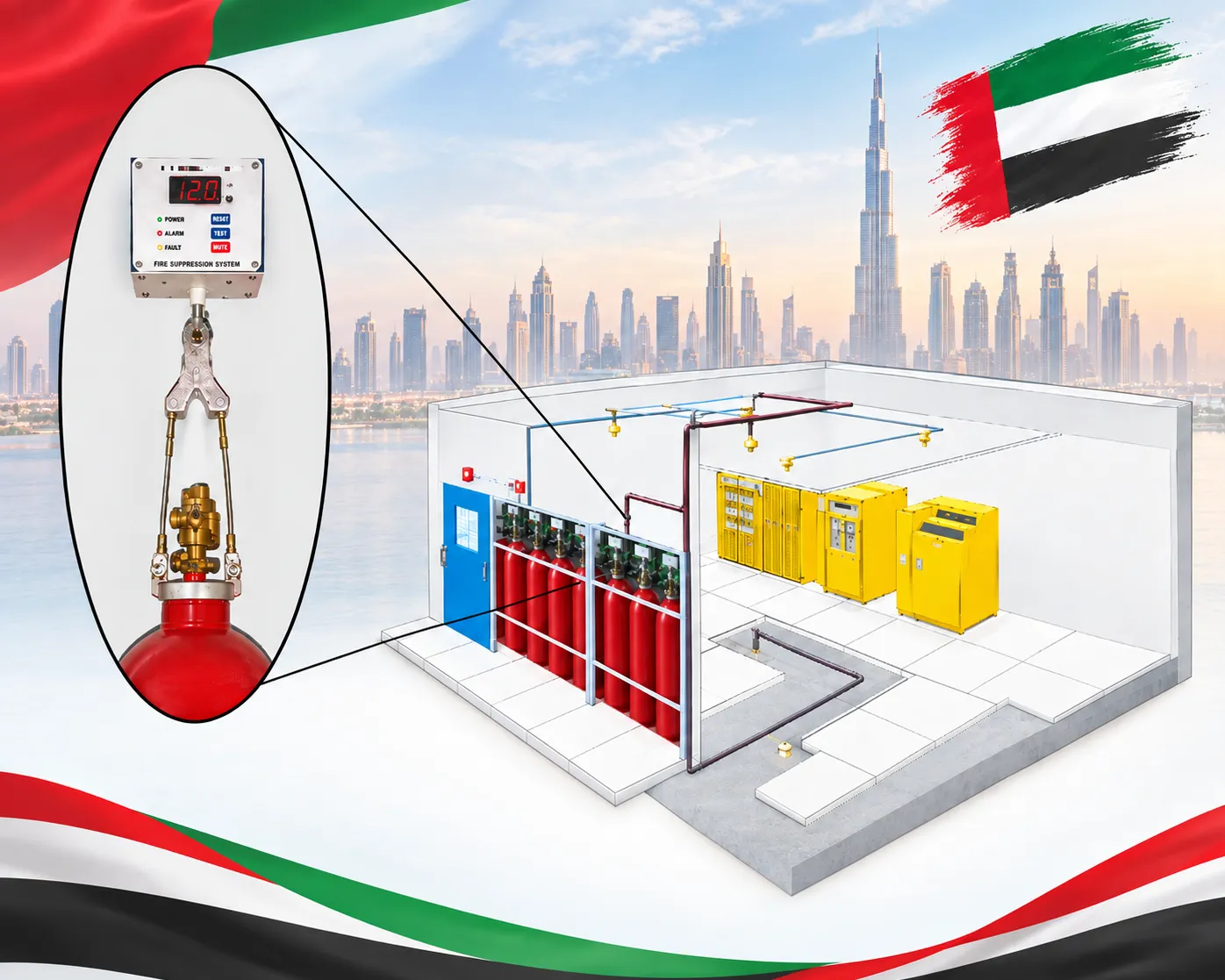
LIFEGUARD® provides engineered clean agent fire suppression systems for airport and aviation applications in the UAE, combining automatic fire detection, control panels, clean-agent storage, piping, discharge nozzles and associated safety interfaces into an integrated fire suppression solution.
Dubai Airports' published requirements state that fire protection activities are governed by applicable UAE fire requirements and airport-adopted codes and standards, while fire extinguishing equipment is required to be inspected and serviced at scheduled intervals.
Clean Agent Fire Suppression Systems for UAE Airports
Airport facilities contain numerous areas where conventional water-based fire suppression may not be the preferred first-line protection method because water can damage electronics, electrical equipment, communications infrastructure and other sensitive assets.
LIFEGUARD® clean agent suppression solutions are designed for applications where rapid fire suppression and protection of valuable equipment are important considerations.
Typical airport applications include:
- Airport data centres
- Server rooms
- Network and communication rooms
- Airport IT infrastructure
- Air traffic support rooms
- Electrical and switchgear rooms
- UPS and battery rooms
- Control rooms
- Security and surveillance rooms
- Baggage handling control rooms
- Airport operations centres
- Telecom rooms
- Equipment rooms
- Electrical control rooms
- Critical aviation infrastructure
- Technical rooms
- Command and monitoring centres
- Specialised aviation equipment rooms
Why Clean Agent Suppression Is Important for Airport Infrastructure
Modern airports operate continuously and depend heavily on electronic and digital infrastructure. A fire in a critical technical room can affect not only physical assets but also airport operations.
A clean agent suppression system is engineered to detect an incipient fire and discharge the selected extinguishing agent into the protected enclosure at the required design concentration.
The objective is to:
Detect → Alarm → Protect → Suppress → Minimise Damage → Support Business Continuity
Unlike conventional water-based systems, clean agents are intended for applications where suppression must be achieved without leaving large quantities of water or powder residue on sensitive equipment.
LIFEGUARD® Airport Clean Agent Suppression System
LIFEGUARD® can provide an integrated fire suppression package comprising:
1. Automatic Fire Detection
Advanced detection arrangements can be configured according to the hazard, room geometry and project requirements.
Detection may include:
- Smoke detectors
- Multi-sensor detectors
- Aspirating smoke detection
- Heat detection
- Cross-zoned detection arrangements
- Manual release stations
- Abort switches
- Pressure switches
- Supervisory monitoring
The detection and release philosophy is engineered according to the approved system design and applicable project requirements.
2. Clean Agent Storage Cylinders
Clean agent cylinders are selected according to:
- Protected enclosure volume
- Design concentration
- Agent characteristics
- Required discharge time
- Pipe network configuration
- Operating pressure
- Applicable approvals
- Project specifications
Cylinder arrangements may be designed for main and standby configurations where project requirements call for redundancy.
3. Fire Suppression Control Panel
The releasing control panel acts as the central control point for the suppression system.
Typical functions include:
- Automatic detection monitoring
- Alarm indication
- Pre-discharge warning
- Agent release control
- Manual release
- Abort functionality
- Cylinder pressure monitoring
- Fault monitoring
- HVAC shutdown interface
- Damper interface
- Access-control interface
- Fire alarm panel interface
- Building Management System integration
4. Agent Discharge Piping
The piping network is engineered to distribute the extinguishing agent throughout the protected enclosure.
Pipe sizing, routing, nozzle selection and discharge arrangements are determined through approved hydraulic or flow calculation software and the applicable system design methodology.
5. Discharge Nozzles
Specialised discharge nozzles are positioned according to the engineered design to achieve the required distribution of extinguishing agent within the protected room.
Nozzle selection depends on factors such as:
- Room dimensions
- Ceiling height
- Obstructions
- Agent type
- Design concentration
- Discharge time
- Pipe network
- Manufacturer's design methodology
Clean Agent Options for Airport Applications
Depending on the project specification, hazard classification and applicable approvals, clean-agent systems may use different extinguishing technologies.
Potential technologies include:
FK-5-1-12 Clean Agent Systems
FK-5-1-12 systems are widely considered for critical electronic and electrical applications where equipment protection and reduced post-discharge clean-up are important.
LIFEGUARD® has experience in engineered clean-agent suppression projects involving Kidde/Fenwal clean-agent technology, including FK-5-1-12 solutions, subject to project specifications and applicable approvals.
HFC-227ea / FM-200 Systems
HFC-227ea-based systems can be engineered for total-flooding applications where the agent and system are approved and specified for the project.
Inert Gas Systems
Inert gas systems can also be considered for appropriate airport applications, subject to enclosure characteristics, design requirements, cylinder storage provisions and authority approval.
The final agent selection should always be based on the project hazard, applicable regulations, environmental requirements, manufacturer design limitations and authority having jurisdiction.
UAE Regulatory and Compliance Considerations
For UAE projects, clean-agent fire suppression systems should not be selected solely on the basis of product availability. The complete system should be designed, documented, installed, tested and maintained according to the applicable UAE requirements, project specifications and recognised international standards.
Dubai Civil Defence material identifies clean-agent systems as a specific fire-protection category and states that clean-agent systems should be designed using DCD-approved manufacturer's design software and comply with the UAE Fire & Life Safety Code of Practice and manufacturer's instructions.
Dubai Airports also states that airport fire protection requirements involve UAE fire requirements together with applicable airport and international standards.
Accordingly, LIFEGUARD® approaches airport projects through an engineered-system methodology rather than treating clean-agent suppression as simply a collection of cylinders, pipes and nozzles.
Airport Fire Protection Areas Protected by Clean Agent Systems
Airport Data Centres
Data centres are among the most important technical facilities in modern airports. Clean-agent suppression can be engineered for server rooms, network rooms and associated IT infrastructure where protection from fire and minimisation of equipment damage are essential.
Airport Control Rooms
Control rooms contain electronic systems responsible for monitoring and managing airport operations. An appropriately engineered clean-agent system can provide automatic fire suppression while reducing the potential impact associated with conventional water discharge.
Electrical Rooms
Electrical switchgear and control equipment require carefully selected fire protection strategies. Clean-agent suppression can be considered for suitable enclosed electrical hazards following detailed project assessment.
UPS and Battery Rooms
UPS systems support critical airport infrastructure. Fire protection design for these areas requires consideration of the battery technology, enclosure configuration, ventilation and specific fire hazards.
Communication Rooms
Modern airports depend on extensive communication infrastructure. Clean-agent systems can be engineered to protect enclosed telecommunications and network rooms.
Baggage Handling Infrastructure
Airport baggage systems incorporate electrical controls, automation, conveyors and associated technical equipment. Clean-agent protection may be considered for enclosed control and equipment rooms associated with baggage handling systems.
Two-Stage Detection and Release Philosophy
For critical airport applications, the suppression system can be engineered with a staged detection and release sequence.
A typical sequence may include:
First detector operates → Fire alarm/pre-alarm
Second detector operates → Confirmed fire condition
Pre-discharge warning → Evacuation period
HVAC/interface shutdown → System release
Clean agent discharge → Fire suppression
The exact sequence should be established through the approved cause-and-effect matrix and project requirements.
HVAC and Equipment Interlocking
A clean-agent system must be coordinated with other building services.
Depending on the approved design, interfaces may include:
- Air-conditioning shutdown
- Fresh-air shutdown
- Exhaust fan shutdown
- Motorised damper operation
- Fire alarm system
- BMS
- Access control
- Electrical equipment
- Emergency power systems
- Audible and visual alarms
Proper interfacing helps ensure that the protected enclosure is prepared for the intended suppression sequence.
Room Integrity and Enclosure Protection
Total-flooding clean-agent systems depend on the protected enclosure retaining the required agent concentration for the specified hold period.
Therefore, enclosure integrity is an important part of system performance.
Potential leakage paths include:
- Doors
- Cable penetrations
- HVAC openings
- Raised floors
- False ceilings
- Wall penetrations
- Service openings
- Dampers
- Unsealed conduits
UAE Civil Defence guidance specifically highlights the need to ensure hazard enclosure integrity and account for leakage compensation in clean-agent system design.
LIFEGUARD® can coordinate enclosure integrity requirements, pressure-relief provisions and associated testing as required by the project.
Airport Clean Agent System Design Process
LIFEGUARD® follows a structured approach for airport clean-agent suppression projects:
Step 1 – Site and Hazard Assessment
The protected room is evaluated for:
- Dimensions
- Volume
- Ceiling height
- Raised floor
- False ceiling
- Equipment layout
- HVAC configuration
- Occupancy
- Fire load
- Access points
- Cable penetrations
Step 2 – Agent Selection
The appropriate clean-agent technology is evaluated according to the hazard, project specification, applicable approvals and environmental considerations.
Step 3 – Hydraulic / Flow Calculation
The system is engineered using the appropriate manufacturer's approved design software and methodology.
Step 4 – Nozzle and Pipe Network Design
Pipe sizes, nozzle locations and discharge characteristics are determined according to the approved calculation.
Step 5 – Detection and Control Philosophy
The detection, alarm, release, abort, manual release and equipment-interface sequence is developed.
Step 6 – Installation
Qualified installation teams execute the approved system design with appropriate quality controls.
Step 7 – Testing and Commissioning
The completed system undergoes inspection, functional testing and commissioning according to the approved project requirements.
Step 8 – Handover and Documentation
The final documentation package can include relevant:
- System drawings
- As-built drawings
- Calculation documents
- Equipment datasheets
- Test reports
- Commissioning records
- Operation manuals
- Maintenance information
- Cause-and-effect matrix
- Training records
Clean Agent Suppression Manufacturer and System Provider
LIFEGUARD® positions itself as a fire safety equipment manufacturer and engineered fire protection solutions provider, supporting customers with system design, equipment supply, installation coordination, testing and commissioning for specialised applications.
For airport projects in the UAE, the system can be developed around the project's technical specification, authority requirements and approved equipment.
The selection of a clean-agent manufacturer should consider more than the extinguishing agent itself. Important factors include engineering capability, system integration, documentation, testing, service support, spare parts availability and compliance with project requirements.
Applications Across UAE Aviation Infrastructure
LIFEGUARD® clean-agent suppression solutions can be considered for aviation-related facilities across the UAE, including projects associated with:
- Dubai
- Abu Dhabi
- Sharjah
- Ras Al Khaimah
- Ajman
- Fujairah
- Umm Al Quwain
Airport facilities differ considerably in size, architecture, occupancy and technical infrastructure. Therefore, every clean-agent suppression system should be engineered according to the individual protected hazard rather than applying a generic configuration.
Why Choose LIFEGUARD®?
LIFEGUARD® brings decades of experience in fire safety equipment and engineered fire protection solutions.
Key capabilities include:
- Fire safety equipment manufacturing
- Clean-agent suppression solutions
- System engineering
- Automatic fire detection integration
- Fire suppression control systems
- Cylinder and piping solutions
- Testing and commissioning
- Technical documentation
- Maintenance support
- Project-specific engineering
- Support for critical infrastructure applications
LIFEGUARD® also works with internationally recognised fire suppression technologies where specified by the project and supported by the required approvals.
Airport Fire Safety Requires an Engineered Approach
Airport fire protection is different from conventional commercial building fire protection. The protected environment can include high-value electronic equipment, critical communications infrastructure, uninterrupted operations and strict safety procedures.
Dubai Airports' published requirements demonstrate the importance of documented fire-prevention maintenance, inspection and compliance with applicable airport and UAE fire-safety requirements.
Therefore, an airport clean-agent system should be considered as part of an integrated fire safety strategy encompassing detection, suppression, alarm, HVAC control, enclosure integrity, emergency procedures, testing and maintenance.
LIFEGUARD® – Airport Clean Agent Suppression Manufacturer UAE
From airport data centres and control rooms to electrical rooms, communication facilities, UPS rooms and critical technical infrastructure, LIFEGUARD® provides engineered clean-agent fire suppression solutions designed around the specific requirements of aviation facilities.
With a focus on engineering, equipment quality, system integration and lifecycle support, LIFEGUARD® can support airport owners, consultants, MEP contractors, EPC contractors, system integrators and facility-management teams seeking reliable fire protection solutions for critical airport infrastructure in the UAE.
For airport clean-agent fire suppression requirements, system design assistance, technical specifications, project enquiries and fire protection solutions, contact LIFEGUARD®.
LIFEGUARD® – Manufacturer of ISI Certified Fire Safety Equipment
Email: ufe126@gmail.com | info@lifeguardindia.in
Website: www.lifeguardindia.in
Frequently Asked Questions
What is an airport clean agent suppression system?
An airport clean-agent suppression system is an engineered automatic fire suppression system designed to protect enclosed critical areas such as data centres, control rooms, electrical rooms, communication rooms and other sensitive technical spaces using a gaseous extinguishing agent.
Why are clean agents used in airport technical rooms?
Clean agents can be suitable for sensitive equipment areas because they are designed for gaseous fire suppression and, depending on the selected agent and system, can suppress fire without the type of water or powder residue associated with conventional extinguishing methods.
Which clean agent is suitable for an airport?
The appropriate agent depends on the protected hazard, room occupancy, enclosure, environmental requirements, project specification, applicable approvals and authority requirements. Agent selection should therefore be made through an engineered design process.
Can LIFEGUARD® provide complete airport suppression systems?
LIFEGUARD® can support engineered fire suppression requirements including system design, equipment supply, detection/releasing integration, installation coordination, testing, commissioning and documentation, subject to project scope.
Are clean-agent systems approved for UAE airport applications?
Clean-agent systems can be used for suitable applications when they comply with the applicable UAE requirements, airport-specific requirements, approved design methodology and authority/project approvals. UAE Civil Defence guidance specifically addresses clean-agent system design and approval considerations.
What areas of an airport can use clean-agent suppression?
Potential applications include data centres, server rooms, communication rooms, electrical rooms, UPS rooms, control rooms, security rooms, equipment rooms and other enclosed critical infrastructure areas.
Does a clean-agent system require room integrity?
Yes. For total-flooding applications, enclosure integrity is an important design consideration because the protected enclosure must retain the agent concentration for the required period. UAE guidance specifically addresses enclosure integrity and leakage compensation.
Can the system be integrated with the airport fire alarm and BMS?
Yes. Depending on the project design, clean-agent releasing systems can be integrated with fire alarm systems, HVAC controls, BMS, access control and other building services through approved interfaces and cause-and-effect logic.
Conclusion
LIFEGUARD® is a specialist fire safety equipment manufacturer and engineered fire protection solutions provider supporting clean-agent suppression requirements for critical infrastructure and aviation applications.
For airport clean agent suppression systems in the UAE, LIFEGUARD® focuses on engineered design, appropriate clean-agent technology, automatic detection, releasing controls, enclosure integrity, system integration, testing and commissioning.
Whether the requirement is for a Dubai airport data centre, Abu Dhabi aviation facility, airport control room, communication room, electrical room, UPS room or other mission-critical technical space, LIFEGUARD® can develop a project-specific fire suppression solution based on the applicable technical and regulatory requirements.
Protect critical airport infrastructure with an engineered LIFEGUARD® clean-agent fire suppression solution.
Keywords






