Fire Protection MEP Specification Powered by Agni-Rodhak®
Design the Services. Protect the Pathways. Strengthen the Building.
Modern buildings are powered by an intricate network of electrical, mechanical, plumbing, HVAC, communication and life-safety services. These MEP systems are essential to building functionality—but the very pathways created for these services can also become routes for fire, smoke and heat propagation.
A professional Fire Protection MEP Specification therefore cannot stop at selecting fire extinguishers, sprinklers or alarms. Fire safety must be considered within the MEP design itself—from cable routes and electrical shafts to service penetrations, plant rooms, equipment spaces and compartment boundaries.
Agni-Rodhak® by LIFEGUARD® provides a passive fire-protection layer that can be incorporated into appropriate MEP and building-service protection strategies.
BIS describes the National Building Code as covering fire safety, building services and electrical installations, including protection against fire associated with electrical hazards. BIS material also calls for attention to flame-retardant cabling, protected electrical cable shafts and fire-stopping of shafts at floor levels.
What is Fire Protection MEP Specification?
Fire Protection MEP Specification is the process of defining fire-safety requirements for the building's Mechanical, Electrical and Plumbing (MEP) infrastructure so that fire protection is integrated into design, installation, compartmentation, equipment selection and maintenance.
It may address:
- Electrical cables and cable trays
- HT/LT cable routes
- Electrical shafts and service risers
- Cable trenches
- Electrical panels and switchgear
- Transformers and associated equipment
- HVAC and mechanical service routes
- Service penetrations through fire-rated walls and floors
- Utility shafts
- Plant rooms
- Data centres and server infrastructure
- UPS and battery areas
- BESS installations
- Fire and life-safety electrical circuits
- Fire-rated compartment boundaries
- Critical service pathways
The objective is simple:
Do not wait for fire to reach the MEP system. Design the MEP system with fire protection in mind.
Agni-Rodhak® — Passive Fire Protection for MEP Infrastructure
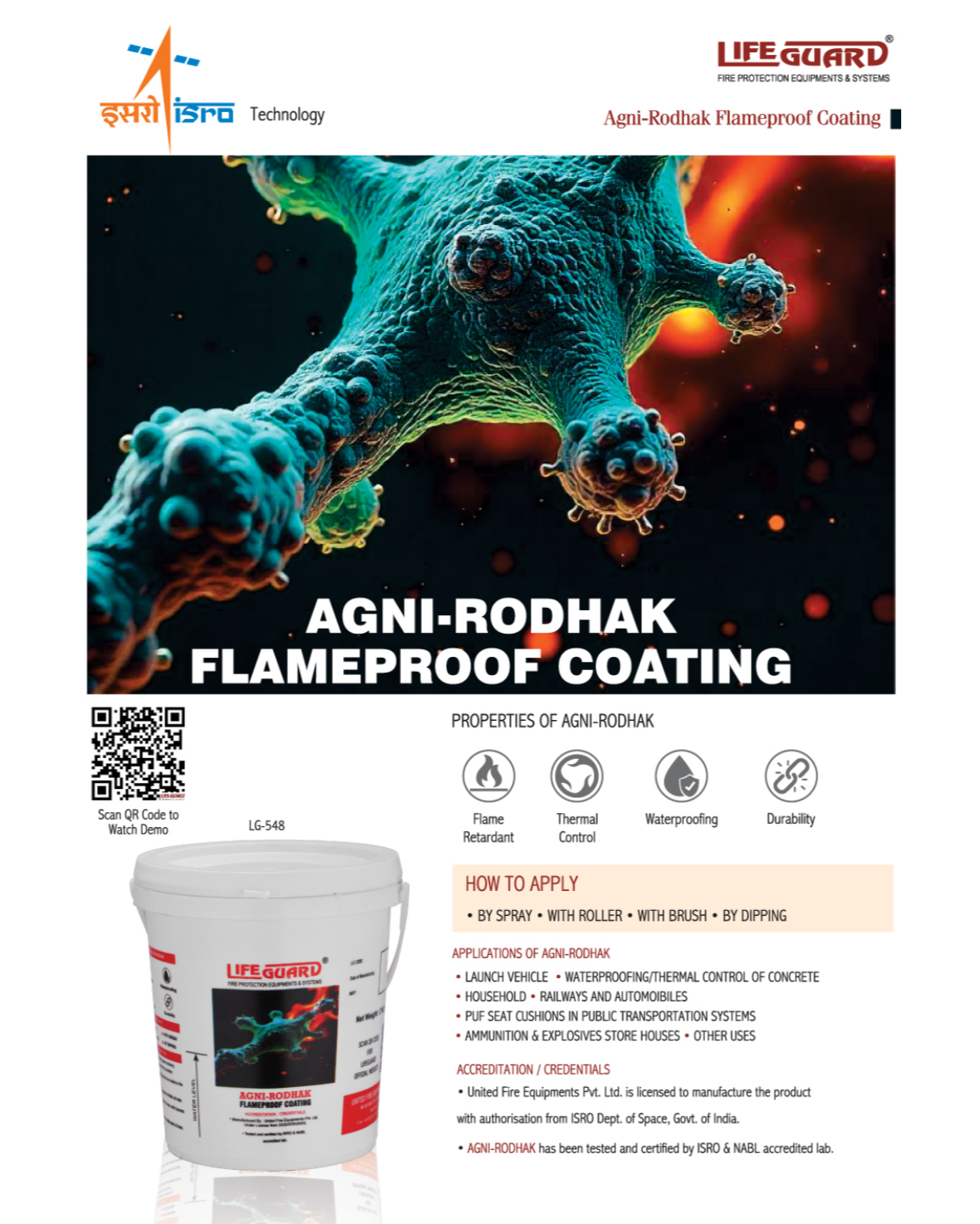
Agni-Rodhak®, powered by LIFEGUARD®, is a flame-proof and fire-retardant protective coating/material platform developed for applications where passive protection of critical surfaces and installations is required.
It is designed to create a protective layer that helps reduce the impact of flame and heat exposure on suitable underlying substrates.
Unlike active suppression equipment, passive fire protection does not depend on electrical activation, manual operation or a fire-extinguishing discharge.
This makes passive protection particularly relevant to MEP infrastructure that must remain protected as part of the building's overall fire-safety strategy.


6
Why Fire Protection Must Be Included in MEP Specifications
MEP services frequently cross or pass through different fire compartments.
Consider the pathway:
Electrical Room → Cable Tray → Shaft → Floor Penetration → False Ceiling → Equipment Room
Every transition creates a potential fire-protection consideration.
A fire originating in an electrical room can potentially expose cables, trays, shafts and adjacent services. Conversely, an unprotected service penetration can provide a pathway through which fire and smoke migrate between otherwise separated areas.
BIS provisions specifically recognize the importance of electrical fire safety and indicate that electrical distribution cables/wiring should be appropriately separated and that shafts should be sealed at floor levels with fire-stop materials having appropriate fire resistance.
Therefore:
MEP design + fire protection = integrated building safety.
Where Agni-Rodhak® Can Support MEP Fire Protection
1. Electrical Cable Fire Protection
Electrical cables are among the most critical MEP components requiring consideration in fire-safety design.
Agni-Rodhak® can be considered for suitable applications involving:
- HT cables
- LT cables
- Power cables
- Control cables
- Instrumentation cables
- Communication cables
- Critical electrical circuits
- Cable bundles
- Cable support systems
The objective is to provide an additional passive protective layer around appropriately selected cable installations.
2. Cable Tray Fire Protection
Cable trays often carry large concentrations of electrical and communication cables.
In a fire event, a cable tray can become an important fire-exposure pathway.
An appropriately specified Agni-Rodhak® protection system can form part of a broader strategy for:
Cable → Tray → Support → Shaft → Compartment
This is particularly relevant to:
- Commercial buildings
- Data centres
- Manufacturing facilities
- Hospitals
- Airports
- Metro infrastructure
- Power plants
- Substations
- Industrial facilities
- Renewable-energy installations
3. Electrical Shaft & Service-Riser Protection
Electrical shafts and vertical service risers connect multiple floors.
This creates a major fire-safety design consideration.
A professional MEP specification should address:
- Shaft construction
- Cable segregation
- Fire stopping
- Penetration treatment
- Access panels
- Service openings
- Vertical fire spread
- Maintenance requirements
Agni-Rodhak® can complement the passive fire-protection strategy around appropriate electrical infrastructure, while dedicated fire-stop systems should be used where required to maintain the integrity of fire-resisting walls and floors.
4. Cable Trench Fire Protection
Underground and building-level cable trenches can contain substantial concentrations of power and control cables.
Agni-Rodhak® can be considered as part of a passive protection strategy for suitable:
- Cable trenches
- Cable galleries
- Utility corridors
- Electrical service areas
- Industrial cable routes
- Substation cable infrastructure
The protection strategy should consider the cable type, substrate, environment, access, ventilation, fire exposure and required performance.
5. Electrical Panels & Switchgear
Electrical panels, MCCs, switchgear and associated infrastructure are important elements of MEP fire-risk management.
A passive coating may form one layer of protection for suitable surrounding surfaces or components.
However, passive protection should not be confused with automatic fire suppression.
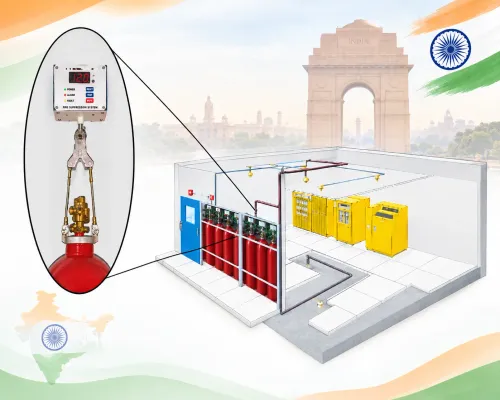
Where a project requires automatic detection and suppression inside electrical enclosures, an appropriately engineered active suppression system should be considered separately.
**Passive protection protects the pathway.
Active protection responds to the fire.**
Together, they can form a stronger layered fire-safety strategy.
6. HVAC & Mechanical Service Areas
MEP fire protection is not limited to electrical installations.
Mechanical systems can create openings and service pathways through:
- Fire-rated walls
- Floors
- Plant rooms
- Service shafts
- Ceiling spaces
- Equipment rooms
Fire protection specifications should therefore consider the interaction between:
HVAC + Electrical + Plumbing + Fire Compartmentation
Where service penetrations occur, appropriate fire stopping and compartmentation measures should be incorporated according to the project design and applicable requirements.
7. Data Centres & Critical Infrastructure
Data centres depend upon continuous electrical and mechanical infrastructure.
Typical fire-sensitive MEP infrastructure includes:
- Power distribution
- UPS systems
- Battery systems
- Cable trays
- Server-room services
- HVAC systems
- Electrical rooms
- Control systems
- Communication infrastructure
For such facilities, passive fire protection can be incorporated as one layer within a broader strategy comprising:
Prevent → Protect → Detect → Suppress → Contain → Respond
Agni-Rodhak® can support the PROTECT layer.
8. Hospitals & Healthcare Facilities
Hospitals contain critical MEP services that support life-safety and patient-care operations.
Fire protection specifications may need to address:
- Electrical distribution
- Emergency power
- Medical services
- HVAC systems
- Critical communication systems
- Cable shafts
- Electrical rooms
- Generator rooms
- UPS infrastructure
BIS fire-safety guidance recognizes the need for reliable emergency power and control supply to critical fire and life-safety systems.
A passive protection strategy can therefore be considered alongside detection, suppression, compartmentation and emergency-power provisions.
9. BESS & Battery Infrastructure
Battery Energy Storage Systems introduce specialized fire risks associated with stored electrical energy and thermal events.
Agni-Rodhak® can be considered as a passive protection layer around suitable structural and infrastructure elements.
However:
Agni-Rodhak® passive protection should not be treated as a replacement for dedicated BESS detection, thermal management, containment or active fire suppression.
For battery installations, LIFEGUARD can approach protection through a combination of passive and active technologies, depending upon the project hazard and engineering requirements.
Fire Protection MEP Specification — The Design Framework
A well-developed specification can follow the following framework:
01 — IDENTIFY
Identify electrical, mechanical and service-related fire hazards.
02 — SEGREGATE
Separate critical services and hazardous services where required.
03 — CONTAIN
Maintain fire compartments and protected service zones.
04 — PROTECT
Apply appropriate passive fire-protection measures to designated infrastructure.
05 — DETECT
Provide early fire and smoke detection.
06 — SUPPRESS
Provide suitable active fire suppression systems.
07 — MAINTAIN
Ensure accessibility, inspection and maintenance throughout the building lifecycle.
Suggested MEP Specification Language
For project consultants, architects, electrical consultants and MEP designers, the specification philosophy can be expressed as:
“All designated critical MEP service pathways, electrical cable routes, cable trays, cable trenches, shafts, service penetrations and other identified fire-exposure zones shall be provided with appropriate passive fire-protection measures as determined by the project fire-risk assessment, applicable codes, approved drawings and manufacturer's technical requirements.”
Where Agni-Rodhak® is specifically selected:
“Agni-Rodhak® by LIFEGUARD®, or an approved equivalent, may be specified for designated passive fire-protection applications subject to substrate compatibility, system configuration, required fire performance, installation methodology and applicable project requirements.”
This approach is preferable to simply specifying a coating without defining where, why and how it is to be used.
Fire Protection MEP Specification Should Cover the Complete Path
A sophisticated specification should not focus only on the cable.
Consider the complete installation:
CABLE
What type of cable is installed?
↓
TRAY / LADDER
How is the cable supported?
↓
TRENCH / SHAFT
Where does the cable travel?
↓
PENETRATION
Where does it cross a wall or floor?
↓
COMPARTMENT
Does it cross a fire-resisting boundary?
↓
EQUIPMENT
What critical equipment does it serve?
↓
EMERGENCY FUNCTION
Is it required to remain operational during a fire?
This is where passive fire protection becomes an engineering specification rather than simply a coating specification.
Agni-Rodhak® in an Integrated Fire Protection Strategy
LIFEGUARD promotes a layered approach:
Fire-Safety LayerObjectivePreventionReduce ignition and electrical risksPassive ProtectionProtect selected infrastructure and pathwaysDetectionIdentify fire at the earliest practical stageSuppressionControl/extinguish the fire using suitable systemsCompartmentationRestrict fire and smoke movementEmergency ResponseSupport evacuation and firefighting
Agni-Rodhak® belongs primarily to the passive protection layer.
It should therefore be specified as part of an integrated fire-protection architecture, not as a standalone substitute for the complete fire-safety system.
Why Architects & MEP Consultants Should Consider Passive Protection at Design Stage
Fire protection becomes significantly more difficult when it is added after construction.
During design, consultants can identify:
- Critical cable routes
- Fire-rated shafts
- Electrical rooms
- Plant rooms
- Cable trenches
- Service penetrations
- Fire compartments
- Critical circuits
- Equipment requiring additional protection
- Areas where future services may be added
This enables passive fire protection to become part of the MEP specification, BOQ, drawings and installation methodology from the beginning.
Specify fire protection before the fire tests the design.
Agni-Rodhak® — A LIFEGUARD Passive Fire Protection Technology
Agni-Rodhak® is positioned by LIFEGUARD as a protective coating/material platform for applications requiring flame retardancy, thermal protection and surface protection.
Potential MEP-related applications include:
- Electrical cables
- Cable trays
- Cable trenches
- Electrical infrastructure
- Service areas
- Critical equipment surroundings
- Industrial installations
- Data centres
- Utility infrastructure
- Renewable-energy infrastructure
- BESS-related infrastructure
- Other project-specific passive fire-protection applications
Important Fire-Rating & Compliance Note
Fire protection specifications must be evidence-based.
A product should not automatically be considered a 2-hour, 3-hour or 4-hour fire-rated system merely because a coating is applied.
Actual fire-resistance performance depends on the complete tested, assessed or engineered assembly, including:
- Substrate
- Cable/service configuration
- Thickness/application
- Penetration geometry
- Supporting construction
- Installation methodology
- Exposure conditions
- Required performance criteria
Similarly, applying Agni-Rodhak® does not automatically make an entire MEP installation code-compliant.
Final compliance should be established against the applicable NBC/standards, authority requirements, project specifications, approved drawings and supporting technical documentation.
BIS identifies IS 12459:2024 — Fire Safety in Cable Runs — Code of Practice as a relevant Indian Standard for cable-run fire safety.
Fire Protection MEP Specification + Agni-Rodhak®
DON'T JUST SPECIFY THE EQUIPMENT.
SPECIFY THE PROTECTION AROUND IT.
DON'T JUST PROTECT THE ROOM.
PROTECT THE PATHWAY.
DON'T WAIT FOR FIRE TO FIND THE WEAK POINT.
DESIGN THE WEAK POINT OUT.
Experience the Agni-Rodhak® Demonstration
See Agni-Rodhak® in action in the LIFEGUARD demonstration:
Watch the Agni-Rodhak® Demonstration on YouTube
Buy Agni-Rodhak® Online
Purchase Agni-Rodhak® from LIFEGUARD India
Why LIFEGUARD®?
United Fire Equipments Pvt. Ltd. — LIFEGUARD® India approaches fire protection through the combination of prevention, passive protection, detection, suppression and containment.
Agni-Rodhak® extends this philosophy into the MEP environment by bringing passive fire protection closer to the infrastructure that powers modern buildings.
Because a building is not protected merely by what is installed in its fire room.
A building is protected when its critical systems, pathways and compartments have been considered as part of one fire-safety design.
SEO Metadata
Meta Title:
Fire Protection MEP Specification | Agni-Rodhak® | LIFEGUARD
Meta Description:
Fire Protection MEP Specification powered by Agni-Rodhak® by LIFEGUARD®. Passive fire protection for electrical cables, cable trays, shafts, trenches, service penetrations and critical MEP infrastructure.
Suggested URL:
/fire-protection-mep-specification
Primary SEO Keyword:
Fire Protection MEP Specification
Secondary Keywords
- Fire protection MEP specification India
- MEP fire protection specification
- Fire safety MEP design
- Passive fire protection MEP
- Electrical MEP fire protection
- Electrical cable fire protection
- Cable tray fire protection
- Cable trench fire protection
- Fire protection for electrical cables
- Fire resistant cable protection
- Fire retardant cable coating
- HT cable fire protection
- LT cable fire protection
- Electrical shaft fire protection
- Service shaft fire protection
- MEP fire safety India
- Passive fire protection India
- Fire protection for critical infrastructure
- Fire protection for data centres
- Fire protection for electrical rooms
- Fire protection for BESS
- Fire protection for cable trays
- Fire protection specification for architects
- Fire protection specification for MEP consultants
- Agni-Rodhak fire protection
- Agni-Rodhak coating
- LIFEGUARD passive fire protection
FIRE SAFETY IS NOT AN ADD-ON TO MEP DESIGN.
IT IS PART OF THE DESIGN.
Specify Protection. Protect the Pathway. Protect the Building.
Agni-Rodhak® — Powered by LIFEGUARD® India.
Keywords