
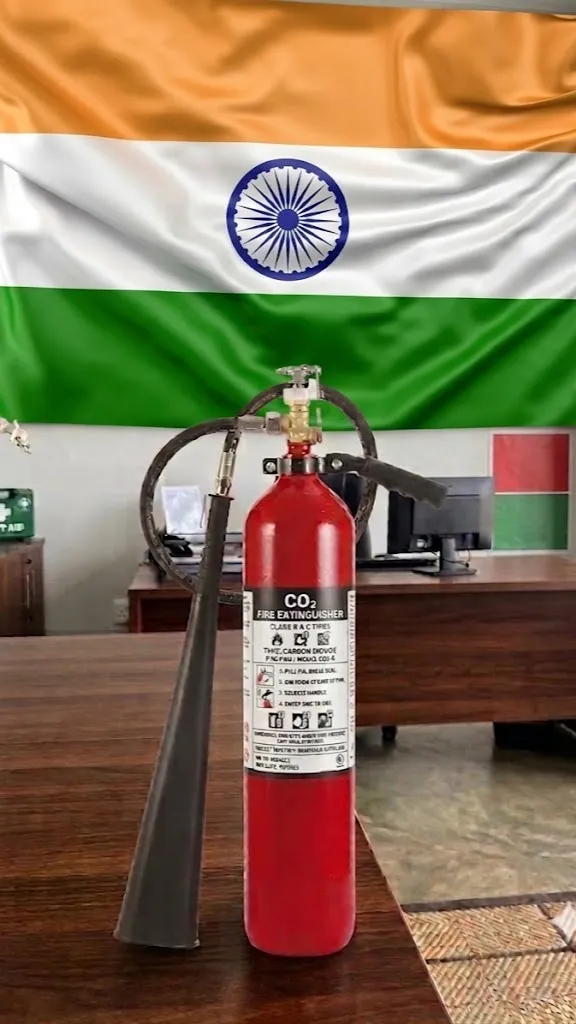
Hospital Fire Protection Manufacturer in India – LIFEGUARD® Fire Safety Solutions
LIFEGUARD® – United Fire Equipments Pvt. Ltd. provides comprehensive fire protection equipment and engineered fire safety solutions for hospitals, healthcare centres, medical institutions, diagnostic facilities, laboratories, nursing homes and other critical healthcare infrastructure across India.
Hospitals present a unique fire-safety challenge. Unlike ordinary commercial buildings, healthcare facilities accommodate patients who may not be able to evacuate independently, while simultaneously housing sophisticated electrical systems, medical gases, laboratories, pharmacies, kitchens, server rooms, critical-care equipment and high-value medical infrastructure. An effective hospital fire protection system must therefore combine early detection, rapid alarm, appropriate firefighting equipment, automatic suppression and carefully planned evacuation support.
As an experienced hospital fire protection manufacturer in India, LIFEGUARD® focuses on supplying dependable fire safety products and engineered systems designed around the particular risk profile of healthcare environments.
Leading Hospital Fire Protection Manufacturer in India
Modern hospitals operate continuously and require uninterrupted protection against fire hazards. Fire safety planning must cover public areas as well as sensitive locations such as:
- Intensive Care Units
- Operation Theatres
- Emergency Departments
- Patient Wards
- Diagnostic Centres
- MRI and Imaging Rooms
- Laboratories
- Pharmacies
- Electrical Rooms
- UPS and Battery Rooms
- Server and Data Rooms
- Medical Gas Storage Areas
- Kitchens and Cafeterias
- Basements and Parking Areas
- Administrative Offices
- Medical Record Rooms
- Stores and Warehouses
- AHU and HVAC Areas
- Generator and Utility Rooms
LIFEGUARD® supports healthcare projects with fire protection solutions selected according to the nature of the hazard, occupancy conditions, protected equipment and applicable project requirements.
Why Hospitals Require Specialized Fire Protection Systems
Fire protection in a hospital is fundamentally different from fire protection in many other buildings.
Patients may include elderly people, newborn babies, individuals undergoing surgery, ICU patients and people connected to life-support systems. Immediate evacuation may therefore be difficult or medically unsafe.
Hospitals also contain numerous potential ignition sources, including overloaded electrical circuits, sophisticated diagnostic machines, batteries, electrical panels, kitchen appliances, oxygen-enriched areas and continuously operating medical equipment.
For this reason, hospital fire safety should follow a layered protection philosophy consisting of:
Fire Prevention → Early Detection → Alarm & Notification → Initial Firefighting → Automatic Suppression → Smoke Management → Safe Evacuation → Emergency Response
LIFEGUARD® provides equipment and system solutions intended to support these multiple levels of protection.
Hospital Fire Protection Solutions by LIFEGUARD®
1. Fire Extinguishers for Hospitals
Portable fire extinguishers form one of the first lines of defence against a developing fire.
Different areas of a hospital can present different classes of fire risk. Appropriate extinguishing media should therefore be selected according to the hazard.
LIFEGUARD® supplies fire extinguisher solutions including:
ABC Dry Powder Fire Extinguishers
Suitable for many general fire hazards involving combustible materials, flammable liquids and electrical equipment.
They can be considered for areas such as:
- Utility rooms
- Maintenance sections
- Parking areas
- General service areas
- Workshops
- Electrical risk locations
Carbon Dioxide Fire Extinguishers
CO₂ extinguishers are widely associated with electrical and electronic equipment risks because the agent does not leave conventional powder residue.
Potential hospital applications include:
- Electrical rooms
- UPS rooms
- Electrical panels
- Control rooms
- Equipment rooms
Water-Based Fire Extinguishers
Suitable for appropriate Class A combustible materials such as paper, wood and similar ordinary combustible materials, subject to correct hazard assessment.
Foam Fire Extinguishers
Foam extinguishers may be selected for suitable combustible and flammable-liquid risks depending upon the protected location.
Wet Chemical Fire Extinguishers
Hospital kitchens and cafeterias can contain hot cooking oils and fats. A suitable kitchen fire protection strategy may therefore incorporate wet chemical extinguishing equipment for applicable cooking hazards.
Correct extinguisher selection, capacity and location should always be based on the actual fire risk and project requirements rather than using one extinguisher type throughout an entire healthcare facility.
2. Hospital Fire Detection and Alarm Systems
Early detection is particularly important in healthcare facilities.
A hospital fire alarm system should be capable of identifying developing fire conditions quickly and providing clear warning so hospital staff can begin emergency procedures before conditions become critical.
LIFEGUARD® can support fire alarm system requirements incorporating components such as:
- Smoke detectors
- Heat detectors
- Multi-criteria detectors
- Manual call points
- Hooters
- Sounders
- Flashers
- Control panels
- Monitor and control modules
- Repeater panels
- Emergency notification devices
Fire alarm zoning and system configuration should correspond to the hospital's floor plan, fire compartments, critical-care areas and evacuation strategy.
3. Aspirating Smoke Detection for Critical Hospital Areas
Certain hospital areas contain equipment where very early fire warning can be valuable.
Aspirating smoke detection systems continuously draw air samples through a network of sampling pipes and analyse them for smoke particles.
Potential applications include:
- Hospital server rooms
- Data centres
- Network rooms
- Control rooms
- Communication rooms
- Sensitive diagnostic equipment rooms
- Electrical control areas
Very early smoke detection can provide additional response time before a developing fault becomes a significant fire event.
4. Clean Agent Fire Suppression Systems
Hospitals increasingly depend on computers, networking systems, diagnostic electronics, building-management controls and other sensitive equipment.
Using conventional water-based firefighting directly over certain electronic assets may result in substantial secondary damage.
For suitable enclosed special-hazard areas, a properly engineered clean agent fire suppression system can therefore provide an important protection option.
LIFEGUARD® can support clean-agent suppression solutions for applications such as:
- Server Rooms
- Data Centres
- Hospital Communication Rooms
- Control Rooms
- UPS Rooms
- Electrical Rooms
- Medical Data Storage Areas
- Critical Electronic Equipment Rooms
Depending on project requirements and approvals, clean-agent systems may utilise appropriate gaseous extinguishing agents and engineered piping/nozzle arrangements.
An engineered clean-agent system normally involves consideration of:
- Protected enclosure volume
- Design concentration
- Agent quantity
- Cylinder capacity
- Distribution piping
- Nozzle positioning
- Detection and releasing system
- Manual release
- Abort arrangement where required
- Alarm and warning devices
- Pressure relief considerations
- Enclosure integrity
- Required agent retention period
Proper hydraulic or flow calculations are essential for engineered gaseous suppression systems.
5. Fire Protection for Hospital Electrical Rooms
Electrical fires can affect essential hospital services and may interrupt critical systems.
Hospitals often have dedicated:
- Main electrical rooms
- Distribution boards
- HT/LT panels
- UPS systems
- Transformer areas
- Battery systems
- Generator controls
- Medical-equipment power distribution
Suitable protection can include combinations of:
- Automatic detection
- Portable extinguishers
- Localised suppression
- Clean-agent suppression
- Tube-based suppression for suitable electrical cabinets
- Alarm and shutdown interface arrangements
The solution should be determined after evaluating equipment construction, enclosure dimensions, ventilation and electrical risks.
6. Electrical Panel Fire Suppression Systems
Many electrical fires originate within enclosed electrical or control panels before becoming visible to occupants.
For selected applications, automatic panel-level fire suppression can provide targeted protection close to the source of the hazard.
Such protection may be appropriate for:
- Electrical control cabinets
- Distribution panels
- UPS panels
- Automation panels
- Generator control panels
- Critical medical equipment control panels
Localised systems can help detect and suppress a developing fire inside the protected enclosure before it spreads to adjacent equipment.
7. Hospital Kitchen Fire Protection
Commercial hospital kitchens operate for extended hours and include a combination of:
- Cooking oils
- Deep-fat fryers
- Gas equipment
- Electrical appliances
- Hot surfaces
- Exhaust ducts
- Grease deposits
Kitchen fire protection can therefore require a combination of:
- Appropriate portable extinguishers
- Wet chemical protection
- Heat detection
- Automatic suppression where required
- Gas/electric shut-off interface
- Fire-resistant extraction arrangements
Effective kitchen fire safety is particularly important because hospitals may contain vulnerable occupants in adjoining areas.
8. Fire Hose Reels and Hydrant Systems
Hospitals may require fixed water-based firefighting infrastructure depending upon building design and applicable requirements.
Systems can include:
- Internal hydrants
- External hydrants
- First-aid hose reels
- Landing valves
- Fire hoses
- Branch pipes
- Hose boxes
- Fire brigade connections
- Fire pumps
- Water storage arrangements
Hydrant and hose-reel systems provide trained personnel and firefighters with water for controlling larger developing fires.
System design should consider building height, floor area, hydraulic requirements, pump capacity, water storage and the applicable fire-safety provisions for the project.
9. Automatic Sprinkler Systems for Hospitals
Automatic sprinkler systems can provide rapid fire control by activating individual sprinkler heads when sufficient heat reaches the operating element.
They can be considered for areas such as:
- Basements
- Storage rooms
- Parking areas
- Administrative areas
- Public spaces
- Service areas
- Utility zones
Sprinkler system design depends on hazard classification, protected area, water demand, spacing, pipe sizing and other hydraulic parameters.
10. Fire Protection for Hospital Server Rooms and Data Centres
Healthcare is becoming increasingly digital.
Patient records, diagnostic images, laboratory reports, pharmacy systems, billing platforms, security systems and clinical applications rely on IT infrastructure.
A fire in a hospital server room can therefore disrupt far more than computer equipment.
Protection strategies can include:
Very Early Smoke Detection + Fire Alarm + Clean Agent Suppression + Controlled System Shutdown
This provides both early warning and automatic suppression capability while reducing the risk of damage to sensitive electronic infrastructure.
11. Fire Safety for UPS and Battery Rooms
Hospitals depend heavily on emergency backup power.
UPS installations and battery banks may introduce electrical and battery-related hazards that require dedicated risk assessment.
Protection planning may involve:
- Smoke detection
- Heat detection
- Appropriate gas detection where required
- Ventilation
- Electrical isolation
- Automatic suppression
- Portable firefighting equipment
The exact protection technology should be chosen after identifying the battery chemistry and installation configuration.
12. Fire Protection for Operation Theatres and Critical Care Areas
Operation theatres and critical-care areas require careful fire-safety planning because patients may be unable to evacuate immediately.
These locations also contain significant electrical equipment and may involve oxygen-enriched environments.
Fire protection should therefore focus strongly on:
- Prevention
- Early detection
- Controlled alarm
- Fire compartmentation
- Staff response procedures
- Appropriate firefighting equipment
- Safe evacuation planning
Any suppression solution intended for an occupied medical space should be selected through careful engineering and regulatory review.
13. Fire Doors, Signage and Passive Fire Protection
Active fire protection equipment alone cannot provide complete hospital fire safety.
Passive fire protection helps restrict the movement of smoke, heat and flame between building sections.
Important measures may include:
- Fire-rated doors
- Fire-resistant walls
- Fire stopping
- Fire-rated shafts
- Protected staircases
- Emergency exits
- Exit signage
- Escape-route marking
- Compartmentation
Hospitals commonly rely on compartment-based evacuation strategies because immediate total evacuation of the building may not always be practical.
14. Emergency and Exit Signage
Clear evacuation guidance becomes especially important during smoke conditions or power failure.
Healthcare facilities may require:
- Emergency exit signs
- Directional signs
- Fire extinguisher identification
- Hydrant identification
- Fire alarm identification
- Emergency lighting
- Floor evacuation plans
- Assembly-point signage
Correctly positioned signs help hospital employees, visitors, patients and emergency responders locate exits and firefighting equipment quickly.
Engineering Approach for Hospital Fire Protection
A reliable hospital fire-safety system should not be created simply by adding equipment to a building.
LIFEGUARD® follows an application-based approach in which the fire hazard, protected equipment and operating environment are evaluated before recommending suitable protection.
A typical engineering process can include:
Site Assessment → Hazard Identification → System Selection → Design → BOQ Preparation → Equipment Supply → Installation Support → Testing & Commissioning → Documentation
Depending upon the project scope, the process may also include drawings, piping layouts, equipment schedules and technical submittals.
Areas We Can Protect in a Hospital
LIFEGUARD® fire protection solutions can be considered across healthcare environments including:
Hospital AreaTypical Fire Protection ConsiderationsPatient WardsDetection, alarm, extinguishers, evacuationICUEarly detection and controlled emergency responseOperation TheatrePrevention, detection and specialized risk managementServer RoomAspirating detection and clean-agent suppressionElectrical RoomDetection, CO₂/appropriate extinguishers, suppressionUPS RoomDetection and engineered suppressionLaboratoryHazard-specific detection and extinguishingPharmacyDetection and appropriate portable protectionKitchenWet chemical and cooking-hazard protectionBasementSprinkler/hydrant and detection systemsParkingHydrant, sprinkler, alarm and extinguisher protectionGenerator RoomDetection and suitable suppressionControl RoomEarly detection and clean-agent protectionRecords RoomSmoke detection and fire suppression planningWhy Choose LIFEGUARD® as Your Hospital Fire Protection Manufacturer in India?
Extensive Fire Safety Product Range
Healthcare projects often require multiple fire-protection technologies.
LIFEGUARD® provides access to a broad range of fire safety equipment and system solutions, enabling customers to coordinate several fire protection requirements through one experienced organization.
Application-Based System Selection
Different hospital departments contain different hazards.
Rather than recommending one fire protection technology everywhere, system selection can be tailored to each application.
Engineering Support
Fire suppression systems require more than the supply of cylinders and nozzles.
Engineering considerations may include:
- Hazard assessment
- Room volume
- Agent calculations
- Cylinder selection
- Pipe sizing
- Nozzle selection
- Detection logic
- Alarm sequence
- System interfaces
Support for New and Existing Hospitals
Fire protection solutions may be required for:
- New hospital projects
- Hospital expansion
- Renovation projects
- Fire-safety upgrades
- Equipment replacement
- Critical-room protection
- Existing-system modernization
Pan-India Project Support
LIFEGUARD® can support healthcare fire-safety requirements for projects across India, including hospitals, diagnostic centres, medical colleges, research institutions, nursing homes and specialised healthcare infrastructure.
Hospital Fire Protection Manufacturer for Healthcare Infrastructure Across India
Healthcare development across India has increased demand for professionally engineered fire protection.
LIFEGUARD® supports requirements for hospital fire safety equipment and systems across major locations including:
Delhi NCR, Delhi, Noida, Gurugram, Faridabad, Ghaziabad, Mumbai, Pune, Bengaluru, Hyderabad, Chennai, Kolkata, Ahmedabad, Surat, Jaipur, Lucknow, Chandigarh, Indore, Bhopal, Kochi, Coimbatore, Bhubaneswar, Patna and other locations throughout India.
Whether the requirement involves a single critical room or an entire healthcare complex, the protection strategy should be developed according to the project's actual fire risks and applicable requirements.
Hospital Fire Protection System Manufacturer & Supplier in India
LIFEGUARD® can support healthcare customers requiring:
- Hospital fire extinguishers
- Hospital fire detection systems
- Hospital fire alarm systems
- Hospital fire suppression systems
- Clean-agent suppression systems
- Server-room fire suppression
- Electrical-panel suppression
- Aspirating smoke detection
- Hydrant equipment
- Fire hose reels
- Fire hoses
- Fire alarm accessories
- Emergency warning equipment
- Fire protection engineering support
Our objective is to help healthcare facilities establish a coordinated fire safety strategy rather than relying on individual products in isolation.
Frequently Asked Questions
Which fire extinguisher is suitable for hospitals?
There is no single extinguisher suitable for every hospital area. Extinguisher selection should depend upon the fire hazard. Electrical areas, kitchens, general wards, utility areas and laboratories may require different extinguisher types.
What fire suppression system is suitable for a hospital server room?
For suitable enclosed server rooms containing sensitive electronic equipment, an engineered clean-agent suppression system combined with early smoke detection can be considered.
Why is early fire detection important in hospitals?
Many hospital occupants may require assistance during evacuation. Early detection gives hospital personnel additional time to implement emergency procedures, move patients where necessary and control a developing incident.
Can hospitals use automatic fire suppression systems?
Yes. Depending upon the location and hazard, hospitals may incorporate sprinkler systems, clean-agent systems, kitchen suppression systems, electrical-panel suppression and other specialised fire-control technologies.
Is one fire suppression system sufficient for the entire hospital?
Usually not. Hospitals contain multiple risk environments. A server room, kitchen, electrical panel, basement and patient ward should each be evaluated according to their individual hazards.
Does LIFEGUARD® provide hospital fire protection solutions in India?
Yes. LIFEGUARD® – United Fire Equipments Pvt. Ltd. provides fire safety equipment and engineered fire protection solutions for healthcare and other infrastructure applications across India.
Complete Hospital Fire Safety Starts with the Right Engineering
Hospital fire safety is not simply about installing extinguishers.
A complete strategy requires coordination between:
Detection + Alarm + Firefighting + Suppression + Compartmentation + Evacuation + Emergency Response
Each system must complement the others.
When properly planned, fire protection helps safeguard patients, doctors, nurses, visitors, medical equipment, hospital records, critical infrastructure and continuity of healthcare services.
For hospitals seeking an experienced hospital fire protection manufacturer in India, LIFEGUARD® offers application-focused equipment and engineered solutions for modern healthcare facilities.
Contact LIFEGUARD®
LIFEGUARD® – United Fire Equipments Pvt. Ltd.
Manufacturer of Fire Safety Equipment & Fire Protection Systems
Contact our team for:
- Hospital fire protection system requirements
- Fire extinguisher enquiries
- Clean-agent suppression systems
- Electrical-panel fire suppression
- Server-room fire protection
- Fire detection and alarm systems
- Hydrant and hose-reel equipment
- Technical quotations
- Project BOQs
- Fire protection engineering support
SEO Meta Title
Hospital Fire Protection Manufacturer India | LIFEGUARD®
SEO Meta Description
Looking for a hospital fire protection manufacturer in India? LIFEGUARD® provides fire extinguishers, alarm systems, clean agent suppression, hydrants, server room and electrical fire protection solutions for hospitals and healthcare facilities.
Suggested URL
/hospital-fire-protection-manufacturer-india
Primary SEO Keyword
Hospital Fire Protection Manufacturer India
Secondary SEO Keywords
Hospital fire protection manufacturer in India, hospital fire safety equipment manufacturer India, hospital fire suppression system manufacturer India, hospital fire extinguisher manufacturer India, healthcare fire protection solutions India, hospital fire alarm system supplier India, hospital clean agent suppression system India, hospital server room fire suppression India, hospital electrical room fire protection, hospital fire safety solutions India, medical facility fire protection manufacturer, healthcare fire suppression company India, hospital fire protection system provider India, hospital fire safety equipment supplier India, LIFEGUARD hospital fire protection.
Keywords






