
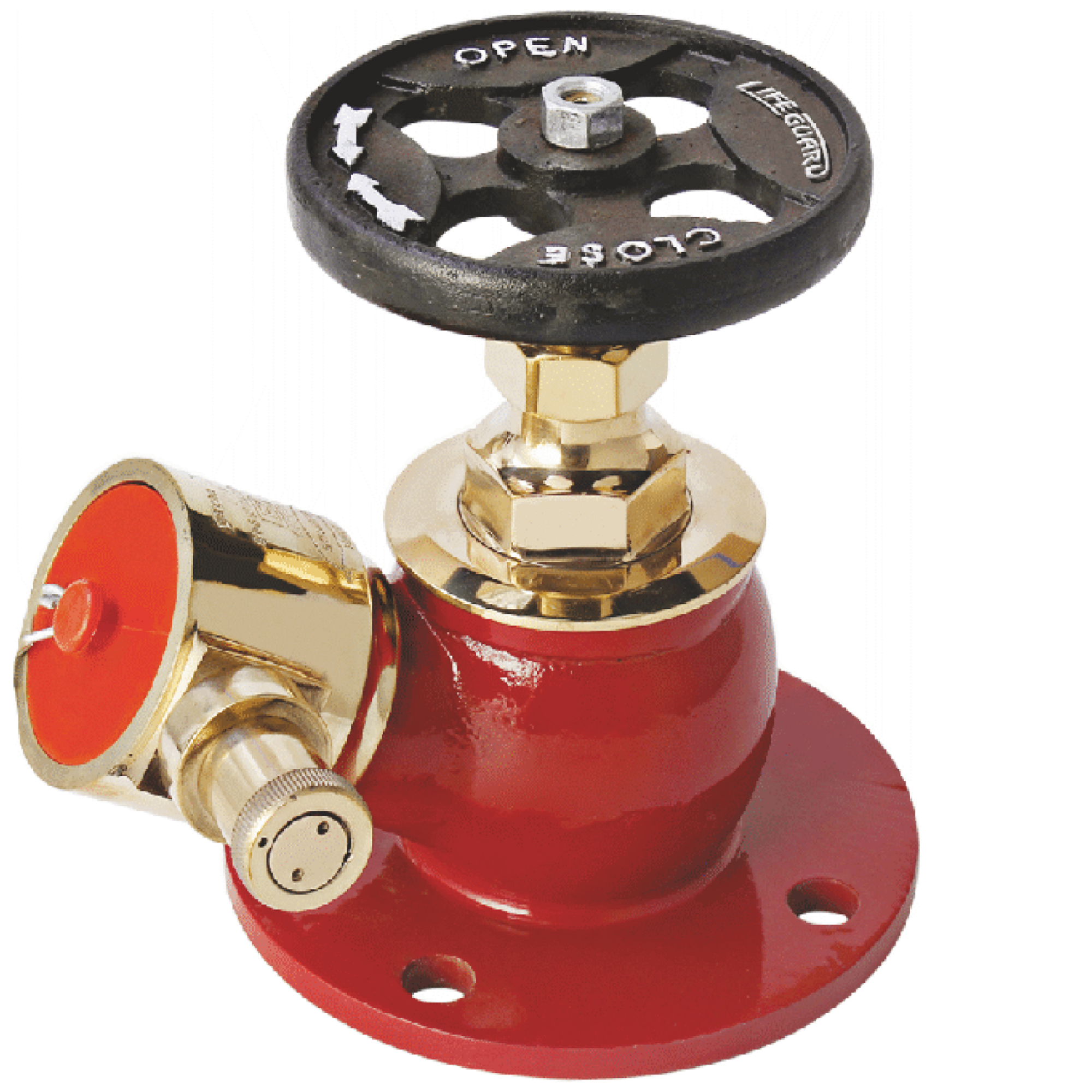
HYDRANT VALVE — LIFEGUARD® | Robust ISI-grade valves for Wet Risers, Hydrant Systems & Life-Safety Infrastructure
A hydrant valve is a mission-critical component in any building or campus fire-fighting network. It provides the controlled outlet for pressurised water from wet risers, down-comers and external hydrant mains so trained responders can rapidly deploy hoses and branch pipes. For owners, facility managers and fire consultants working on high-rise buildings, hospitals, rail/metro stations, bus depots, industrial plants and public gathering places, the choice of hydrant valve directly affects operational reliability, firefighter safety and regulatory compliance.
LIFEGUARD (United Fire Equipments Pvt. Ltd.) supplies heavy-duty, precision-manufactured hydrant valves designed for long service life, leak-proof performance and easy operation under real emergency conditions. Our valves are built for Indian climates and engineered for integration with standard hydrant networks and pump systems.
Why the right hydrant valve matters
- Immediate availability: Hydrant valves must operate smoothly under pressure the moment firefighters mount hoses.
- Leak-proof performance: Leaks reduce flow and pressure — impacting firefighting effectiveness.
- Durability: Valves are exposed to humidity, dust, vibration and intermittent use; material quality matters.
- Compatibility: Valves must work seamlessly with local coupling standards, branch pipes and landing valves.
- Compliance & audit readiness: Correct, tested hydrant valves simplify NOCs, fire audits and insurance checks.
Selecting a LIFEGUARD hydrant valve reduces downtime, ensures dependable water delivery and improves lifecycle maintenance economics for your fire-safety infrastructure.
Product overview — LIFEGUARD Hydrant Valve range
LIFEGUARD offers a complete line of hydrant valves and related accessories to suit different installation types and project needs:
- Landing / Floor Hydrant Valves (Right-angle / Oblique types) — for stair landings and floor outlets.
- Inlet / Outlet Hydrant Valves — for pump room and external hydrant mains.
- Pillar / Street Hydrant Valves — for external fire mains and municipal connections.
- Control Gate Valves & Isolation Valves — for sectional control of risers and mains.
- Hydrant Valve Assemblies — valve + pressure gauge + drain + blanking cap for ready installation.
- Customized valves — special materials, larger sizes or modified outlets for specific projects.
All valves can be supplied with appropriate flanges, threaded connections or instantaneous couplings to match your existing standard.
Key features & engineering highlights
1. Premium materials & corrosion resistance
- Bodies in gunmetal / bronze / ductile iron (NI-coated) or stainless steel where specified.
- Protective finishes and powder coat options for exposed or coastal applications.
- Sealing materials rated for prolonged exposure to water and varying temperatures.
2. Precision machined internals
- Smooth spindle operation with low torque for rapid opening/closing.
- Engineered valve seats and discs for leak-free shutoff under pressure.
- Replaceable seat and spindle assemblies to simplify maintenance.
3. Fire-grade operational design
- Large bore flow passages to minimise pressure drop.
- Robust handwheels and operating nuts sized for gloved operation.
- Tamper-proof caps, chain attachments and secure locking options.
4. Compatibility & ease of use
- Designed to accept standard instantaneous or threaded couplings used by fire services.
- Provision for pressure gauges, drain pipes and bleed valves.
- Clear marking of inlet/outlet direction and flow rating for quick identification.
5. Tested reliability
- Hydrostatic test certification (factory tested).
- Optional factory flow test and QA documentation for project handover.
Typical applications & recommended valve types
High-Rise Buildings
- Landing hydrant valves on every fire stair landing for immediate hose connection.
- Riser isolation valves and pump-room hydrant valves sized to ensure required flow at top floors.
Hospitals & Healthcare Campuses
- SS or corrosion-resistant valves in sensitive areas (ICU, OT wings, basements).
- Quick-access landing valves near patient evacuation routes.
Rail, Metro & Transport Hubs
- External pillar hydrant valves on platform perimeters and depot yards.
- Heavy-duty valves for high-use, high-vibration environments.
Bus Depots & Fleets
- Workshop, fuelling and maintenance zones protected with hydrant valves and wheeled monitor connections.
Industrial Plants & Warehouses
- Large-bore hydrant valves for high flow requirement areas and process plant firewater mains.
Public Gathering Places (malls, stadia, airports)
- Strategically distributed landing valves and hydrant points to meet crowd safety and egress requirements.
Selection & sizing guidance (practical B2B checklist)
- Understand design flow & pressure — valve size must match pump output and hydraulic calculations.
- Identify mounting location — floor, recessed, external pillar or pump room.
- Choose coupling type — instantaneous couplings are common for rapid response.
- Select material — stainless steel for corrosive/coastal/hospital applications; gunmetal/bronze for general use.
- Include accessories — pressure gauge, drain, blanking cap and chain.
- Compliance review — ensure arrangement meets local fire codes, NBC guidance and fire authority requirements.
- Maintenance access — allow clearance for operation and servicing.
LIFEGUARD assists project teams with valve selection, hydraulic matching and documentation to speed approvals and installation.
Installation & commissioning best practices
- Fit valves on stable supports and check alignment to prevent coupling stress.
- Torque all flange bolts to recommended values and use appropriate gaskets.
- Verify valve rotation and seat integrity during dry commissioning.
- Hydrostatic test the completed section to validate leak-free performance.
- Install pressure gauges and ensure drains are routed to safe discharge points.
- Provide end caps/blankets to protect couplings from dust and vandalism.
LIFEGUARD offers on-site commissioning support and factory acceptance testing to certify each installation.
Inspection, testing & preventive maintenance
A documented maintenance programme extends valve life and ensures operational readiness:
Monthly / Visual Check
- Ensure caps are present, no visible corrosion, handwheel turns.
- Verify signage and unobstructed access.
Quarterly
- Operate valve partially to confirm movement, check for leaks at gland/seat.
- Inspect pressure gauges and drains.
Annual
- Full cycling test under flow conditions where feasible.
- Replace gland packings and seals if wear observed.
- Lubricate spindle and moving parts with approved lubrication.
Every 5 years / As per code
- Detailed strip, inspection of internals and seat replacement if required.
- Hydrostatic test in accordance with project protocol.
LIFEGUARD provides AMC packages, spares kits (seats, O-rings, gland packings) and certified maintenance teams.
Compliance, standards & documentation
Hydrant valves should conform to applicable national and local standards. LIFEGUARD valves are supplied with factory test reports, material certificates and documentation required for fire authority inspections and project handovers. For specific projects we supply dimensional drawings, GA layouts and test certificates on request.
Technical specifications (typical models — customizable)
- Sizes: DN50 / DN65 / DN80 / DN100 / DN150 and larger on request
- Connection types: Flanged (ANSI/DIN/IS), Threaded, Instantaneous coupling interface
- Materials: Gunmetal / Bronze / Ductile Iron (coated) / Stainless Steel (SS304 / SS316)
- Working pressure: Up to 16 bar (model dependent, specify design pressure)
- Operating types: Right-angle landing valve, oblique/angled valve, pillar valve
- Accessories: Pressure gauge, drain valve, blanking caps, chain, wall bracket
(Exact specification to be confirmed during enquiry — LIFEGUARD engineers will propose detailed datasheets per project.)
Frequently Asked Questions (FAQ)
Q: What’s the difference between a landing valve and a pillar hydrant valve?
A: A landing valve is typically installed on stair landings or inside building risers for floor-level hose connection. A pillar (street) hydrant valve is installed externally on the hydrant main for fire brigade or external use.
Q: Which material should I choose for coastal buildings?
A: Use stainless steel or high-grade bronze/gunmetal with protective finishes to resist corrosion in coastal or chemically aggressive environments.
Q: How often should hydrant valves be pressure tested?
A: Valves should be hydrostatically tested during commissioning and retested per project and regulatory schedule; routine annual inspections and five-year detailed checks are good practice.
Q: Can LIFEGUARD supply custom sizes and assemblies?
A: Yes. We tailor valve assemblies, flanges, gauges and couplings to project hydraulics and local standards.
SEO Keyword Bank — use for headings, meta, alt text & on-page SEO
Primary Keywords
- Hydrant valve
- Landing valve
- Fire hydrant valve
Secondary Keywords
- Hydrant valve for high-rise buildings
- ISI hydrant valve
- Pillar hydrant valve
- Hydrant valve manufacturer India
Long-Tail & PAA Keywords
- Best hydrant valve for wet riser system
- Hydrant valve installation and maintenance checklist
- Hydrant valve sizes for high-rise buildings
- How to test a hydrant valve for leaks
LSI / Semantic Keywords
- Wet riser landing valve, fire hydrant outlet, pump room valve, instantaneous coupling, pressure gauge for hydrant
Why specify LIFEGUARD hydrant valves?
- Industry-grade manufacturing tailored to Indian conditions
- Full project support — selection, hydraulic matching, commissioning and AMC
- Compliance documentation for audits, tenders and handovers
- Spare parts & service network — long term reliability and low lifecycle cost
Get specification help, datasheets & project quotes
United Fire Equipments Pvt. Ltd.
Manufacturer of ISI Certified Fire Safety Equipment
📞 8048034226
📧 ufe126@gmail.com, info@lifeguardindia.in