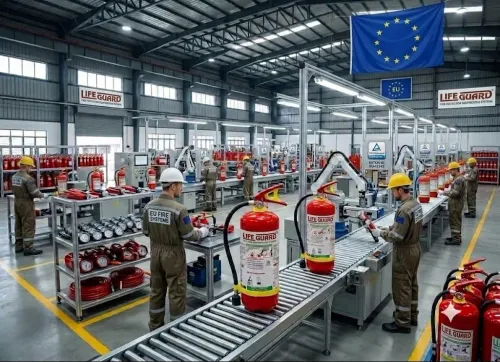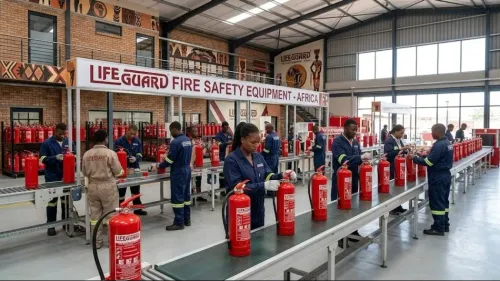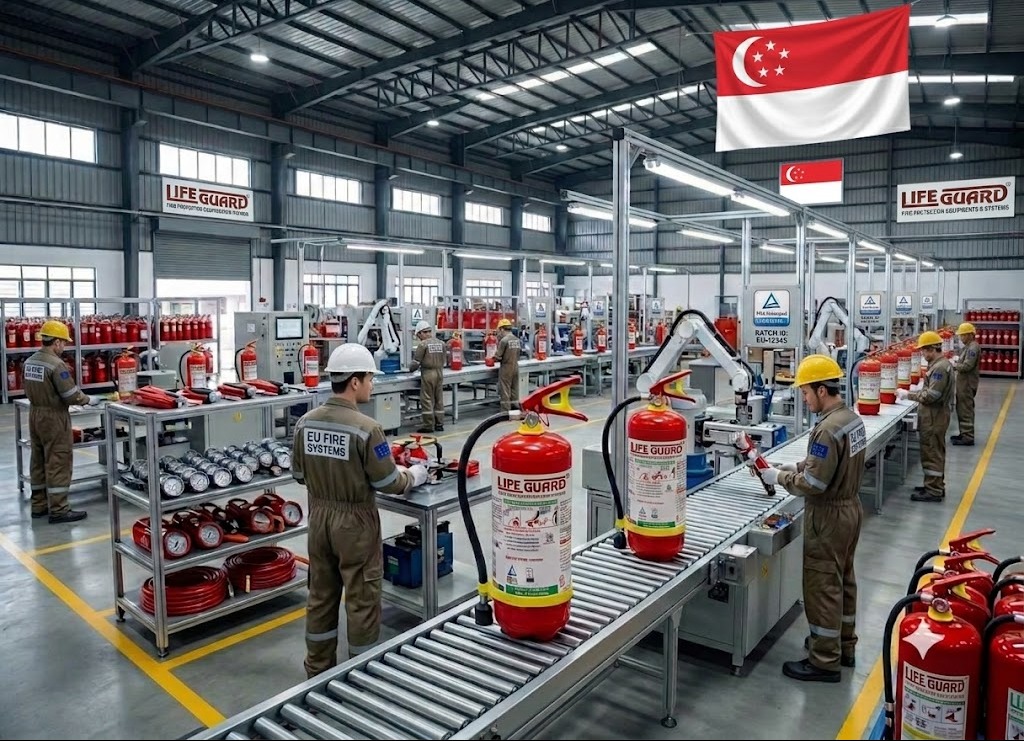
Manufacturing Plant Fire Suppression Manufacturer in Asia | LIFEGUARD®
Advanced Industrial Fire Suppression Systems for Manufacturing Plants Across Asia
Asia is one of the world's leading manufacturing regions, with extensive industrial activity across India, China, Japan, South Korea, Singapore, Malaysia, Thailand, Indonesia, Vietnam, Bangladesh, and other rapidly developing economies. From automotive assembly lines and electronics manufacturing units to pharmaceutical facilities, petrochemical plants, textile factories, food processing facilities, and heavy engineering industries, manufacturing operations require dependable fire protection to safeguard employees, equipment, inventory, and business continuity.
LIFEGUARD®, a brand of United Fire Equipments Pvt. Ltd. (UFEPL), is an established Indian manufacturer of fire safety equipment, offering firefighting products and access to selected engineered fire suppression solutions for industrial and infrastructure applications. With a manufacturing legacy dating back to 1991 for ISI-marked firefighting equipment, LIFEGUARD® focuses on supporting industrial fire safety requirements through application-oriented products and solutions.
For businesses searching for a manufacturing plant fire suppression manufacturer in Asia, LIFEGUARD® offers a product portfolio that includes fire extinguishers and specialized firefighting equipment, alongside access to selected gas-based suppression solutions through authorized channel arrangements. The appropriate equipment and system configuration depend on the fire risk, project specifications, applicable standards, and local regulatory approvals.
Our objective is to help manufacturing facilities evaluate suitable fire protection solutions for production areas, machinery, electrical rooms, process equipment, warehouses, utilities, and other critical industrial environments.
Why Manufacturing Plants Across Asia Need Advanced Fire Suppression Systems
Manufacturing plants often operate with a combination of electrical installations, high-temperature machinery, combustible raw materials, flammable liquids, industrial gases, automated equipment, and continuous production processes. These conditions can create complex fire risks that require carefully planned protection measures.
A fire originating in an electrical cabinet, production machine, fuel-handling area, or raw material storage zone can spread quickly and affect adjoining operations. In addition to threatening personnel and property, an industrial fire can interrupt manufacturing schedules, damage essential equipment, affect supply chains, and result in significant financial losses.
A properly designed fire suppression system helps address specific fire hazards through the selection of suitable detection equipment, extinguishing agents, discharge arrangements, and control mechanisms.
Key benefits include:
- Rapid fire response: Appropriate detection and suppression arrangements can help control a developing fire.
- Protection of industrial assets: Solutions can be selected for compatible machinery, electrical installations, process equipment, and critical infrastructure.
- Reduced production disruption: Effective fire protection may help limit fire-related damage and operational downtime.
- Improved workplace safety: Fire protection systems can complement evacuation plans, emergency procedures, and personnel training.
- Hazard-specific protection: Suppression technologies can be selected according to the materials, ignition sources, and environmental conditions present.
- Support for compliance: Properly specified systems can help facilities meet applicable fire safety standards and regulatory requirements.
No suppression system can eliminate every fire risk. Protection effectiveness depends on suitable engineering, correct installation, commissioning, inspection, maintenance, and an appropriate emergency response plan.
LIFEGUARD® Industrial Fire Suppression Solutions for Manufacturing Plants
Different manufacturing operations require different fire protection strategies. LIFEGUARD® supports the evaluation of firefighting equipment and relevant suppression options according to the application, hazard classification, and project requirements.
1. Clean Agent Fire Suppression Systems
Clean agent fire suppression systems are commonly considered for enclosed spaces containing sensitive electronic equipment and essential control infrastructure. Depending on the selected agent and system design, they can suppress fire without leaving the powder residue associated with dry chemical extinguishers.
Potential applications include:
- Electrical control rooms and PLC panels
- Industrial automation and instrumentation rooms
- Server rooms and manufacturing data centres
- Process monitoring and control centres
- Telecommunications and network rooms
- Selected electronic equipment enclosures
A typical fixed installation may include fire detection devices, a release control panel, agent storage cylinders, distribution piping, discharge nozzles, alarms, and manual release arrangements.
System design must account for the protected enclosure, required extinguishing concentration, leakage, ventilation, pressure-relief requirements, personnel safety, and applicable standards.
2. FK-5-1-12 Gas Fire Suppression Systems
FK-5-1-12-based suppression systems are used in suitable applications requiring a clean extinguishing agent. They may be considered for selected electrical rooms, control infrastructure, electronic equipment spaces, and other compatible enclosed hazards.
These systems typically require engineered calculations for agent quantity, storage pressure, discharge time, pipe sizing, nozzle placement, and enclosure performance.
For manufacturing projects across Asia, the proposed system should be assessed against the local fire code, project specifications, equipment certification, environmental requirements, and approval conditions in the destination country.
LIFEGUARD® has an authorized channel partnership for Kidde gas suppression solutions. Availability and suitability of specific systems must be confirmed for each project.
3. Dry Chemical Powder Fire Suppression Equipment
Dry chemical powder firefighting equipment is widely used for specified fire risks involving flammable liquids, gases, and other compatible combustible materials.
Manufacturing plants may consider powder-based protection for selected workshops, industrial process areas, fuel-handling locations, and other suitable applications.
LIFEGUARD® manufactures dry chemical powder fire extinguishers in configurations designed for different operational requirements. Depending on the hazard and applicable specifications, portable and trolley-mounted extinguishers may form part of the facility's broader fire protection strategy.
For fixed installations, the extinguishing agent, discharge arrangement, system configuration, and suitability for the particular fire scenario must be established through appropriate engineering.
Powder residue may damage sensitive machinery, contaminate products, reduce visibility, and require extensive cleanup. These consequences should be considered before selecting powder-based protection.
4. Carbon Dioxide (CO₂) Fire Suppression Systems
Carbon dioxide systems may be suitable for specific industrial fire hazards involving compatible flammable liquids and electrical equipment.
Potential applications include selected machinery enclosures, certain process installations, and compatible electrical equipment areas.
CO₂ systems present a serious asphyxiation hazard when used at extinguishing concentrations. Total-flooding installations require stringent personnel safety measures, including appropriate alarms, evacuation arrangements, controlled access, and compliance with applicable codes.
The technology must be selected only after evaluating the protected hazard, occupancy conditions, and required safeguards.
5. Water Mist Fire Suppression Systems
Water mist systems use finely divided water droplets to help control fire through cooling and other suppression mechanisms. Their suitability depends on the hazard, system configuration, nozzle design, water supply, and applicable test evidence.
Potential applications include selected machinery, industrial process equipment, and designated production environments where the system has been validated for the intended hazard.
Water mist is not universally suitable for all electrical fires, flammable liquids, reactive chemicals, or combustible metals. The proposed application must be assessed against the specific materials, operating conditions, and relevant technical requirements.
6. Foam-Based Fire Suppression Systems
Foam systems can be considered for compatible flammable-liquid hazards, including selected fuel storage, liquid transfer, and industrial processing applications.
Correct system selection requires an assessment of the liquid involved, storage configuration, application method, discharge rate, environmental considerations, and applicable standards.
Manufacturing facilities should also evaluate containment, drainage, cleanup, and restrictions on foam concentrate chemistry. The selected system must be appropriate for the actual hazard rather than chosen solely because foam protection is commonly used in industrial environments.
7. Automatic Fire Suppression for Industrial Machinery
Industrial machinery may contain multiple ignition sources, including overheated electrical components, lubricants, hydraulic fluids, heated surfaces, and friction-generated heat.
A localized automatic suppression system may be considered for a specific machine or enclosure where a fire could develop rapidly and be difficult to control manually.
Potential applications include:
- CNC machines and machine tools
- Industrial electrical cabinets
- Automated production lines
- Selected hydraulic power units
- Process machinery and equipment skids
- Enclosed industrial equipment
- Selected manufacturing support systems
The appropriate suppression agent and discharge arrangement must be determined by the machine design, fire load, operating environment, and applicable engineering requirements.
Manufacturing Industries Across Asia We Support
Asia's manufacturing sector encompasses a broad range of industries, each with distinct fire hazards and operational requirements. Fire protection planning should reflect the processes, raw materials, equipment, and regulatory conditions of the individual facility.
Automotive and Automobile Component Manufacturing
Automotive manufacturing facilities may include welding stations, paint shops, assembly lines, hydraulic machinery, electrical control panels, battery-related operations, and combustible component storage.
Fire protection planning may combine portable fire extinguishers, detection and alarm systems, sprinklers, and appropriately engineered fixed suppression for specific hazards.
Facilities handling lithium-ion batteries or conducting battery testing require a dedicated assessment of thermal runaway, propagation, smoke, cooling, containment, and re-ignition risks. Conventional suppression agents should not be assumed sufficient for every battery fire scenario.
Electronics and Semiconductor Manufacturing
Electronics and semiconductor facilities depend on sensitive equipment, automated systems, precision machinery, electrical infrastructure, and controlled manufacturing environments.
Selected enclosed electrical rooms, control spaces, and electronic equipment areas may benefit from appropriately engineered clean agent systems. Other areas may require sprinklers or alternative suppression technologies according to the actual fire load and facility design.
System selection should consider equipment sensitivity, contamination risk, room integrity, personnel safety, and applicable industry requirements.
Pharmaceutical and Healthcare Product Manufacturing
Pharmaceutical manufacturing facilities may contain process equipment, packaging materials, solvents, electrical installations, cleanrooms, and temperature-sensitive products.
A fire protection strategy should consider chemical compatibility, hygiene requirements, potential product contamination, occupancy, and operational continuity.
The appropriate combination of extinguishers, detection, sprinklers, and specialized suppression depends on the particular process and applicable standards.
Chemical and Petrochemical Manufacturing
Chemical and petrochemical facilities can present complex hazards involving flammable liquids, combustible gases, reactive substances, high-temperature processes, and pressurized systems.
Fire protection measures may include fixed suppression, specialized extinguishers, detection systems, emergency shutdown arrangements, and other engineered safeguards.
The choice of agent must reflect the chemical properties of the materials involved. Some substances react dangerously with water or require specialized extinguishing methods, making a detailed hazard assessment essential.
Textile, Garment, and Packaging Manufacturing
Textile factories, garment production facilities, paper mills, and packaging plants may contain significant quantities of combustible fibres, paper, cardboard, plastics, and finished products.
Fire protection planning should consider storage density, production machinery, electrical distribution, housekeeping, combustible dust where applicable, and the layout of the premises.
Depending on the facility and applicable code, appropriate extinguishers, automatic detection, sprinkler systems, and other engineered fire protection measures may be required.
Food Processing and Beverage Manufacturing
Food processing plants may contain electrical machinery, refrigeration systems, cooking equipment, packaging materials, oils, and cleaning chemicals.
Specific hazards, such as commercial cooking operations or combustible dust in selected food-processing applications, may require specialized protection. The extinguishing agent must be compatible with the process and the substances involved.
Plastics, Rubber, and Polymer Manufacturing
Plastics and rubber manufacturing can involve heated processing equipment, combustible polymers, hydraulic systems, electrical machinery, and stored finished products.
Fire protection should consider the polymer type, process temperature, potential smoke generation, storage conditions, and the consequences of an uncontrolled fire.
A combination of suitable portable equipment, fixed fire protection, and engineered suppression may be appropriate depending on the plant layout and risk assessment.
Heavy Engineering, Metalworking, and Industrial Machinery
Metal fabrication and heavy engineering plants may contain welding operations, cutting equipment, machine tools, lubricants, hydraulic systems, and electrical installations.
Fire safety measures should address hot work, combustible liquids, electrical hazards, and the special requirements of any combustible metals being processed. Water and conventional extinguishing agents may be unsuitable for certain metal fires, so hazard-specific protection is essential.
Serving Key Manufacturing Markets Across Asia
LIFEGUARD® welcomes enquiries from industrial buyers, project consultants, OEMs, engineering contractors, facility managers, and procurement teams across Asia.
India
India's manufacturing sector includes automotive, pharmaceuticals, electronics, engineering, chemicals, food processing, textiles, and infrastructure-related industries. LIFEGUARD® is based in India and manufactures firefighting equipment for industrial and commercial applications, subject to applicable product specifications and certifications.
China
China's extensive manufacturing base includes electronics, machinery, automotive components, chemicals, and industrial equipment. Fire suppression selection should reflect the facility's processes, local regulatory requirements, and the relevant product conformity documentation.
Japan
Japanese manufacturing facilities often require careful protection of precision machinery, automation systems, electronics, and advanced production infrastructure. System selection should account for the specific hazard, equipment sensitivity, and applicable local standards.
South Korea
Automotive, electronics, semiconductor, battery, and advanced materials manufacturing can involve specialized fire hazards. Facilities should evaluate equipment-specific risks and use suppression technologies validated for the intended application.
Singapore
Singapore's industrial and advanced manufacturing sectors include electronics, pharmaceuticals, chemicals, logistics, and marine-related industries. Projects should follow the applicable local fire safety requirements and relevant authority approvals.
Malaysia, Thailand, Indonesia, and Vietnam
These markets include electronics, automotive components, rubber, plastics, food processing, textiles, and other manufacturing industries. Industrial fire protection requirements vary according to the manufacturing process, building design, and local regulations.
Bangladesh and Other Asian Industrial Markets
Textile, garment, packaging, engineering, and other manufacturing facilities require fire protection strategies appropriate to their building layouts, combustible loads, production machinery, and local compliance requirements.
For every destination, export availability, delivery schedules, local representation, installation arrangements, and after-sales support should be confirmed before procurement.
Why Choose LIFEGUARD® for Industrial Fire Safety Equipment?
LIFEGUARD® is a fire safety brand of United Fire Equipments Pvt. Ltd., an Indian manufacturer serving industrial and commercial fire protection requirements.
Established Manufacturing Experience
LIFEGUARD® has a manufacturing legacy dating back to 1991 for ISI-marked firefighting equipment. Product certification claims should always be verified against the specific product, applicable Indian Standard, and valid licence scope.
Broad Firefighting Equipment Portfolio
The portfolio includes firefighting equipment such as dry chemical powder and other fire extinguisher types. Specialized suppression solutions may be evaluated through relevant authorized channel arrangements, depending on the project.
Application-Based Product Selection
Different industrial environments need different firefighting technologies. Product selection should account for the protected hazard, combustible materials, equipment sensitivity, occupancy, and operational conditions.
Quality and Documentation Focus
Industrial procurement teams should evaluate product specifications, technical data sheets, applicable certifications, test reports, inspection documents, and conformity requirements before placing an order.
Support for Industrial and Infrastructure Projects
LIFEGUARD® welcomes enquiries from manufacturers, EPC contractors, fire protection consultants, OEMs, facility management teams, and industrial procurement departments seeking firefighting equipment and suitable suppression options.
Product availability, technical support, installation responsibilities, and local approvals must be agreed upon for each project.
Fire Suppression System Design and Installation Considerations
Selecting an appropriate fire suppression system requires a structured assessment of the manufacturing facility and the hazards being protected.
1. Fire Risk Assessment
Identify potential ignition sources, combustible materials, flammable liquids, gases, machinery, electrical installations, and process-specific hazards.
2. Identification of Critical Assets
Determine which production lines, control systems, machinery, storage zones, or utility areas require dedicated protection based on risk and operational importance.
3. Selection of Suppression Technology
Assess the suitability of clean agent, CO₂, dry chemical powder, water mist, foam, sprinkler protection, or another system based on the hazard and applicable requirements.
4. Engineering and System Sizing
Determine the required agent quantity, cylinder arrangement, pipe sizing, nozzle locations, detection configuration, discharge characteristics, and control interfaces using the relevant design standards.
5. Integration with Detection and Alarms
Where required, coordinate suppression activation with fire alarms, ventilation, emergency shutdown systems, monitoring facilities, and evacuation procedures.
6. Installation and Commissioning
Installation and commissioning should be performed by appropriately qualified personnel according to approved drawings, manufacturer instructions, applicable standards, and local regulations.
7. Inspection, Testing, and Maintenance
Periodic inspection and maintenance are essential for maintaining system readiness. The required schedule depends on the equipment, manufacturer's instructions, applicable standards, and local authority requirements.
Industrial Fire Safety Standards and Regulatory Compliance Across Asia
Fire suppression requirements vary considerably between Asian countries and between different industrial sectors. Project teams should identify the standards and approval procedures that apply to the facility's location and intended use.
Depending on the system and application, relevant standards may include NFPA 2001 for clean agent fire extinguishing systems, NFPA 12 for carbon dioxide systems, NFPA 11 for foam systems, and other applicable fire protection standards.
Local building codes, fire authority requirements, environmental regulations, occupational safety requirements, and product conformity rules must also be considered.
For export projects, buyers should confirm that the supplied product is suitable for the destination market and that all required certificates and approvals cover the exact model and configuration being purchased. An Indian ISI certification does not automatically establish compliance with every Asian country's requirements, and certification of an extinguisher does not automatically certify an entire fixed suppression installation.
LIFEGUARD® recommends coordination between the manufacturer, importer, local fire protection contractor, project consultant, and approving authority to establish the correct compliance pathway.
Frequently Asked Questions (FAQs)
1. Who is a manufacturing plant fire suppression manufacturer in Asia?
LIFEGUARD®, a brand of United Fire Equipments Pvt. Ltd. in India, manufactures firefighting equipment and offers access to selected engineered suppression solutions through authorized channel arrangements. Buyers should confirm the availability, technical scope, approvals, and delivery arrangements applicable to their country and project.
2. Which fire suppression system is best for a manufacturing plant?
The best system depends on the hazard. Clean agent systems may be appropriate for selected enclosed electronic installations, foam may be suitable for certain flammable-liquid hazards, and water mist or dry chemical systems may be appropriate for specific validated applications. A site-specific fire risk assessment is essential.
3. Does LIFEGUARD® supply fire extinguishers for Asian industrial facilities?
LIFEGUARD® manufactures fire extinguishers and other firefighting equipment. Export availability, product configuration, certification requirements, quantities, and delivery arrangements should be confirmed for the destination market.
4. Can LIFEGUARD® provide clean agent suppression for industrial electrical rooms?
Selected clean agent systems may be suitable for enclosed electrical and electronic hazards, subject to engineering calculations, room integrity, personnel safety measures, system availability, and applicable local approvals.
5. Are LIFEGUARD® products certified for all Asian countries?
Certification and acceptance requirements vary by country and product category. Buyers should verify the relevant certificates, test reports, product conformity requirements, and local authority acceptance for the specific equipment being procured.
6. How can I request a quotation for an industrial fire suppression system?
Provide the country and city, facility type, protected equipment or area, fire hazard, approximate dimensions or enclosure volume, required standards, estimated quantity, and available technical specifications. Drawings and existing fire protection details can help clarify the project requirements.
7. Does LIFEGUARD® offer customized fire suppression solutions?
Product and system options can be evaluated against project specifications and the identified fire hazards. The final system design, installation, commissioning, and local compliance responsibilities should be established with the appropriate project stakeholders.
Contact LIFEGUARD® for Manufacturing Plant Fire Suppression Solutions Across Asia
If you are looking for a manufacturing plant fire suppression manufacturer in Asia, an industrial fire suppression equipment supplier, or a fire extinguisher manufacturer for factory applications, contact LIFEGUARD® to discuss your requirements.
Whether your project involves a manufacturing plant, industrial warehouse, electrical room, machinery enclosure, process facility, or other industrial installation, the first step is to identify the fire hazards and establish the appropriate protection strategy.
LIFEGUARD® — United Fire Equipments Pvt. Ltd.
Manufacturer of ISI Certified Fire Safety Equipment
Phone: +91 8048034226
Email: ufe126@gmail.com | info@lifeguardindia.in
Website: www.lifeguardindia.in
LIFEGUARD® — Supporting industrial fire safety with firefighting equipment and application-oriented fire protection solutions. Contact our team to discuss your manufacturing plant fire safety requirements across Asia.
SEO Metadata for the LIFEGUARD® Website
SEO Title: Manufacturing Plant Fire Suppression Manufacturer Asia | LIFEGUARD®
Meta Description: Looking for a manufacturing plant fire suppression manufacturer in Asia? Explore LIFEGUARD® industrial fire extinguishers and fire suppression solutions for factories, machinery, electrical rooms, and manufacturing facilities.
Suggested URL Slug: /manufacturing-plant-fire-suppression-manufacturer-asia/
Primary SEO Keyword:
- Manufacturing plant fire suppression manufacturer Asia
Secondary SEO Keywords:
- Manufacturing plant fire suppression system Asia
- Industrial fire suppression manufacturer Asia
- Factory fire suppression system supplier Asia
- Manufacturing plant fire protection solutions Asia
- Industrial fire protection equipment manufacturer Asia
- Factory fire safety equipment supplier Asia
- Automatic fire suppression systems for manufacturing plants
- Industrial fire extinguisher manufacturer Asia
- Industrial clean agent fire suppression systems
- Fire suppression solutions for manufacturing facilities
- Manufacturing plant fire safety equipment
- Factory fire protection system provider Asia
Suggested H1: Manufacturing Plant Fire Suppression Manufacturer in Asia
Suggested H2 Headings:
- Industrial Fire Suppression Systems for Manufacturing Plants Across Asia
- Why Manufacturing Plants Need Advanced Fire Suppression Systems
- Types of Manufacturing Plant Fire Suppression Systems
- Industrial Fire Protection Solutions for Different Manufacturing Industries
- Serving Manufacturing Markets Across Asia
- Why Choose LIFEGUARD® for Industrial Fire Safety Equipment?
- Industrial Fire Safety Standards and Regulatory Compliance
- Contact LIFEGUARD® for Manufacturing Plant Fire Suppression Solutions
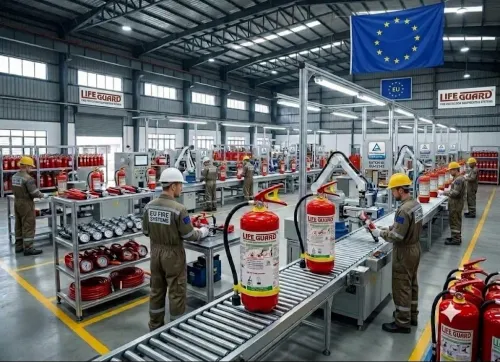
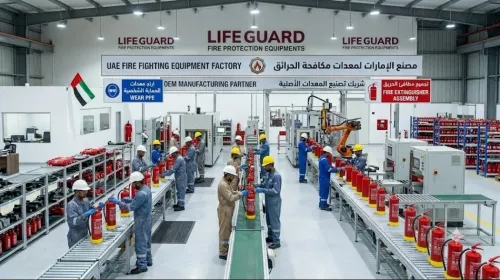
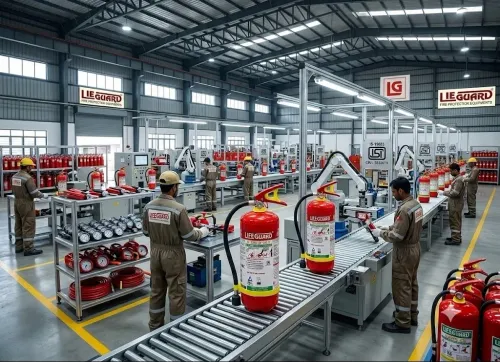
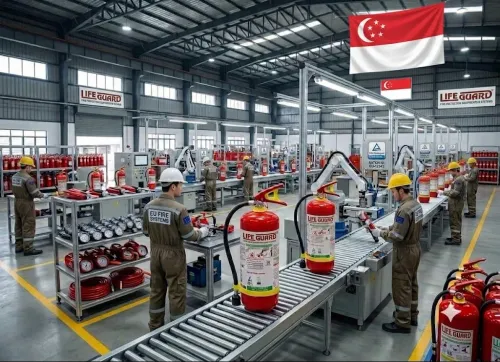
Suggested Image Alt Text: LIFEGUARD® industrial fire suppression solutions for manufacturing plants across Asia
Recommended Internal Links:
- Fire Extinguishers
- Industrial Fire Protection Systems
- Clean Agent Fire Suppression Systems
- CO₂ Fire Suppression Systems
- Water Mist Fire Extinguishers
- Manufacturing Plant Fire Safety Solutions
- Warehouse Fire Protection Systems
- Factory Fire Extinguisher Solutions
SEO implementation recommendation: Use the primary keyword naturally in the title, H1, introductory paragraph, and URL. Integrate secondary keywords in relevant sections without repetitive keyword stuffing. For country-specific SEO, create separate localized pages only when they provide genuinely useful country-specific information, including relevant products, compliance requirements, availability, and service arrangements. Do not claim local manufacturing facilities, local offices, installation teams, or country-specific approvals unless these have been verified.
Tighten the page for SEO focusClarify our Asia service coverage
Keywords