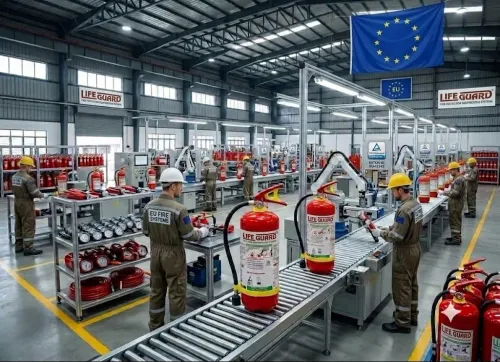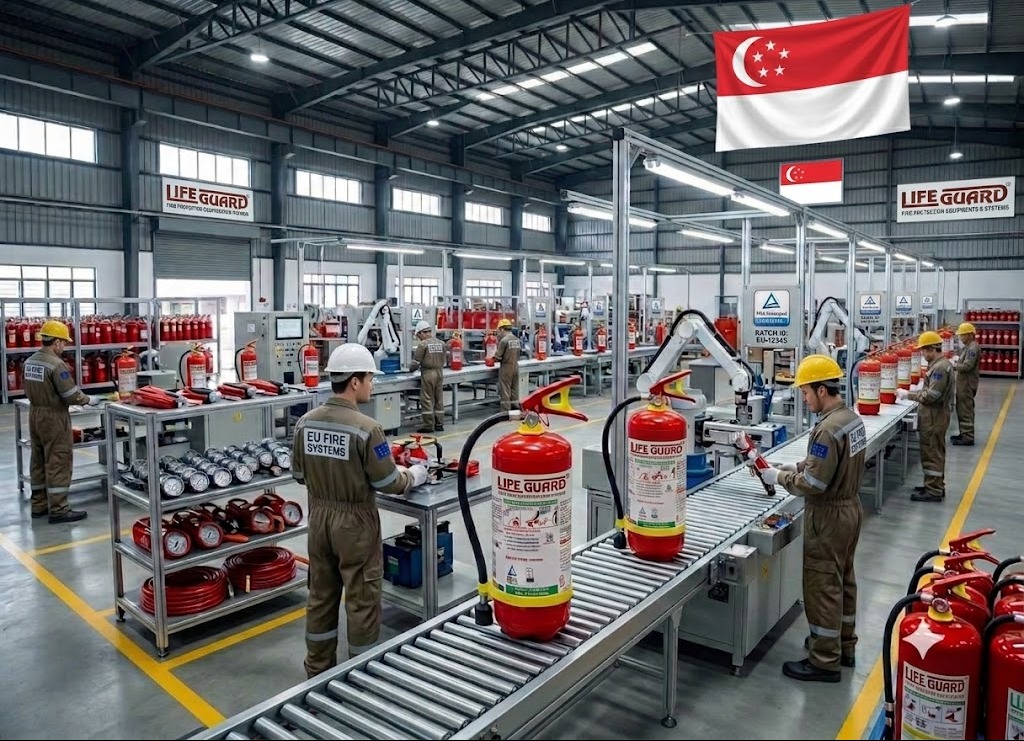
Manufacturing Plant Fire Suppression Supplier in Asia | LIFEGUARD®
Advanced Industrial Fire Suppression Solutions for Manufacturing Plants Across Asia
Asia is one of the world's leading manufacturing regions, with extensive industrial activity across India, China, Japan, South Korea, Singapore, Indonesia, Malaysia, Thailand, Vietnam, the Philippines, and other rapidly developing economies. From automotive and electronics manufacturing to pharmaceuticals, textiles, chemicals, food processing, engineering, and heavy industries, manufacturing plants require reliable fire protection solutions to safeguard people, machinery, raw materials, finished products, and critical infrastructure.
LIFEGUARD®, a brand of United Fire Equipments Pvt. Ltd. (UFEPL), is an Indian manufacturer of ISI-certified fire safety equipment, with a manufacturing legacy dating back to 1991. The company offers firefighting equipment and access to selected engineered fire suppression solutions for industrial, commercial, and infrastructure applications.
As a manufacturing plant fire suppression supplier in Asia, LIFEGUARD® aims to support industrial buyers, EPC contractors, MEP consultants, fire protection companies, system integrators, distributors, and procurement teams seeking suitable fire safety equipment for manufacturing facilities across Asian markets.
With a focus on application-specific fire protection, product quality, and industrial safety requirements, LIFEGUARD® helps businesses evaluate appropriate fire extinguishers and fire suppression technologies for factories, production lines, electrical rooms, machinery enclosures, utility areas, and industrial warehouses.
Industrial Fire Suppression Systems for Manufacturing Plants in Asia
Manufacturing facilities operate in environments where electrical faults, overheated machinery, welding operations, flammable liquids, combustible dust, fuel systems, and chemical processes can create significant fire risks. In many industrial settings, a small fire can spread quickly, damage expensive equipment, interrupt production, and affect worker safety.
A comprehensive industrial fire protection strategy combines appropriate fire detection, alarm systems, portable firefighting equipment, and fixed fire suppression systems according to the hazards present.
LIFEGUARD® supports fire safety requirements through its range of firefighting equipment and relevant fire suppression system offerings, subject to the particular application, project specifications, and required approvals.
A properly designed fire suppression installation may include automatic detection devices, a control panel, suppression cylinders, distribution piping, discharge nozzles, manual release arrangements, audible and visual alarms, and interfaces with other plant safety systems.
The system configuration must be selected according to the type of fire risk, characteristics of the protected space, operating conditions, and applicable national and international standards.
Why Manufacturing Plants Need Reliable Fire Suppression
Industrial fire protection is essential for reducing the potential consequences of fire incidents and supporting safer, more resilient manufacturing operations.
Key benefits of a well-planned fire protection strategy include:
- Personnel protection: Supports early warning, emergency response, evacuation, and appropriate fire control measures.
- Machinery protection: Helps address fire risks involving production equipment, control panels, process machinery, and selected critical assets.
- Operational continuity: Appropriate suppression systems may help limit fire damage and reduce production interruptions.
- Protection of inventory: Supports fire safety planning for raw materials, packaging, finished goods, and storage areas.
- Application-specific solutions: Allows different technologies to be selected for electrical, flammable-liquid, machinery, and other industrial hazards.
- Regulatory preparedness: Helps project owners and industrial operators address applicable fire safety codes, approval conditions, and inspection requirements.
Actual performance depends on correct system design, installation, commissioning, maintenance, and the suitability of the selected technology for the hazard.
Types of Fire Suppression Systems for Manufacturing Plants
Different manufacturing processes present different fire risks. Selecting the correct suppression technology requires a detailed understanding of the facility, the materials handled, and the consequences of extinguishing-agent discharge.
1. Clean Agent Fire Suppression Systems
Clean agent systems are commonly considered for enclosed spaces containing sensitive electrical and electronic equipment. When correctly designed for a suitable application, these systems can suppress fire without leaving the powder residue associated with dry chemical extinguishers.
Potential applications include:
- Industrial control rooms and automation centres
- Electrical and instrumentation rooms
- PLC panels and selected electrical enclosures
- Server rooms and industrial data centres
- Telecommunications and monitoring facilities
- Critical electronic equipment rooms
A typical installation may include agent cylinders, detection equipment, release controls, distribution piping, nozzles, alarms, and pressure-relief provisions where required.
For manufacturing plants across Asia, the system must be engineered for the enclosure volume, leakage characteristics, design concentration, temperature conditions, occupancy, and applicable local requirements.
LIFEGUARD® provides access to gas-based fire suppression solutions through its authorized channel partnership for Kidde gas suppression systems, subject to product availability and the specific project requirements.
2. FK-5-1-12 Fire Suppression Systems
FK-5-1-12-based suppression systems may be considered for suitable total-flooding applications requiring a clean extinguishing agent.
These systems can be evaluated for enclosed electrical installations, industrial control infrastructure, and other compatible hazards where the applicable design requirements can be satisfied.
Important system considerations include agent quantity, enclosure integrity, discharge arrangements, design concentration, detection and alarm integration, and personnel safety provisions.
Manufacturing plant owners should also review relevant environmental requirements, agent availability, system approvals, and the documentation required in the country where the equipment will be installed.
3. Dry Chemical Powder Fire Suppression Systems
Dry chemical powder systems are used for specified fire hazards involving flammable liquids, gases, and other compatible combustible materials, depending on the extinguishing agent and system configuration.
Potential industrial applications include selected workshops, machinery areas, fuel-handling locations, and other suitable production environments.
LIFEGUARD® manufactures firefighting equipment, including dry chemical powder fire extinguishers, for industrial and commercial applications.
Depending on the hazard assessment, a facility may require portable extinguishers, wheeled extinguishers, or a specifically engineered fixed suppression system. Powder residue, visibility reduction, equipment contamination, and post-discharge cleanup should be considered during technology selection.
4. Carbon Dioxide (CO₂) Fire Suppression Systems
Carbon dioxide suppression systems may be suitable for certain industrial hazards involving flammable liquids and energized electrical equipment, subject to the system design and applicable standards.
Potential applications include selected equipment enclosures, compatible industrial machinery, and certain electrical installations.
CO₂ systems require particular care because extinguishing concentrations can create a fatal asphyxiation hazard. Total-flooding applications require suitable evacuation procedures, alarms, controlled access, personnel safeguards, and compliance with applicable safety requirements.
A qualified fire protection engineer should establish whether CO₂ is appropriate for the protected hazard and occupancy conditions.
5. Water Mist Fire Suppression Systems
Water mist systems use finely divided water droplets to control fires through cooling and other suppression mechanisms. Their suitability depends on the hazard, system design, discharge characteristics, water supply, and relevant performance validation.
Potential applications may include selected industrial machinery, production areas, and specific process hazards where the system has been appropriately designed and validated.
Water mist is not suitable for every fire scenario. Electrical hazards, flammable liquids, combustible metals, reactive chemicals, and other special risks require individual assessment before this technology is selected.
6. Foam-Based Fire Suppression Systems
Foam suppression may be suitable for certain flammable-liquid hazards found in manufacturing and industrial processing environments.
Potential applications include designated liquid-handling areas, compatible fuel-related operations, and selected industrial process installations.
The foam concentrate, application rate, discharge arrangement, and design must match the actual hazard and relevant performance criteria. Environmental restrictions and the chemical composition of the foam concentrate must also be considered.
7. Automatic Fire Suppression for Industrial Machinery
Manufacturing machinery may contain electrical components, lubricants, hydraulic fluids, heated surfaces, and moving parts that can contribute to fire incidents. Enclosed equipment fires can be difficult to detect or access using portable firefighting equipment alone.
Depending on the hazard assessment, an automatic suppression arrangement may provide targeted protection for a machine enclosure or specific equipment compartment.
Potential applications include:
- CNC machines and machine tools
- Industrial electrical cabinets
- Automated manufacturing equipment
- Selected hydraulic power units
- Process skids and machinery enclosures
- Specialized production equipment
The selected suppression agent and discharge system must be compatible with the equipment, the materials involved, and the operating environment.
Manufacturing Industries Served Across Asia
LIFEGUARD® recognizes that industrial fire safety requirements vary according to the manufacturing sector, local operating conditions, and applicable regulations.
Automotive and Auto Component Manufacturing
Automotive plants may include welding stations, robotic production lines, paint operations, electrical systems, hydraulic equipment, lubricants, and combustible components.
Fire protection planning can incorporate suitable extinguishers, machinery-specific suppression, electrical-room protection, and appropriate fixed fire protection systems for designated hazards.
Electronics and Semiconductor Manufacturing
Electronics and semiconductor facilities rely on sensitive production equipment, electrical infrastructure, process controls, and precision manufacturing systems.
Clean agent suppression may be considered for selected enclosed electrical and electronic hazards. Other production areas may require different solutions depending on the chemicals, combustible materials, and processes involved.
Pharmaceutical and Healthcare Manufacturing
Pharmaceutical plants require careful attention to production equipment, electrical installations, process materials, contamination risks, and operational continuity.
Fire suppression technology should be chosen according to the protected process, the sensitivity of the equipment, the potential effect of extinguishing agents, and the applicable industry and building requirements.
Chemical and Petrochemical Manufacturing
Chemical and petrochemical facilities may contain flammable liquids, combustible gases, reactive substances, pressurized systems, and high-temperature processes.
These hazards require detailed fire risk assessment and careful selection of suppression agents. Some materials may react dangerously with water or require specialized extinguishing methods.
System design should be coordinated with process safety, gas detection, emergency shutdown, and other applicable plant protection measures.
Food Processing and Packaging Plants
Food manufacturing and packaging operations may contain electrical equipment, ovens, conveyors, cooking oils, packaging materials, cold-storage infrastructure, and warehouse areas.
Different zones may require different protection strategies, including suitable portable extinguishers, automatic detection, sprinklers, or specialized suppression systems for defined hazards.
Textile, Paper, Plastics, and Packaging Manufacturing
Textile fibres, paper products, plastics, and packaging materials can contribute to rapid fire growth under certain conditions.
A suitable fire protection plan should account for the quantity and arrangement of combustible materials, storage heights, production machinery, dust accumulation, ventilation, and the characteristics of the building.
Engineering, Metalworking, and Heavy Manufacturing
Heavy industrial plants may use cutting equipment, welding processes, hydraulic machinery, electrical installations, and high-temperature production equipment.
Fire protection planning must address the specific hazards of the manufacturing process, including any combustible dust, flammable liquids, or reactive metals present.
LIFEGUARD® — Industrial Fire Safety Equipment Supplier for Asian Markets
LIFEGUARD®, a brand of United Fire Equipments Pvt. Ltd., offers firefighting equipment and relevant fire suppression solutions for industrial, commercial, and infrastructure applications.
Manufacturing experience, product-focused engineering, and attention to application requirements are important considerations when evaluating a fire safety supplier for a manufacturing plant.
Why Choose LIFEGUARD®?
Established manufacturing experience
LIFEGUARD® has manufactured ISI-marked firefighting equipment since 1991, subject to the relevant product and certification scope.
Industrial fire safety product range
The portfolio includes fire extinguishers and specialized firefighting equipment for a range of industrial and commercial applications.
Application-based product selection
Equipment and suppression technologies should be selected according to the fire hazard, operating environment, protected assets, and project specifications.
Quality and documentation focus
Relevant product certifications, test reports, approvals, and technical documents can be evaluated against the exact product model and intended market requirements.
Support for project-based procurement
LIFEGUARD® welcomes enquiries from industrial buyers, distributors, fire protection contractors, EPC companies, consultants, and system integrators seeking suitable equipment for manufacturing facilities.
International project enquiries
Businesses across Asia can contact the company to discuss product availability, export requirements, technical documentation, delivery arrangements, and any necessary local conformity or approval procedures.
Specific installation services, local representation, after-sales arrangements, and regulatory approvals should be confirmed for each country and project.
Manufacturing Plant Fire Suppression Supplier Across Major Asian Markets
LIFEGUARD® welcomes enquiries from industrial organizations and procurement teams across Asia, including the following markets.
India
India's manufacturing sector includes automotive, engineering, pharmaceuticals, electronics, food processing, chemicals, textiles, steel, and infrastructure-related industries.
LIFEGUARD®'s Indian manufacturing background supports enquiries for industrial fire extinguishers and relevant fire suppression equipment, subject to product specifications and applicable approvals.
China
Manufacturing plants in China may require fire protection for electronics, automotive components, machinery, industrial chemicals, consumer goods, and large-scale production facilities.
Equipment selection should comply with applicable Chinese regulations, local conformity requirements, and the relevant project's technical specifications.
Japan
Japanese manufacturing facilities frequently operate precision machinery, automation equipment, electronics production lines, and advanced industrial processes.
Fire protection planning should reflect the sensitivity of production equipment, the materials involved, and applicable national and local requirements.
South Korea
Electronics, automotive, battery-related manufacturing, engineering, and industrial production facilities can involve specialized electrical and process hazards.
The fire protection strategy should be developed around the specific equipment, materials, and relevant regulatory requirements.
Singapore
Singapore's industrial sector includes advanced manufacturing, pharmaceuticals, electronics, logistics, and petrochemical-related operations.
Projects require careful attention to local fire safety requirements, relevant standards, and any applicable authority approvals.
Malaysia and Thailand
Automotive components, electronics, rubber, plastics, food processing, and industrial manufacturing create diverse fire protection requirements.
Suppression systems and extinguishers should be selected according to the actual hazard and the applicable national standards.
Indonesia, Vietnam, and the Philippines
Manufacturing growth across these markets creates demand for appropriate fire safety planning in industrial estates, warehouses, production facilities, and export-oriented factories.
Equipment suitability, certification, local import requirements, and installation arrangements should be verified for each country.
Fire Suppression System Design for Manufacturing Plants
An effective industrial fire suppression system begins with a structured fire risk assessment and an understanding of the facility's operational requirements.
Step 1: Assess the Fire Hazards
Identify combustible materials, flammable liquids, electrical equipment, machinery, process temperatures, storage conditions, and potential ignition sources.
Step 2: Select the Appropriate Technology
Determine whether the application requires portable extinguishers, wheeled extinguishers, local-application suppression, clean agent systems, foam, water mist, or another suitable solution.
Step 3: Develop the System Design
Establish the appropriate agent quantity, protected volume, detection arrangements, nozzle locations, discharge duration, piping configuration, and control logic according to the applicable design standard.
Step 4: Integrate Detection and Alarms
Where required, coordinate the suppression system with fire detection, audible and visual alarms, ventilation controls, emergency shutdown systems, and other plant safety interfaces.
Step 5: Verify Installation and Commissioning
Ensure installation and commissioning are carried out by suitably qualified personnel in accordance with approved designs, manufacturer instructions, and local regulatory requirements.
Step 6: Establish Inspection and Maintenance
Follow the applicable maintenance schedule, inspection requirements, equipment instructions, and local regulations to maintain the system in serviceable condition.
International Standards and Compliance Considerations
Manufacturing plants across Asia are subject to different fire safety regulations, certification schemes, and approval processes. Requirements can vary substantially between countries and even between individual industrial projects.
Depending on the application, relevant references may include:
- NFPA 2001: Clean agent fire extinguishing systems.
- NFPA 12: Carbon dioxide extinguishing systems.
- NFPA 11: Low-, medium-, and high-expansion foam systems.
- Applicable national fire safety codes and building regulations.
- Relevant product certification, conformity assessment, and local authority requirements.
The applicable editions, installation standards, and approval pathways should be confirmed by the responsible fire protection engineer and relevant authorities.
LIFEGUARD® recommends verifying certification and test documentation for each proposed product and system. Certification of a portable fire extinguisher should not be interpreted as certification of a complete fixed fire suppression installation.
For export projects, buyers should also confirm import documentation, labelling requirements, shipping arrangements, local representation, installation responsibilities, and after-sales support before placing an order.
Frequently Asked Questions (FAQs)
1. Who is a manufacturing plant fire suppression supplier in Asia?
LIFEGUARD®, a brand of United Fire Equipments Pvt. Ltd. in India, supplies firefighting equipment and offers access to selected fire suppression solutions through its relevant authorized channel arrangements. Availability, export capability, local approvals, and project-specific services should be confirmed for the destination country.
2. Which fire suppression system is best for manufacturing plants?
The correct system depends on the fire hazard. Clean agent systems may suit selected enclosed electrical rooms, foam may suit certain flammable-liquid applications, and dry chemical powder or water mist may be appropriate for specific validated hazards. A site-specific assessment is necessary before selection.
3. Does LIFEGUARD® supply industrial fire extinguishers across Asia?
LIFEGUARD® welcomes enquiries from Asian markets for its firefighting equipment. Export availability, delivery timelines, documentation, certification, and any local distribution arrangements should be confirmed directly with the company.
4. Can LIFEGUARD® support OEM or bulk procurement enquiries?
Industrial buyers, distributors, contractors, and procurement teams can contact LIFEGUARD® to discuss OEM-related requirements, bulk quantities, product specifications, branding arrangements where available, and applicable commercial terms.
5. Are LIFEGUARD® products certified for every Asian country?
No single certification should be assumed to cover every country or product. Certification and acceptance depend on the specific product, destination market, applicable regulations, and project requirements. The relevant documents should be checked before procurement.
6. How can I request a quotation for a manufacturing plant fire suppression system?
Share the country and plant location, application, type of fire hazard, protected area or equipment, preferred technology if known, estimated quantity, technical specifications, and required certifications. Drawings or tender documents can help clarify the scope.
7. What information is required to select an industrial fire suppression system?
Important details include the nature of the combustible materials, room dimensions, machinery layout, occupancy, ventilation, operating temperature, electrical equipment, fire load, and applicable local requirements. A qualified fire protection engineer should review the information before finalizing the system design.
Contact LIFEGUARD® for Manufacturing Plant Fire Suppression Solutions in Asia
Looking for a manufacturing plant fire suppression supplier in Asia, an industrial fire extinguisher supplier, or fire safety equipment for your factory?
Contact LIFEGUARD® to discuss your industrial fire protection requirements, product specifications, and project procurement needs.
United Fire Equipments Pvt. Ltd. — LIFEGUARD®
Manufacturer of ISI Certified Fire Safety Equipment
- Phone: 8048034226
- Email: ufe126@gmail.com
- Email: info@lifeguardindia.in
- Website: www.lifeguardindia.in
Whether your requirement involves manufacturing plant fire extinguishers, machinery fire protection, electrical-room suppression, or specialized industrial firefighting equipment, our team welcomes enquiries from businesses across Asian markets.
LIFEGUARD® — Supporting Safer Manufacturing Through Reliable Fire Safety Equipment and Application-Specific Fire Protection Solutions.
SEO Metadata for the Website
SEO Title: Manufacturing Plant Fire Suppression Supplier Asia | LIFEGUARD®
Meta Description: Looking for a manufacturing plant fire suppression supplier in Asia? Explore LIFEGUARD® industrial fire extinguishers and fire suppression solutions for factories, machinery, electrical rooms, and manufacturing facilities.
Suggested URL Slug: /manufacturing-plant-fire-suppression-supplier-asia/
Primary SEO Keyword: Manufacturing plant fire suppression supplier Asia
Secondary SEO Keywords:
- Manufacturing plant fire suppression system supplier Asia
- Industrial fire suppression supplier Asia
- Factory fire suppression equipment supplier Asia
- Industrial fire protection equipment supplier Asia
- Manufacturing plant fire safety equipment supplier
- Industrial fire extinguisher supplier Asia
- Automatic fire suppression systems for factories
- Fire suppression solutions for manufacturing plants
- Industrial clean agent fire suppression systems
- Factory fire protection system provider Asia
- Manufacturing plant firefighting equipment supplier
- Industrial fire safety equipment exporter India
- Fire suppression equipment for industrial machinery
- Fire safety solutions for Asian manufacturing industries
Suggested H1: Manufacturing Plant Fire Suppression Supplier in Asia
Suggested H2 Headings:
- Industrial Fire Suppression Systems for Manufacturing Plants in Asia
- Types of Fire Suppression Systems for Manufacturing Plants
- Industrial Fire Protection Solutions for Asian Manufacturing Industries
- Why Choose LIFEGUARD® as Your Industrial Fire Safety Equipment Supplier?
- Manufacturing Plant Fire Suppression Supplier Across Major Asian Markets
- International Fire Safety Standards and Compliance
- Frequently Asked Questions About Manufacturing Plant Fire Suppression
- Contact LIFEGUARD® for Industrial Fire Protection Solutions
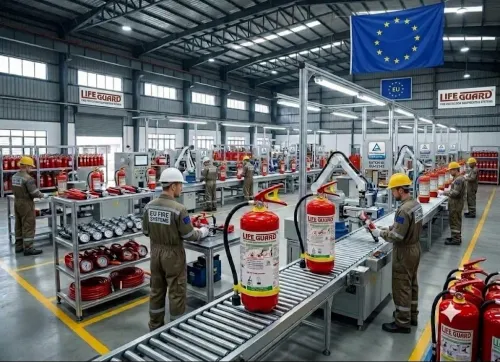
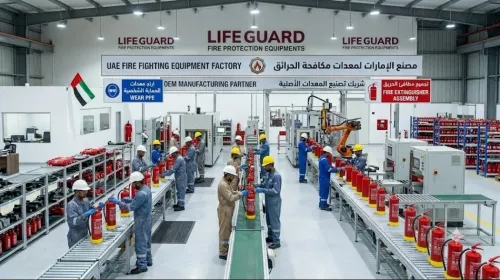
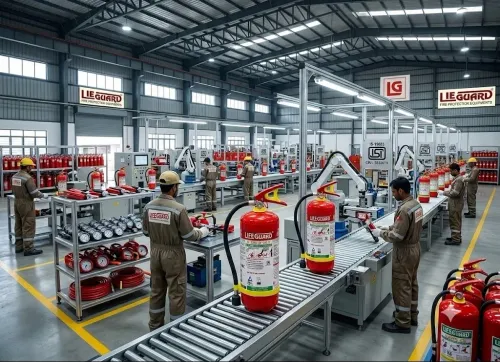
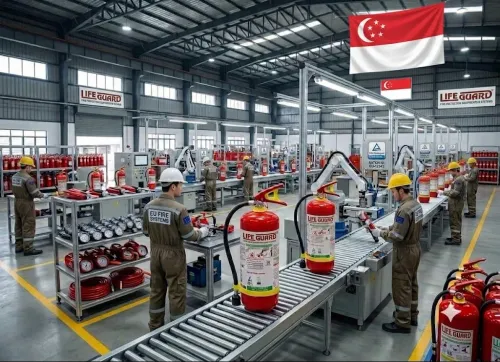
Suggested Image Alt Text: LIFEGUARD® fire suppression equipment for manufacturing plants and industrial facilities across Asia
Suggested Internal Links:
- Industrial Fire Extinguishers
- Factory Fire Protection Systems
- Industrial Fire Suppression Systems
- Clean Agent Fire Suppression Systems
- Manufacturing Plant Fire Safety Equipment
- Warehouse Fire Protection Systems
- Electrical Room Fire Suppression
- Contact LIFEGUARD®
SEO Publishing Recommendations
- Use the primary keyword naturally in the page title, H1, introductory paragraph, meta description, and URL.
- Add relevant internal links to product and industry pages on the LIFEGUARD® website.
- Include genuine product images, technical specifications, relevant certification details, and downloadable product literature where available.
- Create separate country-specific landing pages only when they can offer genuinely useful information about local regulations, product availability, and service arrangements.
- Avoid unsupported claims about local offices, distribution networks, country-specific approvals, or guaranteed system performance.
- Keep the content technically accurate and focused on helping industrial buyers select appropriate fire protection equipment.
Reduce repetition and tighten the pageClarify our actual supply capabilities
Keywords