
Passive Fire Protection for Oil and Gas
Advanced Passive Fire Protection Solutions for the Oil and Gas Industry
The oil and gas industry operates in some of the world's most hazardous environments, where flammable hydrocarbons, high operating temperatures, and complex processing systems create significant fire and explosion risks. Effective Passive Fire Protection (PFP) for oil and gas facilities is essential to safeguard personnel, critical infrastructure, and business continuity.
At LIFEGUARD®, we provide advanced passive fire protection solutions specifically designed for upstream, midstream, and downstream oil and gas operations. Our fire protection systems help contain fires, delay structural failure, and provide valuable time for emergency response and safe evacuation.
What is Passive Fire Protection?
Passive Fire Protection (PFP) refers to integrated fire safety measures that are built into structures, equipment, and systems to prevent the spread of fire and protect assets without requiring activation or human intervention.
Unlike active fire protection systems such as sprinklers and fire extinguishers, passive fire protection remains continuously operational, providing round-the-clock defense against fire hazards.
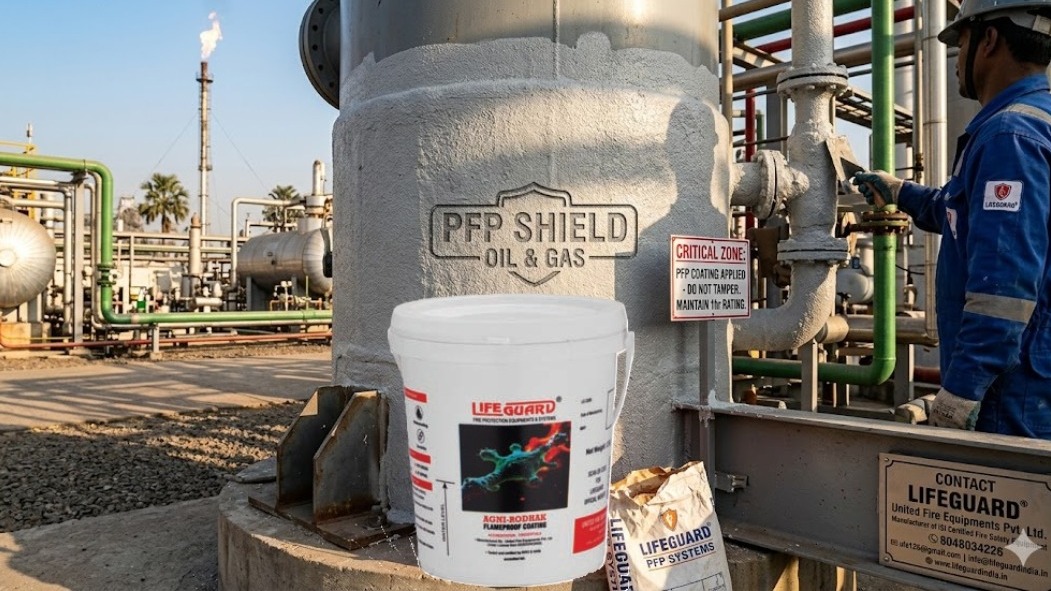
In oil and gas facilities, passive fire protection plays a critical role in maintaining structural integrity during hydrocarbon fires, jet fires, pool fires, and explosion events.
Importance of Passive Fire Protection in Oil and Gas Facilities
Oil and gas facilities face unique fire risks due to:
- Flammable liquids and gases
- Hydrocarbon processing operations
- High-pressure pipelines
- Storage tanks
- Offshore platforms
- Refineries and petrochemical plants
- LNG and LPG facilities
- Compressor stations
- Drilling and production equipment
Without proper fire protection, intense heat generated during hydrocarbon fires can rapidly weaken steel structures, damage equipment, and lead to catastrophic failures.
Passive fire protection systems are designed to:
- Prevent fire escalation
- Protect critical load-bearing structures
- Maintain operational safety
- Support emergency evacuation
- Minimize downtime and financial losses
- Improve regulatory compliance
Key Components of Passive Fire Protection for Oil and Gas
Intumescent Fireproof Coatings
Intumescent coatings expand when exposed to high temperatures, forming an insulating char layer that protects steel structures from heat exposure.
Benefits include:
- Lightweight protection
- Excellent aesthetics
- Long-term durability
- Hydrocarbon fire resistance
- Protection for structural steel
Cementitious Fireproofing
Cement-based fireproofing systems provide robust protection for steel and concrete structures in industrial environments.
Applications include:
- Refineries
- Petrochemical plants
- Processing facilities
- Utility structures
Fire Resistant Coatings
Advanced fire-resistant coatings help reduce heat transfer and protect industrial assets from fire exposure while enhancing corrosion resistance.
Firestopping Systems
Firestopping solutions prevent fire and smoke from spreading through:
- Cable penetrations
- Pipe penetrations
- Wall openings
- Floor assemblies
- Service ducts
Structural Fire Protection
Critical structural members require specialized protection to maintain integrity during fire emergencies and prevent collapse.
Applications of Passive Fire Protection in Oil and Gas
Offshore Platforms
Offshore installations face extreme fire risks due to confined spaces and hydrocarbon processing activities. Passive fire protection safeguards structural steel, modules, and escape routes.
Refineries
Refineries contain numerous ignition sources and highly flammable materials. Fireproof coatings and fire barriers help limit fire spread and protect key assets.
Petrochemical Plants
PFP systems protect process units, storage areas, and supporting structures from hydrocarbon fire exposure.
LNG and LPG Facilities
Liquefied gas facilities require specialized passive fire protection solutions capable of withstanding severe thermal conditions.
Pipeline Infrastructure
Passive fire protection helps protect pipeline supports, valve stations, and associated infrastructure from fire-related damage.
Storage Tank Farms
Fire-resistant coatings and protective systems help safeguard tanks containing flammable liquids and chemicals.
Benefits of Passive Fire Protection for Oil and Gas
Enhanced Personnel Safety
Protects workers by maintaining structural stability and providing additional evacuation time during emergencies.
Asset Protection
Reduces damage to critical infrastructure and expensive equipment.
Improved Structural Integrity
Maintains load-bearing capacity of steel structures under extreme fire conditions.
Reduced Downtime
Limits fire-related damage and accelerates recovery after incidents.
Regulatory Compliance
Supports compliance with national and international fire safety standards.
Long-Term Cost Savings
Reduces maintenance costs, repair expenses, and operational disruptions caused by fire incidents.
Why Choose LIFEGUARD® for Oil and Gas Fire Protection?
LIFEGUARD® specializes in delivering high-performance passive fire protection systems for demanding industrial environments. Our solutions are designed to meet the stringent safety requirements of oil and gas operations while providing reliable protection against hydrocarbon fires and thermal hazards.
Our expertise includes:
- Passive fire protection coatings
- Intumescent fireproofing systems
- Fire-resistant industrial coatings
- Structural steel fire protection
- Thermal barrier systems
- Industrial fire safety solutions
- Firestopping applications
- Hydrocarbon fire protection systems
We work closely with facility owners, EPC contractors, consultants, and project managers to develop customized fire protection solutions that maximize safety and operational reliability.
Future of Fire Protection in the Oil and Gas Industry
As oil and gas facilities become increasingly complex, the demand for advanced passive fire protection systems continues to grow. Modern fireproof coatings and engineered protection systems provide superior resistance to hydrocarbon fires while supporting sustainability, asset longevity, and operational excellence.
Investing in passive fire protection is not merely a regulatory requirement—it is a strategic decision that protects lives, preserves assets, and ensures business continuity in high-risk industrial environments.
Contact LIFEGUARD®
United Fire Equipments Pvt. Ltd.
Manufacturer of ISI Certified Fire Safety Equipment