
Protect the Building
BUY NOW!
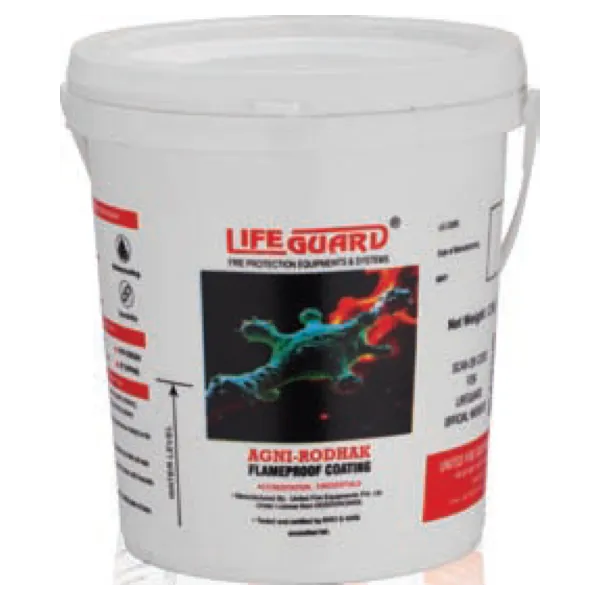
Powered by Agni-Rodhak® | A LIFEGUARD® Passive Fire Protection Solution
Protect the Building. Protect the Structure. Protect the People.
A building is more than walls, floors and a roof.
It is a carefully connected environment of people, electrical systems, cables, equipment, services, escape routes, structural elements and critical assets—all operating together.
When fire occurs, the greatest danger is not always the point where ignition begins. Fire can spread through surfaces, service pathways, openings, electrical installations and connected spaces, threatening occupants, infrastructure and business continuity.
That is why modern fire safety must begin with the building itself.
PROTECT THE BUILDING.
Before Fire Becomes a Building-Wide Threat.
Agni-Rodhak®, powered by LIFEGUARD®, is a fire-protective coating technology designed for suitable applications where flame retardancy, thermal protection and surface protection are required. LIFEGUARD positions Agni-Rodhak® for applications across buildings, electrical infrastructure, industrial facilities, transport systems and critical infrastructure.
What Does “Protect the Building” Mean?
Protect the Building is a fire-safety philosophy that moves beyond firefighting equipment and considers how the building itself can help resist and contain fire.
A comprehensive building fire-protection strategy can include:
- Fire prevention
- Fire-resistant construction
- Passive fire protection
- Fire compartmentation
- Fire stopping
- Protected service penetrations
- Electrical fire protection
- Structural protection
- Fire detection
- Fire alarm systems
- Active fire suppression
- Smoke management
- Safe evacuation
- Emergency response
The National Building Code of India identifies Fire Prevention, Life Safety and Fire Protection as major components of fire and life safety. It also addresses construction, fire-resistant components, electrical installations, compartmentation and firefighting provisions.
The philosophy is simple:
Do not wait for the fire to grow before protecting the building. Build protection into the building itself.
Agni-Rodhak® — The Passive Protection Layer
Agni-Rodhak® is developed by LIFEGUARD® as a fire-protective coating for selected surfaces, structures and installations.
The product is positioned around a combination of:
🔥 Flame Retardancy
Designed to help reduce flame propagation across appropriately treated surfaces.
🌡️ Thermal Protection
Creates a protective coating layer intended to reduce the impact of heat and flame exposure on suitable substrates.
💧 Waterproofing Characteristics
LIFEGUARD describes Agni-Rodhak® as combining fire protection with waterproofing characteristics.
🛡️ Surface Protection
Provides an additional protective layer for selected building and infrastructure surfaces.
🏗️ Passive Protection
Designed to remain in place without depending on external power, electrical activation or manual operation.
Why Protecting the Building Matters
Fire safety is not simply about extinguishing flames.
It is about controlling the journey of fire.
Fire can potentially move through:
Surface → Cavity → Service Opening → Cable Route → Shaft → Adjacent Compartment → Critical Area
Every unprotected pathway can become a vulnerability.
This is why passive fire protection is so important.
The BIS guidance for NBC 2016 identifies constructional aspects, openings in fire-resistant walls and floors, electrical installations, compartmentation and smoke control among the fire-and-life-safety considerations.
Protect the Building from the Inside Out
A building's fire resilience can be considered through several protection layers.
01 — Protect the Structure
Consider suitable passive protection for selected structural and building elements.
02 — Protect the Services
Protect critical electrical, mechanical and utility pathways.
03 — Protect the Compartments
Maintain the intended separation between fire zones and protected areas.
04 — Protect the Openings
Address service penetrations, joints and other potential fire pathways.
05 — Protect the Escape Routes
Support the integrity of protected means of escape through appropriate fire-safety design.
06 — Detect the Fire
Provide suitable detection and alarm systems.
07 — Suppress the Fire
Deploy appropriate active firefighting and suppression systems.
A protected building is a building designed with layers.
Protect the Walls
Walls are fundamental elements of building compartmentation.
But a wall can lose part of its intended fire-separation function when it contains:
- Cable penetrations
- Pipe openings
- Duct openings
- Service shafts
- Construction gaps
- Joints
- Electrical openings
A passive fire strategy therefore has to consider both the wall and everything passing through it.
LIFEGUARD's Agni-Rodhak-powered fire-stop approach is specifically positioned around protecting service penetrations and supporting compartmentation.
A fire barrier is only as effective as the protected system around its openings.
Protect the Floor
Floors can separate one level of a building from another.
But service penetrations can create pathways between floors.
Fire protection design can therefore consider:
Floor → Penetration → Cable → Pipe → Shaft → Upper Floor
Appropriate passive fire stopping and protection systems can help maintain the intended fire-separation strategy of the complete assembly.
Agni-Rodhak® can be evaluated for suitable passive fire protection applications as part of an engineered building protection system.
Protect the Ceiling & Service Spaces
Modern buildings contain complex ceiling and service zones.
Above a ceiling may be:
- Electrical cables
- HVAC services
- Data cables
- Communication systems
- Pipes
- Control systems
- Mechanical equipment
A concealed fire can therefore affect areas that occupants cannot immediately see.
Fire-safe design considers not only visible architectural surfaces, but also hidden service infrastructure.
Protect the Electrical Infrastructure
A building's electrical network is one of its most important systems.
It powers:
- Lighting
- HVAC
- Elevators
- Security
- Data systems
- Fire-safety systems
- Emergency systems
- Building automation
- Critical equipment
Agni-Rodhak® is positioned for suitable applications involving HT/LT cables, cable trays, cable trenches, electrical panels, switchgear and other electrical infrastructure.
Protect the building.
Protect the circuit.
Protect the cable.
Protect the pathway.
Protect the Service Shafts
Service shafts can vertically connect multiple floors.
They may contain:
- Electrical cables
- Communication cables
- Plumbing
- HVAC services
- Mechanical systems
Because these pathways can connect different building zones, passive fire protection and compartmentation around shafts and penetrations become important considerations.
The vertical pathway of a building should not become the vertical pathway of fire.
Protect the Building with Compartmentation
One of the fundamental principles of passive fire protection is compartmentation.
The building is divided into appropriately protected areas so that fire, smoke and heat can be controlled within defined boundaries for the required period.
A compartmentation strategy can involve:
- Fire-resistant walls
- Fire-resistant floors
- Fire doors
- Fire barriers
- Fire stopping
- Protected penetrations
- Service shaft protection
- Fire-resistant construction
- Appropriate coatings and materials
NBC 2016 fire-and-life-safety guidance explicitly identifies compartmentation as an important part of life-safety design.
Protect the Building from Fire Pathways
Fire does not need a large opening.
A small unprotected pathway can become important when it connects otherwise separated areas.
Potential pathways include:
Electrical
Cables, trays and electrical penetrations.
Mechanical
Ducts and service openings.
Plumbing
Pipes and service penetrations.
Architectural
Joints and construction gaps.
Vertical
Shafts and risers.
Utility
Service corridors and infrastructure openings.
This is why passive fire protection must think in terms of pathways, not isolated products.
Protect High-Rise Buildings
High-rise buildings create unique fire-safety challenges because of:
- Large occupant populations
- Vertical travel distances
- Multiple floors
- Vertical service shafts
- Electrical infrastructure
- Mechanical systems
- Smoke movement
- Evacuation complexity
BIS's NBC fire-and-life-safety framework includes specific provisions and guidance concerning high-rise buildings and their fire-safety requirements.
Agni-Rodhak® can be considered for suitable passive fire protection applications within a broader high-rise fire-safety strategy.
Protect Commercial Buildings
Commercial buildings contain dense combinations of:
- Electrical installations
- HVAC systems
- Data infrastructure
- Service shafts
- Public spaces
- Offices
- Retail areas
- Storage
- Kitchens
- Parking facilities
The fire strategy therefore needs to address both occupant safety and infrastructure protection.
Agni-Rodhak® can be evaluated for suitable building and service-infrastructure applications as part of the overall passive fire protection strategy.
Protect Data Centres
A data centre is a building where the infrastructure itself is the business.
Critical systems may include:
- Server rooms
- UPS systems
- Electrical rooms
- Cable trays
- Data cables
- Power distribution
- Cooling infrastructure
- Control systems
BIS fire-and-life-safety training materials specifically identify datacentres among special occupancies requiring attention within fire-safety planning.
A data-centre fire strategy therefore requires multiple layers:
Prevent → Protect → Detect → Suppress → Contain → Respond
Agni-Rodhak® can contribute to the passive protection layer for suitable applications.
Protect Hospitals
Hospitals cannot treat fire protection as an ordinary building service.
Critical areas may include:
- Patient rooms
- ICUs
- Operation theatres
- Electrical rooms
- Medical equipment rooms
- Data rooms
- Emergency power systems
- Service shafts
Fire safety must account for both occupant vulnerability and continuity of critical services.
Agni-Rodhak® can be considered for appropriate passive fire protection applications within a hospital's overall fire-safety strategy, subject to project requirements and technical suitability.
Protect Industrial Buildings
Industrial facilities may contain:
- Production equipment
- Electrical systems
- Machinery
- Process areas
- Storage
- Cable infrastructure
- Control rooms
- Utility systems
- Hazardous materials
Here, fire protection must address both life safety and asset continuity.
Agni-Rodhak® can be evaluated for suitable applications on selected surfaces and infrastructure as part of an engineered passive fire protection programme.
Protect Critical Infrastructure
Buildings are increasingly becoming part of larger infrastructure networks.
Examples include:
- Airports
- Railway stations
- Metro systems
- Hospitals
- Data centres
- Power plants
- Telecom facilities
- Industrial complexes
- Government buildings
- Utility facilities
LIFEGUARD positions Agni-Rodhak® for consideration across public and critical infrastructure applications.
Protect the building that protects the service.
Protect the Building from Fire, Heat & Flame
A building exposed to fire experiences more than direct flame contact.
There can be:
- Radiant heat
- Convective heat
- Hot gases
- Flame impingement
- Smoke
- Thermal stress
Agni-Rodhak® is designed as a protective coating intended to reduce the impact of heat and flames on suitable underlying surfaces.
Its exact performance depends on the substrate, application system, coating configuration, exposure conditions and supporting technical evidence.
Protect the Building Before the Alarm
This is the defining philosophy of passive fire protection.
Active systems respond.
Passive systems are already there.
A fire alarm requires detection.
A sprinkler requires activation.
A suppression system requires a triggering event.
A passive fire protection layer is incorporated into the building before the emergency begins.
It is protection designed into the building—not simply equipment installed inside it.
Agni-Rodhak® & Layered Building Fire Protection
The strongest fire-safety strategy combines passive and active measures.
PREVENT
Reduce ignition risks through good design, installation and maintenance.
↓
PROTECT
Use suitable passive fire protection.
↓
DETECT
Identify fire and smoke at the earliest practical stage.
↓
SUPPRESS
Deploy appropriate active firefighting systems.
↓
CONTAIN
Maintain compartmentation and protect openings.
↓
EVACUATE
Provide safe means of escape.
↓
RESPOND
Enable trained emergency response.
This layered philosophy is consistent with the broad structure of NBC fire-and-life-safety provisions covering fire prevention, life safety and fire protection.
Protect the Building Through Fire-Safe Design
Fire protection should begin at the drawing board.
Architects, MEP consultants, electrical consultants, fire consultants and EPC contractors can consider:
Building Envelope
What surfaces and assemblies require protection?
Structure
Which elements are critical to stability?
Compartments
Where must fire be contained?
Services
Where do cables, pipes and ducts cross barriers?
Penetrations
How will openings be protected?
Electrical
Which circuits are critical?
Escape
How will occupants reach safety?
Detection
Where will fire be detected?
Suppression
What active system is appropriate?
Maintenance
How will the protection be inspected and maintained?
Protect the Building — Protect Its Weakest Point
A building may contain a highly fire-resistant wall.
But what happens when a cable passes through it?
A fire-rated floor may separate two compartments.
But what happens at the service penetration?
A protected shaft may be carefully constructed.
But what happens at the opening around the services?
Passive fire protection is about protecting the complete assembly.
LIFEGUARD's fire-stop material content highlights this principle: openings and penetrations can become pathways for flames, hot gases and smoke, and the complete fire-stop system must be appropriately designed and installed.
Agni-Rodhak® — Applications for Building Protection
Potential application areas include:
🏢 Commercial Buildings
Passive protection for selected building and service infrastructure.
🏙️ High-Rise Buildings
Protection integrated into broader fire-safety design.
🖥️ Data Centres
Protection of critical electrical and service infrastructure.
🏥 Hospitals
Protection of selected critical building infrastructure.
🏭 Industrial Buildings
Fire protection for selected equipment and surfaces.
🚇 Rail & Metro
Protection for appropriate infrastructure applications.
✈️ Airports
Passive protection for selected critical infrastructure.
☀️ Renewable Energy
Protection for appropriate electrical and infrastructure components.
🔋 BESS Facilities
Passive protection as one layer of a comprehensive battery fire-safety strategy.
Why Choose Agni-Rodhak® for Building Protection?
🔥 Passive Fire Protection
Protection designed to remain present without active activation.
🌡️ Thermal Protection
Designed to provide an additional protective layer against heat exposure.
🛡️ Flame-Retardant Characteristics
Designed to help delay flame propagation on suitable treated surfaces.
💧 Waterproofing Characteristics
LIFEGUARD identifies waterproofing as part of the product's functional characteristics.
🏗️ Building & Infrastructure Applications
Can be evaluated for a broad range of suitable building and infrastructure applications.
🔧 Application Flexibility
LIFEGUARD describes Agni-Rodhak® as suitable for application by spray, roller, brush or dipping depending on the intended application.
🔄 Retrofit Potential
Can be considered for appropriate existing infrastructure where additional passive protection is required.
Protect the Building. Protect What Is Inside It.
A building is ultimately designed to protect something more valuable than the structure itself.
It protects:
People.
Businesses.
Equipment.
Data.
Power.
Operations.
Communities.
Continuity.
That is why fire protection should begin with the building.
Protect the Building. Protect the People.
Every passive fire protection measure has a larger purpose.
It contributes to a building where:
Fire has fewer pathways.
Heat has fewer opportunities to damage critical assets.
Compartments can perform their intended function.
Active systems have time to respond.
Emergency responders have a safer environment.
Occupants have a better chance to evacuate safely.
The objective is not to promise that a coating alone can make a building fireproof.
The objective is to make the building better prepared for fire.
Watch Agni-Rodhak® in Action
Experience the LIFEGUARD® demonstration of Agni-Rodhak®:
▶ Watch Agni-Rodhak® Flame Proof Coating Demonstration
The demonstration provides a visual introduction to the product and its fire-protective application.
Buy Agni-Rodhak® Online
🛒 Buy Agni-Rodhak® Online — LIFEGUARD®
For major building, infrastructure, industrial, data-centre, healthcare or institutional projects, technical suitability should be evaluated against the specific substrate, construction assembly, installation conditions and required fire-performance criteria.
The LIFEGUARD® Building Protection Philosophy
Protect the Building.
Protect the Structure.
Protect the Compartments.
Protect the Services.
Protect the Cables.
Protect the Openings.
Protect the Escape Routes.
Protect the Critical Assets.
Protect the People.
Agni-Rodhak® becomes one component of this larger passive fire protection philosophy.
PROTECT THE BUILDING.
BEFORE FIRE BECOMES A BUILDING-WIDE THREAT.
Agni-Rodhak® — Powered by LIFEGUARD®
Passive Fire Protection for Buildings & Critical Infrastructure
SEO Meta Information
Meta Title:
Protect the Building | Agni-Rodhak® Passive Fire Protection | LIFEGUARD®
Meta Description:
Protect buildings, structures and critical infrastructure with Agni-Rodhak® passive fire protection by LIFEGUARD®. Explore fire-protective coating applications for buildings, electrical systems, data centres, industry and infrastructure.
Recommended URL Slug:
/protect-the-building-agni-rodhak
Recommended H1:
Protect the Building — Powered by Agni-Rodhak®
Primary SEO Keywords
- Protect the Building
- Building Fire Protection
- Passive Fire Protection for Buildings
- Building Fire Safety
- Agni-Rodhak
- Agni-Rodhak Fire Protection
- Passive Fire Protection Coating
- Fire Protection Coating
- Fire Resistant Coating
- Fire Retardant Coating
High-Value Long-Tail Keywords
- Passive fire protection for buildings
- Fire protection coating for buildings
- Building fire protection coating India
- Fire resistant coating for buildings
- Fire retardant coating for buildings
- Passive fire protection India
- Fire-safe building design
- Building fire safety solutions
- Fire protection for high-rise buildings
- Fire protection for commercial buildings
- Fire protection for data centres
- Fire protection for industrial buildings
- Fire protection for hospitals
- Fire protection for critical infrastructure
- Fire protection coating for electrical infrastructure
- Passive fire protection for service penetrations
- Fire protection coating for building infrastructure
- Agni-Rodhak passive fire protection
- Agni-Rodhak building fire protection
- Agni-Rodhak fire resistant coating
Recommended Website CTA
PROTECT THE BUILDING.
Protect Before Fire Spreads.
Watch Demonstration → Explore Agni-Rodhak® → Buy Online → Request Project Evaluation
Keywords






