School Fire Extinguisher System Provider in India
Complete Fire Safety Solutions for Schools and Educational Institutions
LIFEGUARD® is a trusted school fire extinguisher system provider in India, offering comprehensive fire protection solutions for schools, colleges, universities, coaching institutes, laboratories, libraries, hostels, training centres and other educational facilities.
Educational buildings accommodate large numbers of students, teachers, employees and visitors every day. They may also contain electrical installations, science laboratories, computer rooms, commercial kitchens, libraries, workshops, buses and storage areas. Each location presents a different fire hazard and requires carefully selected fire protection equipment.
United Fire Equipments Pvt. Ltd., manufacturer of the LIFEGUARD® brand since 1991, provides fire extinguishers, detection systems, suppression solutions and fire safety accessories for new and existing educational institutions across India.
Why Schools Need a Proper Fire Extinguisher System
A fire inside a school can spread rapidly due to the presence of paper, wooden furniture, curtains, electrical wiring, laboratory chemicals and other combustible materials. Young students may also require additional assistance during an emergency. A properly planned fire extinguisher system helps trained personnel control a small fire during its initial stage while evacuation and emergency-response procedures are activated.
A complete school fire safety solution should address:
- Protection of students, teachers and employees
- Fire hazards in classrooms and common areas
- Electrical risks in computer and control rooms
- Chemical and flammable-liquid risks in laboratories
- Cooking-oil and LPG-related risks in kitchens
- Fire protection for libraries and record rooms
- Workshop and maintenance-area hazards
- School bus and transport fire risks
- Safe evacuation and emergency communication
- Inspection, refilling and periodic maintenance
Portable fire extinguishers are only one component of school fire safety. Effective protection also requires fire detection, alarm, emergency signage, evacuation planning, training and routine maintenance.
LIFEGUARD® School Fire Extinguisher Solutions
As a comprehensive school fire extinguisher system provider in India, LIFEGUARD® offers different types of extinguishers for various fire risks.
ABC Dry Powder Fire Extinguishers
ABC dry powder extinguishers are multipurpose units suitable for several common fire risks involving ordinary combustible materials, flammable liquids, flammable gases and certain electrical hazards.
They may be considered for:
- School corridors
- Administrative areas
- General storage rooms
- Maintenance areas
- Workshops
- Parking areas
- School buses
- Outdoor utility locations
Dry powder can spread throughout the surrounding area and may affect sensitive electronic equipment. Its suitability should therefore be evaluated carefully before installation in computer laboratories or server rooms.
Carbon Dioxide Fire Extinguishers
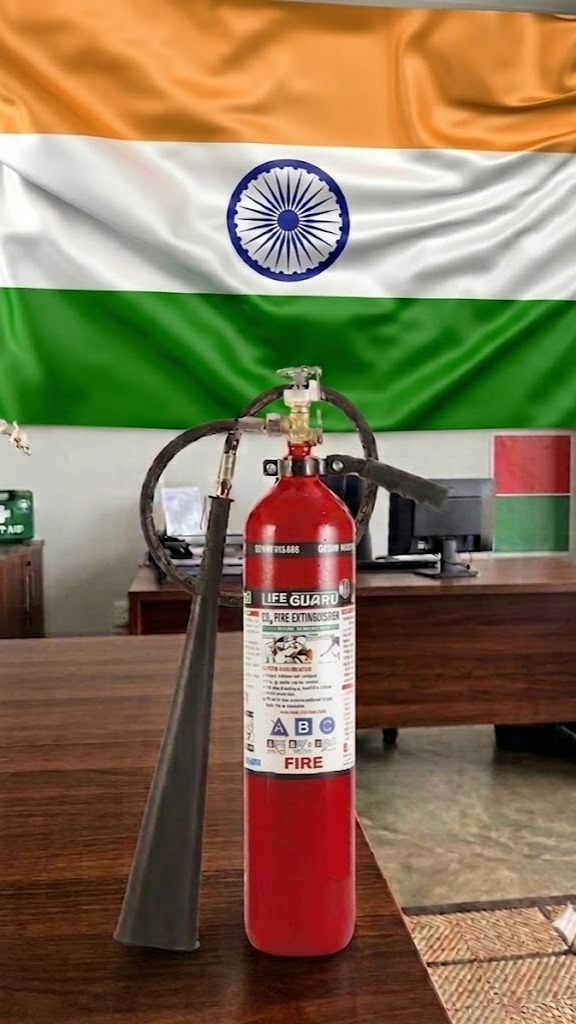
CO₂ fire extinguishers leave no powder or liquid residue and are commonly considered for electrical and electronic equipment.
Typical applications include:
- Computer laboratories
- Electrical panels
- UPS rooms
- Server and communication rooms
- Audio-visual rooms
- Control panels
- Electrical distribution areas
Carbon dioxide can reduce oxygen concentration in enclosed spaces. Therefore, these extinguishers must be used only by trained personnel and with appropriate safety precautions.
Water-Based Fire Extinguishers
Water-based extinguishers may be used for ordinary combustible materials such as paper, cardboard, fabric and wood, subject to the extinguisher’s classification and suitability.
Possible application areas include:
- Classrooms
- Staff rooms
- Libraries
- Assembly halls
- Offices
- General academic areas
Conventional water extinguishers should not be used on energised electrical equipment, cooking-oil fires or flammable-liquid fires unless the particular model is specifically tested and approved for the relevant application.
Foam Fire Extinguishers
Foam extinguishers may be considered for ordinary combustible materials and certain flammable-liquid risks. They can be useful in locations where both solid combustibles and suitable liquid hazards are present.
Application areas may include:
- Workshops
- Maintenance rooms
- Selected laboratory areas
- Fuel-storage locations
- Parking and service areas
The extinguishing medium must be checked for compatibility with the liquids and chemicals present.
Wet Chemical Fire Extinguishers
Wet chemical extinguishers are designed for applicable cooking-oil and fat fires. They are commonly considered for commercial kitchens and canteen cooking areas.
Typical locations include:
- School kitchens
- College canteens
- Hostel kitchens
- Cafeterias
- Catering facilities
- Food-training laboratories
Kitchen staff should also be trained to isolate the fuel or electrical supply, raise the alarm and follow the established emergency procedure.
Clean-Agent Fire Extinguishers
Clean-agent extinguishers may be considered where controlling fire without leaving harmful residue is important. Subject to product approval and risk assessment, they may be suitable for:
- Server rooms
- Data centres
- Communication facilities
- Control rooms
- Electronic laboratories
- Valuable equipment areas
- Record and archive rooms
The applicable agent, fire rating, safety limits and certification must be reviewed before selection.
Wheeled Fire Extinguishers
Wheeled extinguishers provide a larger extinguishing capacity for higher-risk or larger areas. They may be used in:
- Large workshops
- Generator areas
- Fuel-handling locations
- Parking facilities
- Utility blocks
- Central kitchens
- School bus depots
- Technical training institutes
Their placement must allow trained personnel to move and operate the equipment without obstruction.
Area-Wise School Fire Protection Planning
Classrooms
Classrooms commonly contain paper, books, desks, chairs, curtains, noticeboards and electrical appliances. Fire extinguishers should be installed at accessible locations outside or near classroom groups, based on floor area, travel distance and applicable fire-safety requirements.
Students should be instructed to raise the alarm and evacuate. Extinguishers should generally be operated only by trained adults when it is safe to do so.
Science Laboratories
Science laboratories may contain flammable liquids, chemicals, gas connections, heating equipment and electrical appliances. Fire extinguisher selection must be based on a detailed review of every substance and activity present.
Laboratory fire safety may include:
- Suitable hazard-specific extinguishers
- Fire blankets
- Emergency isolation facilities
- Chemical storage control
- Fire detection and alarm systems
- Emergency exits and safety signage
- Laboratory staff training
An incompatible extinguishing medium can create additional danger. Chemical compatibility must therefore be confirmed before finalising the system.
Computer and IT Rooms
Computer laboratories, smart classrooms, server rooms and networking areas contain sensitive electronic equipment. Carbon dioxide or an approved clean-agent extinguisher may be considered to reduce residue-related damage.
The room size, ventilation, occupancy and electrical isolation arrangements should be reviewed during system planning.
Libraries and Record Rooms
Libraries and record rooms have a high concentration of paper, books, cardboard and wooden furniture. Early detection and suitable extinguishing equipment are important because a developing fire can spread through shelving and stored records.
Fire safety planning should also cover:
- Controlled storage arrangements
- Clear aisles
- Safe electrical wiring
- Restricted ignition sources
- Smoke detection
- Emergency lighting
- Accessible escape routes
School Kitchens and Canteens
Kitchens may contain LPG, cooking oils, fats, electrical equipment, exhaust systems and combustible packaging. Wet chemical extinguishers may be selected for applicable cooking-oil risks, while additional extinguishers may be required for electrical and ordinary combustible hazards.
Kitchen fire safety should also include gas isolation, exhaust-system cleaning, emergency signage and staff training.
Electrical Panels and Transformer Areas
Electrical panels, switchboards, UPS units, battery systems and transformer areas require dedicated fire protection. Carbon dioxide, clean-agent or other suitable extinguishers may be selected according to the equipment and assessed hazard.
Only trained and authorised personnel should attempt to control an electrical fire.
Workshops and Vocational Training Areas
Vocational schools may operate welding, automotive, woodworking, mechanical or fabrication workshops. These areas can involve sparks, hot work, fuels, lubricants, gases, paints and electrical machinery.
A combination of extinguishers may be required after examining:
- Combustible materials
- Flammable liquids
- Compressed gases
- Electrical equipment
- Hot-work activities
- Machinery and vehicle risks
School Buses
School buses should carry suitable fire extinguishers according to applicable vehicle and transport requirements. Extinguishers must be securely mounted, clearly visible and readily accessible to the driver or trained attendant.
Drivers and attendants should know how to raise the alarm, evacuate children safely and use the extinguisher only when conditions permit.
Fire Extinguisher Selection Guide
Fire riskTypical school locationCommonly considered extinguisherPaper, wood, fabric and furnitureClassrooms, offices and librariesWater-based, foam or ABC dry powderFlammable liquidsLaboratories and workshopsFoam, dry powder or CO₂, as applicableFlammable gasesKitchens, laboratories and utility areasDry powder, subject to risk assessmentEnergised electrical equipmentComputer rooms and electrical panelsCO₂ or approved clean agentCooking oils and fatsKitchens and canteensWet chemicalSpecial chemicals or metalsSpecialised laboratoriesHazard-specific extinguisherLarger industrial-type risksWorkshops and utility blocksSuitable wheeled extinguisher
This guide is general in nature. The extinguisher type, capacity, fire rating and quantity must be confirmed through a site-specific assessment.
School Fire Extinguisher System Planning Process
LIFEGUARD® can support educational projects through a structured fire protection approach:
- Understanding the building type and occupancy
- Reviewing floor plans and room usage
- Identifying ordinary and special fire hazards
- Selecting appropriate extinguisher types
- Determining capacities and quantities
- Planning suitable installation locations
- Providing brackets, stands, cabinets and signage
- Submitting technical and commercial documentation
- Supporting inspection and delivery requirements
- Planning maintenance, refilling and servicing
Final design and installation must comply with the requirements of the local fire authority, approved drawings, project specifications and applicable statutory provisions.
Applicable Indian Standards and Fire-Safety Requirements
School fire protection in India may be governed by several national, state and local requirements. Depending on the product and project, consideration may be given to:
- National Building Code of India
- Relevant provisions of IS 15683 for portable fire extinguishers
- Applicable BIS requirements
- State fire-service rules
- Local fire department requirements
- Education department or school-board guidelines
- Approved building fire and life-safety plans
- Tender and consultant specifications
- Manufacturer’s installation and maintenance instructions
The applicable requirements differ according to building height, occupancy, floor area, location and state. Model-specific BIS certification, fire rating and technical documents should be verified before procurement.
Importance of Fire Extinguisher Placement
Even a correctly selected extinguisher may be ineffective if it is hidden, obstructed or installed too far from the hazard. School fire extinguishers should generally be:
- Clearly visible and appropriately identified
- Easily accessible to trained personnel
- Positioned along normal movement or escape routes
- Protected against tampering and physical damage
- Installed at an appropriate mounting height
- Located away from conditions that may damage the unit
- Supported by suitable signs
- Placed without reducing escape-route width
Final locations and travel distances must follow approved fire plans and applicable regulations.
Inspection, Refilling and Maintenance
Fire extinguishers require regular inspection and servicing to remain dependable. A school maintenance programme should include:
- Verification that each extinguisher is in its assigned location
- Checking accessibility and visibility
- Inspection for corrosion, leakage and physical damage
- Examination of the safety pin and tamper seal
- Checking the hose, nozzle and valve assembly
- Verification of the pressure indicator, where provided
- Confirmation that operating instructions are readable
- Recording inspection and service information
- Timely refilling after use
- Scheduled maintenance by competent personnel
- Hydrostatic testing or requalification when applicable
- Replacement of unserviceable equipment
School management should maintain an updated asset register showing extinguisher type, capacity, identification number, installation location and service status.
Fire Safety Training for School Staff
Fire extinguishers should not be installed without a supporting training programme. Teachers, security personnel, laboratory staff, drivers, kitchen workers and facility teams should understand:
- How to identify different extinguisher types
- Which extinguisher is suitable for each hazard
- How to raise the fire alarm
- How to call emergency services
- How to maintain a safe escape route
- When not to fight a fire
- How to assist students during evacuation
- Where to assemble after leaving the building
Regular fire drills help students and staff respond calmly and systematically during an emergency.
Why Choose LIFEGUARD®?
Experience Since 1991
United Fire Equipments Pvt. Ltd. has provided fire safety equipment under the LIFEGUARD® brand since 1991, serving institutional, commercial and industrial requirements.
Comprehensive Product Portfolio
Our range supports varied school hazards through portable and wheeled extinguishers, fire detection equipment, suppression systems and associated fire safety accessories.
Project-Specific Technical Support
We assist schools, contractors, consultants, architects and procurement teams with product selection based on the available project information and applicable requirements.
Documentation Support
Depending on the offered product and project, we can provide relevant documents such as:
- Technical data sheets
- Product catalogues
- Compliance statements
- Test certificates
- Model-specific approval documents
- Inspection documents
- Commercial quotations
- Packing and dispatch documents
Pan-India Project Support
LIFEGUARD® supports enquiries for schools and educational institutions across Delhi NCR and other regions of India through project-based supply and coordination.
Applications
Our school fire extinguisher solutions are suitable for:
- Government schools
- Private schools
- International schools
- Nursery and primary schools
- Secondary and senior secondary schools
- Boarding schools
- Colleges and universities
- Engineering and medical institutions
- Coaching and training centres
- Technical and vocational institutes
- Libraries and research centres
- Student hostels
- Sports academies
- School transportation facilities
Frequently Asked Questions
Which fire extinguisher is best for a school?
No single fire extinguisher is suitable for every school area. Classrooms, kitchens, laboratories, computer rooms and workshops have different hazards. A combination of suitable extinguishers should be selected through a fire-risk assessment.
How many fire extinguishers are required in a school?
The required quantity depends on the building area, number of floors, fire rating, hazard type, travel distance and applicable fire regulations. The requirement should be determined from the approved fire plan and site assessment.
Which extinguisher is suitable for a school computer laboratory?
CO₂ or an appropriately approved clean-agent extinguisher may be considered for electrical and electronic equipment. The final selection should account for room occupancy, ventilation and local requirements.
Which fire extinguisher should be installed in a school kitchen?
A wet chemical extinguisher is commonly considered for applicable cooking-oil and fat fires. Additional extinguishers may be required for electrical equipment, LPG risks and ordinary combustible materials.
Are ABC fire extinguishers suitable for schools?
ABC dry powder extinguishers can cover several common fire risks. However, powder discharge may affect visibility and damage sensitive equipment, so their location should be chosen carefully.
How often should school fire extinguishers be serviced?
Inspection and maintenance should be performed at intervals required by applicable standards, local regulations and the manufacturer’s instructions. Extinguishers must also be refilled or replaced immediately after use.
Contact a School Fire Extinguisher System Provider in India
Whether you are constructing a new school, upgrading an existing campus or preparing a tender for educational fire safety equipment, LIFEGUARD® can assist with suitable product selection and project documentation.
For an accurate proposal, please share:
- School location
- Building layout or floor plan
- Number of floors
- Approximate floor area
- Room-wise usage
- Existing fire safety equipment
- Required extinguisher types and quantities
- Project specifications
- Applicable approvals or standards
- Delivery and installation requirements
Contact LIFEGUARD®
LIFEGUARD® – United Fire Equipments Pvt. Ltd.
Manufacturer of ISI-Certified Fire Safety Equipment
Corporate Office:
LIFEGUARD TOWER, K-960, Opp. SBI
Rithala, Rohini, Delhi – 110085, India
Manufacturing Facility:
B-38, Mangolpuri Industrial Area
Phase-II, Delhi – 110034, India
Contact LIFEGUARD® for product catalogues, technical specifications and commercial proposals from an experienced school fire extinguisher system provider in India.
SEO Information
Meta Title:
School Fire Extinguisher System Provider India | LIFEGUARD®
Meta Description:
LIFEGUARD® is a school fire extinguisher system provider in India offering fire protection solutions for classrooms, labs, kitchens, libraries and buses.
Primary Keyword:
School fire extinguisher system provider India
Secondary Keywords:
- School fire extinguisher supplier India
- School fire safety system India
- Fire extinguisher system for schools
- School fire protection company India
- School fire safety equipment manufacturer
- Classroom fire extinguisher system
- Laboratory fire extinguisher supplier
- School kitchen fire extinguisher
- Fire extinguisher for educational institutions
- LIFEGUARD® school fire extinguishers
Keywords