
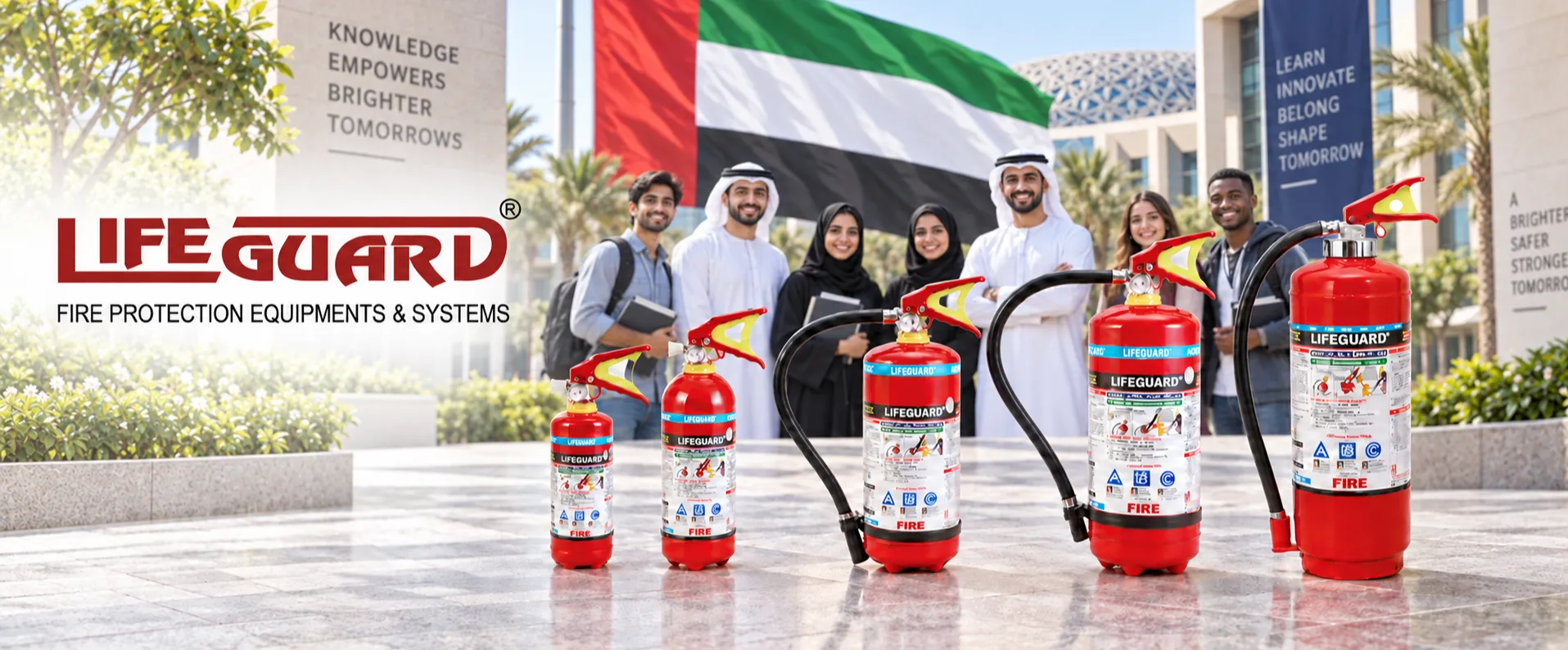
University Automatic Fire Suppression Manufacturer for UAE Projects | LIFEGUARD®
SEO title: University Automatic Fire Suppression Manufacturer UAE | LIFEGUARD®
Meta description: Explore automatic fire suppression solutions for UAE university campuses. LIFEGUARD® supports project enquiries for server rooms, kitchens, electrical areas and other specialist spaces.
Suggested URL slug: /university-automatic-fire-suppression-manufacturer-uae/
Primary keyword: university automatic suppression manufacturer UAE
Related keywords: university fire suppression systems UAE; automatic fire suppression for university server rooms; campus kitchen fire suppression UAE; clean agent suppression university UAE
Automatic fire suppression for university campuses in the UAE
A university campus can contain lecture halls, research laboratories, commercial kitchens, libraries, residential buildings, data centres, electrical rooms and maintenance workshops. These spaces do not share the same fire hazards. An effective automatic suppression strategy starts with the equipment, processes and people in each area, then selects a system suitable for the approved building design.
LIFEGUARD® is the fire safety brand of India-based United Fire Equipments Pvt. Ltd. We manufacture fire safety equipment and support enquiries for university automatic fire suppression projects in the UAE. Our team can discuss product options, technical submittals and project requirements with campus owners, consultants, procurement teams and contractors. The exact manufacturing scope, product model, certification and supply arrangement should be confirmed in each proposal.
Where universities may need automatic suppression
Server rooms and campus data facilities
University networks support learning platforms, research data, administration and communications. Where a dedicated server room requires automatic suppression, an engineered clean agent system may be considered after reviewing room volume, enclosure integrity, ventilation, equipment arrangement and occupant safety. Detection, alarm notification, discharge delay, shutdown interfaces and post-discharge procedures should be coordinated with the approved design.
Electrical panels and control rooms
Electrical distribution spaces and equipment enclosures may call for a suitable, hazard-specific suppression approach. The design must consider the enclosure or room dimensions, ventilation, energized equipment, access for maintenance and any required electrical isolation. A small enclosure system and a whole-room system have different design and approval requirements; the selection must match the protected hazard.
University kitchens and dining facilities
Campus cafeterias and food courts often operate for long hours and use cooking oils, heated equipment and extraction hoods. Automatic kitchen suppression can be evaluated for the cooking line, hood and duct arrangement, together with manual actuation and the necessary appliance or fuel shutdown interfaces. Equipment placement and nozzle coverage must follow the selected system's approved design criteria.
Laboratories and specialist research spaces
University laboratories may contain changing inventories of chemicals, gas supplies, electrical instruments and valuable research equipment. No suppression agent is appropriate for every laboratory hazard. A project assessment should identify the actual substances and processes, review compatibility with the proposed agent, and coordinate with the institution's laboratory safety procedures before a system is specified.
Libraries, archives and collections
Rare books, records, archives and collections may benefit from a carefully designed protection strategy that addresses both life safety and preservation. Options depend on the room, contents, occupancy, building systems and approved fire strategy. Detection and compartmentation are as important to review as the proposed suppression technology.
Automatic suppression system options
Clean agent systems
Clean agent systems are commonly evaluated for suitable enclosed, high-value rooms where residue is a concern. A project design must determine the appropriate agent, design concentration, cylinder arrangement, piping, nozzles, enclosure performance, alarms and control sequence. Agent selection and any use around occupied areas require specific engineering review.
Water-based protection
Sprinkler or other water-based systems may form part of the building-wide fire protection design. Their application depends on occupancy, hazard classification, water supply, hydraulic design and the requirements of the authority having jurisdiction. The system should be coordinated with the building's detection, alarm and maintenance arrangements.
Local application and specialised systems
Kitchen lines, individual electrical enclosures and certain equipment hazards may need local application systems rather than room flooding. Specialist systems must be chosen against the actual equipment layout and the approved application limits of the selected product. System names alone are not a substitute for a hazard assessment.
How an automatic suppression system operates
Depending on the approved configuration, detectors or sensing elements identify a potential fire condition and signal the control equipment. The system may provide pre-discharge warnings, coordinate ventilation or equipment shutdown, and release the suppression medium according to its programmed sequence. Manual release, abort functions and fault monitoring are included where specified and appropriate for the system. Every interface should be documented and tested during commissioning.
For university buildings, the sequence must also fit evacuation arrangements and normal operations. A system protecting an occupied laboratory, for example, requires different planning from one protecting an unmanned electrical enclosure. Training, access control and clear response instructions help facilities teams manage an event safely.
Information needed for a UAE university project
A useful project enquiry includes:
- The campus location and the emirate in which the project will be approved.
- Architectural drawings and room dimensions, including false ceiling and raised floor spaces.
- The use of each protected room, normal occupancy and operating schedule.
- Equipment layouts, cooking line details or laboratory process information, as relevant.
- Ventilation, openings, air-conditioning and existing fire alarm interfaces.
- Consultant specifications, bill of quantities and required product documentation.
- The intended installation, inspection, commissioning and maintenance responsibilities.
For an engineered gaseous system, room dimensions alone are insufficient to finalise the quantity of agent or piping design. The complete technical review should follow the applicable system standard, listed or approved product design manual, and the project approval requirements.
Technical documentation and approval
UAE projects should be reviewed against the applicable UAE Fire and Life Safety Code of Practice, project specifications and the requirements of the relevant local authority. Product acceptance depends on the exact model, configuration and evidence submitted. LIFEGUARD® can share available product data sheets, drawings, certificates and technical information for evaluation upon request. Any local approval, certification or listing should be verified against the proposed product rather than assumed for a whole product range.
A complete submission may also require design calculations, cause-and-effect logic, equipment layouts, installation details, inspection and testing records, and an operations and maintenance package. The project consultant and appropriately authorised local contractor should confirm the precise submission and execution requirements.
Why work with LIFEGUARD®?
LIFEGUARD® brings experience in fire safety equipment and project documentation to discussions with universities and their delivery teams. We focus on the details that make a proposal useful: the protected hazard, proposed system components, available technical evidence and the responsibilities needed to take a design from procurement through commissioning.
For UAE enquiries, our team can review product requirements and discuss the available supply scope. Delivery, installation, local approvals and after-sales arrangements should be agreed for the individual project.
Request a project discussion
Planning automatic fire suppression for a new university building or an existing campus upgrade? Send LIFEGUARD® your drawings, room schedule, equipment details and project specification. We can review your requirements and provide relevant product information for the next stage of evaluation.
LIFEGUARD® | United Fire Equipments Pvt. Ltd.
Phone: +91 8048034226
Email: ufe126@gmail.com | info@lifeguardindia.in
Website: https://www.lifeguardindia.in/
Keywords






