
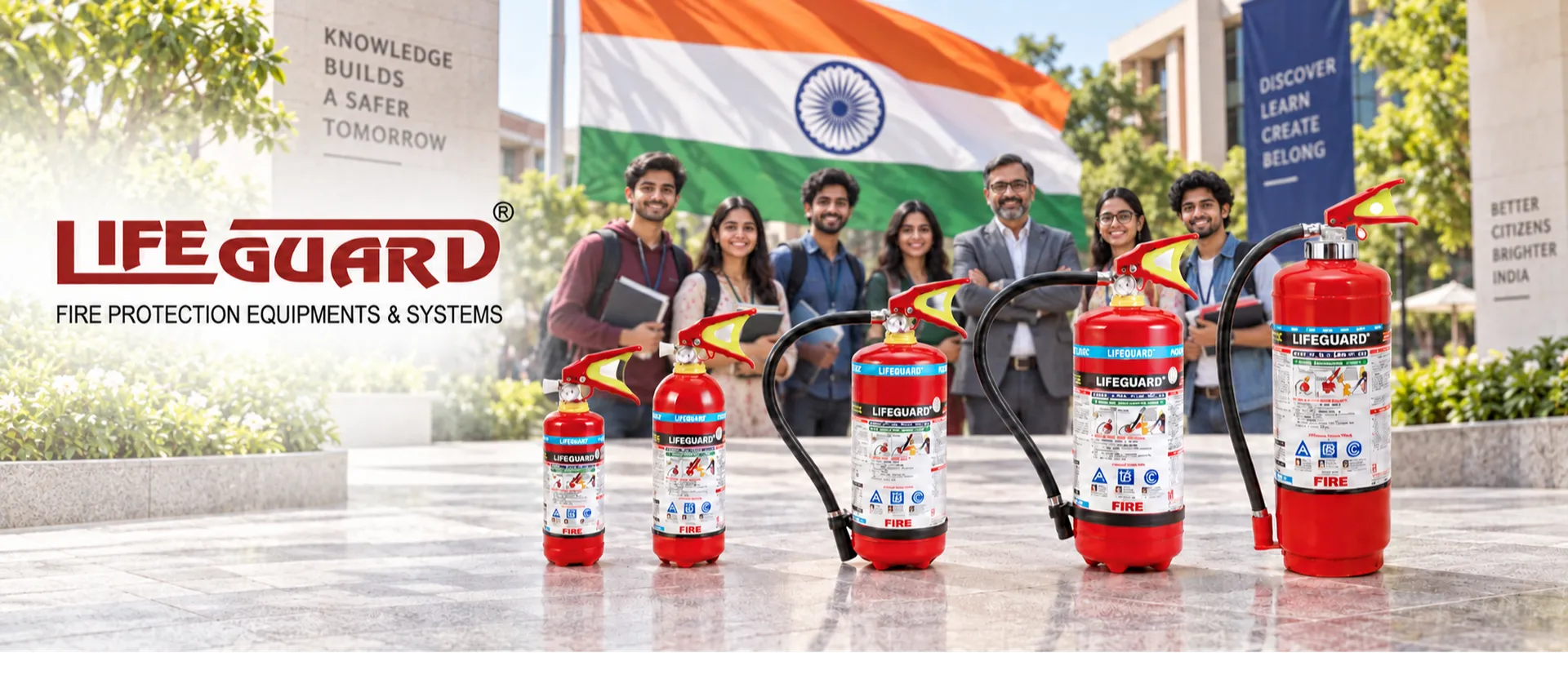
University Automatic Fire Suppression Manufacturer in India | LIFEGUARD®
Suggested URL: /university-automatic-fire-suppression-manufacturer-india/
SEO title: University Automatic Fire Suppression Manufacturer India | LIFEGUARD®
Meta description: Explore automatic fire suppression solutions for university server rooms, laboratories, kitchens and electrical areas with LIFEGUARD® in India.
Primary keyword: university automatic suppression manufacturer India
Related keywords: automatic fire suppression for universities, university fire suppression systems India, campus clean agent suppression, laboratory fire suppression, server room fire suppression, kitchen suppression for universities
University Automatic Fire Suppression Manufacturer in India
A university campus houses more than classrooms. Its laboratories, server rooms, libraries, electrical installations, research facilities and commercial kitchens can face very different fire hazards. An automatic fire suppression system is designed to detect a developing fire and release a suitable extinguishing agent in a defined area, subject to the system's design and operating conditions. It can help protect critical spaces when personnel are not immediately present.
LIFEGUARD®, the brand of United Fire Equipments Pvt. Ltd., supports universities and educational institutions in India with fire safety equipment and project-specific suppression solutions. Our approach starts with the room, the equipment inside it and the university's operational needs. The proposed system must then be engineered, documented, installed and maintained for its intended application.
Where automatic suppression can support a university campus
Server rooms and campus data centres
Learning platforms, admissions, examinations and research often depend on campus IT infrastructure. In a suitable enclosed server room, an engineered clean agent system may provide automatic protection for sensitive equipment. Design considerations include room volume, enclosure integrity, ventilation, cable penetrations, detection, pre-discharge warning and safe shutdown interfaces.
Electrical panels, UPS rooms and control spaces
Electrical distribution panels, control cabinets and UPS installations can be essential to continuous campus operation. Depending on the hazard and enclosure, a project may call for a dedicated panel suppression arrangement or a room-level system. The chosen design should account for the equipment configuration, maintenance access and manufacturer instructions.
Research laboratories and specialist facilities
Laboratory risks depend on the experiments, chemicals, gases and equipment actually present. An automatic suppression proposal should follow a specific hazard review. Some processes may require special isolation or emergency response measures, and an agent suitable for one laboratory may be unsuitable for another. Coordinate the solution with laboratory managers, safety officers and the project consultant.
Libraries, archives and document storage
Universities may hold valuable manuscripts, records and collections. For selected enclosed archive or records areas, an appropriate automatic suppression system can form part of a broader strategy that also includes early detection, compartmentation and evacuation. Suitability depends on the room and the materials stored.
Commercial kitchens and food service areas
Campus canteens and hostel kitchens involve cooking oils, hot surfaces and extraction systems. A kitchen suppression system can be designed around the actual cooking appliances, hood and duct arrangement. The installation should be supported by staff instruction, routine inspection and servicing.
Workshops and technical spaces
Engineering workshops, equipment rooms and utility spaces may have distinct fuel and ignition sources. A system should be selected only after reviewing the processes, occupancy and surrounding building protection. Portable extinguishers, alarms and manual response procedures remain important parts of the overall plan.
Types of automatic fire suppression solutions
The appropriate technology depends on the specific hazard, protected enclosure and project requirements. Options may include:
- Clean agent systems for eligible enclosed rooms with sensitive electrical or electronic equipment.
- Kitchen fire suppression systems configured for covered cooking appliances and extraction areas.
- Local application systems for electrical enclosures where the design and product are suitable for the panel.
- Other engineered suppression arrangements specified for a particular hazard after technical assessment.
No single system is right for every campus building. Agent selection, design concentration or application rate, detection logic, discharge arrangement, warning devices, controls and maintenance provisions must be established for the exact installation.
How an automatic suppression system works
A typical engineered arrangement combines detection, control and discharge. Detectors identify a potential fire condition and signal the control unit. Where specified, the control logic activates alarms and a pre-discharge sequence, coordinates relevant equipment interfaces and then releases the suppression agent through the designed distribution arrangement. Manual release, abort provisions and post-discharge procedures depend on the system specification and applicable requirements.
The system must be commissioned and periodically checked so that detection, controls, cylinders or agent containers, piping or tubing, nozzles and interfaces remain ready for use. University staff should understand what the alarms mean and the actions required before and after a discharge.
A project-led approach for universities
1. Survey the protected areas. Record room dimensions, occupancy, equipment layout, ventilation, cable openings and the assets to be protected.
2. Assess the hazards. Identify potential ignition sources, fuels, operating processes and any special risks to people or equipment.
3. Select the system. Choose a suppression method suited to the hazard, enclosure and project specifications. Confirm the exact product documentation and approvals required for the project.
4. Engineer the installation. Prepare the applicable calculations, equipment schedule, layout, detection sequence and interface requirements.
5. Install and commission. Verify the installed components, functional sequence, alarms and documentation under the agreed project scope.
6. Maintain and train. Set inspection and service intervals, keep records and brief the facilities and safety teams on operation and emergency response.
Why work with LIFEGUARD®?
United Fire Equipments Pvt. Ltd. has developed fire safety equipment under the LIFEGUARD® brand since 1991. We understand the coordination needed when a university procurement covers many buildings, room types and stakeholders. Our team can review drawings, a bill of quantities or a room schedule to help define a practical suppression enquiry.
For every proposal, ask for the exact model, technical data, applicable certification and agreed supply, installation and maintenance scope. This keeps the solution aligned with the university's specifications and the requirements of the approving authority.
Frequently asked questions
Which university areas benefit most from automatic suppression?
Potential applications include server rooms, selected electrical or UPS spaces, specialist laboratories, archives and commercial kitchens. The decision should follow a site-specific hazard assessment.
Is clean agent suppression suitable for every laboratory?
No. Suitability depends on the substances, processes, enclosure and safety requirements. Laboratory managers and qualified designers should review the hazard before an agent is selected.
Can automatic suppression replace a fire alarm system or extinguishers?
An automatic system addresses a defined protected area. The building's alarm, evacuation arrangements and appropriate first-response equipment should be considered together in the approved fire safety plan.
What information is needed for a quotation?
Share the campus location, protected room dimensions, drawings, room use, equipment details, ventilation arrangement, specification or BOQ, and any approval requirements. Site assessment may be needed to finalise the design.
Does an installed system require maintenance?
Yes. Inspection, servicing and periodic functional checks help confirm that the detection, controls and discharge equipment remain operational. Follow the system manufacturer's instructions and applicable project requirements.
Request an automatic suppression proposal for your university
Planning a new university building or upgrading protection in a critical campus space? Share your drawings, protected-area schedule and project specifications with LIFEGUARD®. Our team can review the application and help prepare a suitable technical and commercial proposal.
LIFEGUARD® | United Fire Equipments Pvt. Ltd.
Phone: 8048034226
Email: ufe126@gmail.com | info@lifeguardindia.in
Website: www.lifeguardindia.in
Keywords






