
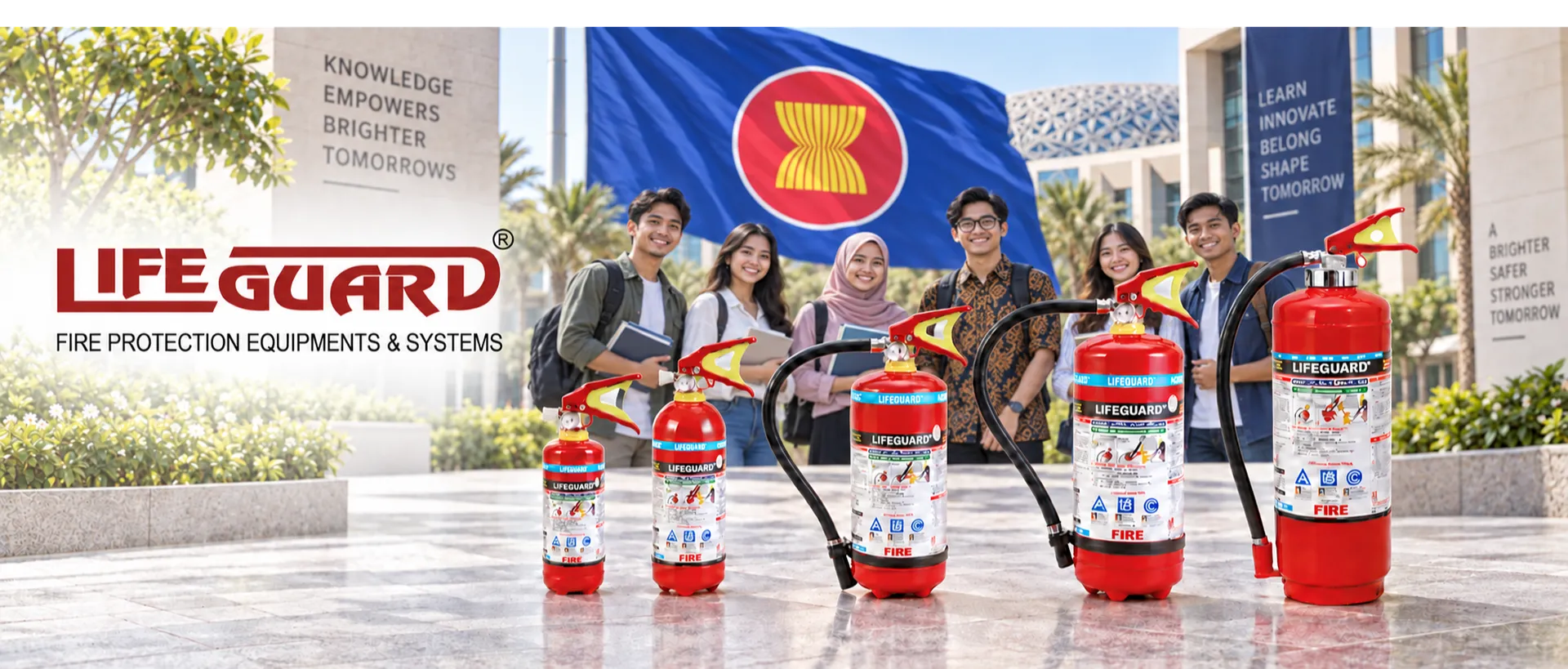
University Automatic Suppression Exporter in Asia | LIFEGUARD®
Advanced Automatic Fire Suppression Solutions for Universities Across Asia
LIFEGUARD® is an experienced university automatic suppression exporter in Asia, providing fire protection equipment and engineered automatic fire suppression solutions for universities, colleges, research institutions, technical institutes, medical colleges, laboratories, libraries, hostels, administrative buildings and other educational campuses.
Manufactured by United Fire Equipments Pvt. Ltd., LIFEGUARD® has been associated with fire safety equipment manufacturing since 1991 and supports institutional, industrial and infrastructure fire protection requirements through a comprehensive portfolio of fire safety products and systems.
Modern universities are no longer limited to classrooms and lecture halls. Large educational campuses may include computer laboratories, server rooms, electrical rooms, research laboratories, workshops, libraries, commercial kitchens, hostels, auditoriums, data centres, laboratories and critical utility areas.
Each of these locations can present a different fire hazard. Therefore, a university fire protection strategy may require a combination of automatic fire suppression, fire detection and alarm systems, portable fire extinguishers, hydrant systems and specialised fire protection solutions.
LIFEGUARD® provides application-oriented automatic suppression solutions that can be evaluated according to the specific hazard, protected volume, equipment configuration and applicable project requirements.
University Automatic Fire Suppression System Manufacturer & Exporter
An automatic fire suppression system is designed to detect a developing fire condition and initiate suppression with limited dependence on manual intervention.
A typical engineered system may include:
- Fire detection devices
- Releasing control panel
- Suppression agent cylinder
- Cylinder valve
- Actuation mechanism
- Discharge piping
- Discharge nozzles
- Manual release station
- Abort switch, where required
- Audible and visual alarms
- Pressure monitoring
- HVAC shutdown interface
- Electrical shutdown/interlock
- Emergency controls
- System status indication
The exact components and operating sequence depend on the selected suppression technology, hazard classification and approved system design. LIFEGUARD's existing automatic-suppression guidance similarly describes detection, alarm, shutdown/interlock and agent-discharge functions as part of an engineered system.
Automatic Suppression Solutions for University Campuses
A university campus can contain multiple fire-risk zones. Instead of using a single suppression technology throughout the entire campus, the fire protection system should be selected according to the specific hazard.
1. Server Room Fire Suppression
University server rooms may contain critical academic, administrative, examination, attendance, CCTV and networking infrastructure.
A suitable clean-agent suppression system can be considered for areas containing sensitive electronic equipment where minimising post-discharge residue is important.
Typical protection may include:
- Clean-agent cylinders
- Releasing control panel
- Smoke/heat detection
- Discharge nozzles
- Manual release
- Abort switch
- Audible/visual warning
- HVAC shutdown
- Pressure-relief provisions
- Alarm and BMS interfaces
The system should be engineered based on room volume, enclosure integrity, equipment layout, agent concentration and applicable standards.
2. University Computer Laboratory Fire Suppression
Computer laboratories contain electrical equipment, power supplies, cabling and electronic devices.
LIFEGUARD® can support suppression requirements for:
- Computer labs
- ICT rooms
- Digital classrooms
- Networking rooms
- Electronics laboratories
- Computer server areas
- Communication rooms
Where gaseous suppression is selected, the system can be designed to provide rapid response while reducing the risk of residue associated with certain conventional extinguishing media.
3. Electrical Room & Panel Suppression
Electrical rooms and control panels can present a significant ignition risk because of electrical faults, overheating, short circuits and equipment failures.
LIFEGUARD® can support automatic suppression requirements for:
- Electrical panels
- MCC panels
- Control panels
- UPS systems
- Battery rooms
- Electrical rooms
- Switchgear rooms
- Control cabinets
For individual electrical cabinets, compact local-application suppression solutions may also be considered depending on the enclosure, hazard and approved system design.
4. University Laboratory Fire Suppression
Science, chemical and research laboratories can contain specialised equipment and materials requiring carefully evaluated fire protection.
Potential applications include:
- Chemistry laboratories
- Physics laboratories
- Research laboratories
- Biotechnology laboratories
- Pharmaceutical laboratories
- Engineering laboratories
- Testing laboratories
- Medical research facilities
The suppression technology should be selected only after evaluating the materials present, fire characteristics, occupancy, ventilation and applicable regulations.
5. University Library Fire Protection
Libraries contain books, paper records, archives, digital equipment and valuable educational resources.
Fire protection may incorporate:
- Automatic fire detection
- Addressable fire alarm systems
- Clean-agent suppression where suitable
- Portable fire extinguishers
- Hydrant/hose reel protection
- Emergency notification
- Smoke management
- Fire-rated compartmentation
For valuable archival or electronic collections, the selection of suppression technology requires particular attention to potential secondary damage from the extinguishing agent.
6. University Kitchen Fire Suppression
Large universities often operate cafeterias, food courts and commercial kitchens.
Kitchen areas can contain:
- Cooking oils
- Fryers
- Gas-fired appliances
- Electrical cooking equipment
- Exhaust hoods
- Ducting
- Grills
- Cooking ranges
Automatic kitchen suppression can be designed to detect and suppress fires in identified cooking hazards and, where required, interface with fuel or electrical shutdown systems.
7. Hostel & Student Accommodation Fire Protection
University hostels and student accommodation require special attention to life safety because of occupancy levels and sleeping accommodation.
A comprehensive protection strategy may include:
- Smoke detection
- Heat detection
- Fire alarm systems
- Manual call points
- Audible/visual alarms
- Portable extinguishers
- Hydrant systems
- Hose reels
- Emergency lighting
- Fire doors
- Evacuation systems
- Special hazard suppression where required
Automatic suppression requirements should be determined according to the building design, occupancy, local regulations and fire strategy.
8. Auditorium & Multipurpose Hall Fire Safety
University auditoriums and event halls can accommodate large numbers of people.
Fire protection planning can incorporate:
- Fire detection
- Alarm notification
- Emergency communication
- Portable extinguishers
- Hydrant systems
- Automatic suppression
- Smoke management
- Emergency exits
- Evacuation arrangements
The protection system should be coordinated with the architectural and MEP design.
9. Data Centre & Critical Infrastructure Protection
Modern universities increasingly depend on digital infrastructure.
Critical IT areas may include:
- Data centres
- Server rooms
- Network operation centres
- UPS rooms
- Communication rooms
- Examination-data servers
- CCTV control rooms
- Security control rooms
LIFEGUARD® can support project requirements for clean-agent and special-hazard fire suppression systems for such applications, subject to system design, agent suitability and applicable approvals.
How Does a University Automatic Suppression System Work?
Depending on the system technology, an automatic suppression system may follow a sequence such as:
Fire Detection → Alarm → Verification/Release Logic → Warning → Interlock/Shutdown → Suppression Discharge → Fire Control → System Indication
A typical engineered gaseous suppression system may operate as follows:
Step 1 – Fire Detection
Smoke, heat or other approved detection devices identify the developing fire condition.
Step 2 – Fire Alarm
The fire alarm/releasing panel receives the detection signal and activates the programmed alarm sequence.
Step 3 – Warning
Audible and visual warning devices notify occupants before discharge where required by the system design.
Step 4 – Interlock
HVAC, ventilation, electrical equipment or other connected services may be shut down according to the approved cause-and-effect logic.
Step 5 – Agent Release
Following the programmed release sequence, the suppression agent is discharged through the designed nozzle network.
Step 6 – Fire Suppression
The agent reaches the protected enclosure at the required design concentration or application rate to control or suppress the fire.
Step 7 – System Indication
The releasing panel provides system status and activation information for emergency response and subsequent inspection.
The exact sequence must always follow the approved system design and applicable fire-safety requirements.
Why Universities Need Automatic Fire Suppression
Universities combine a wide variety of occupancies and fire hazards within a single campus.
Automatic suppression can provide additional protection for areas where:
- Fire growth could threaten critical equipment
- Human response may be delayed
- Valuable electronic equipment is installed
- A fire could interrupt essential services
- Sensitive records need protection
- A localised equipment fire could spread rapidly
- Special hazards require engineered suppression
Automatic suppression should form part of a complete fire protection strategy, rather than being treated as a replacement for detection, alarm, evacuation, passive protection and portable firefighting equipment.
University Fire Suppression Equipment Exporter Across Asia
LIFEGUARD® supports fire suppression and fire safety requirements for Asian markets, subject to destination-country regulations, product suitability, project specifications and commercial feasibility.
Potential markets include:
- India
- United Arab Emirates
- Saudi Arabia
- Qatar
- Oman
- Kuwait
- Bahrain
- Bangladesh
- Nepal
- Bhutan
- Sri Lanka
- Maldives
- Singapore
- Malaysia
- Indonesia
- Thailand
- Vietnam
- Philippines
- Kazakhstan
- Uzbekistan
- Other Asian markets
Export documentation, packaging, shipping arrangements and technical documentation can be coordinated according to the specific project and destination.
LIFEGUARD's existing Asian export content follows a similar destination-focused approach and notes that final supply is subject to local regulations and project requirements.
Automatic Fire Suppression Systems for Different University Areas
University AreaPotential Fire ProtectionServer RoomClean-agent suppression + detectionData CentreEngineered gaseous suppression + detectionElectrical RoomAutomatic suppression + detectionControl RoomClean-agent/special-hazard suppressionComputer LabDetection + suitable suppressionResearch LaboratoryHazard-specific suppressionCommercial KitchenKitchen suppressionLibraryDetection + suitable suppressionArchive RoomDetection + suitable suppressionUPS RoomSpecial-hazard suppressionBattery RoomApplication-specific fire protectionHostelDetection, alarm, extinguishers and other required systemsAuditoriumDetection, alarm and building fire protectionWorkshopHazard-specific extinguishing equipmentGenerator RoomAppropriate detection and suppression
Note: The table represents potential applications. The final system must be selected following a fire-risk assessment, engineering design and applicable local requirements.
LIFEGUARD® University Fire Suppression Project Support
As a manufacturer and exporter of fire safety equipment, LIFEGUARD® can support university projects with:
Technical Assistance
- Product selection
- Application assessment
- Technical proposals
- System configuration
- Equipment schedules
- BOQ assistance
Documentation
- Product datasheets
- Technical catalogues
- Installation information
- Operation and maintenance documentation
- Compliance documentation applicable to the supplied product/system
Project Support
- Tender support
- Budgetary quotations
- Bulk procurement
- Export packaging
- Dispatch coordination
- Installation guidance
- Testing and commissioning support
- After-sales coordination
LIFEGUARD's existing export programmes similarly identify technical documentation, BOQ support, system drawings, installation guidance and testing/commissioning assistance among potential project-support services.
OEM & Bulk Export of Automatic Suppression Equipment
LIFEGUARD® can also work with eligible:
- Fire protection distributors
- System integrators
- EPC contractors
- MEP contractors
- Fire consultants
- Educational groups
- Government procurement agencies
- Institutional buyers
- Importers
- Regional dealers
Subject to technical feasibility and commercial requirements, OEM/private-label and bulk procurement opportunities can be discussed.
Potential support includes:
- Bulk manufacturing
- Project-specific configurations
- Custom branding
- Technical documentation
- Export packaging
- Distributor supply
- Tender documentation
- Long-term supply arrangements
Quality, Standards & Compliance
Fire suppression systems are life-safety systems and must be designed, installed, tested and maintained correctly.
For Asian projects, the applicable requirements may depend on:
- Destination country
- Building regulations
- Local fire authority
- Civil defence requirements
- Project consultant specification
- Insurance requirements
- Applicable national standards
- Applicable international standards
- Product-specific approvals
- Occupancy type
- Hazard classification
LIFEGUARD® recommends reviewing these requirements before finalising equipment selection.
Certification and approval should always be verified for the specific product, model, system, project and destination country.
Installation & Maintenance of University Suppression Systems
Correct installation is essential for system reliability.
Inspection and maintenance programmes may include checking:
- Suppression cylinders
- Cylinder pressure
- Agent quantity
- Detection devices
- Releasing panel
- Manual release station
- Abort switch
- Discharge piping
- Nozzles
- Alarm devices
- Interlock functions
- HVAC shutdown
- Electrical shutdown
- System power supply
- Battery backup
- Enclosure integrity
- Warning signage
The system should also be reviewed when there are changes to the protected room, equipment layout, ventilation system or fire hazard.
Why Choose LIFEGUARD® as Your University Automatic Suppression Exporter?
Experienced Fire Safety Manufacturer
LIFEGUARD® is a fire safety brand manufactured by United Fire Equipments Pvt. Ltd., with manufacturing experience dating to 1991.
Comprehensive Fire Protection Portfolio
LIFEGUARD® can support university projects requiring multiple categories of fire safety equipment and systems.
Application-Specific Solutions
Different university areas have different hazards. LIFEGUARD® focuses on selecting systems according to the application rather than applying one generic suppression technology everywhere.
Export-Oriented Support
We support international enquiries with technical information, documentation, packaging and project coordination according to the destination and order requirements.
Support for Contractors & Distributors
LIFEGUARD® can work with consultants, EPC contractors, MEP contractors, system integrators, distributors and institutional buyers.
Project-Focused Technical Assistance
From initial enquiry and technical evaluation through equipment supply and commissioning support, project requirements can be coordinated according to the agreed scope.
Partner with LIFEGUARD® for University Fire Suppression Projects in Asia
Whether you are developing a new university campus, upgrading an existing educational facility or supplying fire protection equipment for an institutional project, LIFEGUARD® can support your requirement for automatic fire suppression and related fire safety equipment.
We welcome enquiries from:
Universities | Colleges | Educational Groups | EPC Contractors | MEP Contractors | Fire Consultants | System Integrators | Distributors | Importers | Government Institutions
For a technical and commercial evaluation, share:
- Project location
- University/educational facility type
- Protected area
- Room dimensions
- Equipment layout
- Fire hazard
- Preferred suppression technology
- Quantity
- BOQ
- Technical specification
- Required certifications
- Required delivery schedule
Our team can evaluate the requirement and propose suitable fire protection equipment and system options.
LIFEGUARD® – University Automatic Suppression Exporter Asia
Protecting Educational Infrastructure with Engineered Fire Protection Solutions
LIFEGUARD®
United Fire Equipments Pvt. Ltd.
Manufacturer of ISI-Certified Fire Safety Equipment
Email: ufe126@gmail.com | info@lifeguardindia.in
Website: www.lifeguardindia.in
Keywords






