https://updates.lifeguardindia.in/products/lg-611a-wsm-200-kg-with-collar-cable/13
University Automatic Suppression Supplier Africa
Advanced Automatic Fire Suppression Solutions for Universities, Campuses, Laboratories, Data Centres and Student Accommodation
Universities are among the most diverse and complex institutional environments to protect against fire. A modern university campus may include academic buildings, laboratories, libraries, computer centres, data centres, workshops, commercial kitchens, hostels, research facilities, electrical rooms, battery storage areas, auditoriums and administrative offices.
Each area can present a different fire hazard and therefore requires a carefully selected fire protection strategy.
LIFEGUARD® is an experienced fire safety equipment manufacturer and automatic fire suppression solution provider supporting university, educational and institutional fire protection projects for African markets.
Through United Fire Equipments Pvt. Ltd., LIFEGUARD® provides automatic fire suppression equipment, fire safety products, technical documentation, project support and export solutions for universities, colleges, research institutions, consultants, contractors, distributors and system integrators.
Our automatic suppression solutions can be considered for university campuses, laboratories, libraries, server rooms, data centres, electrical rooms, kitchens, workshops, student hostels, battery facilities and other high-risk areas.
Automatic Fire Suppression Systems for Universities in Africa
A university cannot normally be protected effectively with one type of extinguishing system throughout the entire campus.
A computer laboratory has a different risk profile from a commercial kitchen. A chemistry laboratory differs from a student hostel, while a data centre requires different considerations from a generator room.
LIFEGUARD® therefore focuses on application-specific automatic fire suppression solutions.
Depending on the hazard and project requirements, solutions may include:
- Clean-agent fire suppression systems
- Automatic kitchen fire suppression systems
- Electrical panel suppression systems
- Automatic modular suppression systems
- Water-mist fire suppression solutions
- Gas-based fire suppression systems
- Automatic detection and releasing systems
- Local application suppression
- Battery and lithium-ion fire protection solutions
- Fire alarm and suppression control equipment
- Portable fire extinguishers as complementary protection
The final system selection should always be based on the actual hazard, protected enclosure, occupancy, applicable standards and requirements of the relevant authority having jurisdiction.
Why Universities Need Automatic Fire Suppression
Universities operate large and often continuously occupied campuses.
Some areas remain active during normal teaching hours, while others—including server rooms, electrical rooms, research laboratories, archives and utility areas—may be unattended for extended periods.
A fire can originate from:
- Electrical faults
- Overloaded circuits
- Laboratory equipment
- Flammable liquids
- Cooking equipment
- Gas installations
- Battery systems
- UPS equipment
- Server equipment
- Machinery
- Generators
- Workshops
- Storage areas
- Research equipment
Automatic suppression provides an additional layer of protection by detecting a developing fire and activating the appropriate extinguishing mechanism without depending exclusively on manual firefighting.
It can help:
- Detect and respond to a developing fire
- Limit fire growth
- Protect critical equipment
- Reduce potential property damage
- Protect valuable academic records
- Reduce business and educational interruption
- Support emergency response
- Provide protection when selected areas are unattended
Automatic suppression is not a replacement for evacuation systems, fire alarms, portable extinguishers or trained emergency personnel. It should form part of an integrated fire and life-safety strategy.
LIFEGUARD® Automatic Suppression Solutions for Universities
1. Clean-Agent Fire Suppression Systems
University data centres, server rooms, computer laboratories, communication rooms and control centres contain sensitive electronic equipment that can be vulnerable to damage from unsuitable extinguishing media.
Clean-agent systems are designed for appropriate enclosed applications where protection of electronic equipment and other valuable assets is important.
Typical Applications
- University data centres
- Server rooms
- Computer laboratories
- Network rooms
- IT rooms
- UPS rooms
- Communication rooms
- Control rooms
- CCTV rooms
- Digital archives
- Research facilities
- Electronic laboratories
Depending on the project specification, suitable clean-agent technologies may include FK-5-1-12 and HFC-227ea, subject to design, safety and applicable project requirements.
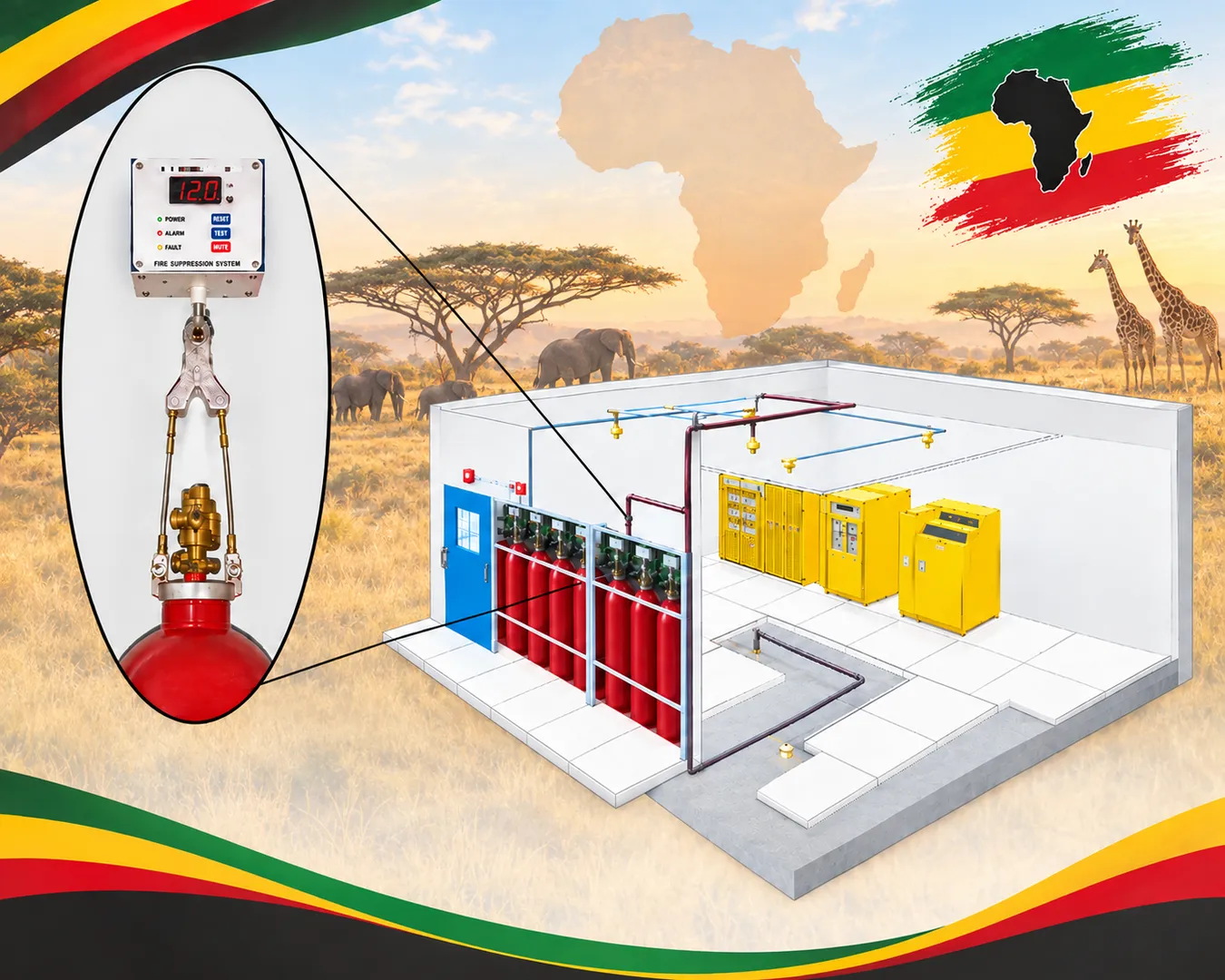
A typical engineered clean-agent system can include:
- Fire detectors
- Releasing control panel
- Agent storage cylinders
- Cylinder valves
- Actuators
- Distribution piping
- Discharge nozzles
- Manual release station
- Abort switch
- Audible alarm
- Visual warning indicator
- Pressure monitoring
- HVAC shutdown/interlock
- Room-integrity considerations
Agent quantity, nozzle arrangement, discharge time and system configuration must be determined through proper engineering calculations.
2. Automatic Kitchen Fire Suppression Systems
University cafeterias, canteens, food courts, hostel kitchens and institutional kitchens can present specialized fire hazards.
Cooking oil, grease, gas appliances, electrical equipment, high-temperature surfaces and exhaust systems can contribute to rapid fire development.
LIFEGUARD® automatic kitchen suppression solutions can be considered for:
- University cafeterias
- Student dining halls
- Hostel kitchens
- Institutional kitchens
- Central kitchens
- Food courts
- Staff dining facilities
- Hospitality training kitchens
Depending on the approved design, kitchen suppression can protect:
- Fryers
- Cooking ranges
- Griddles
- Cooking equipment
- Hoods
- Filters
- Plenums
- Exhaust ducts
The system can also be integrated with appropriate gas and electrical shutdown arrangements, where required by the system design.
3. Automatic Electrical Panel Fire Suppression
Electrical distribution equipment is installed throughout almost every university campus.
Electrical faults, loose connections, overheating, component failures and short circuits can create fire risks inside enclosed cabinets.
LIFEGUARD® offers localized automatic suppression solutions for appropriately assessed applications such as:
- LT panels
- Electrical distribution boards
- MCC panels
- Control panels
- UPS cabinets
- Solar inverter panels
- Generator control panels
- Electrical enclosures
- Network cabinets
- Laboratory control cabinets
Depending on the application, automatic detection may utilize suitable heat detection, detection tubing or other approved activation technologies.
The suppression agent should be selected according to the electrical equipment, enclosure characteristics and fire hazard.
4. Automatic Modular Fire Suppression Systems
Automatic modular suppression systems can provide localized protection for selected small or enclosed hazards without requiring a large centralized suppression system.
Potential applications include:
- Electrical rooms
- Small server rooms
- Generator enclosures
- Utility rooms
- Control cabinets
- Storage areas
- Small plant rooms
- Battery enclosures
- Communication cabinets
The correct extinguishing medium, capacity and activation temperature should be established through a technical assessment of the protected hazard.
5. University Laboratory Fire Suppression
Research and teaching laboratories can contain a combination of electrical equipment, chemicals, gases, solvents, heating equipment and specialized research apparatus.
Laboratory fire protection therefore requires careful consideration of:
- Chemical inventory
- Flammable materials
- Gas systems
- Electrical equipment
- Laboratory processes
- Ventilation
- Fire load
- Occupancy
- Emergency shutdown arrangements
- Storage configuration
LIFEGUARD® can support fire protection requirements for:
Chemistry Laboratories
Protection for laboratories involving chemicals, solvents and specialized research materials.
Engineering Laboratories
Protection for machinery, electrical systems and technical testing equipment.
Electronics Laboratories
Protection for electronic equipment, power supplies and electrical test systems.
Physics Laboratories
Application-specific protection for experimental equipment and electrical installations.
Research Centres
Fire protection for specialized, high-value research equipment and infrastructure.
6. University Data Centre Fire Suppression
Digital infrastructure has become an essential component of modern universities.
Data centres and server rooms may support:
- Student information systems
- Online learning platforms
- Research databases
- Digital libraries
- Campus networks
- Administrative systems
- Security systems
- Examination systems
- Communication infrastructure
A fire in a critical IT facility can result in both physical equipment damage and operational disruption.
LIFEGUARD® can provide engineered automatic clean-agent fire suppression solutions for suitable enclosed data-processing areas.
A typical sequence may involve:
Fire Detection → Alarm → Pre-Discharge Warning → Interlock/Shutdown → Agent Release → Post-Discharge Monitoring
The exact sequence depends on the approved system design and applicable standard.
7. Fire Suppression for University Libraries & Archives
Libraries and archives can contain substantial quantities of paper, books, documents and other combustible materials.
Some university archives may also contain irreplaceable research material and historical records.
Fire protection may incorporate:
- Early fire detection
- Automatic suppression
- Portable extinguishers
- Fire alarm systems
- Fire compartmentation
- Smoke management
- Emergency evacuation provisions
Where sensitive materials are involved, the suppression technology should be selected by considering both fire-control requirements and the potential impact of the extinguishing medium on valuable contents.
8. Automatic Fire Protection for Student Hostels
Student accommodation creates additional life-safety considerations because buildings may remain occupied day and night.
University hostels may require a coordinated combination of:
- Automatic fire detection
- Fire alarm systems
- Portable fire extinguishers
- Automatic suppression where required
- Emergency lighting
- Fire doors
- Escape-route signage
- Emergency communication
- Fire safety training
- Evacuation procedures
Automatic suppression systems should be integrated with the overall building fire-safety design and local regulatory requirements.
9. Generator & Utility Room Suppression
University campuses frequently operate:
- Diesel generators
- Electrical substations
- Pump rooms
- Mechanical rooms
- Utility equipment
- HVAC equipment
- Fuel systems
These areas may contain fuel, lubricants, electrical equipment and hot surfaces.
Automatic suppression may be considered for selected generator and utility applications after evaluating:
- Fuel type
- Equipment configuration
- Room volume
- Ventilation
- Fire load
- Occupancy
- Electrical systems
- Shutdown requirements
10. Lithium-Ion Battery & EV Fire Protection
Modern university campuses are increasingly adopting electric vehicles, battery-powered equipment, UPS systems and energy-storage technologies.
Potential applications include:
- EV charging areas
- Electric campus vehicles
- Battery rooms
- UPS battery installations
- Energy-storage systems
- Robotics laboratories
- Battery research laboratories
- E-mobility facilities
LIFEGUARD® offers specialized LION-EX® lithium-ion battery fire protection solutions and other battery-related fire safety technologies for appropriately assessed applications.
Battery fire protection should be selected based on the battery chemistry, capacity, enclosure configuration, ventilation, installation arrangement and expected fire scenario.
Integrated Automatic Fire Protection for University Campuses
Automatic suppression works most effectively as part of a coordinated fire protection architecture.
A university fire protection strategy can integrate:
Fire Detection
↓
Fire Alarm
↓
Automatic Suppression
↓
Equipment / HVAC Interlock
↓
Emergency Notification
↓
Evacuation & Emergency Response
This integrated approach helps ensure that detection, alarm, suppression and emergency response functions work together.
University Automatic Suppression Supplier for African Markets
LIFEGUARD® supports fire protection enquiries from educational and institutional projects across African markets.
Potential markets include:
- South Africa
- Kenya
- Nigeria
- Ghana
- Tanzania
- Uganda
- Ethiopia
- Rwanda
- Zambia
- Zimbabwe
- Botswana
- Namibia
- Mozambique
- Mauritius
- Egypt
- Morocco
- Algeria
- Senegal
- Côte d'Ivoire
- Cameroon
- Angola
- Democratic Republic of the Congo
- Other African markets
Africa is not a single regulatory market. Fire-safety codes, certification requirements, import procedures, environmental conditions and authority approvals can vary between countries.
Accordingly, the destination country and project requirements should be confirmed before final equipment selection.
Automatic Suppression Solutions for New & Existing Universities
New University Construction Projects
Fire suppression systems can be incorporated during the design stage to coordinate:
- Detection
- Suppression
- Piping
- Cylinders
- Nozzles
- Control panels
- Electrical interfaces
- HVAC interfaces
- Room integrity
- Emergency controls
Early coordination can reduce installation conflicts and simplify commissioning.
Existing University Fire-Safety Upgrades
Existing campuses can be assessed for modernization and additional protection in:
- Server rooms
- Electrical rooms
- Laboratories
- Kitchens
- Archives
- Workshops
- Battery areas
- Generator rooms
University Expansion Projects
New academic buildings, research centres, hostels, libraries and data centres can be protected according to their individual hazards.
University Automatic Suppression Design Considerations
Automatic suppression equipment should not be selected only according to room size or purchase price.
Professional system selection should consider:
- Fire hazard
- Fuel type
- Fire classification
- Protected volume
- Occupancy
- Equipment installed
- Fire load
- Ventilation
- Room openings
- Enclosure integrity
- Ambient temperature
- Electrical supply
- Detection requirements
- Agent requirements
- Discharge requirements
- Interlocks
- Emergency shutdown
- Local regulations
- Applicable standards
- Inspection and maintenance requirements
The final system should be designed or reviewed by appropriately qualified fire-protection professionals and approved by the relevant authority where required.
Fire Safety Standards & Regulatory Considerations in Africa
Fire-safety requirements vary considerably between African countries and individual projects.
Depending on the destination and specification, projects may reference:
- NFPA standards
- National building regulations
- National fire codes
- Local fire authority requirements
- Applicable electrical standards
- Manufacturer requirements
- Consultant specifications
- Authority Having Jurisdiction requirements
For example, research on fire safety in Kenyan universities has identified the importance of fire detection, alarm, hydrant and automatic suppression provisions, illustrating why university projects require an integrated approach rather than relying only on portable extinguishers.
Nigeria also has specific building-code provisions dealing with automatic fire detection systems and their installation requirements.
Therefore, LIFEGUARD® recommends confirming the applicable national regulations and AHJ requirements for the destination country before finalizing a suppression system.
Installation, Testing & Commissioning
Automatic suppression equipment must be properly installed and commissioned to provide dependable performance.
Depending on the system, commissioning activities may include:
- Detector testing
- Fire alarm testing
- Releasing panel testing
- Manual release testing
- Abort switch testing
- Pressure-switch verification
- Solenoid/actuator verification
- Agent-release logic testing
- HVAC shutdown testing
- Electrical interlock testing
- Gas shutdown testing
- Audible alarm testing
- Visual indicator testing
- System functional testing
- Documentation and handover
LIFEGUARD® can support project partners with technical documentation and commissioning guidance according to the agreed project scope.
Inspection & Maintenance of University Suppression Systems
Fire suppression systems need periodic inspection and maintenance to remain ready for operation.
A maintenance program may include:
- Cylinder inspection
- Pressure or weight verification where applicable
- Detector inspection
- Control-panel testing
- Alarm testing
- Nozzle inspection
- Piping inspection
- Actuator inspection
- Manual release inspection
- Abort switch testing
- Interlock verification
- Warning-sign inspection
- Service documentation
- Periodic functional testing
Inspection and maintenance intervals should follow the manufacturer's recommendations, applicable standards and local regulatory requirements.
Why Choose LIFEGUARD® as a University Automatic Suppression Supplier?
Established Fire Safety Manufacturer
LIFEGUARD® is backed by United Fire Equipments Pvt. Ltd., an Indian manufacturer of fire safety equipment and fire protection solutions.
Application-Specific Solutions
A university contains many different fire hazards. LIFEGUARD® focuses on selecting solutions according to the specific application rather than treating every area with the same suppression technology.
Broad Fire Protection Portfolio
Our portfolio includes solutions for:
- Portable fire protection
- Clean-agent suppression
- Gas fire suppression
- Kitchen suppression
- Water-mist applications
- Electrical-panel suppression
- Lithium-ion battery fire protection
- Detection and releasing arrangements
- Specialized fire safety equipment
Project & Export Support
LIFEGUARD® can work with:
- Universities
- Government institutions
- Private educational groups
- Consultants
- Architects
- EPC contractors
- MEP contractors
- Fire-system integrators
- Fire protection contractors
- Importers
- Distributors
- Facility-management companies
- Institutional procurement teams
Depending on the project, technical documentation can include:
- Product datasheets
- Technical catalogues
- Drawings
- Test certificates
- Compliance documents
- Installation guidance
- Operation and maintenance information
- Packing documentation
- Commercial documentation
- Project-specific technical information
Certification and approval requirements vary by country and project, so the applicable requirements should be identified during the enquiry stage.
University Fire Suppression Projects Across Africa
LIFEGUARD® can support requirements for:
Government Universities
Fire protection for public-sector academic campuses and institutional buildings.
Private Universities
Automatic suppression for private university campuses, administrative buildings and student facilities.
Technical & Vocational Institutes
Protection for engineering workshops, laboratories and technical training areas.
Medical & Nursing Colleges
Fire protection for educational buildings, laboratories and associated facilities.
Research & Innovation Centres
Specialized suppression for research equipment, laboratories and technology infrastructure.
Student Accommodation
Fire protection solutions for university hostels and residential facilities.
University Data Centres
Clean-agent suppression for critical IT and communication infrastructure.
Campus Renovation Projects
Modernization and expansion of existing fire protection systems.
Request a University Automatic Fire Suppression Solution
If you are searching for a university automatic suppression supplier in Africa, LIFEGUARD® can support your project with application-specific fire protection equipment and technical coordination.
For an accurate technical and commercial proposal, project partners can provide:
- Destination country
- University/project name
- BOQ
- Technical specification
- Protected area
- Room dimensions
- Fire hazard
- Required suppression agent
- Quantity
- Applicable standards
- Authority requirements
- Installation scope
- Delivery location
- Required documentation
Our technical team can then review the requirement and identify an appropriate solution based on the project information provided.
LIFEGUARD® – University Fire Protection & Automatic Suppression Solutions
United Fire Equipments Pvt. Ltd.
Delhi, India
Email: ufe126@gmail.com | info@lifeguardindia.in
Website: www.lifeguardindia.in
Keywords