
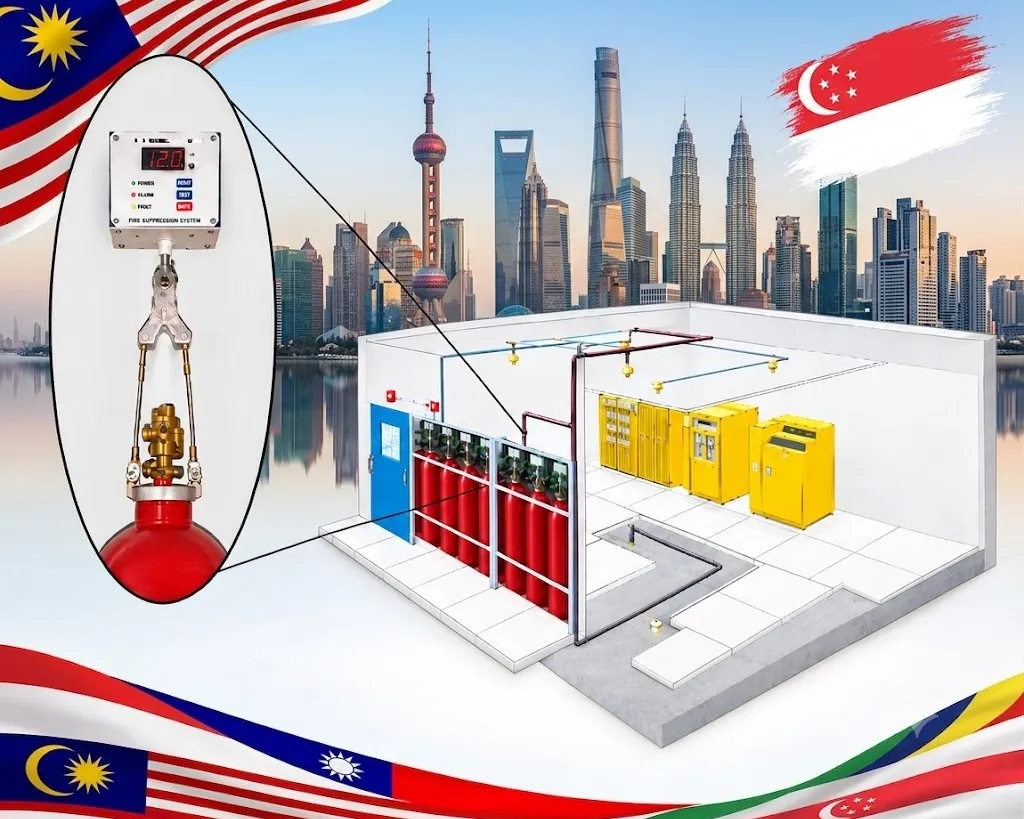
University Clean Agent Suppression Manufacturer Asia
Advanced Clean Agent Fire Suppression Systems for Universities, Campuses, Laboratories, Data Centres & Critical Infrastructure
LIFEGUARD® is an Indian fire safety equipment manufacturer providing university clean agent suppression systems for projects across Asia, with solutions designed for critical areas where conventional water-based firefighting may not be suitable. Our clean agent fire suppression solutions are developed for applications such as university data centres, server rooms, laboratories, electrical rooms, control rooms, archives, libraries, communication rooms, UPS rooms and other technology-intensive facilities.
Modern universities are no longer limited to classrooms and administrative buildings. Large educational campuses increasingly incorporate research laboratories, computer centres, data centres, server rooms, electrical infrastructure, battery systems, libraries, digital archives and specialised technical facilities. These areas require fire protection capable of responding rapidly while considering sensitive electronic and electrical equipment.
LIFEGUARD® provides application-oriented clean agent fire suppression solutions for universities in Asia, supporting consultants, EPC contractors, MEP contractors, system integrators, facility managers, educational institutions and project developers.
Clean-agent systems use electrically non-conductive gaseous extinguishing agents that can provide total-flooding protection without leaving conventional solid or liquid extinguishing residue. ISO 14520-1:2023 establishes requirements and recommendations covering design, installation, testing, maintenance and safety of gaseous fire-extinguishing systems.
Why Universities in Asia Need Clean Agent Fire Suppression
University buildings contain a wide variety of fire risks. A conventional sprinkler system may be appropriate for many occupied areas, but specialised rooms containing valuable electronics, sensitive research equipment, electrical infrastructure or irreplaceable information may require a different protection strategy.
A properly engineered clean agent suppression system can be considered for areas where fire protection must address:
- Sensitive electronic equipment
- Server and networking infrastructure
- Electrical and control equipment
- Research and laboratory equipment
- Digital archives and records
- Communication systems
- UPS and power-conditioning equipment
- Mission-critical university IT infrastructure
- High-value technical equipment
- Areas where extinguishing-agent residue could create additional cleanup requirements
The objective is not simply to install cylinders and nozzles. A complete system requires appropriate hazard assessment, agent selection, enclosure evaluation, hydraulic/pneumatic calculation, detection, releasing logic, alarms, safety interfaces, commissioning and maintenance.
LIFEGUARD® – University Clean Agent Suppression Manufacturer for Asia
LIFEGUARD® operates from India as a manufacturer and fire safety solutions provider serving industrial, commercial and institutional applications.
Our approach combines fire suppression equipment with application-specific system engineering to help customers develop suitable protection strategies for university infrastructure.
For Asian projects, LIFEGUARD® can support:
- University fire protection consultants
- EPC contractors
- MEP contractors
- Fire protection contractors
- System integrators
- Educational institutions
- Facility management companies
- Government educational projects
- Private universities
- Research institutions
- Technology and innovation centres
- Data-centre operators
- OEM and distribution partners
The exact agent, equipment configuration, approvals and certification requirements should be established according to the project specification and the regulations applicable in the country of installation.
University Clean Agent Fire Suppression Systems
LIFEGUARD® can provide clean agent suppression configurations for different university applications.
1. Data Centre Clean Agent Suppression
University data centres can support student information systems, research databases, digital learning platforms, administration systems, campus networking and other critical services.
Clean agent protection can be engineered for:
- Server rooms
- Network rooms
- Data centres
- IT rooms
- Storage rooms
- Communication rooms
- Network operation centres
The system can integrate automatic fire detection with releasing controls to initiate suppression when the required detection and release conditions are satisfied.
2. Server Room Fire Suppression
Server rooms require careful consideration because water discharge can create secondary risks to electronic equipment.
A clean agent system can be designed as a dedicated suppression solution for the protected enclosure, incorporating:
- Smoke/heat detection as applicable
- Releasing control panel
- Clean-agent cylinders
- Container valves
- Distribution piping
- Discharge nozzles
- Manual release
- Abort switch
- Alarm indication
- Pressure monitoring
- HVAC shutdown interface
- Electrical shutdown/interlock where required
- Room integrity considerations
System design should be based on the selected agent, enclosure volume, hazard characteristics and applicable design standard.
3. University Laboratory Fire Suppression
Research laboratories may contain electrical equipment, instrumentation, chemicals, computers, testing equipment and other specialised assets.
A clean agent solution may be considered for selected laboratory environments where residue-free gaseous suppression is appropriate.
Potential applications include:
- Research laboratories
- Computer laboratories
- Electronics laboratories
- Instrumentation laboratories
- Research data rooms
- Testing laboratories
- Control laboratories
- Specialised university research facilities
The suppression strategy should be determined through a project-specific hazard assessment. Not every laboratory is suitable for the same extinguishing agent or suppression configuration.
4. Electrical Room Clean Agent Suppression
University campuses depend on extensive electrical infrastructure.
Potential protected areas include:
- Electrical control rooms
- LV/MV electrical rooms
- Control rooms
- Switchgear rooms
- UPS rooms
- Electrical panels
- Power-control areas
- Automation rooms
Where clean-agent protection is selected, the system can be coordinated with electrical shutdown and alarm interfaces according to the project design.
5. Library & Archive Fire Protection
University libraries and archives may contain books, manuscripts, documents, digital records and other valuable materials.
For selected enclosed areas, clean agent suppression can form part of a broader fire protection strategy.
Potential applications include:
- Rare-book rooms
- Archives
- Digital archives
- Document storage rooms
- Records rooms
- Special collections
- Museum-like university collections
Protection design should consider the occupancy, enclosure characteristics, materials stored, human occupancy and applicable fire regulations.
6. University Control Room Fire Suppression
Control rooms often contain sensitive electronics and communication equipment that supports building, laboratory, utility or campus operations.
LIFEGUARD® clean agent systems can be engineered for selected control-room applications using:
- Automatic detection
- Releasing control
- Clean agent cylinders
- Pipe network
- Discharge nozzles
- Audible/visual alarms
- Manual release
- Abort arrangement
- Equipment shutdown interfaces
7. UPS & Battery Room Fire Protection
Universities increasingly deploy UPS systems, energy storage systems and battery-backed infrastructure.
These areas require careful hazard evaluation because battery-related incidents can involve characteristics that differ from conventional Class A or electrical equipment fires.
Clean agent suppression should therefore not be treated as a universal solution for every battery hazard. The suppression strategy should be selected after assessing:
- Battery chemistry
- Energy capacity
- Enclosure configuration
- Ventilation
- Detection requirements
- Thermal runaway considerations
- Fire propagation risk
- Applicable local regulations
- Required emergency response strategy
For lithium-ion battery hazards, LIFEGUARD® can also offer specialised fire safety solutions where appropriate.
Clean Agent Options for University Applications
Depending on project requirements, clean-agent systems may be designed around different gaseous extinguishing technologies.
Possible technologies include:
FK-5-1-12 Based Fire Suppression
FK-5-1-12 systems are used for selected electronic, electrical and critical-equipment applications where a clean, electrically non-conductive extinguishing medium is required.
LIFEGUARD® can support project-specific FK-5-1-12 system configurations subject to the selected equipment, agent approvals and project requirements.
HFC-Based Clean Agent Systems
Certain HFC extinguishing agents have been used in gaseous fire suppression applications. Their applicability depends on current environmental regulations, local requirements, agent availability and project specifications.
Inert Gas Fire Suppression
Inert-gas systems can be considered for suitable applications where the project requires an electrically non-conductive gaseous extinguishing medium.
ISO 14520 includes specific requirements for various gaseous extinguishing agents and their physical properties, system design and safety considerations.
Automatic Detection & Clean Agent Release
A university clean agent suppression system is more than a cylinder-based extinguishing arrangement.
A complete automatic suppression system can integrate:
Fire Detection → Detection Logic → Releasing Panel → Pre-Discharge Warning → Equipment Interlocks → Agent Release → Alarm & Monitoring
Depending on the project design, system interfaces may include:
- Smoke detectors
- Heat detectors
- Aspirating smoke detection
- Releasing control panel
- Manual release station
- Abort switch
- Hooters/sounders
- Strobe indicators
- HVAC shutdown
- Damper control
- Electrical equipment shutdown
- Access-control interfaces
- Building Management System interfaces
- Fire alarm panel integration
- Remote monitoring
The exact cause-and-effect sequence should be approved by the consultant and relevant authority before commissioning.
Total Flooding Clean Agent Suppression for Universities
Many university applications involve enclosed rooms where total-flooding protection can be considered.
The basic concept involves introducing the required concentration of extinguishing agent into the protected enclosure and maintaining the necessary concentration for the specified design period.
This requires consideration of:
- Room volume
- Hazard classification
- Agent concentration
- Design temperature
- Leakage
- Openings
- Door construction
- Pressure relief
- Ventilation
- False ceiling
- Raised floor
- Cable penetrations
- HVAC arrangements
- Nozzle positioning
- Pipe network
- Discharge characteristics
ISO 14520-1:2023 specifically addresses design, installation, testing, maintenance and safety considerations for gaseous fire-extinguishing systems.
University Clean Agent Suppression Manufacturer for Asian Markets
Asia includes a diverse range of countries, construction practices, fire regulations and approval requirements. Therefore, a university fire suppression system should not be treated as a one-size-fits-all product.
LIFEGUARD® supports project-specific requirements for customers across Asian markets, including potential applications in:
- India
- UAE and wider Middle East projects serving Asian-linked organisations
- Singapore
- Malaysia
- Indonesia
- Thailand
- Vietnam
- Philippines
- Bangladesh
- Nepal
- Sri Lanka
- Maldives
- South Korea
- Other Asian markets
The applicable local authority requirements, certification requirements, environmental regulations and project specifications should always be verified for the actual installation country.
Standards & Compliance Considerations
For international university projects, the system design may need to consider relevant international standards, national regulations, authority requirements and consultant specifications.
Depending on the project, documentation may address:
- ISO 14520
- NFPA requirements where specified
- Applicable national fire codes
- Local civil defence/fire authority requirements
- Electrical and building regulations
- Consultant specifications
- Manufacturer design manuals
- Project-specific approval requirements
ISO 14520-1:2023 is the current published general requirements document for gaseous fire-extinguishing systems and covers design, installation, testing, maintenance and safety.
Important: Certification or approval should always be verified for the exact agent, cylinder, valve, control equipment, nozzle, system configuration and project application. Standards compliance should not be assumed merely because a product belongs to a particular product category.
Why Choose a Clean Agent System for University Infrastructure?
Clean agent suppression can be considered where the university needs fire protection for equipment and facilities that could be adversely affected by conventional extinguishing media.
Potential benefits include:
Residue-Free Suppression
Suitable gaseous agents can extinguish fire without depositing conventional solid extinguishing powder or liquid residue on protected equipment.
Protection of Sensitive Electronics
Clean-agent systems are particularly relevant to selected server, communication, control and electronic equipment environments.
Rapid Automatic Response
Automatic detection and releasing arrangements can provide a coordinated response to a developing fire when properly designed and commissioned.
Reduced Equipment Cleanup
Where the selected agent and application are appropriate, the absence of conventional extinguishing residue can simplify post-discharge equipment recovery.
Integration with Building Systems
The suppression system can be integrated with fire alarm, HVAC, electrical and building management interfaces as required by the project.
LIFEGUARD® University Fire Protection Solutions
LIFEGUARD® can support a broader university fire protection strategy beyond clean-agent suppression.
Our fire safety portfolio can include:
- Clean agent fire suppression
- FK-5-1-12 systems
- Gas-based fire suppression
- Automatic fire suppression
- Electrical panel suppression
- Server room suppression
- Data centre fire protection
- Kitchen fire suppression
- Water mist systems
- Fire extinguishers
- CO₂ fire extinguishers
- ABC/DCP extinguishers
- Lithium-ion battery fire protection solutions
- Detection and releasing systems
- Fire safety equipment for laboratories
- Special hazard fire protection
This enables consultants and contractors to evaluate different suppression technologies according to the specific hazard rather than applying one suppression method to every area.
Clean Agent System Design for New Universities
For new university construction projects, clean agent suppression can be incorporated during the design stage.
LIFEGUARD® can support project teams with information required for:
- Preliminary system selection
- Equipment schedules
- Agent selection
- Cylinder sizing
- Protected-room assessment
- Piping concept
- Nozzle arrangement
- Detection concept
- Cause-and-effect logic
- Technical submittals
- BOQ preparation
- Commercial quotations
- Installation requirements
- Testing and commissioning documentation
Early coordination is particularly important for server rooms, data centres, laboratories and electrical rooms because room construction, HVAC systems, cable openings and equipment layouts can affect the suppression system.
Clean Agent Retrofit for Existing University Buildings
Existing universities may have legacy fire protection systems that require modification, replacement or expansion.
LIFEGUARD® can support retrofit-oriented requirements such as:
- Existing server-room protection
- Data-centre expansion
- Additional laboratory rooms
- Electrical-room protection
- Control-room upgrades
- Replacement of obsolete suppression systems
- Capacity enhancement
- Additional cylinder banks
- Detection and releasing upgrades
Before retrofit, the existing room should be assessed for enclosure integrity, openings, HVAC arrangements, electrical interfaces and compatibility with the proposed suppression system.
University Clean Agent Suppression OEM & Project Support
For Asian distributors, fire contractors and system integrators, LIFEGUARD® can support OEM and project-oriented requirements.
Possible support areas include:
- Project-specific configurations
- Technical documentation
- Product schedules
- System drawings
- Datasheets
- Installation guidance
- Testing documentation
- Packaging for export projects
- Commercial quotations
- Distributor support
- Private-label/OEM discussions where applicable
- Project-based technical coordination
OEM requirements should be discussed according to the intended application, product configuration, certification requirements and destination-country regulations.
From Design to Commissioning
A reliable university suppression system requires more than equipment supply.
A typical project workflow can include:
1. Hazard Assessment
Identify protected rooms, fire risks, occupancy and critical assets.
2. Agent Selection
Select the appropriate clean-agent technology based on project requirements.
3. System Engineering
Develop system calculations, cylinder configuration, piping and nozzle arrangements.
4. Detection & Releasing
Develop detection and automatic release logic.
5. Interface Engineering
Coordinate HVAC, electrical shutdown, alarms and building management systems.
6. Installation
Install cylinders, valves, piping, nozzles, detection and control equipment.
7. Testing
Conduct functional testing and system verification.
8. Commissioning
Verify cause-and-effect operation and project requirements.
9. Handover
Provide relevant documentation, operating instructions and maintenance information.
10. Periodic Maintenance
Maintain the system according to applicable standards, manufacturer requirements and local regulations.
Applications Across University Campuses
LIFEGUARD® clean agent suppression systems can be considered for:
- University data centres
- Server rooms
- IT rooms
- Network operation centres
- Research laboratories
- Electronics laboratories
- Control rooms
- Electrical rooms
- UPS rooms
- Communication rooms
- Libraries
- Archives
- Digital record rooms
- Security control rooms
- Examination data centres
- Research computing facilities
- Instrumentation rooms
- Automation rooms
- Specialised technical rooms
Partner with LIFEGUARD® for University Fire Protection Projects in Asia
Universities require a coordinated approach to fire safety because different campus areas present different risks.
A server room may require clean-agent protection, a kitchen may require dedicated wet-chemical suppression, an electrical room may require a specialised suppression strategy, and common occupied areas may require conventional detection and fire protection systems.
LIFEGUARD® helps project stakeholders evaluate these requirements individually and develop application-oriented fire safety solutions.
As an Indian fire safety manufacturer, LIFEGUARD® can support Asian university projects, international buyers, distributors, contractors, consultants and system integrators seeking clean agent suppression equipment and technical support.
Request a University Clean Agent Suppression Proposal
Planning fire protection for a university, research institution, data centre or educational campus in Asia?
Share the following project information with LIFEGUARD®:
- Project location
- Protected room name
- Room length × width × height
- False ceiling/raised-floor details
- HVAC information
- Equipment type
- Fire hazard classification
- Required clean agent
- Applicable standard
- Cylinder location
- Approximate quantity of protected rooms
- Project drawings, if available
- BOQ/specification, if available
Our team can review the requirements and assist with an appropriate university clean agent fire suppression system configuration.
LIFEGUARD® – Fire Safety Equipment Manufacturer from India
United Fire Equipments Pvt. Ltd. (LIFEGUARD®)
Manufacturer of Fire Safety Equipment
New Delhi, India
Email: ufe126@gmail.com | info@lifeguardindia.in
Website: www.lifeguardindia.in
SEO Meta Information
Primary Keyword:
University Clean Agent Suppression Manufacturer Asia
Secondary Keywords:
- University Clean Agent Fire Suppression Asia
- University Fire Suppression Manufacturer Asia
- Clean Agent Suppression Manufacturer India
- University Fire Protection Solutions Asia
- University Gas Suppression System Asia
- University Server Room Suppression Asia
- University Data Centre Fire Suppression Asia
- University Laboratory Fire Suppression Asia
- Clean Agent Fire Suppression System Manufacturer
- FK-5-1-12 Suppression System Asia
- Clean Agent OEM Manufacturer Asia
SEO Title:
University Clean Agent Suppression Manufacturer Asia | LIFEGUARD®
Meta Description:
LIFEGUARD® is an Indian manufacturer of clean agent fire suppression solutions for universities, laboratories, server rooms, data centres and critical facilities across Asia.
Suggested URL:
/university-clean-agent-suppression-manufacturer-asia/
Suggested H1:
University Clean Agent Suppression Manufacturer Asia
Recommended Internal Linking Structure
For stronger topical SEO authority, link this page with supporting LIFEGUARD® pages such as:
- University Automatic Suppression Manufacturer Asia
- University Automatic Suppression Supplier Asia
- University Automatic Suppression Exporter Asia
- University Automatic Suppression Solutions Asia
- University Fire Safety Equipment Asia
- University Fire Protection Solutions Asia
- Clean Agent Fire Suppression Manufacturer India
- Data Centre Clean Agent Suppression
- Server Room Fire Suppression
- Laboratory Fire Suppression System
- FK-5-1-12 Fire Suppression System
- Automatic Fire Suppression System
- Lithium-Ion Battery Fire Protection
- Kitchen Fire Suppression System
- Electrical Panel Fire Suppression
- Clean Agent Suppression UAE
- Clean Agent Suppression Africa
- Clean Agent Suppression Europe
Keywords






