https://updates.lifeguardindia.in/products/lg-121-abc-1kg/18
University Fire Extinguisher Solutions in Europe
Comprehensive Fire Protection for Universities and Higher-Education Campuses
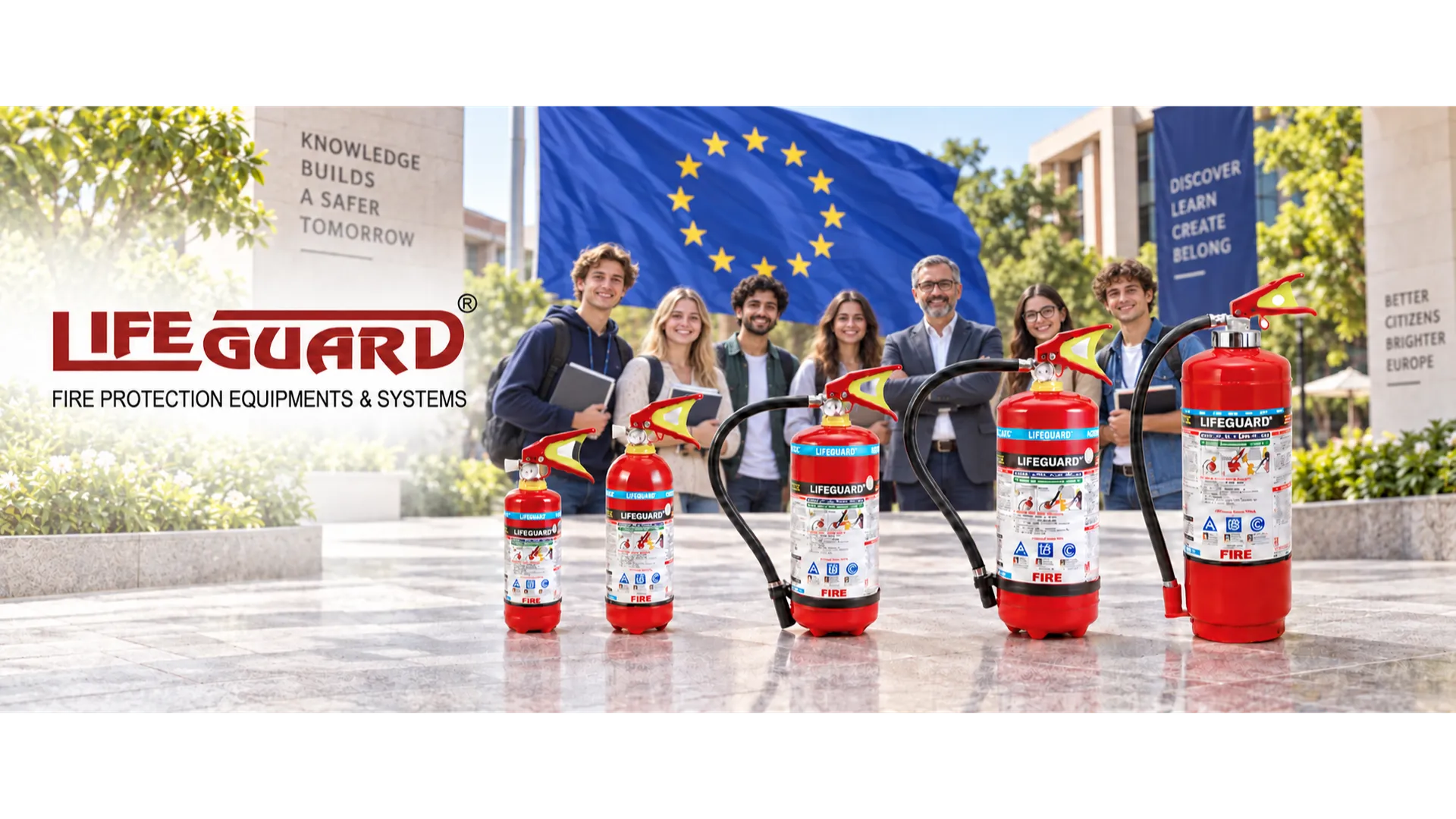
LIFEGUARD® by United Fire Equipments Pvt. Ltd. provides university fire extinguisher solutions for educational institutions, research centres, technical colleges and higher-education campuses across Europe.
Established in 1991, LIFEGUARD® offers a broad range of portable and wheeled fire extinguishers for the different risks found within modern university environments. Our solutions are developed for classrooms, laboratories, server rooms, libraries, workshops, student accommodation, kitchens, electrical facilities and other critical campus areas.
Universities require more than a standard collection of extinguishers. Each building has its own occupancy, equipment, combustible materials and operational risks. An effective university fire extinguisher solution must therefore combine appropriate equipment selection, strategic placement, compliant signage, staff awareness, periodic inspection and professional maintenance.
Why Universities Need Specialised Fire Extinguisher Solutions
A university campus may function like a small city, containing academic, residential, industrial, scientific, commercial and public-assembly spaces. A single extinguisher type cannot adequately address every fire risk.
Universities may face fires involving:
- Paper, furniture and textiles
- Electrical and electronic equipment
- Flammable liquids and solvents
- Flammable gases
- Cooking oils and fats
- Combustible metals
- Laboratory chemicals
- Lithium-ion batteries
- Vehicles, fuels and lubricants
- Specialist research materials
The extinguisher selection for each area must be based on a documented fire-risk assessment and the regulations applicable in the destination country.
LIFEGUARD® University Fire Extinguisher Range
ABC Dry Powder Fire Extinguishers
ABC dry powder extinguishers provide versatile protection for several common fire risks. Depending on the approved fire rating, they may be suitable for fires involving ordinary combustible materials, flammable liquids and gases.
Typical campus applications include:
- Engineering workshops
- Maintenance rooms
- Parking facilities
- Security cabins
- Generator rooms
- Campus stores
- Utility buildings
- Outdoor service areas
Dry powder can create extensive residue and may damage electronic equipment or contaminate sensitive environments. It should therefore be used selectively around laboratories, libraries, server rooms and digital equipment.
Carbon Dioxide Fire Extinguishers
CO₂ extinguishers are commonly selected for electrical and electronic equipment because carbon dioxide is non-conductive and leaves no residue.
They may be used in:
- Computer laboratories
- Server and network rooms
- Electrical-panel areas
- UPS rooms
- Audio-visual control rooms
- Communication centres
- Research-instrument rooms
- Administrative offices
CO₂ extinguishers require appropriate user training and should be used cautiously in small or poorly ventilated areas.
Water Fire Extinguishers
Water extinguishers are primarily intended for Class A fires involving materials such as wood, paper, cardboard and textiles.
Suitable locations may include:
- Classrooms
- Lecture halls
- Offices
- Meeting rooms
- Student residences
- General storage areas
- Common spaces
Water must not be applied to energised electrical equipment unless the specific extinguisher has been tested, approved and marked for that use.
Foam Fire Extinguishers
Foam extinguishers may provide protection against Class A and certain Class B risks, depending on the product’s approved classification.
Possible university applications include:
- Maintenance facilities
- Campus garages
- Mechanical workshops
- Fuel-handling areas
- Selected laboratories
- General-purpose buildings
The selected foam formulation must comply with environmental requirements applicable in the relevant European country, including restrictions relating to certain fluorinated substances.
Wet Chemical Fire Extinguishers
Wet chemical extinguishers are designed primarily for Class F fires involving cooking oils and fats.
They are suitable for:
- University kitchens
- Campus cafeterias
- Food courts
- Student dining facilities
- Catering departments
- Hospitality-training kitchens
The extinguisher’s capacity and fire rating should be selected according to the cooking appliances and quantity of oil present.
Clean Agent Fire Extinguishers
Clean agent extinguishers offer residue-free protection for sensitive and high-value equipment. They can help minimise contamination and secondary damage following discharge.
Potential applications include:
- Server rooms
- Digital archives
- Communication rooms
- Specialist laboratories
- Control rooms
- Electronic-equipment areas
- Valuable research facilities
Agent suitability, environmental impact and regulatory acceptability must be confirmed for the destination market.
Water-Mist Fire Extinguishers
Water-mist extinguishers may be considered for selected university environments where limited residue and reduced collateral damage are important.
Potential locations include:
- Libraries
- Archives
- Student accommodation
- Academic buildings
- Heritage university properties
- Selected office spaces
The extinguisher must carry the appropriate rating and approval for the identified fire risks.
Class D Fire Extinguishers
Class D extinguishers are designed for particular combustible-metal fires. The extinguishing agent must match the metal involved because no single Class D extinguisher is suitable for every combustible metal.
These units may be required in:
- Metallurgy laboratories
- Mechanical engineering departments
- Advanced manufacturing facilities
- Research workshops
- Material-science laboratories
Lithium-Ion Battery Fire Protection
Universities increasingly use lithium-ion batteries in laptops, laboratory devices, mobility equipment, energy-storage systems and research projects. Battery incidents present complex thermal-runaway, fire and re-ignition risks.
A suitable protection strategy may require:
- Hazard-specific extinguishers
- Early detection
- Safe isolation procedures
- Battery-storage controls
- Cooling and re-ignition monitoring
- Evacuation planning
- Emergency-response training
The solution must be based on battery chemistry, capacity, state of charge, equipment arrangement and the latest applicable guidance.
Wheeled Fire Extinguishers
Wheeled extinguishers provide a larger quantity of extinguishing agent for high-risk or extensive campus areas.
Suitable locations may include:
- Engineering workshops
- Generator facilities
- Campus substations
- Fuel-storage areas
- Vehicle-maintenance facilities
- Warehouses
- Industrial training centres
- Large research laboratories
Recommended Solutions by Campus Area
University AreaTypical RiskCommonly Considered SolutionClassroomsPaper, furniture and electrical equipmentWater, foam or locally approved multipurpose unitsLecture hallsClass A materials and electrical equipmentWater or foam with nearby CO₂ protectionComputer laboratoriesElectronic equipmentCO₂ or approved clean agentServer roomsSensitive electrical equipmentCO₂, clean agent or engineered suppressionLibrariesBooks, paper and valuable materialsWater-mist or risk-assessed Class A protectionArchivesDocuments and sensitive recordsWater-mist, clean agent or another approved solutionChemistry laboratoriesSolvents, chemicals and electrical equipmentHazard-specific extinguisher combinationEngineering workshopsSolids, oils, gases, metals and electrical risksPowder, foam, CO₂ or Class D equipmentCommercial kitchensCooking oils and fatsWet chemical extinguisherElectrical roomsEnergised equipmentCO₂ or another approved non-conductive agentStudent accommodationFurniture, textiles and electrical appliancesWater, foam or locally approved unitsParking facilitiesFuel, oil and vehicle risksFoam, powder or specialist protectionBattery laboratoriesLithium-ion cells and battery packsBattery-specific, risk-assessed protectionPlant roomsMechanical and electrical equipmentExtinguisher combination based on installed plant
This table is indicative. Final selection must be confirmed through a site-specific risk assessment.
Campus-Wide Fire Extinguisher Planning
Fire-Risk Assessment
The process begins with identifying hazards, combustible materials, ignition sources, occupants and existing fire-protection measures.
Building-Wise Extinguisher Schedule
A structured schedule should list every extinguisher by:
- Building name
- Floor and room
- Extinguisher type
- Extinguishing-agent capacity
- Fire rating
- Asset-identification number
- Installation date
- Service date
- Replacement or test date
Correct Extinguisher Selection
Each extinguisher should match the identified hazard. Installing the wrong extinguisher can increase danger, spread burning material or damage valuable equipment.
Strategic Placement
Extinguishers should be visible, accessible and positioned along escape routes or close to exits. Users should not be required to approach the fire to reach the equipment.
Signage and Identification
Clear signs help staff, students and visitors quickly identify extinguisher locations and types.
Training and Awareness
University security personnel, laboratory staff, kitchen employees, maintenance teams and designated fire wardens should receive suitable instruction.
Inspection and Maintenance
Every extinguisher should be included in a planned inspection and maintenance programme that complies with applicable national requirements.
European Standards and Compliance
University fire extinguisher solutions in Europe must comply with the regulations of the country where the equipment will be installed. Requirements may differ between European Union member states, the United Kingdom and other European countries.
Relevant requirements may include:
- EN 3 series for portable fire extinguishers
- EN 1866 series for mobile fire extinguishers
- Pressure Equipment Directive 2014/68/EU, where applicable
- Transportable Pressure Equipment Directive 2010/35/EU, where applicable
- Applicable CE-marking requirements
- National building and fire-safety regulations
- Workplace health and safety requirements
- Environmental restrictions on extinguishing agents
- Requirements of the university, consultant or insurer
- Local fire-authority requirements
Certification and conformity documents must be verified for the particular product model and intended destination before procurement.
Fire Extinguisher Solutions for University Laboratories
Laboratories require careful assessment because they may contain chemicals, gases, electrical instruments, pressurised equipment and reactive materials.
The review should consider:
- Safety data sheets for all hazardous substances
- Quantity and storage method of chemicals
- Presence of flammable liquids
- Combustible or reactive metals
- Electrical and electronic equipment
- Compressed-gas cylinders
- Potential chemical incompatibilities
- Ventilation arrangements
- Occupant training
- Emergency isolation procedures
- Risk of toxic smoke or vapour
A combination of extinguisher types may be required. Laboratory personnel should be trained not only in extinguisher use but also in recognising situations where immediate evacuation is the safest action.
Solutions for University Server and Data Rooms
Server rooms contain high-value electronic equipment that can be severely damaged by water, powder and smoke.
Suitable protection may include:
- CO₂ portable extinguishers
- Approved clean agent extinguishers
- Aspirating or early-warning smoke detection
- Automatic clean agent suppression
- Electrical isolation interfaces
- HVAC shutdown
- Room-integrity testing
- Emergency operating procedures
Portable extinguishers should complement, rather than replace, an engineered suppression system where such a system is required by the risk assessment.
Solutions for Student Accommodation
Student residences contain sleeping occupants, electrical appliances, furniture, textiles and cooking-related risks. Fire-safety solutions should therefore address both prevention and emergency response.
A complete strategy may include:
- Suitable extinguishers in designated locations
- Fire blankets in approved kitchen areas
- Automatic detection and alarm systems
- Emergency lighting
- Fire doors
- Clear escape routes
- Evacuation instructions
- Regular drills
- Controls against extinguisher obstruction or misuse
Local regulations may restrict extinguisher placement within individual residential units. The design must follow the applicable national and university requirements.
Solutions for University Kitchens
Commercial kitchens contain high-temperature cooking appliances, oils, fats, electrical equipment and fuel supplies.
Recommended protection may include:
- Wet chemical extinguishers
- CO₂ extinguishers for selected electrical risks
- Fire blankets
- Automatic kitchen hood suppression
- Emergency fuel and power isolation
- Staff training
- Cleaning and maintenance of extraction systems
A wet chemical extinguisher should be selected according to its Class F rating and the quantity of cooking oil present.
Extinguisher Cabinets, Stands and Accessories
LIFEGUARD® can support university projects with suitable extinguisher accessories, subject to project requirements.
These may include:
- Wall-mounting brackets
- Floor stands
- Single and double extinguisher cabinets
- Protective outdoor cabinets
- Extinguisher identification signs
- Anti-tamper devices
- Covers
- Trolleys
- Inspection tags
- Asset-identification labels
- Hose and nozzle assemblies
- Replacement valves and spare parts
Accessories should be selected according to the extinguisher model, installation environment and local accessibility requirements.
University Fire Extinguisher Audit and Replacement Planning
Older university campuses may have fire extinguishers of different makes, ages, specifications and maintenance histories. A structured audit can identify:
- Missing equipment
- Incorrect extinguisher types
- Expired service dates
- Damaged cylinders
- Corroded components
- Inaccessible locations
- Inadequate signage
- Obsolete extinguishing agents
- Unrecorded equipment
- Extinguishers affected by building alterations
Following the assessment, the university can implement a phased replacement and standardisation plan.
Inspection, Servicing and Maintenance
Extinguishers must be maintained in serviceable condition throughout their operational life.
Routine checks may include:
- Confirming that the extinguisher is in its assigned location
- Ensuring that access is unobstructed
- Examining the cylinder for damage or corrosion
- Checking the pressure indicator, where fitted
- Verifying the safety pin and tamper seal
- Inspecting the hose, horn and nozzle
- Confirming that instructions remain clear
- Reviewing the service label
- Checking agent weight, where applicable
- Recording the inspection
- Recharging or replacing used units
- Completing periodic pressure testing as required
Professional servicing should be undertaken by trained and competent personnel according to applicable standards and manufacturer instructions.
LIFEGUARD® Project Support
LIFEGUARD® provides technical and commercial support for university fire extinguisher projects.
Our support may include:
- Review of extinguisher schedules
- Product-selection assistance
- Technical data sheets
- Product catalogues
- Commercial quotations
- Compliance documentation, where applicable
- Product photographs
- Inspection coordination
- Export-worthy packaging
- Building-wise packing
- Labelling and asset identification
- Installation guidance
- Spare-part support
- Operation and maintenance information
- After-sales technical assistance
The exact scope is confirmed according to the project specification and purchase order.
Why Choose LIFEGUARD®?
Experience Since 1991
United Fire Equipments Pvt. Ltd. has served the fire-safety sector under the LIFEGUARD® brand since 1991.
Comprehensive Product Range
We offer solutions for common, electrical, kitchen, laboratory, workshop and specialist university fire risks.
Application-Based Approach
Products are selected according to the area, hazard and required fire rating rather than through a one-product-fits-all approach.
Institutional Project Support
We support new campuses, existing university upgrades, replacement programmes and multi-building procurement.
Bulk Supply Capability
LIFEGUARD® can support large quantity requirements and phased project deliveries.
Export and Distributor Support
We welcome enquiries from European importers, distributors, contractors, consultants and institutional procurement departments.
University Fire Extinguisher Solutions Across Europe
LIFEGUARD® supports enquiries for university fire extinguisher solutions in the United Kingdom, Germany, France, Italy, Spain, Portugal, the Netherlands, Belgium, Ireland, Poland, Austria, Switzerland, Sweden, Norway, Denmark, Finland, Greece, Romania, the Czech Republic and other European markets.
Product availability is subject to the approvals, conformity requirements, import regulations and technical specifications applicable to the destination country.
Frequently Asked Questions
Which fire extinguisher is best for a university?
There is no single extinguisher suitable for an entire university. Selection depends on the building, materials, equipment and fire risk. A campus normally requires a combination of water, foam, powder, CO₂, wet chemical or specialist extinguishers.
Which extinguisher should be used in a university laboratory?
The correct extinguisher depends on the chemicals, metals, solvents, gases and equipment present. Laboratory selection must be based on a detailed hazard assessment and safety data sheets.
What extinguisher is suitable for a university server room?
CO₂ or an approved clean agent extinguisher is commonly considered for electronic equipment. An automatic suppression system may also be required for critical server facilities.
Which extinguisher is required for a university kitchen?
A wet chemical extinguisher is generally selected for Class F fires involving cooking oils and fats. Other extinguishers may be needed for electrical or general combustible risks.
Can ABC powder extinguishers be installed everywhere?
ABC powder is versatile but can contaminate sensitive electronics, documents and laboratory equipment. Its use should be limited to locations where powder residue will not create unacceptable secondary damage.
How often should university fire extinguishers be inspected?
Inspection and servicing intervals must follow the destination country’s regulations, applicable standards, manufacturer instructions and university fire-safety policy.
Can LIFEGUARD® support a complete campus requirement?
Yes. LIFEGUARD® can support building-wise product schedules, bulk supply, accessories, documentation and project coordination, subject to the agreed scope.
Information Required for a Technical Proposal
For an accurate university fire extinguisher proposal, please provide:
- University and project name
- Destination country
- Building list and floor plans
- Existing fire-risk assessment
- Area-wise extinguisher schedule
- Required extinguisher types and capacities
- Required fire ratings
- Applicable standards and approvals
- Quantity of each model
- Cabinet, stand and signage requirements
- Labelling language
- Inspection requirements
- Delivery location
- Required delivery schedule
- Tender or consultant specification
Contact LIFEGUARD®
For university fire extinguisher solutions in Europe, share your campus requirements, quantity schedule and technical specifications with our team.
LIFEGUARD®
United Fire Equipments Pvt. Ltd.
Manufacturer of ISI-Certified Fire Safety Equipment
Phone: 8048034226
Email: ufe126@gmail.com | info@lifeguardindia.in
Website: www.lifeguardindia.in
Suggested SEO Metadata
SEO Title: University Fire Extinguisher Solutions Europe | LIFEGUARD®
Meta Description: Explore LIFEGUARD® university fire extinguisher solutions in Europe for classrooms, laboratories, kitchens, server rooms, libraries, workshops and student residences.
Primary Keyword: University fire extinguisher solutions Europe
Related Keywords: University fire safety solutions Europe, campus fire extinguisher systems, college fire extinguishers Europe, laboratory fire extinguisher solutions, university kitchen fire protection, university campus fire equipment, educational institution fire safety Europe
Suggested URL Slug: /university-fire-extinguisher-solutions-europe/
Keywords