
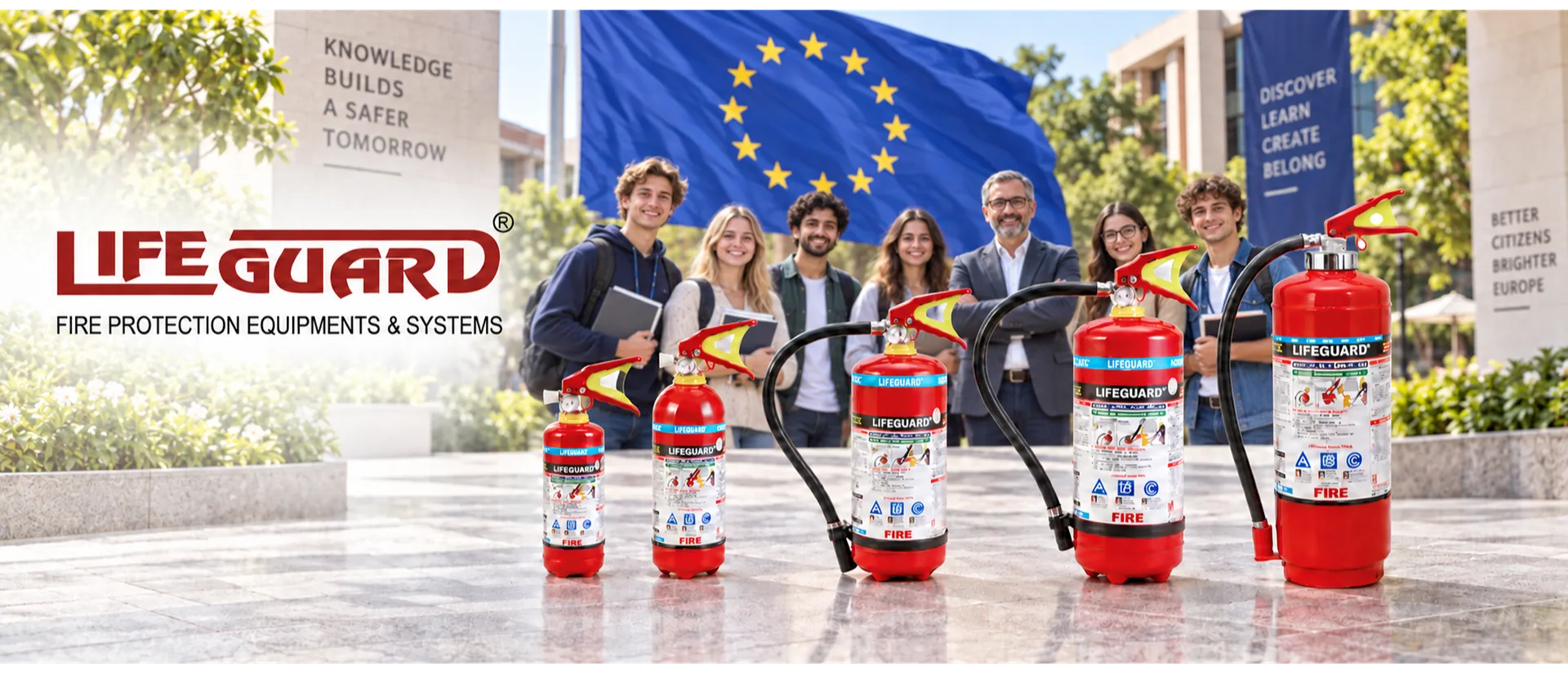
University Fire Protection Solutions Europe
Complete Fire Safety Solutions for Universities and Educational Campuses
Modern universities are dynamic environments that combine education, research, accommodation, administration, recreation and critical digital infrastructure. A single campus may contain lecture theatres, laboratories, libraries, student residences, commercial kitchens, server rooms, workshops, electrical facilities and heritage buildings. Since every area presents different fire hazards, university safety requires an integrated, risk-based approach rather than a single product.
LIFEGUARD®, a fire safety brand of United Fire Equipments Pvt. Ltd., provides comprehensive university fire protection solutions in Europe for new developments, existing campuses and facility upgrades. We support consultants, contractors, distributors and institutional buyers with carefully selected equipment, engineered suppression options, technical documentation and project coordination.
Our aim is to help universities protect life, valuable research, academic records, buildings and essential operations through reliable detection, warning, first-aid firefighting and automatic suppression solutions.
Understanding Fire Risks Within a University Campus
Universities operate for extended hours and accommodate occupants with different levels of familiarity with the buildings. Fire protection planning must therefore consider life safety, evacuation, property protection, business continuity and the needs of people who may require assistance.
Common campus risks include:
- High occupant density in lecture halls, auditoriums and event spaces
- Electrical equipment in classrooms, offices and student accommodation
- Flammable chemicals, gases and specialist processes in laboratories
- Large quantities of books, paper and archival material
- Energised servers, UPS systems and communication equipment
- Cooking oils, hot surfaces and grease deposits in kitchens
- Machinery, tools and combustible materials in workshops
- Transformers, switchgear and distribution panels in utility areas
- Restricted access, unfamiliar visitors and complex evacuation routes
A coordinated fire strategy should identify these risks, define appropriate protection measures and establish inspection, training and emergency-response procedures.
Our University Fire Protection Solutions
Fire Detection and Alarm Systems
Rapid detection and effective notification are essential for safe evacuation and early response. Depending on the building layout and approved fire strategy, a university fire alarm system may include:
- Addressable or conventional fire alarm control panels
- Smoke, heat and multi-criteria detectors
- Manual call points
- Audible and visual alarm devices
- Beam detectors for auditoriums, atriums and sports halls
- Aspirating smoke detection for data rooms and sensitive facilities
- Input/output modules for monitored equipment and building interfaces
- Repeater panels and networked campus monitoring
- Gas-release control panels for automatic suppression systems
The system can be planned to provide clear alarm zoning, event identification and controlled interfaces with equipment such as air-conditioning systems, fire doors, lifts and suppression controls, where required by the approved design.
Portable and Wheeled Fire Extinguishers
The correct extinguisher enables trained occupants to respond safely to an incipient fire. LIFEGUARD® offers solutions that may include:
- ABC dry powder extinguishers
- Carbon dioxide extinguishers
- Water and water-based extinguishers
- Foam extinguishers
- Wet chemical extinguishers for commercial kitchens
- Clean-agent extinguishers for sensitive equipment
- Wheeled extinguishers for larger hazards
Selection should be based on the anticipated fire class, electrical risk, environmental conditions, equipment sensitivity and applicable local requirements. Placement, signage and accessibility should be considered as part of the overall fire-risk assessment.
Clean-Agent and Gaseous Fire Suppression
University data centres, server rooms, research facilities, control rooms, archives and electrical spaces may contain high-value assets that could be harmed by water or powder residue. Engineered gaseous suppression provides rapid, three-dimensional fire control for selected enclosed risks.
Depending on the project specification, environmental objectives and regulatory acceptance, solutions may include FK-5-1-12, HFC-227ea or inert-gas systems. Typical system components include agent cylinders, actuation valves, discharge pipework, nozzles, detection devices, release controls, alarms, manual-release and abort stations, pressure monitoring and required interfaces.
Every system must be designed for its specific enclosure. Important considerations include room volume, hazard classification, design concentration, agent quantity, flow calculations, pipe routing, nozzle coverage, pressure relief, enclosure integrity and occupant safety.
Laboratory Fire Protection
University laboratories require special attention because the hazards can vary substantially between departments and research activities. Chemical storage, combustible liquids, pressurised gases, electrical instruments and heat-producing equipment may all be present.
Protection measures can include suitable fire detection, risk-specific portable extinguishers, gas detection, local application suppression, emergency isolation interfaces and specialist suppression systems. The final arrangement should be developed from the laboratory risk assessment, material inventory, process details and the requirements of the responsible authorities.
Commercial Kitchen Fire Suppression
Canteens, cafeterias, food courts and training kitchens can produce rapidly developing fires involving hot cooking oils and grease deposits. An automatic wet-chemical kitchen suppression system can protect cooking appliances, hoods, plenums and associated ductwork. Manual activation, fuel or electrical isolation, alarm signalling and suitable portable extinguishers can be coordinated within the solution.
Electrical Panel Protection
Electrical cabinets, switchboards, UPS enclosures and control panels may develop fire in confined spaces. Automatic local application systems can detect rising temperature or flame conditions and discharge extinguishing agent close to the source. Heat-sensitive tube systems and other enclosure-protection arrangements may be considered according to cabinet construction, ventilation, electrical rating and the approved project design.
Hydrant, Hose Reel and Water-Based Fire Protection
Campus buildings may also require internal and external firefighting infrastructure. Our project offering can include hydrant valves, landing valves, hose reels, fire hoses, branch pipes, cabinets, breeching inlets, sprinkler components and related accessories. System configuration and hydraulic design must follow the building fire strategy and applicable European, national and local requirements.
Fire Protection by Campus Area
Campus AreaPrincipal ConcernsTypical Solution ElementsClassrooms and officesElectrical faults and ordinary combustiblesDetection, alarms, extinguishers and evacuation signageLecture theatres and auditoriumsHigh occupancy and limited exit awarenessEarly warning, audible/visual notification and evacuation planningLaboratoriesChemicals, gases, instruments and specialist processesRisk-specific detection, extinguishers, isolation and suppressionLibraries and archivesDense combustible storage and valuable recordsEarly detection and residue-conscious suppression optionsServer and UPS roomsEnergised assets and operational interruptionAspirating detection and gaseous suppressionStudent accommodationSleeping occupants, cooking and portable appliancesDetection, alarm, extinguishers and water-based protectionKitchens and cafeteriasCooking oil, grease and hot equipmentWet-chemical suppression and Class F extinguishersElectrical and plant roomsSwitchgear, batteries, motors and overheatingAppropriate detection, extinguishers and local protectionWorkshops and storesMachinery, fuels and combustible inventoryHazard-specific extinguishers, detection and fixed protection
European Compliance and Project Documentation
Fire safety requirements differ across European countries and may involve European standards, national building and fire regulations, local authority requirements, insurer rules and project-specific specifications. Products and systems must be selected according to the destination market and intended application.
Depending on the scope, project requirements may reference recognised standards covering fire detection and alarm systems, portable extinguishers, fixed firefighting systems, gaseous suppression, sprinklers, hose systems and installation practices. Relevant conformity, approval and certification requirements should be established before procurement.
LIFEGUARD® can support the technical review process with documents such as:
- Product catalogues and technical data sheets
- Compliance and certification documents applicable to the offered product
- Equipment schedules and bills of quantities
- System drawings and calculations where included in scope
- Inspection and test documentation as agreed
- Operation and maintenance information
- Packing lists and export documents
Certification and documentation vary by product. Buyers should share the destination country, applicable standard, consultant specification, approved-make requirement and authority expectations with their enquiry.
Why Choose LIFEGUARD® for University Fire Protection in Europe?
Industry Experience Since 1991
United Fire Equipments Pvt. Ltd. has served the fire safety sector since 1991. Our experience covers product supply and engineered solutions for institutional, commercial and industrial applications.
Broad Fire Safety Portfolio
Our range encompasses portable extinguishers, detection and alarm equipment, clean-agent and gaseous suppression, kitchen protection, electrical-panel systems and hydrant-related equipment. This helps customers coordinate diverse campus requirements through a single source.
Application-Focused Engineering
We assess the available drawings, room data, hazards and specifications before proposing an engineered solution. This supports correct system selection and more efficient technical coordination.
Export and Logistics Support
For European orders, we can coordinate documentation, protective packing and dispatch in line with agreed contractual and delivery requirements. Clear communication helps distributors and project teams manage approvals, inspections and site schedules.
Support for New Construction and Upgrades
Our solutions are suitable for new campus developments, renovation projects, system extensions and the replacement of ageing fire equipment. We can support protection planning for individual buildings or multiple facilities across a university estate.
Project Execution Approach
- Risk and requirement review: The project specification, building use, hazard information and required approvals are examined.
- Solution development: Appropriate detection, extinguishing and suppression options are identified for each protected area.
- Technical and commercial proposal: Product data, quantities, scope, exclusions and commercial terms are documented.
- Approval coordination: Required technical clarifications and agreed submittals are provided for review.
- Production and inspection: Equipment is prepared and inspected according to the confirmed order requirements.
- Packing and dispatch: Export packing and shipping documentation are coordinated for the selected transport method.
- Installation and commissioning support: Technical assistance can be provided where included in the supply or project scope.
Inspection, Maintenance and Campus Preparedness
Even the best fire protection equipment will not perform reliably without regular inspection and maintenance. Universities should maintain a planned programme covering extinguishers, detectors, alarm panels, batteries, cylinders, valves, nozzles, pipework, interfaces, signage and access routes.
Maintenance records should document inspections, tests, defects, corrective actions, refilling, component replacement and periods when any system is unavailable. Universities should also conduct staff training, evacuation drills and awareness programmes, with additional planning for laboratories, residential buildings and occupants who may need assistance.
Frequently Asked Questions
What university fire protection solutions does LIFEGUARD® provide in Europe?
We can offer portable extinguishers, fire detection and alarm equipment, gaseous suppression, kitchen suppression, electrical-panel protection, hydrant accessories and related fire safety products. The final offering depends on the approved design and destination requirements.
Can one solution cover an entire university campus?
An integrated strategy can cover the whole campus, but the equipment must be selected for each risk. A server room, kitchen, laboratory and student residence require different protection measures.
Do you provide solutions for university laboratories and data centres?
Yes. We can propose risk-specific protection for laboratories, server rooms, UPS rooms, archives and other critical spaces, subject to complete hazard and enclosure information.
Can you support European distributors and fire contractors?
Yes. We work with distributors, contractors, consultants and institutional buyers on product supply, technical documentation and project-specific coordination.
What details are required for a quotation?
Please share the bill of quantities, specification, drawings, room dimensions, hazard description, destination country, required standards or certifications, delivery location and target schedule.
Contact LIFEGUARD® for University Fire Protection Solutions in Europe
Whether you are developing a new campus, modernising an existing university or sourcing equipment for an education-sector project, LIFEGUARD® can help you build a coordinated fire safety package. Send us your BOQ, specification and drawings for a project-specific proposal.
LIFEGUARD® – United Fire Equipments Pvt. Ltd.
Manufacturer of ISI-Certified Fire Safety Equipment
Phone: 8048034226
Email: ufe126@gmail.com | info@lifeguardindia.in
Website: www.lifeguardindia.in
Keywords






