
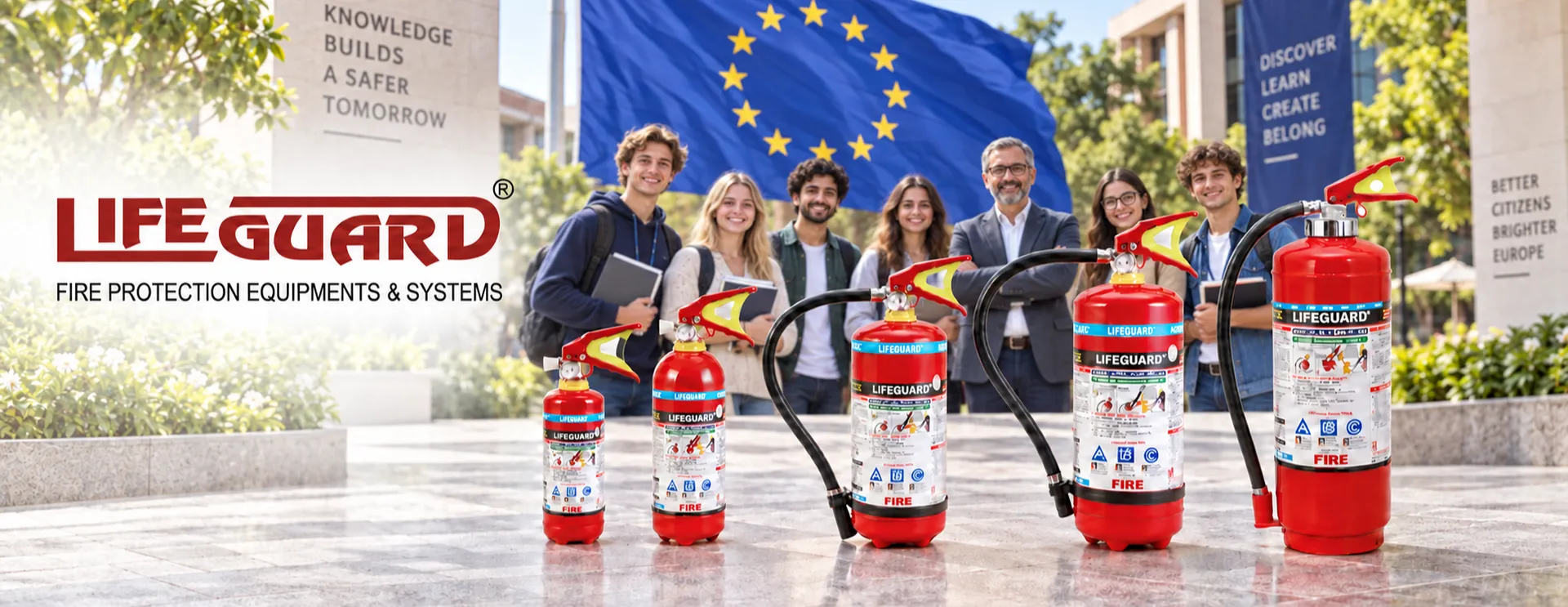
University Fire Protection Supplier in Europe
SEO Title: University Fire Protection Supplier Europe | LIFEGUARD®
Meta Description: LIFEGUARD® supplies integrated fire protection solutions for universities across Europe, including detection, alarms, suppression systems, extinguishers, hydrants and project support.
Suggested URL Slug: /university-fire-protection-supplier-europe/
Primary Keyword: university fire protection supplier Europe
Secondary Keywords: university fire safety equipment Europe, campus fire protection systems, fire suppression supplier for universities, laboratory fire protection, student accommodation fire safety, university data centre suppression
Trusted University Fire Protection Supplier in Europe
Universities are complex environments where thousands of students, faculty members, researchers, employees and visitors move between buildings every day. A modern campus may include lecture halls, laboratories, libraries, student residences, kitchens, auditoriums, workshops, sports facilities, archives, server rooms and electrical substations. Each space presents a different fire risk and requires a carefully selected protection strategy.
LIFEGUARD®, the fire safety brand of United Fire Equipments Pvt. Ltd., offers dependable fire protection equipment and integrated solutions for universities and higher-education facilities across Europe. With manufacturing experience since 1991, we support consultants, contractors, facility managers, distributors and institutional buyers with application-focused products, technical documentation and coordinated project assistance.
Our objective is not simply to supply equipment. We help project teams select suitable fire protection arrangements for each campus risk, from portable first-aid firefighting equipment to automatic detection, alarm and suppression systems.
Comprehensive Fire Protection for University Campuses
A university requires a layered approach to life safety, property protection and operational continuity. LIFEGUARD® can support projects with a broad portfolio of fire safety solutions, subject to the approved design, applicable regulations and project specifications.
Fire Detection and Alarm Systems
Early detection is essential for safe evacuation and rapid emergency response. Solutions can include:
- Addressable and conventional fire alarm control panels
- Smoke, heat and multi-criteria detectors
- Aspirating smoke detection for high-value or sensitive areas
- Manual call points, sounders, strobes and notification devices
- Beam detection for auditoriums, atriums and large halls
- Linear heat detection for cable routes and special hazards
- Gas-release control panels for suppression installations
- Interfaces for lifts, ventilation, access control and building management systems
System architecture should be developed around the building layout, occupancy, evacuation strategy, cause-and-effect requirements and local authority expectations.
Portable Fire Extinguishers
Portable extinguishers provide immediate first-response capability when correctly selected and safely used. LIFEGUARD® supplies extinguisher options for common campus hazards, including:
- ABC dry powder extinguishers
- Carbon dioxide extinguishers for electrical risks
- Water and water-based extinguishers for ordinary combustibles
- Foam extinguishers for appropriate Class A and flammable-liquid risks
- Wet chemical extinguishers for commercial kitchens
- Clean-agent extinguishers for sensitive equipment areas
- Trolley-mounted extinguishers for larger or industrial risks
Final extinguisher type, rating, quantity and placement must be determined by the risk assessment, local requirements and approved fire strategy.
Clean-Agent and Gaseous Fire Suppression
University facilities often contain equipment and records that may be damaged by water, powder or smoke. For suitable enclosed spaces, engineered gaseous suppression can provide rapid protection while helping reduce secondary damage.
Applications may include:
- Data centres and server rooms
- Network operation rooms
- Electrical and UPS rooms
- University archives and rare-book storage
- Research instrument rooms
- Control rooms and communication facilities
- Specialised laboratories, subject to a detailed hazard assessment
Available system approaches may include FK-5-1-12 clean-agent systems, inert-gas systems and other approved technologies selected according to current legal, environmental, safety and project requirements. Every system should be supported by hydraulic or flow calculations, nozzle-layout engineering, enclosure integrity assessment, pressure-relief evaluation and a documented cause-and-effect sequence.
Hydrant, Hose Reel and Water-Based Systems
For campus-wide firefighting infrastructure, LIFEGUARD® can supply or support solutions such as:
- Landing and hydrant valves
- Fire hose reels and hose assemblies
- Fire brigade inlet connections
- Sprinklers and related accessories
- Fire pumps and control arrangements
- Cabinets, nozzles and firefighting accessories
- Water-mist solutions for selected applications
The design must account for water supply, pressure, hydraulic demand, zoning, freeze protection where relevant, building height, fire service access and maintenance provisions.
Kitchen Fire Suppression
Commercial kitchens in cafeterias, hostels, food courts and training facilities contain hot cooking oils, grease deposits and ignition sources. A purpose-designed kitchen suppression system can detect a fire and discharge the appropriate extinguishing agent over protected appliances, hoods and duct entry points. Interfaces for fuel or electrical shut-off and alarm signalling can be included in the approved sequence.
Special-Hazard Protection
University research and engineering facilities may have risks not found in ordinary teaching spaces. Depending on the hazard study, protection may be required for:
- Chemical and material laboratories
- Battery and energy-storage rooms
- Electrical panels and control cabinets
- Generator and transformer areas
- Workshops and fabrication facilities
- Flammable-liquid stores
- Museums, galleries and heritage collections
These risks require project-specific engineering. The selected detection and extinguishing technology must be compatible with the materials, equipment, occupants and operational processes present in the room.
Fire Protection by Campus Area
Lecture Halls and Classrooms
High occupant density and varying room configurations make reliable detection, audible and visual notification, clear escape routes and accessible extinguishers essential. Alarm zoning and evacuation messaging should support an orderly response without creating confusion.
Student Accommodation
Residences require particular attention because occupants may be sleeping, unfamiliar with the building or slow to react. Early warning, suitable notification, protected escape routes, emergency lighting and well-maintained firefighting equipment contribute to a safer accommodation environment.
Laboratories
Laboratory fire protection should begin with a documented review of chemicals, gases, ignition sources, ventilation, experimental processes and shutdown procedures. Generic equipment selection is rarely sufficient; suppression agents and detection methods must be evaluated for compatibility with the specific hazard.
Libraries and Archives
Libraries combine combustible loading with valuable and sometimes irreplaceable collections. Solutions may incorporate early smoke detection, compartmentation, carefully selected suppression, portable extinguishers and emergency procedures designed to protect both people and contents.
Data Centres and IT Rooms
Fast detection, controlled shutdowns and properly engineered suppression can reduce downtime and protect critical digital infrastructure. Room integrity, ventilation shutdown and post-discharge safety arrangements are important parts of the system design.
Auditoriums, Sports Facilities and Large Spaces
Large-volume rooms may require beam or aspirating detection, carefully planned notification coverage and evacuation coordination. Equipment must suit ceiling height, air movement, acoustic conditions and occupant capacity.
Our Project Support Process
LIFEGUARD® works with university representatives, fire consultants, engineering contractors, distributors and facility-management teams through the principal stages of a project:
- Requirement review: Study building use, room risks, specifications and available drawings.
- Solution selection: Recommend suitable product categories and system concepts for the identified hazards.
- Engineering coordination: Support layouts, bill of quantities, calculations, datasheets and system interfaces where included in scope.
- Technical submittals: Provide relevant catalogues, compliance documents, drawings and quality records for the offered products.
- Supply and execution support: Coordinate manufacturing, inspection, packing, delivery and installation guidance according to the agreed scope.
- Testing and commissioning: Assist with functional checks, cause-and-effect verification and handover documentation where contracted.
- Training and maintenance guidance: Help campus teams understand routine inspection, system operation and preventive maintenance needs.
European Compliance and Quality Considerations
Europe is not a single approval jurisdiction for every fire product or installation. Requirements can vary by country, building type, insurer, authority having jurisdiction and contract specification. Products must therefore be evaluated against the standards and legal requirements applicable to the destination market and intended use.
Depending on the product and project, relevant considerations may include European or national standards, CE marking where legally applicable, Declarations of Performance or Conformity, third-party approvals, environmental rules, local building regulations and fire-service requirements. EU rules on fluorinated greenhouse gases must also be considered when selecting, installing, servicing or decommissioning affected fire protection equipment.
LIFEGUARD® follows a transparent submittal approach: certification and approval claims should be made only for the specific offered model and supported by valid documentation. Final acceptance remains subject to the project consultant, client and competent local authority.
Why Choose LIFEGUARD®?
- Fire safety manufacturing experience since 1991
- Broad portfolio for campus-wide fire protection requirements
- Application-focused support for diverse university risks
- Assistance with technical submittals, drawings and bills of quantities
- Solutions for ordinary, electrical, kitchen and special hazards
- Support for consultants, contractors, distributors and institutional buyers
- Export-oriented documentation, packing and project coordination
- Commitment to product quality, traceability and dependable service
Serving University Projects Across Europe
LIFEGUARD® welcomes enquiries for new-build campuses, building renovations, laboratory upgrades, hostel developments, data-centre protection and replacement of ageing fire safety equipment across Europe. We can work with local partners and project stakeholders to align the offered solution with the tender specification, destination-country requirements and approved fire strategy.
Whether the requirement is for individual fire extinguishers, a clean-agent suppression package, detection and alarm equipment, hydrant components or a coordinated campus solution, our team aims to provide technically clear and commercially practical support.
Frequently Asked Questions
What fire protection systems are commonly required in universities?
Typical requirements include fire detection and alarm systems, portable extinguishers, emergency notification, hydrants or hose reels, sprinklers or other water-based protection, kitchen suppression and specialised systems for data rooms, archives, laboratories and electrical spaces. The final scope depends on the risk assessment and local regulations.
Can LIFEGUARD® supply fire protection equipment for European university projects?
Yes. We support export enquiries and project-based supply for universities, contractors, distributors and consultants. Product eligibility and documentation are reviewed against the specific destination, tender and approval requirements before commitment.
Do you offer clean-agent suppression for university server rooms?
Yes. Clean-agent or inert-gas solutions can be proposed for suitable enclosed IT and electrical rooms after reviewing the hazard, enclosure, required performance, environmental obligations and applicable approvals.
Can you provide technical documentation with the offer?
Depending on the product and agreed scope, the submission can include datasheets, catalogues, drawings, calculations, compliance documents, quality records and bill-of-quantity support.
Do you provide one standard solution for every university?
No. Campus buildings, hazards and national requirements differ. A suitable solution must be developed from the building use, occupancy, fire strategy, local regulations and project specifications.
Can LIFEGUARD® work with local European contractors or distributors?
Yes. We welcome cooperation with qualified local partners for distribution, installation, commissioning, service and regulatory coordination, subject to commercial and technical agreement.
Request a Proposal
For a university fire protection proposal, share the project location, building or room details, fire-risk information, tender specification, drawings, required approvals, quantities and expected delivery schedule. Our team will review the requirement and recommend an appropriate supply scope.
LIFEGUARD® – United Fire Equipments Pvt. Ltd.
Manufacturer of ISI-Certified Fire Safety Equipment
Phone: 8048034226
Email: ufe126@gmail.com | info@lifeguardindia.in
Website: www.lifeguardindia.in
Keywords






