
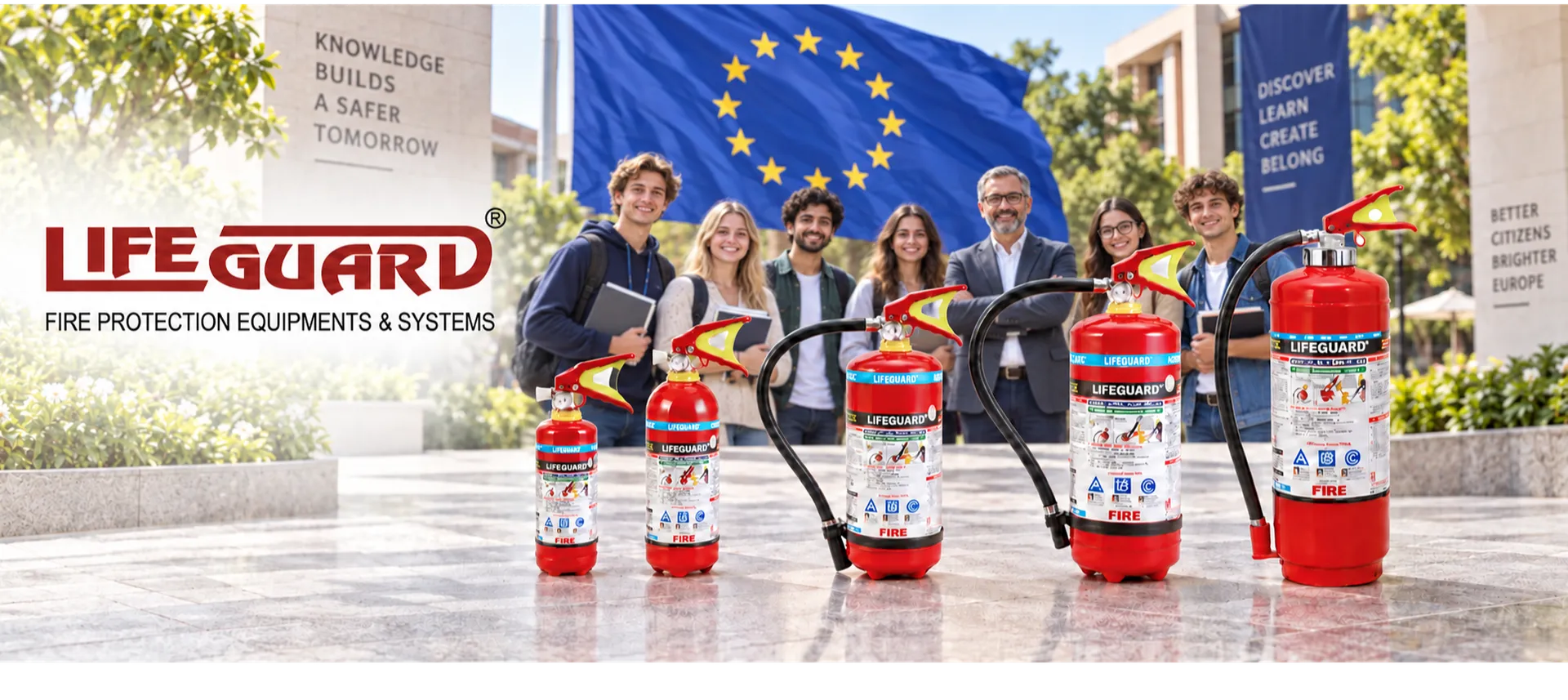
University Fire Safety Equipment Company for Europe | LIFEGUARD®
SEO title: University Fire Safety Equipment Company for Europe | LIFEGUARD®
Meta description: Discover fire safety equipment for European university campuses from LIFEGUARD®. Explore extinguishers, detection, suppression and project documentation.
Suggested URL: /university-fire-safety-equipment-company-europe/
Primary keyword: university fire safety equipment company Europe
University Fire Safety Equipment Company for Europe
A university is a collection of distinct environments: busy teaching blocks, student residences, laboratories, libraries, dining facilities, workshops and rooms housing essential electrical and IT equipment. Protecting the people and assets in these spaces calls for fire safety equipment selected for the actual hazard, the building's use and the applicable local requirements.
LIFEGUARD®, a brand of United Fire Equipments Pvt. Ltd., works with buyers, contractors and project partners seeking fire protection equipment for university projects in Europe. From portable extinguishers and hydrant accessories to detection and specialist suppression solutions, we help organise product enquiries around the campus fire strategy and approved technical schedule. Our India-based team can review the required quantities, product specifications and documentation for each proposed item.
Fire safety needs across a university campus
No two campus buildings have identical fire risks. A lecture theatre requires timely warning and clear evacuation provisions for a large group of occupants. A chemistry laboratory may present different materials and processes from a computer laboratory. A kitchen has cooking-related hazards, while a library holds collections that may be difficult to replace. Equipment planning should therefore begin with a building-by-building risk assessment and the approved design, rather than a single standard list for the entire university.
For new campuses, this approach can make the original procurement schedule clearer. For older buildings, it helps identify gaps in equipment coverage, compatibility, inspection access and replacement planning. Products should be positioned, installed, commissioned and maintained by competent parties in accordance with the requirements of the destination country.
LIFEGUARD® fire safety equipment for academic institutions
Portable fire extinguishers
Portable fire extinguishers support an immediate response to a small, manageable fire when use is safe and personnel are trained. Depending on the hazard assessment and product specification, a university may require ABC dry powder, CO₂, foam, water-based, clean agent or wet chemical extinguishers in different locations. Capacity, fire rating, operating instructions, mounting and service arrangements should be checked for each proposed model. Extinguishers do not replace evacuation procedures or fixed fire protection systems.
Fire detection and alarm systems
Detection and alarm provisions give occupants time to respond and evacuate. Campus specifications may include smoke and heat detectors, manual call points, control panels, sounders, visual warning devices and interfaces with building equipment. The system architecture should account for how the buildings are used, accessibility needs, zoning and the approved cause-and-effect sequence. Compatibility and certification must be confirmed for the actual components proposed.
Fixed fire suppression
Server rooms, archives, certain laboratories and electrical spaces may need a suppression solution designed around a specific risk. Possible technologies include clean agent, CO₂, water mist and other application-specific systems, subject to the approved fire strategy. A system design should assess occupancy, agent suitability, enclosure conditions, ventilation, discharge arrangements, detection and required interlocks. Qualified designers and local authorities should review the final proposal before installation.
Hydrant, hose and water-based equipment
Depending on the building design, university facilities may specify hydrant valves, hoses, hose reels, nozzles and associated components. Correct connection types, dimensions, materials, pressure ratings and test evidence matter when equipment must work with the wider building installation. Clear schedules also help facilities teams inspect and maintain equipment over the long term.
Protection for kitchens and electrical assets
Dining halls and campus kitchens need a fire protection approach matched to cooking appliances and extraction arrangements. Electrical rooms and distribution panels may also need dedicated detection or suppression measures. Sharing equipment drawings and operating details early allows proposed products to be assessed against the actual application.
Support from enquiry to product documentation
University procurement usually involves consultants, facilities teams, contractors, purchasing departments and, in some cases, public tender requirements. LIFEGUARD® can review a bill of quantities and provide available technical data sheets, drawings and product-specific quality or test documents for the items quoted. For larger or phased projects, a building-wise schedule helps confirm the correct quantities and product variants before an order is placed.
Please include the destination country, building or room use, item descriptions, quantities, required standards and approvals, delivery location and any consultant comments in your enquiry. Where a product is offered through an installation partner or distributor, responsibilities for local installation, commissioning, servicing and warranty support should be agreed in the project documents.
Product compliance for Europe
Requirements differ across European countries and product categories. Any reference to EN standards, CE marking, third-party certification or national approval should be checked against current documents for the exact product model and the destination market. Acceptance of a product for one location or application does not automatically establish acceptance elsewhere. Our team can discuss the documentation available for the proposed items so the buyer and local project professionals can assess suitability before procurement.
Why consider LIFEGUARD® for a campus project?
- Broad equipment enquiries: Bring multiple fire safety product categories into one technical discussion.
- Application-led selection: Review products in the context of residences, teaching spaces, kitchens and critical rooms.
- Clearer tender submissions: Request model-specific information against the approved bill of quantities.
- Project coordination: Discuss phased quantities, packaging and delivery requirements for campus-wide procurement.
- Long-term planning: Identify the documentation facilities teams need for inspection, service and future replacement.
Discuss your university fire safety requirements
If you are preparing a specification, comparing equipment options or sourcing products for a university project in Europe, send LIFEGUARD® your technical schedule and project location. We can review the requested items and provide a quotation with available product information for the models proposed.
LIFEGUARD® | United Fire Equipments Pvt. Ltd.
Phone: +91 8048034226
Email: ufe126@gmail.com | info@lifeguardindia.in
Website: www.lifeguardindia.in
Frequently asked questions
What fire safety equipment does a university typically need?
The answer depends on the building, its hazards, occupancy and local fire strategy. A project may include portable extinguishers, alarm and detection equipment, hydrant accessories and specialist suppression for selected rooms. A competent local professional should determine the final schedule.
Can LIFEGUARD® review a campus-wide bill of quantities?
Yes. Share the building-wise schedule, quantities, destination country and technical specification. The team can review the products requested and identify the information needed to prepare an offer.
Are the same extinguishers suitable for laboratories, kitchens and computer rooms?
Usually, these areas require separate assessments. The extinguishing media and equipment should be chosen for the specific fire hazards, user safety and approved project requirements.
Can LIFEGUARD® provide documents for a European tender?
Available product data sheets, drawings and test or quality documents can be discussed for the particular models quoted. Ask for the exact certification and conformity evidence required by the tender and destination authority.
Does LIFEGUARD® install and maintain systems throughout Europe?
Installation and service arrangements depend on the project location and the agreed delivery scope. Confirm the roles of qualified local designers, contractors and service providers when planning procurement.
Keywords






