
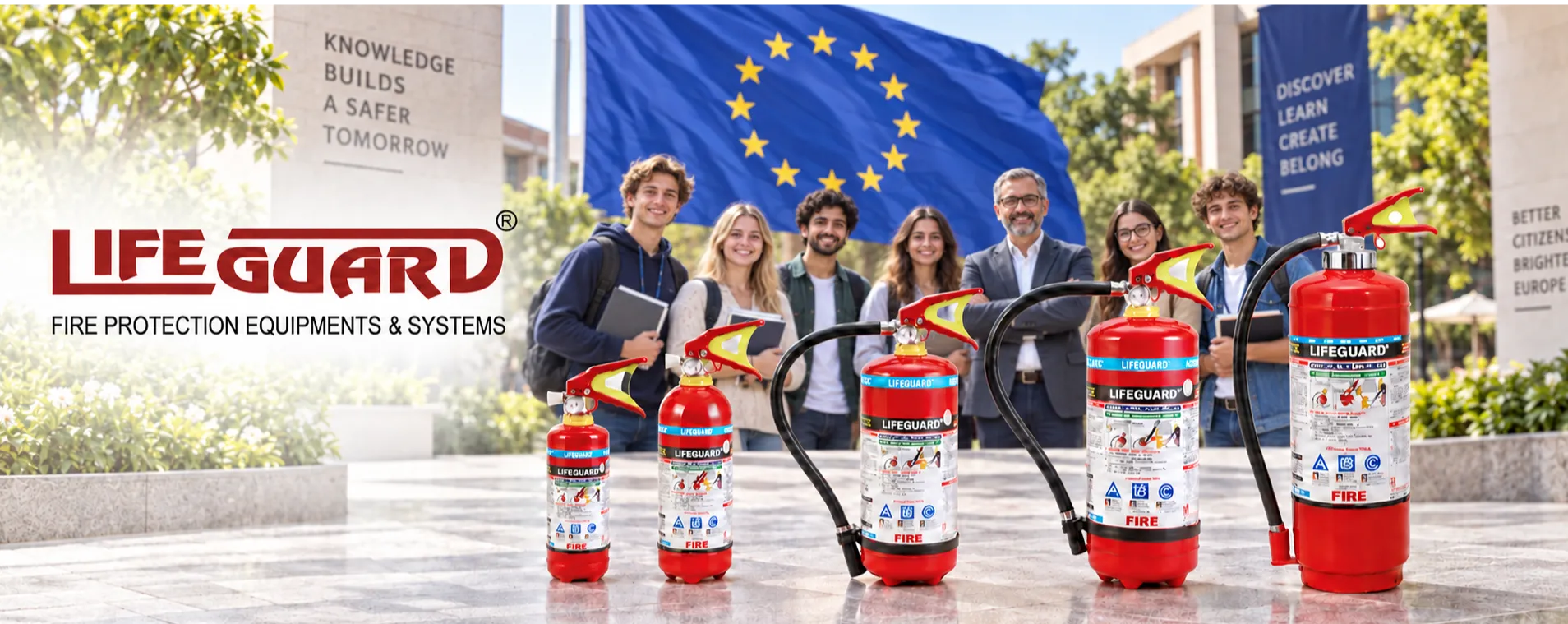
University Fire Safety Equipment OEM Manufacturer for Europe | LIFEGUARD®
SEO title: University Fire Safety Equipment OEM Manufacturer for Europe | LIFEGUARD®
Meta description: Explore OEM fire safety equipment for European university campuses. LIFEGUARD® supports project-specific supply for academic buildings, laboratories, libraries and residences.
Suggested URL slug: /university-fire-safety-equipment-oem-manufacturer-europe/
University Fire Safety Equipment OEM Manufacturer for Europe
A university campus brings together very different fire risks in one setting. Lecture halls and student residences need clear evacuation routes and accessible first-response equipment. Laboratories require careful consideration of chemicals, processes and ventilation. Libraries, archives, data centres and electrical rooms may need specialist detection or suppression to limit damage to valuable assets. A reliable equipment programme starts with the building and its users, then selects products that suit each application.
LIFEGUARD®, the fire safety brand of United Fire Equipments Pvt. Ltd., manufactures and supplies a range of fire protection equipment for institutional projects. We work with procurement teams, contractors, system integrators and distributors seeking OEM supply for university developments and campus upgrades in Europe. Our team can review a project schedule, identify suitable product options and provide available technical and quality documents for the exact models offered.
Fire protection products for university campuses
Portable fire extinguishers
Portable extinguishers provide an immediate means of response when a small fire can be tackled safely by a trained person. Product selection should follow the local fire risk assessment and the classes of fire present. Depending on the project specification and product availability, the range can include ABC dry powder, carbon dioxide, clean agent, foam, water-based and wet chemical extinguishers. CO₂ units may be considered for certain electrical risks; wet chemical units may be appropriate for cooking areas. Location, capacity, signage, mounting and maintenance arrangements should be decided for each building.
Fire detection and alarm equipment
Timely warning supports safe evacuation across lecture theatres, corridors, libraries, offices and accommodation blocks. A campus design may call for manual call points, smoke or heat detection, sounders, visual alarms, control panels and interfaces with other building services. We can support project discussions around compatible components and documented system requirements. Final system design and approval should be carried out by qualified parties under the rules applicable at the installation site.
Specialist suppression for critical areas
University server rooms, archives, electrical spaces and selected research facilities can require a more tailored suppression approach. Subject to the hazard assessment and approved design, options may include clean agent systems, CO₂ systems, water mist or local application solutions. Agent selection must account for room occupancy, enclosure integrity, equipment, ventilation and life safety. Any system proposal should identify its design basis, applicable approvals and commissioning requirements.
Hydrant, hose and first-response equipment
Larger academic buildings and campus infrastructure may specify hydrant valves, hose reels, hoses, nozzles and related accessories. Product dimensions, materials, pressure ratings, connections and testing documentation should match the approved schedule. Where multiple buildings are involved, consistent equipment specifications can make inspection and spare-parts planning easier.
Kitchen and electrical-panel protection
Campus kitchens and cafeterias need protection suited to cooking appliances, extraction hoods and the associated fire risks. Electrical distribution and control panels can also call for targeted detection or suppression. We can discuss available equipment configurations against the project's equipment drawings, dimensions and operating conditions.
OEM support for university procurement
Campus tenders often cover several buildings and require a clear record of what is being supplied. LIFEGUARD® can assist buyers and project partners with product schedules, technical data sheets, drawings, available test certificates, packaging details and model-specific documentation. Where applicable, our team can discuss quantities, marking, project-specific labelling and delivery planning before an offer is finalised.
For each enquiry, please share the bill of quantities, technical specification, intended country of installation, required approvals, delivery location and any consultant or authority comments. This helps us check the exact products and evidence required, especially when several equipment categories appear in the same tender.
Supporting European project requirements
European university projects are subject to the requirements of the destination country, the relevant authority and the approved design. Product standards, conformity documentation, language requirements and installation practices can differ by product and location. We therefore review the compliance requirements for the specific model and destination before making a technical or commercial commitment. Any CE marking, EN conformity, third-party listing or local approval should be confirmed through current documentation for the item offered; it should not be assumed for an entire product range.
An effective university fire safety programme also includes inspection, servicing, training and periodic review after installation. Equipment should be incorporated into a site maintenance plan by competent local personnel, with clear responsibilities for checks and replacements.
Why work with LIFEGUARD®?
- One point of contact for multiple categories: Discuss portable extinguishers, suppression equipment and associated fire protection products within a coordinated procurement enquiry.
- Project-based product selection: Match each proposed item to the building use, risk schedule and approved specification.
- Document-led submissions: Request available data sheets, drawings and certificates for the specific products quoted.
- OEM supply discussions: Review quantities, branding or labelling requirements, packaging and delivery terms for institutional procurement.
- Technical coordination: Resolve specification questions before ordering so the submitted products align with the approved bill of quantities.
Request an OEM quotation
Planning a new university campus, upgrading existing buildings or preparing a fire safety equipment tender for a European institution? Send LIFEGUARD® your project specification, quantities and destination country. We will review the required product range and respond with suitable available options and the supporting documents relevant to the proposed models.
LIFEGUARD® | United Fire Equipments Pvt. Ltd.
Phone: +91 8048034226
Email: ufe126@gmail.com | info@lifeguardindia.in
Website: www.lifeguardindia.in
Frequently asked questions
Can LIFEGUARD® supply fire safety equipment for several university buildings under one enquiry?
Yes. Share a building-wise bill of quantities and technical schedule so the team can review product selection, quantities and documentation for each area.
Which fire extinguishers are suitable for a university?
There is no single extinguisher type for every campus space. The choice depends on the identified fire hazards, occupancy, local requirements and approved fire strategy. Laboratories, kitchens, residences and electrical areas may need different equipment.
Do all LIFEGUARD® products carry European approvals?
Approval and conformity status must be checked for each proposed model and destination. Request the current supporting documents during the enquiry and confirm acceptance with the local designer or authority before purchase.
What information is needed for a clean agent or other fixed suppression enquiry?
Provide room dimensions and use, protected equipment, occupancy, enclosure and ventilation details, system drawings if available, the applicable design specification and any required approvals. A qualified designer should confirm the final system design.
Can product branding and project documentation be discussed for OEM orders?
Yes. Share your branding, marking and document requirements with the product schedule. Feasibility and any applicable minimum quantities can then be confirmed in the quotation.
Keywords






