
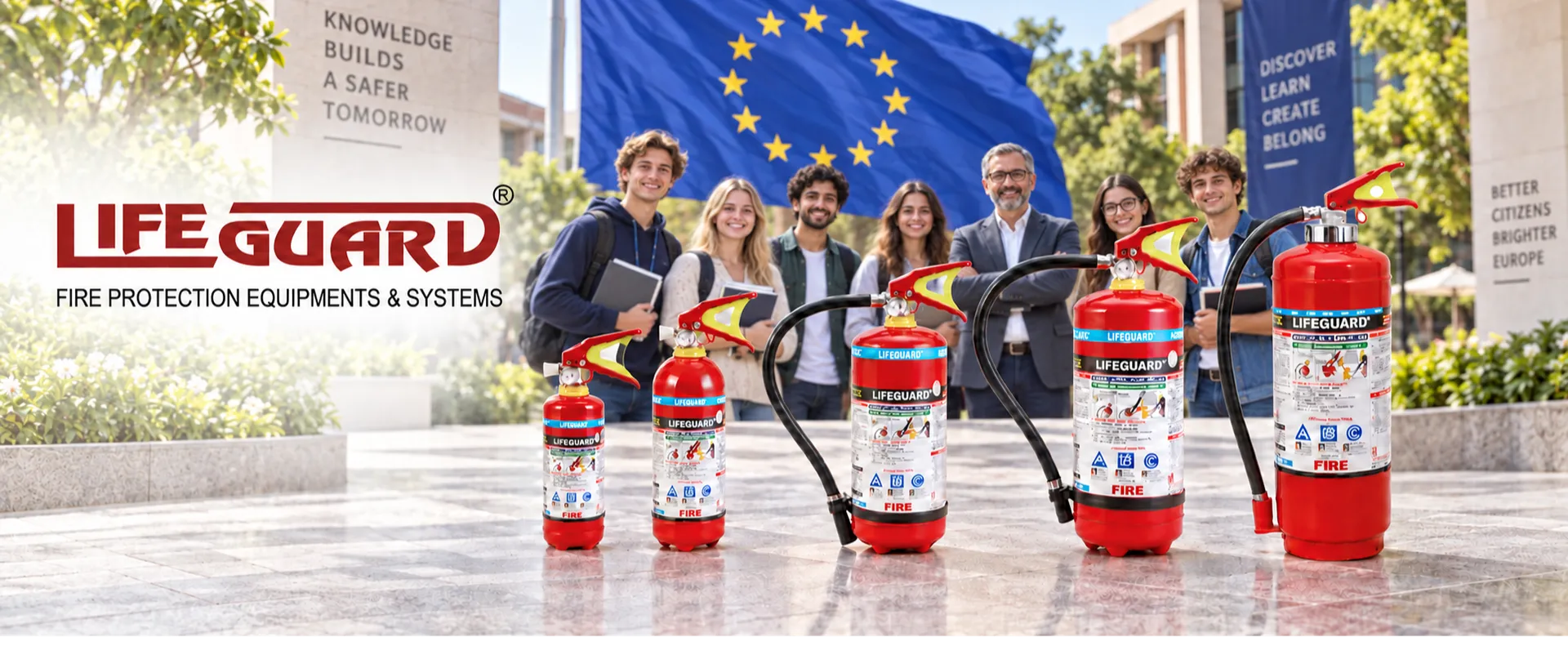
University Fire Safety Equipment Solutions in Europe
SEO title: University Fire Safety Equipment Solutions Europe | LIFEGUARD®
Meta description: Explore fire safety equipment solutions for European universities, from extinguishers and detection to laboratory, kitchen and critical-room protection. Contact LIFEGUARD® for project-specific supply support.
Suggested URL: /university-fire-safety-equipment-solutions-europe/
Universities are complex environments. A single campus may include crowded lecture halls, laboratories, libraries, student residences, commercial kitchens, data centres, workshops and heritage buildings. Each space presents different ignition sources, occupancy patterns and evacuation challenges. LIFEGUARD®, the fire safety brand of United Fire Equipments Pvt. Ltd., helps university procurement teams, consultants and local fire protection partners bring suitable equipment together as part of a coordinated campus fire safety strategy.
Our approach begins with the risk in each building. We support the selection and supply of portable fire extinguishers, fire detection and alarm equipment, hose and hydrant accessories, and application-specific suppression equipment. Product selection, installation and maintenance should be confirmed against the project specification and the requirements of the destination country and local authority.
Fire protection for every part of a university campus
Teaching buildings and lecture theatres
High occupancy and frequent room changes make clear alarm notification, accessible first-response equipment and unobstructed escape routes essential. A campus plan can combine suitable extinguishers at designated points, alarm interfaces, emergency signage and trained staff procedures. Equipment placement and ratings should follow the approved building fire strategy.
Laboratories and research facilities
Laboratories may contain electrical instruments, combustible liquids, specialist processes and valuable research. Protection should be based on a documented assessment of the actual hazards. Depending on the room and substances involved, the solution may include appropriately rated extinguishers, early fire detection, local protection or an engineered suppression system. Chemical compatibility, ventilation and safe evacuation must be assessed before specifying an agent.
Libraries, archives and museums
Collections and records are difficult to replace. Early warning and a considered suppression strategy can reduce damage while supporting life safety. Aspirating smoke detection and clean agent systems may be evaluated for suitable enclosed spaces, subject to enclosure integrity, occupancy, environmental considerations and the approved design brief.
Data centres, server rooms and electrical areas
Campus networks, learning platforms and research systems depend on reliable power and IT infrastructure. For suitable enclosed rooms, an engineered clean agent system can be considered alongside fire detection, alarm and building-system interfaces. Electrical panels and small enclosures may require a different, locally designed protection method. Room volume, leakage, ventilation shutdown, personnel safety and maintenance access all affect the final design.
Student accommodation and shared facilities
Residential buildings operate around the clock and have changing occupants. Equipment should support a clear, building-wide strategy for detection, alerting, escape and maintenance. Common areas, plant rooms and service spaces may call for different extinguisher types and other protective measures. Training and periodic checks help keep equipment usable throughout the academic year.
Campus kitchens, cafeterias and food courts
Cooking oil, heat and extraction equipment create distinct risks. Suitable wet chemical extinguishers and purpose-designed kitchen suppression systems may form part of the protection package. Selection should consider the cooking appliances, hood and duct arrangement, shut-off interfaces and cleaning schedule.
Workshops, parking and utility areas
Engineering workshops, stores, generators and service buildings require equipment matched to their activities. A site survey can establish fire classes, likely ignition sources, response arrangements and the need for detection or fixed protection. Battery charging and other emerging hazards deserve a separate assessment rather than a generic extinguisher specification.
Equipment and solution categories
Campus needEquipment to considerSelection considerationsFirst responsePortable and wheeled fire extinguishersFire class, performance rating, accessibility and user trainingDetection and warningDetectors, alarm controls and notification devicesOccupancy, nuisance-alarm control, system compatibility and evacuation strategyWater-based responseHose reels, hydrant accessories and related componentsAvailable water supply, building layout and local specificationCritical-room protectionEngineered gaseous or other suitable suppression systemsEnclosure, hazard, personnel safety, approvals and commissioningCatering protectionWet chemical equipment and kitchen suppressionAppliance configuration, ductwork and service accessOngoing readinessDocumentation, inspection and service coordinationLocal maintenance intervals, records and replacement planning
The table is a starting point for discussion; no single product is appropriate for every university space.
A practical route from assessment to handover
- Map the campus: Identify building uses, occupants, high-value assets and existing systems.
- Review the fire strategy: Work with the university, design consultant and local installer to define performance needs and interfaces.
- Prepare the equipment schedule: Match product types, ratings, quantities and documentation to each location.
- Confirm destination requirements: Check applicable national rules, local authority expectations, specified standards and product documentation before procurement.
- Coordinate supply and installation: Align equipment delivery with drawings, site readiness and the approved installation plan.
- Commission and document: Record applicable tests, training, operating instructions and maintenance responsibilities at handover.
Supplying universities across Europe
LIFEGUARD® can support enquiries from universities, contractors, distributors and engineering consultants in European markets with product information and project-specific quotations. Cross-border supply depends on the requested products, destination country, applicable conformity requirements and commercial arrangements. For an accurate proposal, share the campus location, building or room schedule, hazard description, relevant drawings and any approved make or certification requirements.
European product rules and building fire requirements serve different purposes. CE marking applies where the relevant EU product legislation requires it; it is not a blanket approval for a complete university installation. Building fire requirements and acceptance processes vary by country. Specifications should therefore be checked locally, including the exact conformity and performance documents for each proposed product.
Why work with LIFEGUARD®?
United Fire Equipments Pvt. Ltd. manufactures and supplies a broad range of fire safety equipment under the LIFEGUARD® brand. Our team can help consolidate a multi-building equipment enquiry, review requested technical schedules and identify suitable options for educational, research and support facilities. We work with the project team to clarify documentation and supply scope before an order is placed. Availability, certifications and third-party approvals should always be verified for the specific model and destination market.
Frequently asked questions
What fire safety equipment does a university need?
The answer depends on its buildings and approved fire strategy. Common categories include extinguishers, fire detection and alarm equipment, water-based first-response provisions, and specialised protection for kitchens, laboratories or critical rooms. A qualified local professional should determine the final specification.
Can one extinguisher type cover every campus area?
No. Fire hazards differ between offices, kitchens, laboratories, workshops and electrical spaces. The agent, rating and placement need to suit the assessed hazard and applicable local requirements.
Are clean agent systems suitable for university server rooms?
They may be appropriate for certain enclosed rooms when designed for the specific equipment, room conditions and occupancy. Design calculations, enclosure integrity, controls, warning arrangements and local acceptance requirements must be addressed.
Does CE marking mean a complete fire protection system is approved for use anywhere in Europe?
No. CE marking relates to products under applicable EU rules. Project design and building acceptance remain subject to the requirements of the destination jurisdiction.
What information is needed for a quotation?
Send the destination country, building or room list, product schedule or bill of quantities, drawings where available, requested standards or certifications, quantities and expected delivery date.
Request a university fire safety equipment proposal
Planning a new campus, upgrading an existing facility or sourcing equipment for a university tender? Contact LIFEGUARD® with your technical schedule. We can review the equipment scope and prepare a project-specific supply proposal.
LIFEGUARD® | United Fire Equipments Pvt. Ltd.
Phone: +91 8048034226
Email: ufe126@gmail.com | info@lifeguardindia.in
Website: https://www.lifeguardindia.in/
Keywords






