
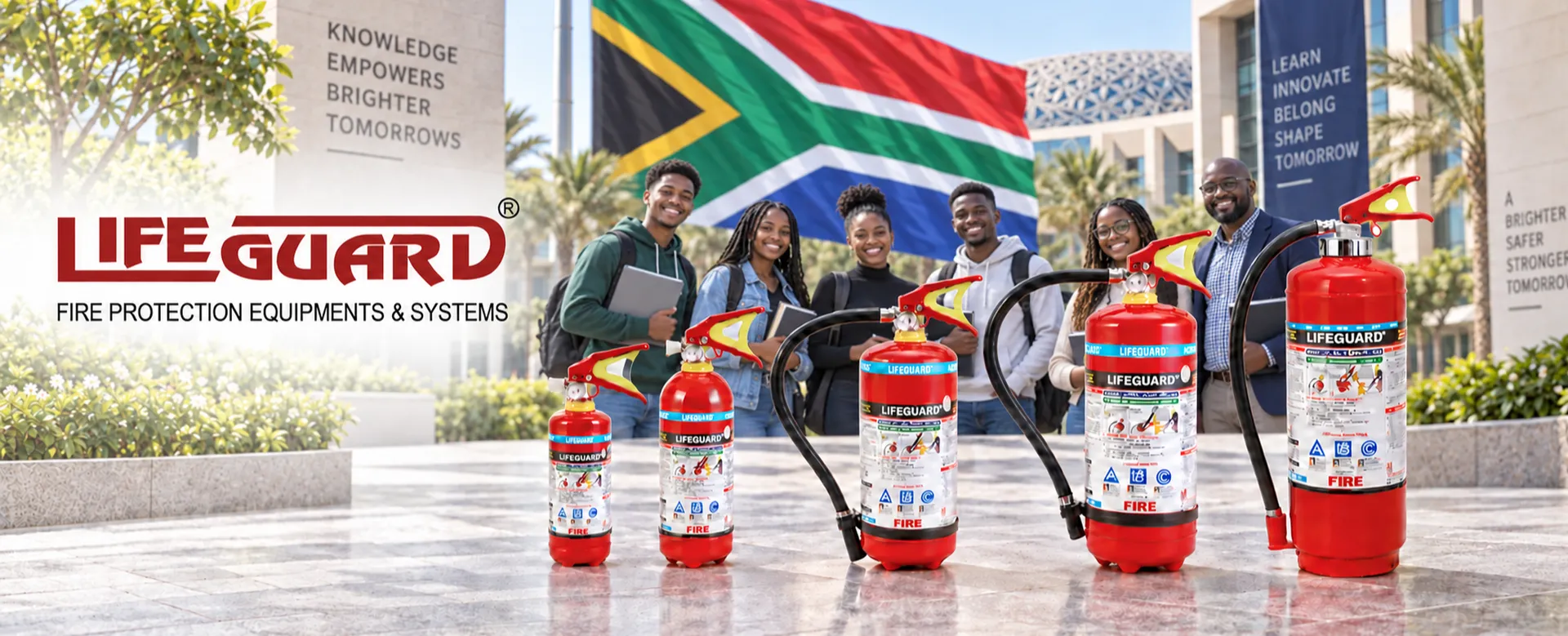
University Fire Safety Equipment System Provider in Africa | LIFEGUARD®
SEO title: University Fire Safety Equipment System Provider Africa | LIFEGUARD®
Meta description: Plan integrated fire safety equipment systems for African universities with LIFEGUARD®: alarms, extinguishers, hydrants, clean agent and kitchen suppression.
Suggested URL: /university-fire-safety-equipment-system-provider-africa/
Primary keyword: university fire safety equipment system provider Africa
University Fire Safety Equipment System Provider for Campuses Across Africa
A university campus contains many buildings but needs one coordinated approach to fire safety. An alarm in a lecture theatre, a suppression system in a server room, and an extinguisher in a workshop serve different purposes. They must also fit the same evacuation strategy, operating procedures and maintenance plan.
LIFEGUARD®, the fire protection brand of United Fire Equipments Pvt. Ltd., supports universities, consultants, contractors and institutional buyers with fire safety equipment and project-specific system options. We help teams develop suitable packages for academic blocks, hostels, laboratories, libraries, kitchens, data rooms and campus infrastructure. The exact design, supply, installation and service responsibilities are agreed for each project and destination country.
What an Integrated University Fire Safety System Includes
A campus fire protection package is built around its hazards, occupants and approved design. It may include:
- Detection and warning: Smoke or heat detection where appropriate, manual call points, control panels, audible or visual notification, and specified system interfaces.
- First-response equipment: Portable and wheeled extinguishers selected for the identified fire hazards, with accessible placement and identification.
- Water-based firefighting: Hydrants, hose reels, hoses, landing valves, sprinklers or related equipment where the design requires them.
- Specialist suppression: Engineered clean agent systems for suitable enclosed spaces and dedicated kitchen suppression for cooking operations.
- Controls and handover: Cause-and-effect logic, equipment records, commissioning checks, user instructions and an inspection schedule appropriate to the installed systems.
Equipment should never be chosen solely from a generic campus checklist. Room use, occupancy, power and water availability, protected assets, local approvals and long-term service capability all influence the specification.
Systems for Different Campus Buildings
Teaching Blocks, Auditoriums and Administration
These spaces can see high occupancy and frequent changes in room use. The approved design should coordinate fire detection and occupant warning with exit routes and the wider campus response plan. Extinguisher type, capacity and location should reflect the hazards and be easy to identify without obstructing movement.
Student Hostels and Residential Buildings
Residential areas require particular attention because occupants may be asleep when an incident begins. The system strategy should address prompt warning, evacuation, accessible equipment, routine checks and clear responsibilities for campus facilities teams.
Laboratories and Workshops
A chemistry laboratory, engineering workshop and research facility do not share the same risk profile. Before specifying equipment, review the substances stored, experiments performed, machinery used and any existing controls. Where a specialist hazard is present, obtain a project-specific fire protection assessment and select compatible equipment.
Libraries, Archives and IT Rooms
Collections and electronic systems may require early detection and carefully selected suppression. In suitable enclosed rooms, an engineered gaseous system can be considered after checking enclosure integrity, ventilation, occupant safeguards and the protected hazard. The alarm, pre-discharge warning and building interfaces must be coordinated with the approved system design.
Campus Kitchens and Dining Facilities
Cooking appliances and extraction hoods create a distinct fire risk. A specified kitchen suppression system should be assessed against the appliance line-up, hood layout and applicable requirements, with appropriate provisions for manual activation, warning and fuel or power shut-off.
From Survey to System Handover
1. Review the site. Collect drawings, occupancy details, room schedules, existing system information and the university's operational requirements.
2. Establish the design basis. Confirm the rules in the destination country, the authority having jurisdiction, insurer requirements and the tender or consultant specification.
3. Develop the equipment schedule. Match equipment and system options to each building and protected hazard. Confirm interfaces between alarms, suppression, ventilation and other relevant services.
4. Submit technical information. Provide the agreed product data, model-specific certifications, drawings and calculations required for project review.
5. Install, test and hand over as contracted. Commission the installed systems against the approved design, document the results, brief responsible personnel and set inspection and maintenance arrangements.
International standards can help define a design basis when they are adopted by the project. For example, ISO 7240-14 addresses the design, installation, commissioning and service of building fire detection and alarm systems; ISO 14520-1 addresses gaseous fire-extinguishing systems. The applicable edition and local acceptance should be verified before specifying either standard for a particular project.
Project Support for African Universities
Africa is not a single regulatory market. Requirements and approval routes differ by country, city and project. LIFEGUARD® can review enquiries from universities and project partners in markets such as Kenya, Nigeria, Ghana, South Africa and elsewhere in Africa, subject to the requested products, documentation, delivery destination and agreed commercial scope. Local authority approval, installation and ongoing service arrangements should be confirmed during project planning.
United Fire Equipments Pvt. Ltd. manufactures fire protection equipment under the LIFEGUARD® brand in India and offers product and system options across several campus applications. For a clear proposal, send us the campus location, drawings, bill of quantities, room hazards, required standards and tender deadline. Our team can identify the relevant product range and confirm available technical documentation and project support.
Plan a coordinated fire safety equipment system for your university campus.
LIFEGUARD® | United Fire Equipments Pvt. Ltd.
Phone: +91 8048034226
Email: ufe126@gmail.com | info@lifeguardindia.in
Website: https://www.lifeguardindia.in/
Keywords






