
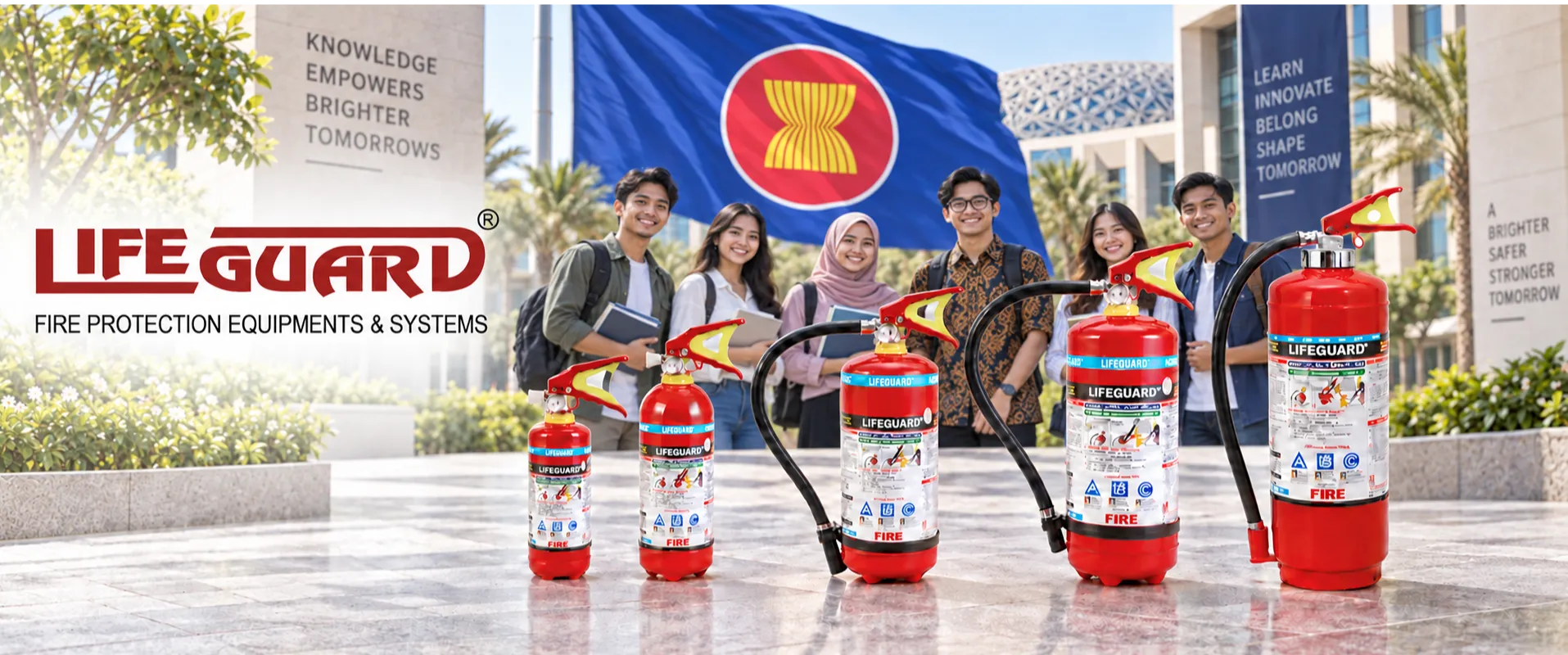
University Fire Safety Equipment System Provider in Asia | LIFEGUARD®
SEO title: University Fire Safety Equipment System Provider in Asia | LIFEGUARD®
Meta description: Plan coordinated fire detection, alarm, extinguishing and suppression systems for universities across Asia with LIFEGUARD® fire safety equipment and technical support.
Suggested URL: /university-fire-safety-equipment-system-provider-asia/
Primary keyword: university fire safety equipment system provider Asia
Related terms: campus fire protection systems; university fire alarm and suppression; fire safety systems for laboratories and hostels
Coordinated fire protection for university campuses
A university is a collection of very different fire risks. Busy lecture halls, residential hostels, specialist laboratories, libraries, kitchens and data centres each need a fire safety strategy suited to their use. Choosing individual products is only one part of the work. Detection, alarm, evacuation, extinguishing equipment and maintenance must function together across the campus.
LIFEGUARD®, the brand of United Fire Equipments Pvt. Ltd., supports institutions, consultants, contractors and facilities teams seeking a university fire safety equipment system provider in Asia. We help turn a building schedule and risk assessment into a coordinated equipment proposal, with technical documentation and project support matched to the specified scope. The exact products, certifications, installation services and local approvals must be confirmed for each country and project.
Fire safety systems built around campus operations
Detection and fire alarm systems
An effective detection system gives occupants time to respond and helps staff identify where an incident has started. A university design may include smoke and heat detectors, manual call points, control panels, sounders, visual alarm devices and monitored interfaces. The chosen device should fit the environment: kitchens, dusty workshops and laboratories can require different detection approaches from offices or libraries.
For multi-building campuses, designers should consider zoning, alarm audibility and visibility, control room indication, backup power and communication between buildings. Occupants must be able to recognise the warning and follow a practical evacuation plan, including provision for people who need assistance.
Portable and wheeled firefighting equipment
Strategically located extinguishers support a trained first response when it is safe to act. ABC dry powder, CO₂, foam, water based, clean agent and wet chemical options address different hazards; no single extinguisher type is suitable for every university space. Wheeled units may be specified for larger risks after assessing access and operator training.
A system level equipment schedule identifies each unit's type, capacity, location, mounting, signage and service requirements. It should also account for equipment sensitivity, expected occupants and local fire authority requirements.
Hydrant, hose reel and water based protection
Where the approved fire strategy requires water based systems, campus protection may include hydrants, hose reels, sprinklers, valves, pumps and associated piping. Coordinated design considers available water supply, demand, pressure, coverage, building access and inspection points. For larger sites, hydrant placement and fire appliance routes should be reviewed together rather than building by building in isolation.
Engineered suppression for special hazards
Server rooms, UPS spaces, archives and selected research facilities may need a suppression approach that protects critical contents and supports continuity. Depending on the risk and local acceptance, options may include FK-5-1-12, HFC-227ea, inert gas or other engineered systems. The design process includes hazard definition, room volume, enclosure integrity, agent quantity, pipe and nozzle calculations, detection, release logic, warnings, shutdown interfaces and commissioning.
Carbon dioxide systems introduce serious personnel safety considerations and require application specific safeguards. Laboratories also vary greatly: their chemical inventories, processes and ventilation arrangements must be assessed before recommending any extinguishing agent.
Kitchen and electrical enclosure protection
Student dining and commercial kitchens require attention to cooking appliances, extraction hoods and grease related hazards. Dedicated kitchen suppression, suitable portable equipment and staff procedures may be needed. Switchboards and other electrical enclosures can call for targeted detection or suppression where justified by the enclosure design and fire risk. Routine cleaning, electrical inspection and operating controls remain part of the overall strategy.
A system provider's role throughout the project
Risk review and scope definition. Gather architectural plans, room uses, occupancy, process information, existing system drawings and local authority requirements. Identify special hazards, phased construction and buildings that must remain operational.
Equipment selection and system coordination. Build a room by room and building by building schedule. Coordinate detection zones, alarm notification, extinguisher placement, water based protection and automatic suppression interfaces with the wider fire strategy.
Documentation and procurement support. Prepare or support technical submittals, product data, drawings, equipment lists and commissioning requirements according to the agreed project scope. Confirm that proposed items meet the specification and the destination market's applicable approvals.
Installation and commissioning coordination. Qualified project teams should verify location, wiring and piping, operating sequences, alarm annunciation, release safeguards, system interfaces and documented tests. Any installation or commissioning responsibility should be agreed before award.
Handover and lifecycle planning. Provide clear operating information, inspection and service schedules, training needs and records for the university's facilities team. Review the design when occupancy, equipment or room layouts change.
Typical system priorities by campus area
University spaceMain concernSystem elements to assessLecture halls and administrative buildingsEarly warning and organised evacuationDetection, manual call points, alarms, extinguishers and signageStudent hostelsSleeping occupants and escape routesDetection, notification, extinguishers and evacuation arrangementsResearch laboratoriesVaried chemicals, processes and ventilationHazard specific detection, suitable extinguishers and engineered protection where justifiedLibraries and archivesPeople, collections and continuityEarly detection, alarm, first response equipment and appropriate special hazard protectionData centres and UPS roomsElectrical risk and service interruptionEarly warning detection, release interfaces and engineered suppressionDining halls and kitchensCooking oil and hood hazardsKitchen suppression, suitable extinguishers and staff trainingWorkshops, utilities and parkingMachinery, fuels and site accessDetection as applicable, hydrants, hose reels and portable or wheeled units
This table illustrates planning priorities. A qualified designer should determine the final system against actual hazards and applicable requirements.
Supporting projects across Asia
Asian university projects differ in building codes, climate, languages, authority review, product acceptance and service infrastructure. A proposal for one jurisdiction should not be reused without checking the rules at the destination. In coastal or humid environments, environmental conditions can affect equipment placement and maintenance planning. On existing campuses, installation phasing and temporary safety arrangements may matter as much as the final equipment schedule.
LIFEGUARD® can review the information you provide and discuss an appropriate equipment package and technical scope. Export availability, country specific documentation, third party approvals and on site services should be confirmed during enquiry. We do not assume that an approval or certification for one product applies to an entire range.
Why choose LIFEGUARD®?
United Fire Equipments Pvt. Ltd. has operated under the LIFEGUARD® fire safety brand since 1991. Our experience in extinguishers and fire protection applications helps project teams assemble equipment requirements around actual building risks. We aim to give consultants and university buyers a clear basis for comparing specifications, documentation, delivery and project responsibilities.
For a useful proposal, share the country and campus location, building plans, room schedule, occupancy, laboratory or kitchen hazards, available fire water details, existing systems and the tender specification. Our team can then discuss the relevant products and the support available for that project.
Frequently asked questions
What does a university fire safety equipment system provider do?
A system provider helps select and coordinate fire safety equipment across building types, supports technical documentation and, where agreed, assists with project delivery. The scope can include alarms, extinguishers, hydrant equipment and specialist suppression. Design and installation responsibilities must be defined in the contract.
Can one system design cover every building on a campus?
A common campus strategy is valuable, but equipment and layouts should reflect each building's use, occupancy and hazards. Laboratories, hostels and data centres require different assessments.
Does every server room need clean agent suppression?
No. The need and system choice depend on the room's risk, continuity objectives, occupancy, enclosure construction and applicable codes. A properly engineered system also needs coordinated detection and release controls.
How are compliance requirements handled across Asian countries?
Start with the specific destination country's building and fire requirements, the approving authority and the project specification. Check each proposed product and system for the certifications and documentation required in that market.
What information is needed to request a proposal?
Send the project location, architectural and service drawings, a room list, hazard details, the proposed scope, tender specifications and expected schedule. Existing system information is especially useful for campus extensions or upgrades.
Discuss your university fire protection project
Plan fire safety across teaching, research, residential and support facilities with a coordinated equipment schedule. Contact LIFEGUARD® to discuss the project location, building risks, technical requirements and the products or support needed.
LIFEGUARD® | United Fire Equipments Pvt. Ltd.
Phone: +91 8048034226
Email: ufe126@gmail.com | info@lifeguardindia.in
Website: https://www.lifeguardindia.in/
Keywords






