
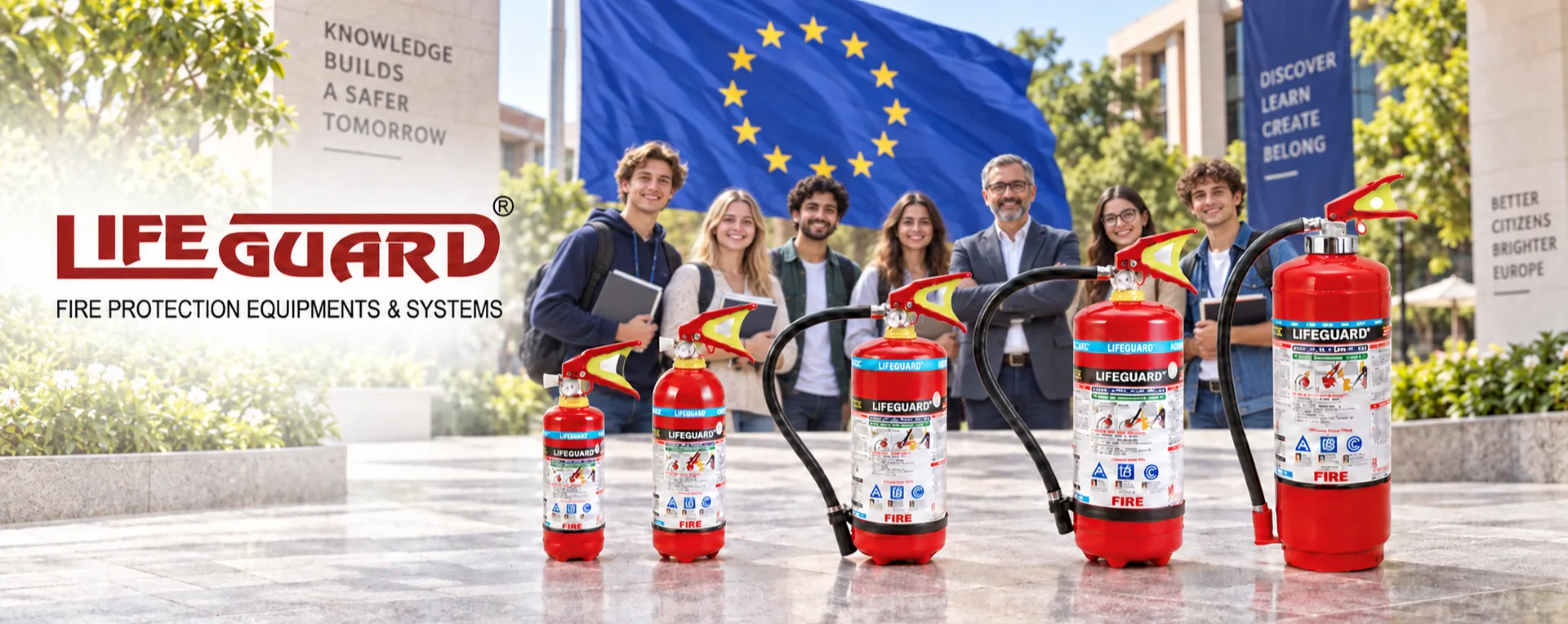
University Fire Safety Equipment System Provider in Europe
SEO title: University Fire Safety Equipment System Provider Europe | LIFEGUARD®
Meta description: Discover coordinated fire detection, alarm, extinguishing and suppression equipment for European universities. Request a campus-specific technical proposal from LIFEGUARD®.
Suggested URL: /university-fire-safety-equipment-system-provider-europe/
Connected fire safety planning for university campuses
A university is rarely a single building with a single fire risk. Teaching blocks, student accommodation, laboratories, libraries, workshops, kitchens, plant rooms and data facilities all operate differently. An effective fire safety equipment programme therefore starts with the approved fire strategy for each building and connects the right products to the people, processes and systems already in place.
LIFEGUARD®, a brand of United Fire Equipments Pvt. Ltd., supports universities, consultants, contractors and distribution partners with fire safety equipment and project-specific system proposals. We help define equipment schedules, review interfaces and coordinate technical documentation for campus projects. The final design, installation, commissioning and approval scope is agreed for each project with qualified local partners and the relevant authorities.
What does a university fire safety equipment system include?
The required arrangement depends on occupancy, hazards, building layout, local rules and the approved design. A coordinated scope may include:
- Fire detection: Smoke, heat or application-specific detectors selected for the environment, with aspirating detection considered where early warning is needed.
- Alarm and notification: Control equipment, manual call points, sounders and visual warning devices arranged to support the building's evacuation strategy.
- Portable first-response equipment: Fire extinguishers with suitable agents and ratings, positioned according to the approved plan and supported by user training.
- Water-based equipment: Hose reels, hydrant valves and related accessories where specified and supported by the available water supply.
- Special hazard suppression: Engineered protection for suitable server rooms, electrical areas, kitchens or other defined hazards, with appropriate release controls and safety measures.
- Interfaces and records: Where the fire strategy calls for them, connections to ventilation, access control, shutdown or building management systems, plus commissioning and maintenance documentation.
Equipment categories must be checked for compatibility. A list of individually compliant products does not by itself establish a correctly designed or approved integrated system.
Solutions by university environment
Lecture theatres, classrooms and administration
Large and changing populations need clear warning and a practical route to safety. Detection, alarm zoning, notification and extinguisher placement should reflect room occupancy, accessibility and the building's evacuation strategy. Refurbishment projects also need careful coordination with existing panels and circuits.
Student residences
Accommodation stays occupied beyond teaching hours. The system design should address sleeping occupants, common spaces, service rooms and emergency response procedures. Maintenance access and clear responsibility for routine checks matter throughout the academic year.
Laboratories and research buildings
Research spaces can combine electrical equipment, flammable substances and processes that produce dust, vapour or heat. A hazard-led review should determine appropriate detection and extinguishing methods. Where specialist agents or fixed systems are considered, designers must check the actual materials, ventilation, exposure risks and room configuration.
Libraries, archives and collections
Rapid detection can help protect irreplaceable materials. Aspirating detection or an engineered suppression solution may be considered for suitable spaces, alongside compartmentation, evacuation and collection-care procedures. Storage arrangements and the presence of people should inform the design.
Server rooms and campus IT infrastructure
Network rooms and data facilities may require early warning and carefully designed suppression to limit service interruption. For a gaseous system, the engineering review typically covers protected volume, enclosure leakage, agent quantity, controls, alarms, ventilation interfaces and safe re-entry procedures. The selected system must suit the specific room and its approved performance objectives.
Kitchens, cafeterias and workshops
Commercial cooking hazards require equipment suited to appliances and cooking media; a dedicated kitchen suppression arrangement may be appropriate. Workshops and service buildings need separate assessments based on their machinery, stored materials and electrical loads. Battery charging areas should be evaluated for their own risks.
From initial enquiry to campus handover
Project stageKey activityTypical outputDiscoveryReview building uses, drawings, fire strategy and existing infrastructureCampus risk and scope briefSpecificationAgree equipment types, capacities, interfaces and product documentationTechnical schedule or bill of quantitiesCoordinationAlign with consultant, university team and local installerReviewed drawings and responsibility matrixSupplyConfirm model availability, destination requirements and deliveryApproved submittals and supply planInstallation and commissioningExecute and test through the appointed qualified teamTest records, training and handover fileIn-service carePlan inspection, maintenance and replacementDocumented service responsibilities
The exact scope of LIFEGUARD® supply, engineering support, installation and after-sales service should be stated in the project offer. Local partners may carry out jurisdiction-specific work.
European project requirements
Europe spans different national building rules and approval procedures. Product-level conformity must be evaluated against the legislation and standards applicable to the precise product and destination. When relevant, project teams should request the applicable declarations, instructions, test reports and certification details for the exact model offered. CE marking, where required, concerns a product's conformity and declared performance; it does not replace a building fire strategy or approval of a complete installation.
For projects outside the EU, including the UK and other European countries, applicable product and building requirements should be checked separately. A local fire engineer, consultant or authorised installer should verify design acceptance, installation and ongoing maintenance obligations.
Why consider LIFEGUARD® for a university project?
LIFEGUARD® brings a broad fire safety equipment portfolio to complex, multi-building enquiries. Our team can consolidate equipment requirements across teaching, residential and infrastructure facilities, discuss suitable product categories with the project team, and prepare a technical and commercial proposal against the supplied schedule. We can coordinate requested product documents during procurement. Any claim about a particular approval, listing or conformity status should be verified for the proposed model before it appears in the final submittal.
Frequently asked questions
Can one provider cover a university's entire fire safety equipment schedule?
A coordinated provider can help consolidate several equipment categories, but final scope depends on the products, local installation capacity, specified approvals and compatibility with existing systems. Ask for a line-by-line proposal showing what is included.
How are new systems connected to an existing campus fire alarm network?
The project team first reviews the installed equipment, protocols, interfaces and fire strategy. Compatibility and permitted modifications must be confirmed with the relevant system stakeholders before integration is designed or commissioned.
Which suppression system is best for a university laboratory or server room?
There is no universal choice. The hazard, enclosure, occupancy, environmental factors, ventilation and continuity needs determine whether a fixed system is suitable and which technology can meet the design objectives.
Does CE marking approve an entire fire safety installation across Europe?
No. Applicable CE marking is assessed at product level. Building design and acceptance requirements are set by the destination jurisdiction and project specification.
What should we send for a project quotation?
Share the destination country and site, floor plans or room data, existing system details, a bill of quantities if available, the fire strategy or tender specification, required certifications, project schedule and the expected scope of installation and commissioning.
Discuss your university fire safety equipment project
Whether you are planning a new research facility, upgrading student accommodation or consolidating a campus-wide tender, send your project information to LIFEGUARD® for a tailored equipment proposal.
LIFEGUARD® | United Fire Equipments Pvt. Ltd.
Phone: +91 8048034226
Email: ufe126@gmail.com | info@lifeguardindia.in
Website: https://www.lifeguardindia.in/
Keywords






