
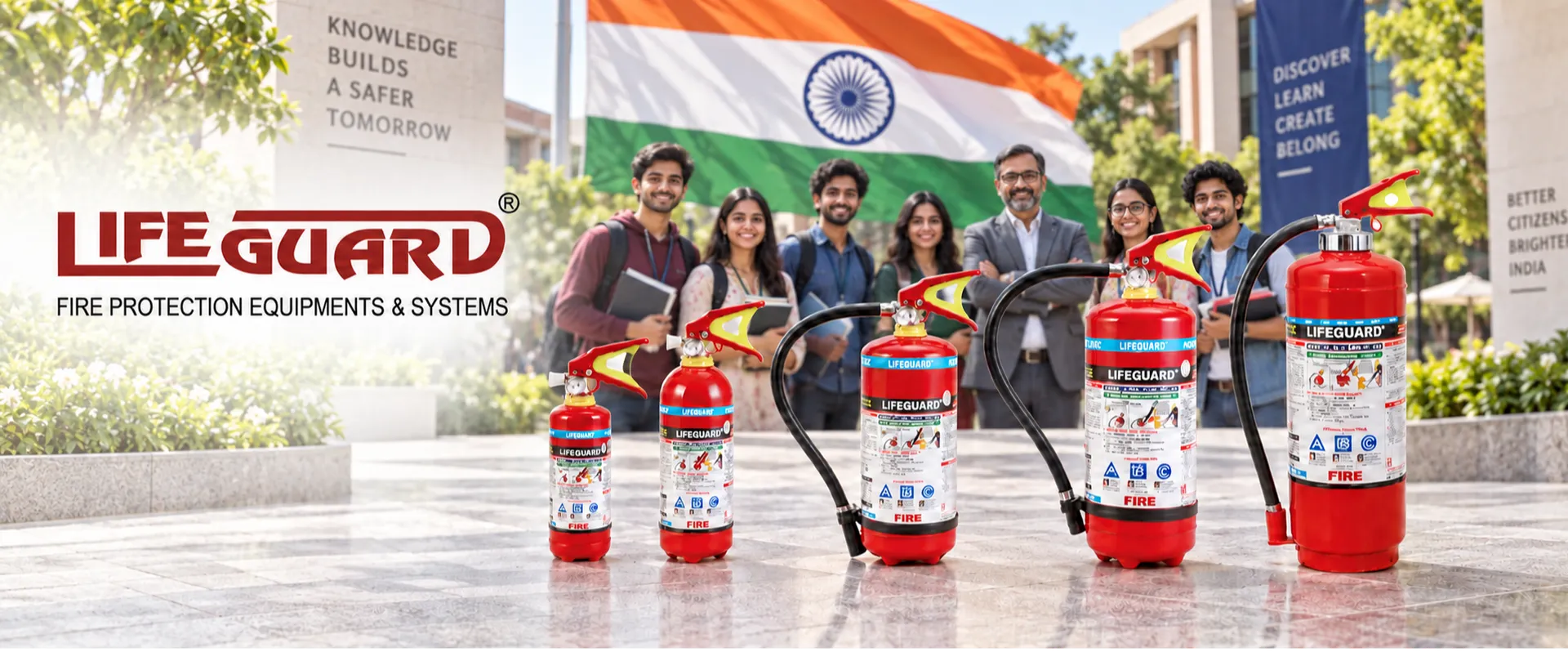
University Fire Safety Equipment System Provider in India
SEO title: University Fire Safety Equipment System Provider in India | LIFEGUARD®
Meta description: LIFEGUARD® supports Indian universities with coordinated fire alarms, extinguishers, hydrants and specialized suppression systems, from planning to commissioning and maintenance.
Suggested URL: /university-fire-safety-equipment-system-provider-india/
Primary keyword: university fire safety equipment system provider India
Related keywords: university fire protection system provider, campus fire safety systems India, fire alarm and hydrant systems for universities, fire suppression systems for colleges, university fire safety equipment supplier
Suggested image alt text: Fire safety equipment and integrated protection systems for a university campus in India
Coordinated fire protection for India's university campuses
A university can include lecture halls, laboratories, hostels, libraries, cafeterias, workshops, data centres, auditoriums and utility buildings. These facilities operate at different hours and face different fire hazards. An effective protection programme therefore needs more than a list of equipment: it needs a coherent design that connects early warning, emergency response, firefighting provisions and ongoing upkeep.
LIFEGUARD®, the fire safety brand of United Fire Equipments Pvt. Ltd., supports educational institutions seeking a university fire safety equipment system provider in India. Our product and system range includes fire extinguishers, fire detection and alarm equipment, hydrant and hose reel systems, sprinklers and application-specific suppression systems. We can help project teams define the scope, select appropriate equipment, coordinate installation, test the completed systems and plan maintenance in line with the agreed contract.
What does a university fire safety system provider do?
A system provider considers how the parts of a campus protection scheme work together. Detectors must send clear warnings; occupants need accessible exits and a defined response; trained personnel need suitable extinguishers and firefighting equipment; and critical rooms may need automatic protection. Systems must also remain usable through inspections, servicing, refilling and replacement.
For universities, this work should address both shared campus requirements and the particular risks in each building. Final design, equipment ratings, quantities, interfaces and approvals must follow the site survey, project specification and applicable authority requirements.
Fire safety systems for academic and residential buildings
Fire detection and alarm systems
Detection and alarm equipment can include smoke or heat detectors, manual call points, fire alarm control panels, sounders and visual notification devices. The system design should reflect the building layout, use of rooms, likely environmental conditions and evacuation strategy. In larger campuses, teams should also consider how building alarms are monitored and how incidents are reported to security or facilities staff.
Portable and wheeled extinguishers
Extinguishers provide a first response option for trained people when a fire is still small and the escape route is clear. ABC dry powder, CO₂, foam, water, clean agent and wet chemical models serve different applications. Kitchens, electrical areas, laboratories and general teaching spaces should be assessed separately. Correct positioning, visible identification, regular inspection and timely refilling are as important as the initial purchase.
Fire hydrant, hose reel and sprinkler systems
For buildings where the approved fire strategy calls for water-based firefighting, the scope may include hydrant valves, hoses, hose reels, nozzles, brigade connections and sprinkler equipment. System design depends on the available water supply, pumps, pressure, coverage and building configuration. Equipment must be specified as part of the engineered scheme and tested after installation.
Special hazard suppression
Server rooms, UPS facilities, electrical panels, kitchens and certain research spaces may need dedicated suppression. Clean agent, panel protection, kitchen hood suppression or other engineered options should be selected according to the actual hazard and use of the room. Laboratory chemicals and processes require individual review; a generic suppression package cannot be assumed to protect every laboratory.
Emergency response and evacuation support
Exit signs, emergency lighting, fire blankets and other response equipment complement the active fire protection systems. Campus teams should maintain clear routes, accessible equipment and instructions that work for students, staff and visitors, including in residential blocks at night.
System planning by campus area
University areaMain planning issueSystems to assessLecture halls and classroomsLarge, changing groups of occupantsDetection, alarm, evacuation provisions and appropriate extinguishersLibraries and archivesCombustible materials and irreplaceable collectionsEarly detection, suitable extinguishers and a reviewed suppression strategyHostelsSleeping occupants and round-the-clock occupancyAlarm and notification, accessible firefighting equipment and evacuation arrangementsLaboratoriesDifferent chemicals, processes and utilitiesHazard-specific detection, extinguishing media and specialized protectionServer and UPS roomsSensitive electronics and service continuityDetection, alarm interfaces and engineered suppression where warrantedKitchens and food courtsCooking oil and hood or duct hazardsSuitable wet chemical equipment and dedicated kitchen suppression where specifiedWorkshops and utility roomsMachinery, electrical equipment or fuel-related risksAppropriate detection, extinguishers and engineered systems based on the hazardAuditoriums and sports facilitiesHigh occupancy during eventsWarning coverage, evacuation routes and firefighting provisions
This table helps frame a site review. It is not a substitute for an approved fire protection design.
From campus survey to long-term readiness
1. Survey and scope definition. Document building plans, occupancy, fire risks, existing installations, water supply and project requirements. Identify any gaps that need detailed engineering review.
2. System design and equipment selection. Develop coordinated schedules and drawings for detection, alarms, extinguishers, water-based systems and special hazards. Confirm equipment specifications against the project's required approvals and certifications.
3. Supply and installation coordination. Plan delivery and installation around construction progress, occupied academic spaces, examination periods and access to critical rooms.
4. Testing, commissioning and handover. Check installed equipment and relevant system functions against the approved design. Provide the agreed test records, operating information and handover documents.
5. Inspection and maintenance. Set a practical schedule for inspections, functional checks, servicing and extinguisher refilling. Keep records current and train designated campus personnel on their responsibilities.
Why choose LIFEGUARD® for a university project?
United Fire Equipments Pvt. Ltd. offers a broad fire protection range under the LIFEGUARD® brand. For a university with multiple buildings and varied hazards, one coordinated project discussion can cover equipment selection, system interfaces, supply, installation support and the documents needed for handover. Our team can review tender specifications, renovation requirements or a new campus brief and propose a project-specific scope.
The exact product make, approval, service coverage and system responsibilities should be confirmed in the quotation and technical submittal. This keeps the proposed solution aligned with the university's drawings, procurement terms and local approval process.
Frequently asked questions
Can a single fire protection design be used for all university buildings?
A campus-wide strategy can set common procedures, documentation and monitoring arrangements. Each building still needs assessment for its occupancy, layout and hazards before equipment and system details are finalized.
How are fire alarms linked to suppression systems?
Where an engineered suppression system requires a release sequence, the detection, control, warning and relevant shutdown interfaces are designed together. The exact sequence depends on the approved system design and room application.
Do university laboratories need special fire protection?
Often they do. The choice depends on chemicals, gases, experiments, ventilation and equipment. A hazard review should precede any decision about extinguishers, detectors or automatic suppression.
Can existing campus equipment be upgraded in phases?
Yes. A phased programme can prioritize high-risk or high-occupancy areas while documenting interfaces with existing systems. The sequencing should preserve the required level of protection during the work.
What information is needed for a proposal?
Share campus and building layouts, room uses, occupancy information, existing fire safety equipment, tender specifications and the desired scope for supply, installation, commissioning and maintenance. Site access and project timelines also help define a workable plan.
Speak to LIFEGUARD® about your university campus
Need a university fire safety equipment system provider in India? Send us your drawings, building list or tender requirements. We can discuss a suitable combination of fire detection, alarms, extinguishers, hydrant equipment and specialized suppression for your project.
LIFEGUARD® | United Fire Equipments Pvt. Ltd.
Manufacturer of fire safety equipment under the LIFEGUARD® brand
Phone: 8048034226
Email: ufe126@gmail.com | info@lifeguardindia.in
Website: https://www.lifeguardindia.in/
Keywords






