
Fire safety has changed significantly over the years. While traditional fire extinguishers remain important, many commercial and industrial buildings now depend on automatic fire detection and suppression systems to identify hazards early and control fires before they become major emergencies.
Across Delhi and the surrounding NCR region, businesses are investing in advanced fire protection because even a small fire can interrupt operations, damage expensive equipment, and put lives at risk. Understanding how these systems work helps property owners and facility managers make informed decisions about protecting their premises.
What Is an Automatic Fire Detection and Suppression System?
An automatic fire detection and suppression system combines two essential functions into one integrated safety solution.
The detection system continuously monitors the environment using devices such as:
- Smoke detectors
- Heat detectors
- Flame detectors
- Gas detectors
- Multi-sensor detectors
When abnormal conditions are detected, the suppression system activates automatically to control or extinguish the fire without waiting for manual intervention.
The goal is simple: detect the danger early, respond immediately, and minimize damage.
Why Early Detection Matters
Most fires start small but can spread rapidly within minutes. Delayed detection often results in:
- Extensive property damage
- Production downtime
- Data loss
- Equipment failure
- Higher insurance claims
- Increased risk to occupants
Automatic detection reduces response time significantly. Instead of relying on someone to notice smoke or flames, the system begins responding the moment predefined conditions are met.
For manufacturing plants, hospitals, commercial buildings, warehouses, and IT facilities in Delhi, this early response can make a critical difference.
How the System Works
Although designs vary depending on the application, most systems follow a similar sequence.
1. Continuous Monitoring
Sensors monitor the protected area 24 hours a day.
2. Hazard Detection
When smoke, excessive heat, or flames are detected, the control panel receives the signal instantly.
3. Alarm Activation
The system triggers alarms to alert occupants so evacuation procedures can begin safely.
4. Automatic Suppression
Depending on the protected environment, the suppression agent is released automatically.
Common suppression agents include:
- Water
- Foam
- Clean agents
- Wet chemicals
- Inert gases
- CO₂ in specific industrial applications
Each type is selected according to the fire risk and the equipment being protected.
Where These Systems Are Commonly Used
Automatic fire detection and suppression systems are suitable for many industries and facilities.
Some common applications include:
- Commercial office buildings
- Manufacturing plants
- Chemical industries
- Warehouses
- Hotels
- Shopping malls
- Educational institutions
- Hospitals
- Laboratories
- Airports
- Metro infrastructure
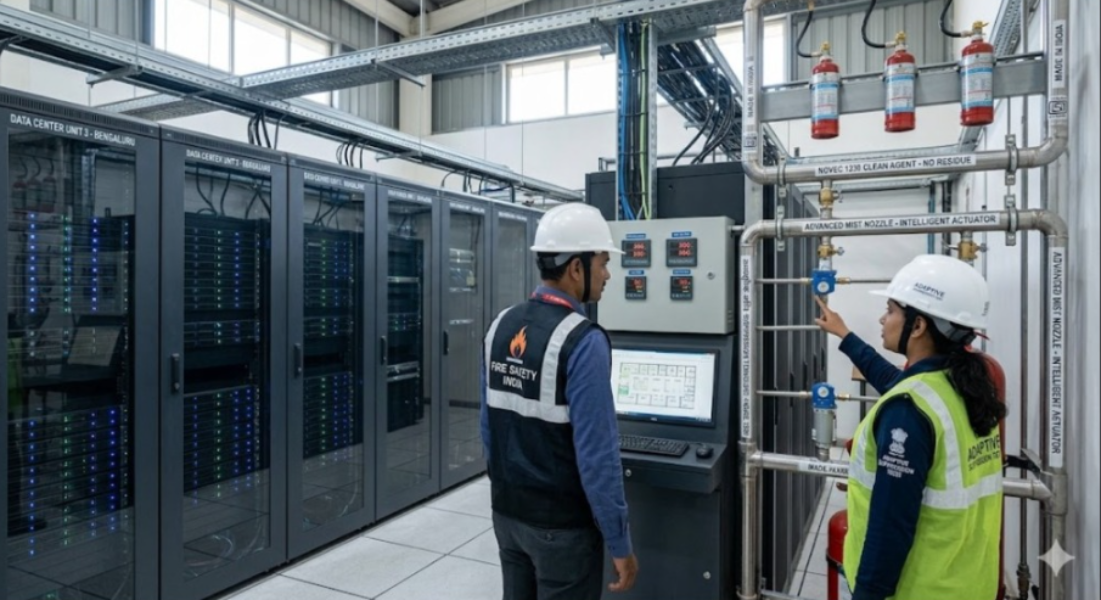
- Data centres
- Electrical control rooms
Many new commercial developments across Delhi now include advanced fire protection systems as part of their overall building safety strategy.
Benefits Beyond Fire Control
Installing an automatic system provides advantages that go beyond extinguishing fires.
Improved Safety
The primary benefit is protecting employees, visitors, and occupants by reducing exposure to dangerous fire conditions.
Reduced Property Damage
Faster response limits fire spread, helping preserve machinery, inventory, documents, and infrastructure.
Business Continuity
Companies can avoid prolonged shutdowns caused by extensive fire damage.
Regulatory Compliance
Many industries must comply with fire safety regulations and building codes. Automatic systems help support these compliance requirements.
Insurance Advantages
Well-designed fire protection systems may contribute to lower insurance risks and demonstrate proactive safety management.
Choosing the Right System
Not every building requires the same solution.
Several factors influence system selection:
- Type of occupancy
- Nature of fire hazards
- Building layout
- Electrical installations
- Storage materials
- Ventilation design
- Local fire safety regulations
- Operational requirements
A proper site assessment helps determine the most appropriate combination of detection technology and suppression methods.
Maintenance Is Just as Important
Even the best system requires regular inspection and maintenance.
Routine servicing should include:
- Detector testing
- Alarm verification
- Control panel inspection
- Pipe and nozzle checks
- Suppression agent inspection
- Battery testing
- Functional system testing
Regular maintenance helps ensure the system performs correctly when needed.
Common Questions
Can these systems activate accidentally?
Modern systems are designed with multiple safeguards and advanced sensors to reduce false alarms. Professional installation and regular maintenance further improve reliability.
Are automatic systems suitable for older buildings?
Yes. Many existing buildings can be upgraded with modern detection and suppression systems after a technical assessment.
Can they protect electrical equipment?
Yes. Depending on the application, clean agent or other specialised suppression systems can protect sensitive electrical equipment without causing unnecessary damage.
Do all industries use the same suppression method?
No. Different industries require different suppression technologies based on the materials, equipment, and fire risks involved.
As businesses continue to modernise their safety infrastructure, automatic fire detection and suppression systems have become an essential part of risk management rather than an optional upgrade. Companies such as United Fire Equipment Pvt Ltd work with commercial and industrial clients to develop fire protection solutions suited to different environments across Delhi, helping businesses improve safety while supporting operational continuity.