
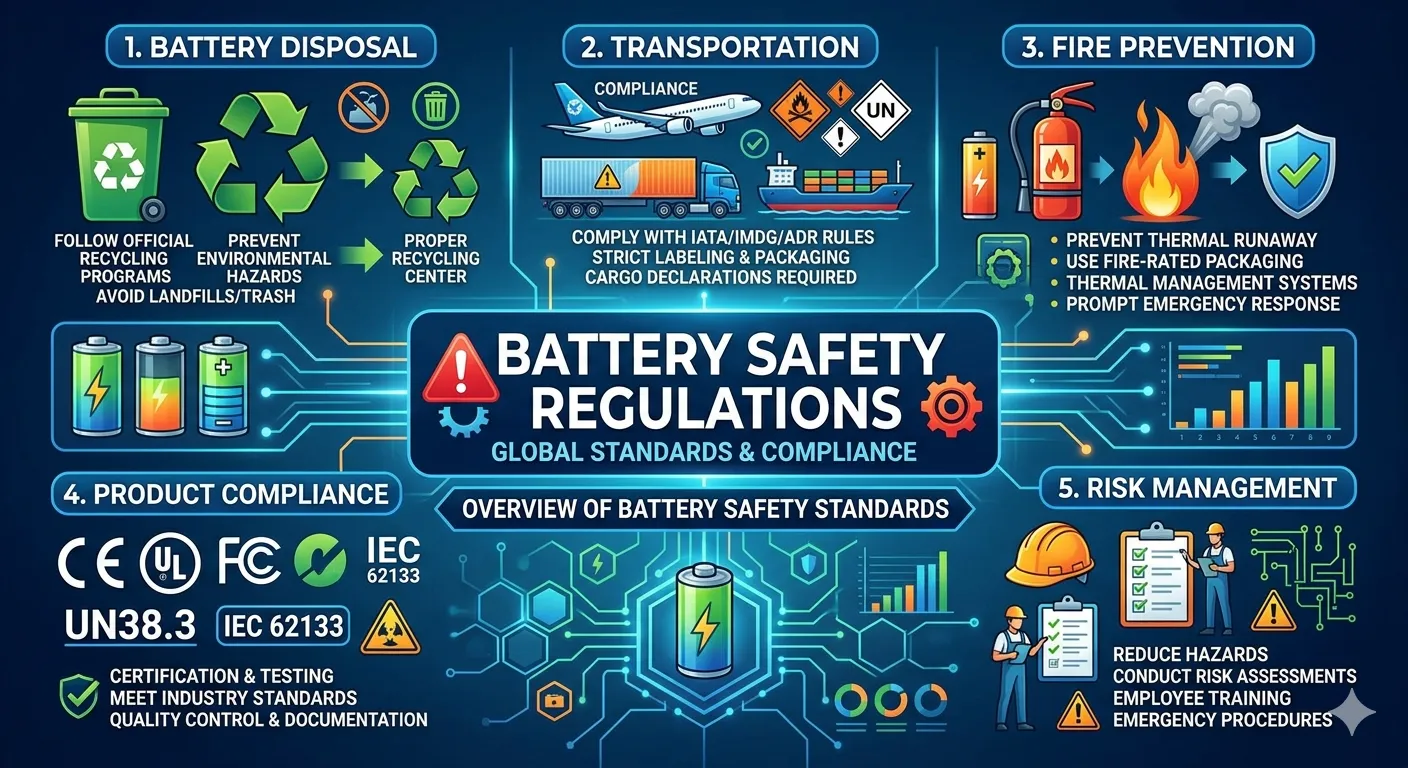
Battery Safety Regulations: Ensuring Safe Energy Storage and Fire Protection
The rapid growth of lithium-ion batteries and energy storage systems has transformed industries worldwide. From electric vehicles (EVs) and renewable energy storage to consumer electronics and industrial backup systems, batteries are now an essential part of modern infrastructure. However, along with innovation comes the critical need for strict battery safety regulations to prevent fires, explosions, thermal runaway incidents, and hazardous failures.
At LIFEGUARD® United Fire Equipments Pvt. Ltd., we understand the growing importance of battery fire safety and regulatory compliance. As a trusted manufacturer of ISI-certified fire safety equipment, we provide advanced fire protection solutions designed to safeguard battery storage systems, EV charging stations, manufacturing units, warehouses, data centers, and industrial facilities.
Understanding Battery Safety Regulations
Battery safety regulations are a set of standards, testing procedures, and compliance requirements developed to ensure batteries operate safely throughout their lifecycle. These regulations are intended to minimize risks associated with:
- Thermal runaway
- Overheating
- Short circuits
- Chemical leakage
- Fire and explosion hazards
- Electrical faults
- Improper transportation and storage
Governments, international agencies, and industry organizations have established stringent battery safety standards to protect people, infrastructure, and the environment.
Why Battery Safety Regulations Are Important
Battery failures can lead to catastrophic incidents, especially in lithium-ion battery systems. Without proper safety measures, even a minor fault can escalate into severe fire hazards.
Key Reasons for Battery Regulations
- Prevent battery fires and explosions
- Ensure safe transportation of hazardous materials
- Protect industrial and commercial facilities
- Improve battery manufacturing quality
- Reduce environmental hazards
- Enhance consumer safety
- Support sustainable energy adoption
Industries handling high-capacity battery systems must strictly follow safety guidelines and install reliable fire protection systems.
Major Global Battery Safety Standards
Several international standards govern battery safety across manufacturing, transportation, storage, and usage.
1. UN 38.3 Regulations
UN 38.3 is one of the most important transportation safety standards for lithium batteries. It ensures batteries can safely withstand transportation conditions such as:
- Altitude simulation
- Thermal testing
- Vibration
- Shock
- External short circuit
- Impact and crush testing
- Overcharge testing
Compliance with UN 38.3 is mandatory for transporting lithium batteries by air, sea, rail, and road.
2. IEC Battery Safety Standards
The International Electrotechnical Commission develops safety standards for electrical and electronic technologies.
Important IEC battery standards include:
- IEC 62133 – Safety requirements for portable batteries
- IEC 62619 – Safety for industrial lithium batteries
- IEC 62660 – EV battery cell safety requirements
These standards focus on electrical safety, thermal stability, and mechanical durability.
3. UL Battery Standards
UL Solutions provides globally recognized battery safety certifications.
Popular UL standards include:
- UL 1642 – Lithium battery safety
- UL 2054 – Household and commercial battery packs
- UL 9540 – Energy storage systems
- UL 9540A – Thermal runaway fire propagation testing
UL testing ensures batteries meet strict fire resistance and performance criteria.
4. NFPA Fire Safety Codes
The National Fire Protection Association develops essential fire protection codes for battery systems and energy storage installations.
Important codes include:
- NFPA 855 – Installation of stationary energy storage systems
- NFPA 70 (NEC) – Electrical safety compliance
- NFPA 1 – Fire code regulations
These standards provide guidelines for fire suppression, ventilation, emergency response, and safe battery storage.
Common Battery Fire Risks
Battery-related incidents often occur due to improper handling, manufacturing defects, or inadequate fire protection systems.
Major Causes of Battery Fires
- Thermal runaway
- Overcharging
- Physical damage
- Manufacturing defects
- Internal short circuits
- Poor ventilation
- Exposure to high temperatures
- Improper storage conditions
Lithium-ion batteries are particularly vulnerable because of their high energy density and flammable electrolytes.
Thermal Runaway: The Biggest Battery Hazard
Thermal runaway occurs when a battery cell overheats uncontrollably, causing a chain reaction that spreads rapidly across the battery pack.
Effects of Thermal Runaway
- Intense heat generation
- Toxic gas release
- Explosive reactions
- Fire propagation
- Structural damage
Battery fire incidents in EVs, warehouses, and energy storage systems highlight the urgent need for advanced suppression technologies and early fire detection systems.
Battery Fire Protection Solutions
Modern battery facilities require specialized fire protection strategies to comply with regulations and minimize operational risks.
Fire Protection Measures Include
Early Detection Systems
Advanced smoke, heat, and gas detection systems help identify battery failures before fire escalation occurs.
Clean Agent Fire Suppression
Clean agent systems suppress fires without damaging sensitive electrical equipment.
Water Mist Systems
Water mist technology effectively cools battery surfaces and prevents thermal propagation.
Aerosol Fire Suppression
Aerosol systems provide rapid suppression in enclosed battery cabinets and electrical panels.
Battery Storage Safety
Proper spacing, ventilation, temperature control, and fire-rated enclosures reduce fire risks.
Battery Safety in Electric Vehicles (EVs)
The global EV industry is driving increased focus on battery safety regulations.
EV Battery Safety Requirements
- Crash resistance testing
- Thermal management systems
- Battery management systems (BMS)
- Fire containment design
- Emergency disconnect systems
EV charging infrastructure also requires proper fire suppression and emergency response planning.
Industrial Applications Requiring Battery Safety Compliance
Battery safety regulations are essential across multiple sectors:
- Electric vehicle manufacturing
- Data centers
- Renewable energy storage
- Telecom infrastructure
- UPS and backup power systems
- Battery warehouses
- Industrial automation facilities
- Marine and defense sectors
Each environment demands customized fire protection systems and regulatory compliance strategies.
Best Practices for Battery Safety
Organizations can significantly reduce risks by implementing the following practices:
- Use certified battery systems
- Follow proper charging procedures
- Install automatic fire suppression systems
- Conduct regular inspections and maintenance
- Train personnel on emergency response
- Monitor battery temperatures continuously
- Ensure proper ventilation
- Store batteries in fire-rated environments
The Future of Battery Safety Regulations
As battery technologies continue evolving, regulations are becoming stricter worldwide. Governments and industries are investing heavily in safer battery chemistries, intelligent monitoring systems, and advanced fire suppression technologies.
Future developments may include:
- AI-based thermal monitoring
- Smart battery management systems
- Improved solid-state battery technologies
- Enhanced fire-resistant battery designs
- Automated emergency shutdown systems
Organizations that prioritize battery safety today will be better prepared for future compliance requirements and operational challenges.
Why Choose LIFEGUARD® for Battery Fire Safety Solutions
LIFEGUARD® United Fire Equipments Pvt. Ltd. is committed to delivering reliable and ISI-certified fire safety solutions for modern battery and energy storage applications.
Our expertise includes:
- Fire extinguishers for electrical and lithium battery risks
- Industrial fire suppression systems
- Clean agent systems
- Fire hydrant systems
- Detection and alarm systems
- Customized fire safety solutions
- Compliance-oriented fire protection planning
We help industries strengthen safety infrastructure while meeting evolving battery safety regulations.
Contact LIFEGUARD®
LIFEGUARD® United Fire Equipments Pvt. Ltd.
Manufacturer of ISI Certified Fire Safety Equipment
📞 8048034226
📧 ufe126@gmail.com | info@lifeguardindia.in






