
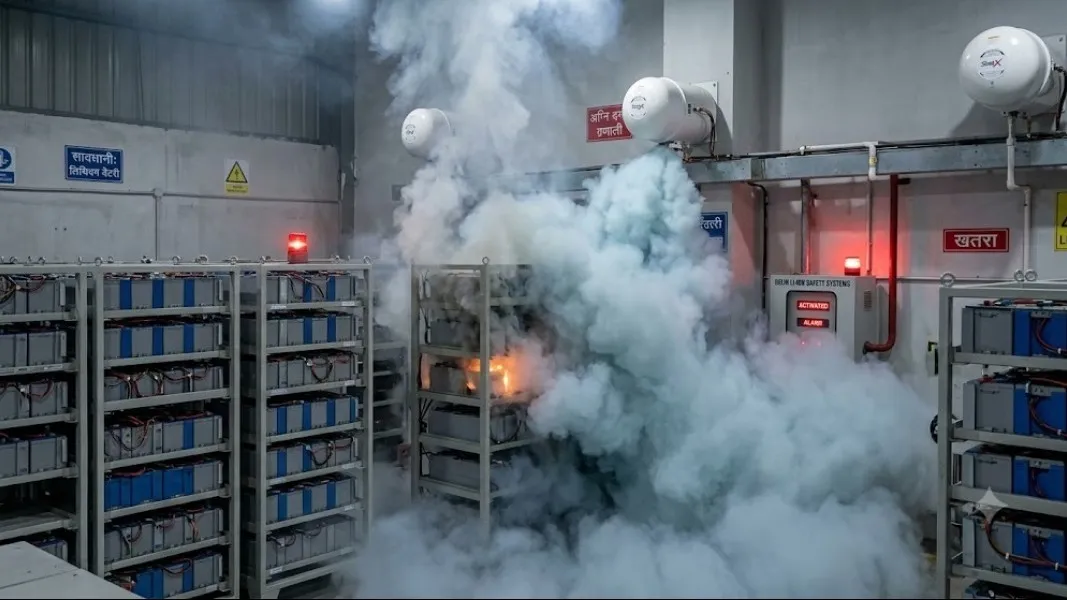
Battery Energy Storage Systems (BESS) are becoming an important part of modern infrastructure. They support renewable energy projects, improve power reliability, and help businesses manage electricity demand. As more organisations in Delhi adopt battery storage solutions, fire safety has become an equally important consideration.
Unlike traditional electrical installations, large battery storage systems require carefully designed battery storage fire suppression solutions because lithium-ion batteries present unique fire risks. Understanding these risks before installation can help facility managers make better decisions about protecting people, equipment, and business operations.
Why Battery Storage Systems Need Special Fire Protection
Energy storage systems contain large numbers of interconnected battery cells that store significant amounts of electrical energy.
If one cell fails due to overheating, mechanical damage, or an electrical fault, it can trigger thermal runaway. This chain reaction generates extreme heat, flammable gases, and the possibility of fire spreading rapidly through the battery bank.
Without suitable suppression systems, these incidents may result in:
- Damage to valuable equipment
- Long operational downtime
- Increased repair costs
- Risks to maintenance personnel
- Disruption of power supply
- Environmental concerns
This is why battery storage projects are typically planned alongside dedicated fire protection systems rather than relying solely on portable extinguishers.
Common Applications of Battery Storage Systems
Battery storage is no longer limited to utility companies.
Today, these systems are used in:
- Solar power plants
- Commercial buildings
- Manufacturing facilities
- Hospitals
- Data centres
- Telecom infrastructure
- Warehouses
- Renewable energy projects
- Industrial campuses
- Smart buildings
Across Delhi, more commercial developments are integrating battery storage as part of their energy management strategy.
What Makes Battery Fires Challenging?
Battery fires differ from ordinary electrical fires in several ways.
They may produce:
- Extremely high temperatures
- Toxic and corrosive gases
- Dense smoke
- Explosive vapours
- Re-ignition after initial suppression
Because of these characteristics, battery storage areas require both early detection and specialised suppression methods.
Key Components of a Battery Storage Fire Suppression System
An effective fire protection strategy combines several technologies.
Early Fire Detection
Heat, smoke, and gas detection systems identify abnormal conditions before flames become widespread.
Continuous Monitoring
Battery management systems monitor voltage, current, and temperature to identify potential failures.
Automatic Suppression
Depending on the application, suppression may involve clean agents, water mist, aerosol technology, or other specialised systems designed for battery environments.
Ventilation and Gas Management
Proper ventilation reduces the accumulation of hazardous gases generated during battery failures.
Emergency Isolation
Automatic shutdown systems disconnect affected battery sections to minimise further damage.
Best Practices for Facility Managers
Before installing a battery storage system, consider these important safety measures:
- Conduct a professional fire risk assessment.
- Choose suppression technology suited to the battery chemistry.
- Maintain safe spacing between battery modules.
- Install reliable fire detection systems.
- Provide adequate ventilation.
- Develop emergency response procedures.
- Train maintenance personnel.
- Schedule regular inspections and testing.
Planning these measures during the design stage is often more effective than making costly modifications later.
Common Mistakes to Avoid
Several avoidable errors can reduce the effectiveness of battery fire protection.
These include:
- Treating battery rooms like ordinary electrical rooms
- Ignoring ventilation requirements
- Delaying maintenance
- Installing incompatible suppression systems
- Overlooking battery monitoring systems
- Failing to update emergency response plans as facilities expand
Avoiding these issues helps improve long-term safety and system reliability.
Frequently Asked Questions
Can standard sprinkler systems protect battery storage rooms?
Sprinklers may provide part of the protection strategy, but many battery installations require additional suppression technologies depending on the battery type and facility design.
How often should battery fire protection systems be inspected?
Routine inspections should follow applicable standards, manufacturer recommendations, and site-specific maintenance schedules.
Is battery fire protection only necessary for large energy projects?
No. Even medium-sized commercial battery installations can benefit from dedicated detection and suppression systems.
Can existing battery rooms be upgraded?
Yes. Many existing facilities can improve safety by adding advanced detection, monitoring, and suppression technologies after a professional assessment.
As battery storage becomes increasingly important for commercial and industrial energy management, fire safety must remain a priority from the earliest planning stages. United Fire Equipment Pvt Ltd supports organisations across Delhi by developing battery storage fire suppression solutions that help protect valuable energy assets while improving workplace safety and operational resilience.
Keywords






