
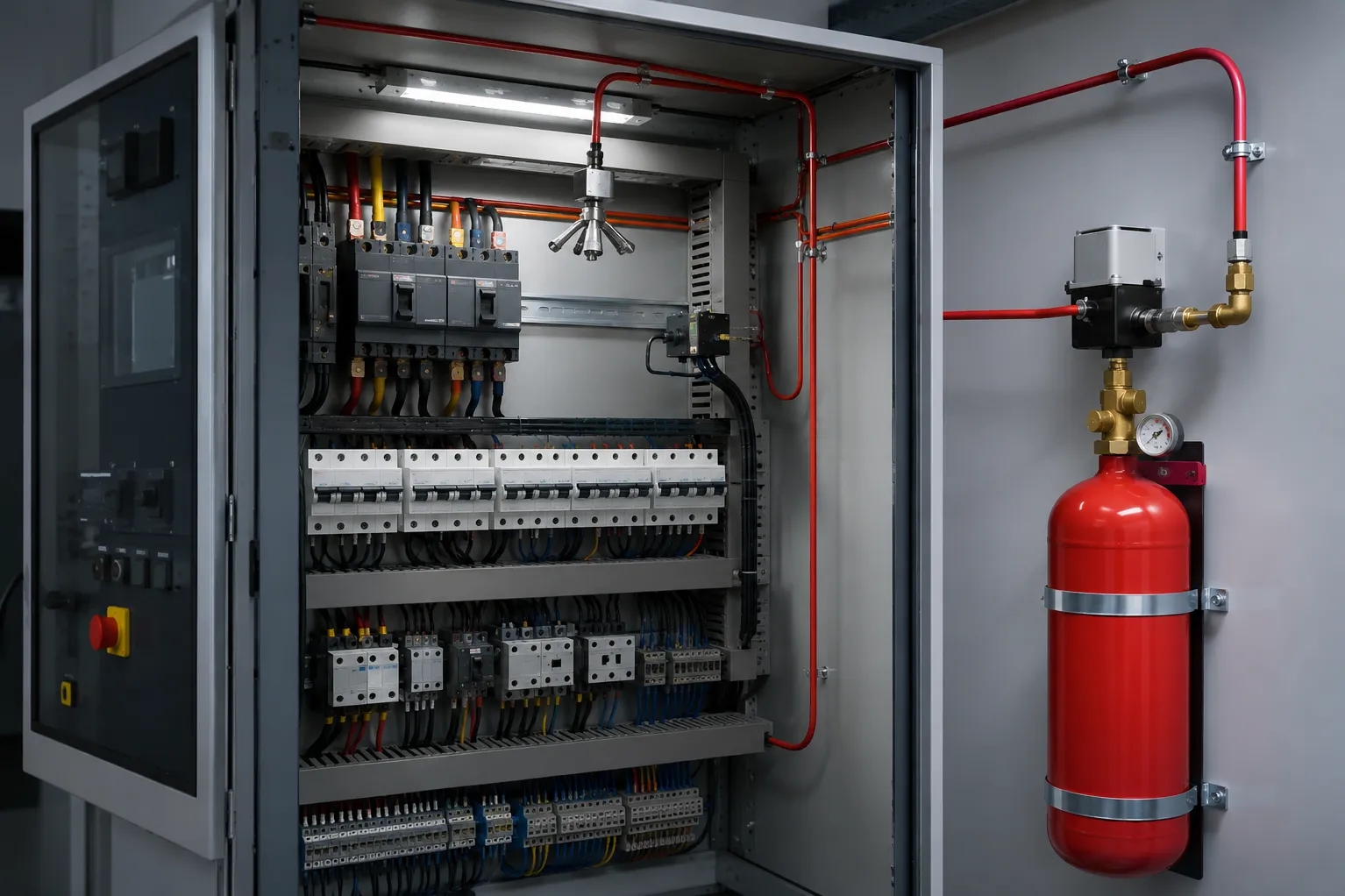
Electrical panels are the backbone of every commercial and industrial facility. They distribute power to machinery, lighting, production equipment, HVAC systems, and essential operations. Yet, they are also one of the most overlooked sources of fire risk.
A single electrical fault inside a control panel can lead to overheating, arcing, or short circuits that develop into serious fires within seconds. For businesses across Delhi, installing an electrical panel fire suppression system has become an important step toward protecting critical equipment and maintaining uninterrupted operations.
Why Electrical Panels Are Vulnerable to Fire
Electrical panels operate continuously under varying loads. Over time, wear and tear, environmental conditions, or improper maintenance can increase the likelihood of electrical faults.
Common causes of electrical panel fires include:
- Short circuits
- Loose electrical connections
- Overloaded circuits
- Component failure
- Arc faults
- Dust accumulation
- Moisture ingress
- Ageing electrical equipment
These problems often begin inside enclosed cabinets, making early detection difficult without specialised monitoring.
Why Traditional Firefighting Methods May Not Be Enough
Electrical panel fires often spread rapidly inside enclosed spaces before becoming visible.
Relying solely on portable extinguishers presents several challenges:
- Fires may already be well developed before they are noticed.
- Opening the panel can introduce additional oxygen and increase fire intensity.
- Manual firefighting may expose personnel to electrical hazards.
- Valuable equipment can suffer extensive damage before emergency teams arrive.
Automatic suppression systems respond much earlier, helping minimise damage and reduce downtime.
How Electrical Panel Fire Suppression Works
Modern panel protection systems are designed specifically for enclosed electrical cabinets.
A typical system includes:
Early Detection
Heat-sensitive detection tubes, thermal sensors, or specialised detectors identify abnormal temperature increases before flames spread.
Automatic Activation
Once the preset activation temperature is reached, the suppression system releases the extinguishing agent directly inside the electrical panel.
Targeted Suppression
Instead of flooding the entire room, the suppression agent is discharged precisely where the fire begins, limiting unnecessary damage.
Rapid Fire Control
Early suppression prevents fire from spreading to nearby electrical systems or surrounding equipment.
Where Electrical Panel Fire Suppression Is Used
These systems are suitable for many industries and commercial facilities.
Common applications include:
- Manufacturing plants
- Power distribution rooms
- Data centres
- Hospitals
- Commercial office buildings
- Telecom facilities
- Water treatment plants
- Warehouses
- Metro infrastructure
- Renewable energy installations
With increasing automation across Delhi's industries, protecting electrical control systems has become more important than ever.
Benefits of Dedicated Electrical Panel Protection
Installing a specialised suppression system provides several operational advantages.
Protects Critical Equipment
Sensitive electrical components can often be protected before extensive fire damage occurs.
Reduces Operational Downtime
Early suppression allows businesses to restore operations more quickly after an incident.
Improves Employee Safety
Automatic activation reduces the need for personnel to intervene during dangerous electrical fires.
Minimises Repair Costs
Containing fires at the earliest stage helps reduce replacement and restoration expenses.
Supports Fire Safety Compliance
Dedicated electrical protection contributes to broader workplace fire safety planning and regulatory compliance.
Best Practices for Electrical Fire Prevention
Fire suppression should be combined with preventive maintenance.
Recommended practices include:
- Inspect electrical panels regularly.
- Tighten loose connections.
- Keep panels clean and free from dust.
- Avoid circuit overloading.
- Replace ageing components promptly.
- Monitor operating temperatures.
- Conduct periodic thermographic inspections.
- Test suppression systems according to maintenance schedules.
These measures significantly reduce the likelihood of electrical fire incidents.
Frequently Asked Questions
Can one suppression system protect multiple electrical panels?
It depends on the facility layout and panel configuration. Many installations use dedicated systems for each critical cabinet.
Will the suppression agent damage electrical equipment?
Many electrical panel suppression systems use clean extinguishing agents specifically selected to minimise damage to sensitive equipment.
Are these systems suitable for small businesses?
Yes. Even smaller facilities with critical electrical infrastructure can benefit from dedicated panel protection.
Can older electrical panels be upgraded?
In many cases, existing electrical cabinets can be fitted with modern fire suppression systems following a technical assessment.
Electrical panels play a vital role in business continuity, making their protection an important part of any fire safety strategy. Rather than waiting for faults to become visible, automatic electrical panel fire suppression systems provide rapid response where fires often begin. United Fire Equipment Pvt Ltd works with commercial and industrial organisations across Delhi to develop electrical fire protection solutions that safeguard essential equipment while supporting reliable day-to-day operations.
Keywords






