

EV Battery Fire Extinguisher Company Saudi Arabia – LIFEGUARD®
Specialized Fire Protection Solutions for Electric Vehicle Battery Risks in Saudi Arabia
The rapid adoption of electric vehicles, battery-powered transport, renewable energy systems, and advanced energy storage technologies is increasing the need for dedicated lithium-ion battery fire protection across Saudi Arabia.
Electric vehicle batteries present a different fire risk compared with conventional vehicle fires. A damaged or overheating lithium-ion battery can experience thermal runaway, leading to extreme heat generation, release of flammable gases, fire propagation between cells, and possible re-ignition even after visible flames have been controlled.
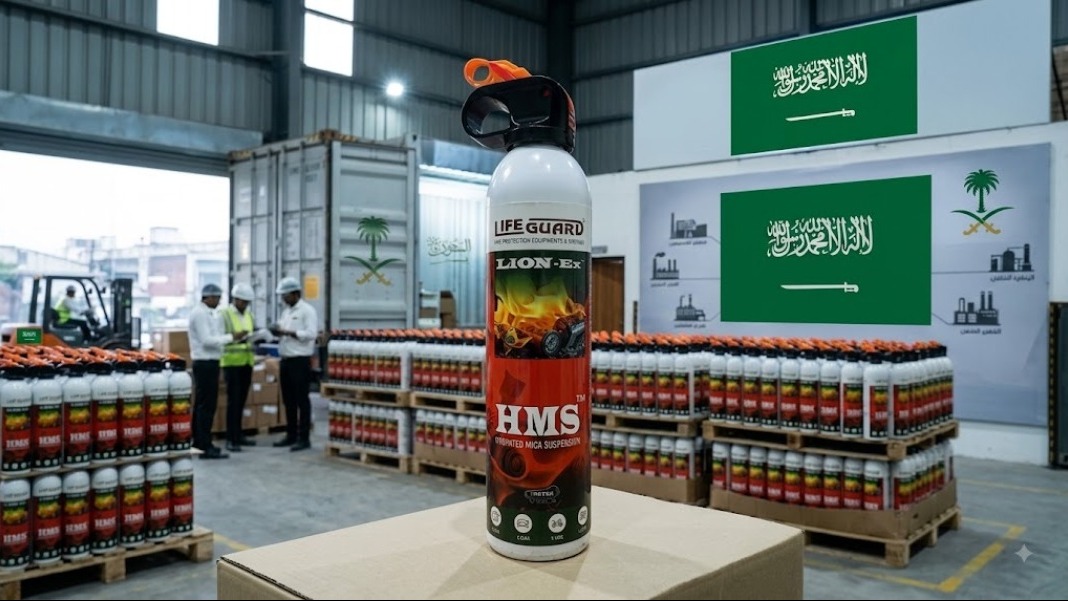
LIFEGUARD® – United Fire Equipments Pvt. Ltd. provides engineered fire safety solutions for electric vehicle and lithium battery applications. As an EV battery fire extinguisher company in Saudi Arabia, LIFEGUARD® supports EV charging stations, vehicle workshops, electric bus depots, parking facilities, battery warehouses, industrial facilities, battery testing areas, and energy storage projects with application-specific fire protection solutions.
Our approach focuses on early detection, fire extinguishing, heat control, cooling, thermal runaway management, alarm integration, and emergency response support.
Why EV Battery Fires Need Specialized Fire Protection
Electric vehicles commonly use high-capacity lithium-ion battery packs consisting of many interconnected battery cells and modules.
Under normal operating conditions, these batteries are engineered for safe operation. However, abnormal conditions such as overheating, mechanical damage, manufacturing defects, charging faults, or electrical failures can create conditions that may initiate thermal runaway.
Potential causes include:
- Internal short circuit
- External short circuit
- Battery overcharging
- Excessive battery temperature
- Manufacturing defects
- Mechanical impact
- Vehicle collision
- Battery penetration
- Electrical malfunction
- Charging equipment failure
- External fire exposure
- Improper battery handling
Once one battery cell enters thermal runaway, heat can transfer to adjacent cells. This may cause a chain reaction known as cell-to-cell thermal propagation.
Because of this behaviour, EV battery fire protection should not focus solely on extinguishing visible flames. A broader strategy may be required to control heat, cool the battery, limit propagation, monitor the affected battery, and reduce the risk of re-ignition.
LIFEGUARD® – EV Battery Fire Extinguisher Company in Saudi Arabia
LIFEGUARD® provides specialized fire extinguishing and fire protection solutions for applications involving electric vehicle batteries and lithium-ion energy storage.
Our solutions can support:
- Electric cars
- Electric buses
- Electric trucks
- Electric delivery vehicles
- EV charging stations
- EV service centres
- Automobile workshops
- Electric bus depots
- Fleet charging facilities
- Public parking areas
- Commercial parking facilities
- Battery storage warehouses
- EV battery assembly facilities
- Battery testing laboratories
- Battery Energy Storage Systems
- Renewable energy projects
The suitable fire protection system is selected according to battery capacity, chemistry, vehicle type, installation environment, fire loading, accessibility, and the required protection philosophy.
What Is an EV Battery Fire Extinguisher?
An EV battery fire extinguisher is an extinguishing device or specialized fire protection solution intended to respond to fire incidents involving electric vehicle batteries and associated lithium-ion battery equipment.
EV battery incidents can be particularly challenging because heat may continue to be generated internally even after external flames have been reduced.
Depending on the application, an EV battery fire extinguisher or suppression solution may be designed to:
- Control developing flames
- Reduce surrounding temperatures
- Provide battery cooling
- Limit fire spread
- Protect adjacent battery modules
- Reduce thermal propagation
- Improve emergency response
- Reduce re-ignition risk
The correct extinguishing solution should therefore be selected according to the specific lithium battery hazard.
Understanding Thermal Runaway in EV Batteries
Thermal runaway is one of the primary hazards associated with lithium-ion batteries.
It occurs when a battery cell generates heat faster than it can safely dissipate that heat.
A typical sequence may involve:
Battery fault
↓
Internal temperature rises
↓
Cell materials begin to deteriorate
↓
Heat and gases are released
↓
Battery temperature increases rapidly
↓
Thermal runaway develops
↓
Heat reaches neighbouring cells
↓
Additional cells may become involved
This process can continue even after the initial fire has been attacked, which is why appropriate cooling and continuous monitoring are important.
EV Battery Cooling and Fire Control
Cooling plays an important role in managing many lithium-ion battery incidents.
When a battery has entered thermal runaway, significant heat can remain within the battery cells and surrounding modules.
Without adequate heat removal, thermal energy may continue to transfer from one cell to another.
A complete EV battery fire protection strategy may therefore include:
- Flame control
- Heat absorption
- Cooling of the battery pack
- Protection of neighbouring cells
- Prevention of thermal propagation
- Continued temperature monitoring
- Post-fire observation
LIFEGUARD® can support customers in selecting suitable fire extinguishing and cooling arrangements based on their battery and site conditions.
EV Battery Fire Extinguishers for Charging Stations in Saudi Arabia
The growth of electric mobility is increasing the number of EV charging facilities across Saudi Arabia.
Charging locations require careful fire safety planning because electric vehicles remain connected to electrical charging equipment for extended periods.
Potential risks can include:
- Battery overheating
- Charging system faults
- Electrical short circuits
- Damaged charging cables
- Battery defects
- Vehicle impact
- Damaged battery packs
- High ambient temperatures
LIFEGUARD® can provide EV fire protection solutions for:
- Public EV charging stations
- Commercial charging stations
- Residential charging areas
- Shopping centre car parks
- Hotel parking facilities
- Corporate parking areas
- Fleet charging stations
- Electric bus charging depots
- Logistics vehicle charging facilities
Fire extinguishers, detection systems, suppression systems, alarms, and other safety measures can be selected according to project requirements.
EV Battery Fire Protection for Parking Facilities
Electric vehicles are increasingly found in modern residential, commercial, and public parking facilities.
Fire protection planning is particularly important for enclosed and basement car parks, where smoke, heat, and toxic gases can create additional hazards.
LIFEGUARD® fire safety solutions can be considered for:
- Basement parking
- Multilevel parking
- Shopping malls
- Hotels
- Residential towers
- Office complexes
- Airports
- Hospitals
- Government buildings
- Industrial facilities
Depending on risk assessment, a protection strategy may include:
- Portable EV battery fire extinguishers
- Heat detection
- Smoke detection
- Flame detection
- Gas detection
- Automatic suppression
- Water-based cooling systems
- Fire alarm integration
- Ventilation control
- Emergency shutdown arrangements
Electric Bus Battery Fire Protection
Electric buses contain high-capacity battery systems and may require specialized fire protection for both vehicles and supporting infrastructure.
LIFEGUARD® solutions can support:
- Electric city buses
- Electric staff buses
- Electric airport buses
- Electric school buses
- Public transport fleets
- Commercial electric buses
Important fire protection areas include:
- Battery packs
- Vehicle propulsion areas
- Charging points
- Bus depots
- Maintenance workshops
- Battery storage rooms
- Battery service facilities
A combination of early detection, fire suppression, and cooling can help reduce the severity of a developing battery incident.
EV Workshop Fire Safety Solutions
Workshops servicing electric vehicles face additional risks because technicians may work directly with high-voltage lithium battery systems.
Potential risk areas include:
- Damaged vehicles
- Accident-involved EVs
- Battery removal areas
- Battery repair zones
- Charging bays
- Diagnostic areas
- Battery storage locations
- Damaged battery quarantine areas
LIFEGUARD® can provide suitable fire extinguishing equipment and application-based fire protection arrangements for EV maintenance and service facilities.
Fire Protection for Damaged Electric Vehicle Batteries
A damaged EV battery may not always show immediate signs of failure.
Internal cell damage following an accident, impact, penetration, or electrical fault can potentially create delayed thermal runaway.
Facilities handling damaged electric vehicles should therefore consider:
- Battery isolation
- Dedicated vehicle quarantine zones
- Safe separation distances
- Temperature monitoring
- Suitable firefighting equipment
- Emergency cooling provisions
- Restricted access
- Continuous observation
- Defined emergency procedures
These measures can help improve safety while damaged batteries are being assessed, repaired, stored, or transported.
EV Battery Fire Protection for Warehouses
Lithium-ion battery warehouses can store significant quantities of battery cells, modules, complete battery packs, or electric vehicle components.
The fire protection strategy should consider factors such as:
- Battery chemistry
- Battery quantity
- Battery capacity
- State of charge
- Storage height
- Rack layout
- Packaging
- Separation distance
- Ventilation
- Charging activities
- Damaged battery storage
- Emergency access
LIFEGUARD® can support customers with detection, alarm, fire extinguishing, and suppression solutions for battery storage environments.
EV Battery Manufacturing and Assembly Fire Protection
Electric vehicle and battery manufacturing facilities can contain batteries at different production stages.
Critical areas may include:
- Lithium cell storage
- Module assembly
- Battery pack assembly
- Battery charging
- Testing stations
- Quality control areas
- Finished battery storage
- Scrap battery locations
- Damaged battery quarantine zones
The protection system should be designed according to the specific process and battery hazard.
LIFEGUARD® can support technical evaluation, equipment selection, detection, suppression, and control system integration.
Early Detection of EV Battery Fire Risks
Early detection can help reduce the consequences of a developing battery incident.
Before visible fire develops, a battery fault may be associated with changes such as:
- Increased temperature
- Smoke generation
- Vapour release
- Abnormal gas generation
- Localized overheating
Depending upon the application, suitable detection systems may include:
- Linear Heat Sensing
- Point heat detectors
- Aspirating smoke detection
- Gas detection
- Multi-criteria fire detectors
- Flame detectors
- Temperature monitoring
Early warning can enable operators or automated systems to initiate shutdown, evacuation, battery isolation, ventilation, cooling, or suppression.
Linear Heat Sensing for EV Battery Applications
Linear Heat Sensing can provide continuous heat monitoring around battery cabinets, battery packs, charging systems, cable routes, and storage areas.
It can be considered for:
- Battery racks
- EV charging areas
- Battery cabinets
- Bus battery compartments
- Battery storage rooms
- Industrial lithium battery installations
The cable routing, alarm temperature, zoning, and controller configuration should be selected according to the application and ambient conditions.
Gas Detection for Lithium-Ion Battery Risks
Abnormal lithium-ion battery conditions may involve the release of gases and vapours.
Suitable gas monitoring can provide an additional layer of early warning in enclosed battery environments.
Depending upon project requirements, gas detection can be integrated with:
- Fire alarm systems
- Battery Management Systems
- Building Management Systems
- Ventilation systems
- Emergency shutdown systems
- Suppression systems
- Remote monitoring platforms
This creates a coordinated response when abnormal battery conditions are detected.
Automatic EV Battery Fire Suppression Systems
For high-risk or unattended facilities, automatic suppression can provide an additional layer of protection.
A typical engineered arrangement may include:
- Detection devices
- Fire alarm or releasing panel
- Suppression cylinders
- Distribution piping
- Flexible discharge hoses
- Discharge nozzles
- Manual release switches
- Audible alarms
- Visual alarms
- Pressure monitoring
- Shutdown interfaces
- Control relays
- BMS interfaces
The final design should be based on battery configuration, enclosure conditions, hazard analysis, and project requirements.
Integrated EV Fire Protection Control
A complete EV battery fire safety solution can be integrated with other building and vehicle infrastructure.
Possible interfaces include:
- Main fire alarm panel
- Building Management System
- Battery Management System
- EV charger controls
- Electrical isolation system
- Emergency shutdown system
- Ventilation system
- Local alarms
- Remote monitoring
- Access control systems
A typical sequence may be:
Abnormal battery condition detected
↓
Pre-alarm activated
↓
Fire alarm initiated
↓
Charging interrupted
↓
Electrical isolation signal generated
↓
Suppression or cooling system activated
↓
Emergency personnel notified
This coordinated approach can help improve response time.
Portable EV Battery Fire Extinguishers
Portable fire extinguishing equipment can form an important part of the first-response strategy for EV-related facilities.
Typical applications include:
- EV charging stations
- Service centres
- Workshops
- Fleet depots
- Battery testing laboratories
- Battery warehouses
- Parking areas
- EV dealerships
- Maintenance facilities
The appropriate extinguisher type, capacity, quantity, and positioning should be selected according to the specific hazard and applicable site fire safety requirements.
Portable extinguishers should be supported by suitable emergency procedures, training, isolation arrangements, and additional fire protection systems for larger risks.
Customized EV Battery Fire Protection Solutions
Every EV installation has different battery and fire safety requirements.
LIFEGUARD® evaluates important parameters before recommending a protection concept.
Battery Information
- Battery chemistry
- Battery voltage
- Battery capacity
- Number of cells
- Number of modules
- Battery configuration
- Battery enclosure
- State of charge
Site Information
- Indoor or outdoor location
- Ambient temperature
- Ventilation
- Room or parking dimensions
- Vehicle spacing
- Charging arrangement
- Electrical infrastructure
- Accessibility
Fire Safety Requirements
- Portable extinguishers
- Fire detection
- Gas detection
- Automatic suppression
- Cooling requirements
- Fire alarm integration
- Emergency shutdown
- BMS integration
- Ventilation control
This information helps in selecting a practical and application-specific fire protection solution.
Applications of EV Battery Fire Extinguishers in Saudi Arabia
LIFEGUARD® EV battery fire protection solutions can be considered for:
- EV charging stations
- Electric vehicle dealerships
- Vehicle service workshops
- Electric bus depots
- Logistics fleets
- Commercial car parks
- Residential parking
- Shopping centres
- Hotels
- Airports
- Industrial plants
- Battery storage facilities
- EV battery testing centres
- Manufacturing facilities
- Energy storage systems
- Renewable energy projects
- Government infrastructure
Why Choose LIFEGUARD® as an EV Battery Fire Extinguisher Company in Saudi Arabia?
Specialized Lithium Battery Fire Safety Solutions
LIFEGUARD® understands that lithium-ion battery incidents can involve thermal runaway, extreme heat, propagation, and re-ignition.
Application-Based Equipment Selection
Fire protection systems can be selected according to vehicle type, battery size, charging environment, location, and operating conditions.
Portable and Automatic Solutions
Solutions can range from first-response portable fire extinguishing equipment to integrated automatic detection and suppression systems.
Engineering and Technical Support
Our technical team can assist with:
- System selection
- Equipment specifications
- Fire protection concept
- Detection philosophy
- Suppression system design
- Equipment layout
- BOQ preparation
- Technical documentation
- Testing support
- Commissioning support
Integrated Protection Approach
Detection, alarms, shutdown, extinguishing, cooling, and monitoring can be coordinated as part of one fire protection strategy.
Solutions for Small and Large Projects
Support can be provided for individual EV charging points as well as large-scale commercial, industrial, transport, and energy projects.
EV Battery Fire Extinguisher Company Across Saudi Arabia
LIFEGUARD® can support EV battery fire protection requirements for customers and projects across major commercial and industrial regions of Saudi Arabia, including:
Riyadh, Jeddah, Dammam, Al Khobar, Dhahran, Jubail, Yanbu, Makkah, Madinah, Tabuk, NEOM region and other locations across the Kingdom of Saudi Arabia.
Whether the project involves a single charging location, commercial parking facility, electric bus fleet, battery warehouse, or industrial energy installation, LIFEGUARD® can assist in developing an appropriate fire safety concept.
Complete EV Battery Fire Safety Strategy
A comprehensive EV battery fire safety strategy should use multiple layers of protection.
Layer 1 – Prevention
Proper charging equipment, battery management, electrical protection, maintenance, and safe operating procedures.
Layer 2 – Early Detection
Monitoring of heat, smoke, gases, and other abnormal battery conditions.
Layer 3 – Alarm and Isolation
Automatic alarms, charging interruption, and electrical isolation.
Layer 4 – Fire Extinguishing
Application of suitable fire extinguishing equipment to control developing fire conditions.
Layer 5 – Cooling
Heat removal to limit cell-to-cell propagation and reduce the risk of re-ignition.
Layer 6 – Monitoring and Emergency Response
Continuous observation, evacuation, firefighting intervention, and post-event assessment.
A layered approach provides broader protection than relying on a single extinguisher or detector.
Frequently Asked Questions
What is the best fire extinguisher for an EV battery fire?
The suitable fire extinguishing solution depends on the battery chemistry, battery size, location, and fire scenario. For lithium-ion battery incidents, controlling heat and providing sufficient cooling can be as important as controlling visible flames.
Can EV batteries reignite after a fire?
Yes. Damaged lithium-ion cells can retain significant heat and energy after visible flames have been controlled. Continued cooling, isolation, and monitoring may therefore be required.
Can normal fire extinguishers be used on EV battery fires?
Conventional extinguishers may assist with surrounding materials or early-stage fire conditions, but a major battery thermal runaway event may require additional cooling and specialized emergency procedures.
Does LIFEGUARD® provide EV charging station fire protection?
Yes. LIFEGUARD® can support EV charging station projects with extinguishing equipment, detection systems, alarms, suppression, cooling, and system integration based on the specific project requirements.
Does LIFEGUARD® provide fire protection for electric bus depots?
Yes. Fire protection solutions can be developed for electric bus charging facilities, battery areas, workshops, depots, and associated infrastructure.
Can fire protection systems be integrated with an EV charging control system?
Depending upon the system architecture, fire alarm and detection signals can be interfaced with charging controls, electrical shutdown systems, ventilation systems, BMS, and other safety systems.
Choose LIFEGUARD® for EV Battery Fire Protection in Saudi Arabia
As Saudi Arabia continues to invest in electric mobility, renewable energy, advanced transportation, and modern infrastructure, specialized lithium-ion battery fire safety is becoming increasingly important.
LIFEGUARD® – United Fire Equipments Pvt. Ltd. provides engineered solutions for EV battery fire extinguishing, lithium battery thermal runaway protection, early detection, suppression, cooling, alarm, and system integration.
Our solutions can support EV charging stations, workshops, fleet operators, parking facilities, electric bus depots, battery storage installations, industrial facilities, and energy storage projects throughout Saudi Arabia.
Contact LIFEGUARD®
United Fire Equipments Pvt. Ltd.
Manufacturer of ISI Certified Fire Safety Equipment
📞 8048034226
For enquiries related to EV battery fire extinguishers in Saudi Arabia, lithium-ion battery fire protection, EV charging station fire safety, thermal runaway protection, battery cooling, electric bus fire suppression, or lithium battery suppression systems, contact LIFEGUARD® with your project details.
Suggested SEO Meta Title
EV Battery Fire Extinguisher Company Saudi Arabia | LIFEGUARD®
Suggested Meta Description
LIFEGUARD® is an EV battery fire extinguisher company serving Saudi Arabia with lithium-ion battery fire protection, thermal runaway control, cooling, detection and suppression solutions for EV charging stations, workshops, fleets and battery facilities.
Primary SEO Keyword
EV Battery Fire Extinguisher Company Saudi Arabia
Related SEO Keywords
EV battery fire extinguisher Saudi Arabia, EV fire extinguisher company Saudi Arabia, lithium battery fire extinguisher Saudi Arabia, electric vehicle battery fire protection Saudi Arabia, EV charging station fire protection Saudi Arabia, EV fire suppression system Riyadh, lithium battery fire protection Riyadh, EV battery fire safety Jeddah, lithium battery thermal runaway suppression Saudi Arabia, electric bus fire protection Saudi Arabia, EV battery cooling system Saudi Arabia, lithium-ion battery fire suppression Saudi Arabia.