
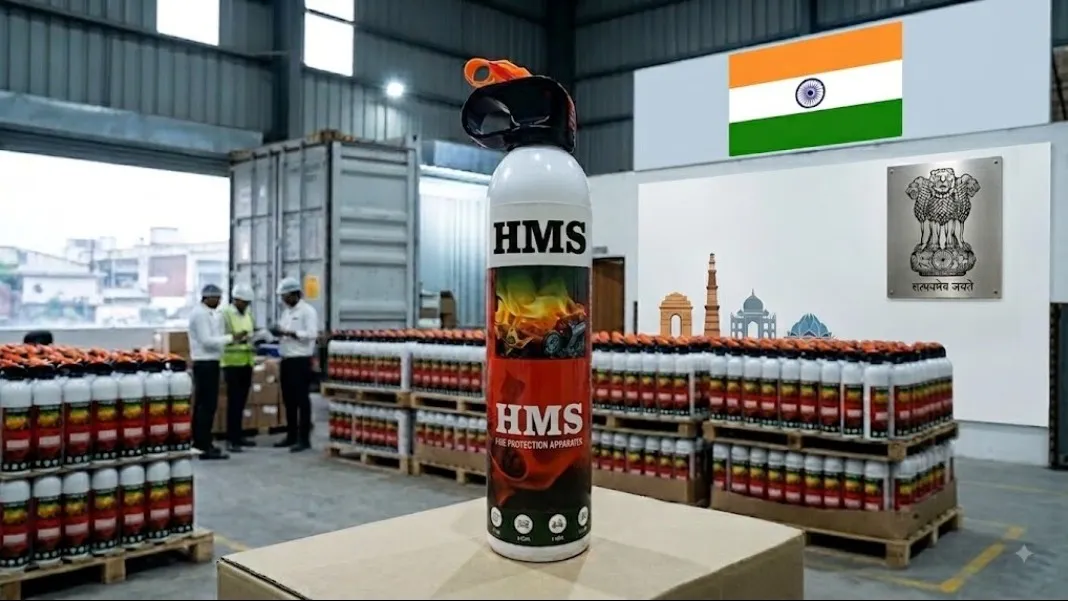
EV Battery Fire Protection System Provider in Delhi NCR
The rapid growth of electric mobility across India has created an urgent requirement for advanced and reliable EV battery fire protection systems. Electric cars, buses, trucks, two-wheelers, three-wheelers, battery manufacturing facilities, charging stations, and battery energy storage applications depend extensively on lithium-ion batteries. While these batteries offer high energy density and excellent performance, abnormal conditions such as overheating, electrical faults, overcharging, mechanical damage, or internal cell failure can potentially lead to thermal runaway and battery fire incidents.
LIFEGUARD® – United Fire Equipments Pvt. Ltd. provides engineered solutions for organizations searching for a dependable EV Battery Fire Protection System Provider in Delhi NCR.
Our solutions can combine early detection, alarm, suppression, cooling, automatic activation, manual release, and system integration to create a comprehensive fire protection strategy for electric vehicles and lithium-ion battery applications.
Reliable EV Battery Fire Protection System Provider in Delhi NCR
Choosing the right EV battery fire protection system provider in Delhi NCR requires careful technical evaluation of the battery hazard.
Lithium-ion battery fires can behave differently from many conventional fire incidents. An affected cell may generate significant heat and potentially transfer this heat to neighbouring cells, resulting in thermal propagation.
Therefore, EV battery protection should focus on early identification of abnormal conditions and rapid intervention.
LIFEGUARD® fire protection solutions may incorporate:
- Early heat detection
- Linear heat detection systems
- Temperature monitoring
- Smoke detection
- Flame detection
- Gas detection where technically appropriate
- Automatic suppression activation
- Manual suppression activation
- Strategically located discharge nozzles
- Battery cooling arrangements
- Fire propagation control
- Audible and visual alarms
- Vehicle shutdown signals
- Electrical isolation interfaces
- Charger shutdown integration
- Fire suppression control systems
- Monitoring and indication devices
Each system can be configured according to the battery layout, vehicle architecture, enclosure geometry, operating conditions, risk assessment, and customer requirements.
Why EV Batteries Need Dedicated Fire Protection
Electric vehicle battery packs contain multiple cells interconnected into modules and larger battery assemblies.
Under normal operating conditions, lithium-ion batteries provide reliable energy storage. However, failures can occur because of several factors.
Potential causes include:
- Internal electrical short circuit
- Battery overcharging
- High operating temperature
- Mechanical impact
- Vehicle collision
- Manufacturing defects
- Damaged battery cells
- Charging equipment malfunction
- Electrical system failures
- Battery management system faults
- External fire exposure
- Thermal propagation between cells
A problem beginning in one cell can potentially affect neighbouring cells if sufficient heat is transferred.
This cascading process can lead to a serious battery fire event.
An engineered EV battery fire protection system should therefore consider not only flame suppression but also early detection, thermal management, isolation, and reduction of fire propagation.
EV Battery Thermal Runaway Protection
One of the most important concerns in electric vehicle fire safety is thermal runaway.
Thermal runaway occurs when a battery cell experiences self-sustaining heat generation. As temperature rises, internal reactions may generate additional heat, causing the situation to escalate.
A thermal runaway event can potentially involve:
- Rapid temperature rise
- Smoke generation
- Gas release
- Battery cell venting
- Flame development
- Damage to adjacent cells
- Thermal propagation
- Possible re-ignition
For this reason, a comprehensive EV battery fire protection strategy may involve several layers.
Layer 1 – Early Detection
Detect an abnormal temperature, smoke, flame, or other selected condition before the incident becomes more severe.
Layer 2 – Alarm
Generate audible or visual alarms and transmit appropriate signals to the vehicle operator or facility management system.
Layer 3 – Automatic Protective Action
Depending on the system design, automatic functions may include suppression activation, charger shutdown, electrical isolation, or vehicle shutdown.
Layer 4 – Fire Suppression
Discharge the selected suppression medium through properly positioned nozzles.
Layer 5 – Cooling
Where applicable, cooling can help reduce heat around affected battery modules and adjacent components.
Layer 6 – Monitoring
The protected area should continue to be observed because lithium-ion battery incidents can involve persistent heat or possible re-ignition.
How an EV Battery Fire Protection System Works
A typical EV battery fire protection system consists of detection, control, suppression, and distribution components.
1. Fire and Heat Detection
Detection devices are installed close to the protected battery area.
Depending upon the project, these may include:
- Linear heat sensing cable
- Temperature detectors
- Smoke detectors
- Flame detectors
- Multi-criteria detectors
- Gas sensors
The objective is to identify abnormal conditions as early as practicable.
2. Signal Processing and Alarm
When a predetermined alarm condition is reached, the detection system sends a signal to the control arrangement.
The system may initiate:
- Audible warning
- Visual warning
- Driver alarm
- Control-room notification
- Battery isolation signal
- Charger shutdown
- Vehicle shutdown
- Automatic suppression activation
The final sequence is selected according to the application.
3. Automatic or Manual Activation
The suppression system can be configured for automatic activation, manual activation, or a combination of both.
Automatic activation can be particularly valuable where rapid response is required or where the protected compartment is not continuously accessible.
4. Suppression Medium Discharge
After activation, the extinguishing or cooling medium is distributed through piping or tubing.
Strategically positioned nozzles discharge the medium toward the identified battery risk zones.
5. Fire Control and Cooling
Depending upon the selected protection technology, the discharged medium can support fire control and heat reduction.
For lithium-ion batteries, managing heat is particularly important because elevated cell temperature may continue even after visible flame has been reduced.
EV Battery Fire Protection System for Electric Buses
Electric buses frequently carry large-capacity lithium-ion battery systems.
Battery packs may be installed:
- On the roof
- Under the floor
- At the rear of the bus
- Inside dedicated battery compartments
- At multiple protected locations
A fire protection system for an electric bus may incorporate:
- Linear heat detection
- Temperature monitoring
- Automatic fire suppression
- Manual release
- Multiple discharge nozzles
- Driver warning system
- Audible and visual alarms
- Battery compartment protection
- Vehicle shutdown interface
- Electrical isolation signal
System design should consider the number of battery packs, compartment size, battery arrangement, tubing route, cylinder location, and available installation space.
EV Battery Fire Protection for Electric Cars
Electric passenger vehicles generally require compact and carefully integrated fire protection systems.
Applications may include:
- Underbody battery packs
- Battery enclosures
- High-voltage electrical areas
- Charging components
- Prototype vehicles
- Test vehicles
- Special-purpose electric vehicles
The solution can be customized according to the battery architecture and vehicle design.
Electric Truck and Commercial EV Fire Protection
Electric trucks, loaders, utility vehicles, and commercial EVs may use high-capacity batteries for extended operational periods.
Fire protection may be provided for:
- Main battery packs
- Battery compartments
- High-voltage equipment
- Electrical cabinets
- Charging interfaces
- Auxiliary electrical systems
Automatic detection and suppression can provide an additional safety layer for commercial fleet applications.
Electric Two-Wheeler and Three-Wheeler Battery Fire Protection
Electric scooters, motorcycles, e-rickshaws, electric loaders, and other compact EVs also use lithium-ion battery systems.
Where technically suitable, compact protection arrangements can be designed according to:
- Battery capacity
- Battery location
- Enclosure dimensions
- Available space
- Detection philosophy
- Suppression method
- Activation requirements
EV Charging Station Fire Protection
The development of EV charging infrastructure has created another important area of fire safety.
Charging locations combine electrical equipment with vehicles containing high-energy battery packs.
A comprehensive fire safety strategy may consider:
- Heat detection
- Smoke detection
- Automatic suppression
- Protection of electrical panels
- Portable fire extinguishers
- Emergency electrical isolation
- Charger shutdown
- Audible alarms
- Visual alarms
- Emergency signage
- Access for emergency response
LIFEGUARD® can provide fire protection solutions for:
- Public EV charging stations
- Fleet charging depots
- Electric bus depots
- Commercial charging hubs
- Shopping malls
- Office complexes
- Industrial plants
- Warehouses
- Parking facilities
- Residential developments
- Transport terminals
EV Battery Manufacturing Plant Fire Protection
Lithium-ion battery manufacturing and assembly facilities contain multiple areas with different fire risks.
Important areas may include:
- Battery cell storage
- Module assembly
- Battery pack assembly
- Charging stations
- Battery testing facilities
- Battery aging areas
- Finished battery storage
- Damaged battery storage
- Rejected battery quarantine
- Prototype development areas
- R&D laboratories
- Electrical rooms
An integrated fire protection strategy may incorporate:
- Heat detection
- Smoke detection
- Gas detection where appropriate
- Fire alarm systems
- Automatic suppression
- Portable fire extinguishers
- Electrical isolation
- Emergency response arrangements
EV Battery Testing Laboratory Fire Protection
Testing and research facilities may conduct demanding tests involving batteries and battery modules.
Customized fire protection can be considered for:
- Battery test chambers
- Charge and discharge testing
- Thermal testing
- Battery prototype testing
- Abuse testing
- EV development laboratories
- Automotive R&D centres
The system should be selected based on battery type, test conditions, enclosure design, and expected hazard.
Battery Energy Storage System Fire Protection
Lithium-ion batteries are widely used in Battery Energy Storage Systems (BESS).
Although stationary energy storage differs from vehicle applications, thermal runaway and propagation remain important safety considerations.
Protection systems can be developed for:
- Battery racks
- Battery modules
- BESS rooms
- Containerized BESS
- Electrical cabinets
- Inverter areas
- Control rooms
- Energy storage enclosures
A project-specific combination of detection, alarm, suppression, and cooling may be adopted according to the risk assessment.
Components of an EV Battery Fire Protection System
Depending upon the application, an EV battery fire protection system may include:
- Suppression agent cylinder or storage container
- Cylinder valve
- Pressure indication
- Distribution piping
- Flexible tubing
- Discharge nozzles
- Linear heat detection cable
- Temperature sensors
- Smoke detectors
- Flame detectors
- Gas detectors
- Fire suppression control panel
- Manual release arrangement
- Automatic release mechanism
- Audible alarm
- Visual indicator
- Electrical isolation interface
- Charger shutdown interface
- Vehicle shutdown interface
- Battery management system interface where technically feasible
System components should always be selected according to the specific hazard and required performance.
Automatic EV Battery Fire Protection System
Battery fire incidents can develop rapidly, making automatic detection and response particularly valuable.
An automatic EV battery fire protection system can initiate a programmed response after detecting a predefined condition.
This response may include:
- Alarm activation
- Automatic suppression release
- Vehicle shutdown
- Charger isolation
- Electrical isolation
- Communication with other control systems
Automatic systems can be considered for:
- Electric buses
- Electric trucks
- Battery compartments
- Battery manufacturing plants
- Testing laboratories
- Charging infrastructure
- Battery storage facilities
- BESS projects
Manual activation can also be provided as an additional function where required.
Customized EV Battery Fire Protection Engineering
There is no universal fire protection configuration suitable for every electric vehicle.
LIFEGUARD® can evaluate important design parameters including:
- Battery chemistry
- Battery capacity
- Number of modules
- Battery pack dimensions
- Number of battery packs
- Battery enclosure volume
- Vehicle configuration
- Installation space
- Ambient and operating temperatures
- Ventilation
- Detector location
- Suppression cylinder location
- Nozzle quantity
- Nozzle positioning
- Piping or tubing route
- Electrical integration
- Alarm requirements
- Automatic activation requirements
- Manual activation requirements
- Maintenance accessibility
This engineering approach allows the fire protection solution to be developed around the actual battery and vehicle configuration.
Advanced Detection for EV Battery Fire Protection
Linear Heat Detection
Linear heat sensing cable can be routed near battery packs to provide temperature-sensitive detection along the protected zone.
This can be particularly useful where battery compartments contain multiple modules distributed across a large area.
Temperature Detection
Temperature sensors can continuously monitor selected high-risk locations.
Smoke Detection
Smoke detection can be considered in enclosed rooms, test facilities, battery storage areas, and other suitable applications.
Flame Detection
UV, IR, or multi-spectrum flame detection can be used where rapid flame identification is required.
Gas Detection
Certain lithium-ion battery failure conditions may produce gases before significant flame development.
Where technically justified, gas detection may be integrated as an additional early-warning layer.
Advantages of Choosing LIFEGUARD® as an EV Battery Fire Protection System Provider
Engineered Fire Protection Solutions
LIFEGUARD® focuses on understanding the protected battery hazard and developing an application-specific fire safety arrangement.
Customized System Design
Systems can be designed according to battery size, vehicle architecture, available installation space, operating conditions, and project requirements.
Detection and Suppression Integration
Detection, alarms, suppression, controls, and shutdown interfaces can be combined into a coordinated system.
Support for EV OEMs
Our team can coordinate with EV manufacturers, battery manufacturers, designers, consultants, and system integrators during prototype development and project execution.
Technical Documentation Support
Project support can include system layouts, technical data, component details, system configuration, and other technical documentation as required.
Delhi NCR Support
Our presence in Delhi enables convenient coordination with customers throughout the Delhi NCR industrial and automotive region.
EV Battery Fire Protection System Provider for OEMs
EV manufacturers require fire protection systems that can be incorporated efficiently into the vehicle architecture.
LIFEGUARD® can coordinate with OEM engineering teams for:
- Battery compartment assessment
- Detector routing
- Cylinder positioning
- Nozzle layout
- Tubing and piping routing
- Control wiring
- Alarm integration
- Automatic activation logic
- Manual release
- Vehicle shutdown interface
- Installation accessibility
- Maintenance considerations
This makes LIFEGUARD® a suitable partner for OEMs looking for a technically oriented EV Battery Fire Protection System Provider in Delhi NCR.
Industries We Serve
Our EV battery fire protection solutions can support projects involving:
- Electric vehicle manufacturers
- Electric bus manufacturers
- Electric truck manufacturers
- Automobile OEMs
- Lithium-ion battery manufacturers
- Battery pack assemblers
- Automotive component manufacturers
- EV conversion companies
- EV charging infrastructure companies
- Battery testing laboratories
- Automotive R&D centres
- Public transportation organizations
- Fleet operators
- Warehouses
- Logistics companies
- Renewable energy projects
- Battery energy storage developers
- Industrial lithium-ion battery installations
Areas We Serve in Delhi NCR
LIFEGUARD® provides EV battery fire protection solutions across:
- Delhi
- New Delhi
- Noida
- Greater Noida
- Gurugram
- Gurgaon
- Faridabad
- Ghaziabad
- Manesar
- Sonipat
- Kundli
- Bahadurgarh
- Other Delhi NCR industrial areas
Our Delhi NCR presence enables efficient coordination with automotive, EV, battery, infrastructure, and industrial customers throughout the region.
Why LIFEGUARD® for EV Battery Fire Protection in Delhi NCR?
Organizations looking for an EV Battery Fire Protection System Provider in Delhi NCR require a partner capable of understanding both fire safety and the technical requirements of modern battery systems.
LIFEGUARD® focuses on:
- Application-specific system engineering
- Early detection solutions
- Automatic suppression options
- Manual activation options
- Battery compartment protection
- Thermal propagation mitigation strategies
- Integration with vehicle systems
- Electrical isolation interfaces
- Charger shutdown integration
- Customized nozzle and piping layouts
- OEM engineering coordination
- Technical and installation support
Our objective is to provide a coordinated fire protection solution that complements the wider safety strategy of the EV or battery application.
EV Battery Fire Protection System Testing
Testing is an important part of validating any fire protection strategy.
Depending upon the application, testing can evaluate:
- Detection response
- Alarm response
- Suppression activation
- Suppression discharge
- Nozzle coverage
- Fire control performance
- Cooling effectiveness
- Thermal propagation
- Re-ignition potential
- Ventilation conditions
- Different fire-load scenarios
- Vehicle operating conditions
Specific test procedures should be selected according to applicable standards, project specifications, OEM requirements, regulatory requirements, and intended system use.
Frequently Asked Questions
What is an EV battery fire protection system?
An EV battery fire protection system is an engineered arrangement that can combine detection, alarm, suppression, cooling, and control functions for responding to abnormal thermal or fire conditions involving EV batteries.
Why do EV batteries require special fire protection?
Lithium-ion batteries can experience thermal runaway, sustained heat generation, cell-to-cell propagation, and potential re-ignition. These characteristics require an application-specific fire protection strategy.
Can EV battery fire protection systems activate automatically?
Yes. Depending on system design, automatic detection can trigger alarms, suppression, shutdown, or isolation functions when predetermined conditions are detected.
Can EV battery systems be customized for different vehicles?
Yes. Fire protection systems can be customized according to battery capacity, chemistry, location, compartment design, vehicle architecture, and available installation space.
Can LIFEGUARD® provide systems for electric buses?
Yes. Fire detection and suppression solutions can be developed for electric buses, including rooftop, underfloor, rear-mounted, or dedicated battery compartments.
Do you provide EV battery fire protection systems in Noida and Gurugram?
Yes. LIFEGUARD® supports requirements throughout Delhi NCR, including Delhi, Noida, Greater Noida, Gurugram, Faridabad, Ghaziabad, Manesar, Sonipat, and surrounding industrial regions.
Can fire suppression completely prevent every thermal runaway incident?
No fire protection solution should be represented as guaranteeing prevention of every thermal runaway event. Performance depends on battery design, the condition and stage of the incident, suppression technology, detection speed, installation configuration, and other application-specific factors.
Looking for an EV Battery Fire Protection System Provider in Delhi NCR?
If your organization is involved in electric vehicle manufacturing, battery production, EV charging infrastructure, fleet operations, battery testing, energy storage, or automotive R&D and requires a dependable EV Battery Fire Protection System Provider in Delhi NCR, LIFEGUARD® can assist with an engineered solution.
Our support can include:
- Technical consultation
- Battery hazard assessment
- System selection
- Fire detection planning
- Suppression system design
- Cylinder selection
- Detector placement
- Nozzle positioning
- Piping and tubing layout
- Control system integration
- Technical documentation
- Installation coordination
- Testing support
Contact LIFEGUARD®
United Fire Equipments Pvt. Ltd.
Manufacturer of ISI Certified Fire Safety Equipment
📞 8048034226
📧 ufe126@gmail.com | info@lifeguardindia.in
SEO Details
SEO Title: EV Battery Fire Protection System Provider Delhi NCR | LIFEGUARD®
Meta Title: EV Battery Fire Protection System Provider in Delhi NCR – LIFEGUARD®
Meta Description: LIFEGUARD® is an EV battery fire protection system provider in Delhi NCR offering engineered lithium-ion battery fire detection, thermal runaway protection, automatic suppression and cooling solutions for EVs, electric buses, charging stations, battery plants and BESS applications.
Primary Keyword: EV Battery Fire Protection System Provider Delhi NCR
Secondary Keywords: EV battery fire protection system provider Delhi NCR, EV battery fire suppression system Delhi NCR, lithium battery fire protection provider Delhi, thermal runaway protection system Delhi NCR, electric vehicle battery fire safety system, EV battery suppression system provider, electric bus battery fire protection Delhi NCR, lithium-ion battery fire suppression system.
Suggested URL Slug: /ev-battery-fire-protection-system-provider-delhi-ncr/
Keywords






