
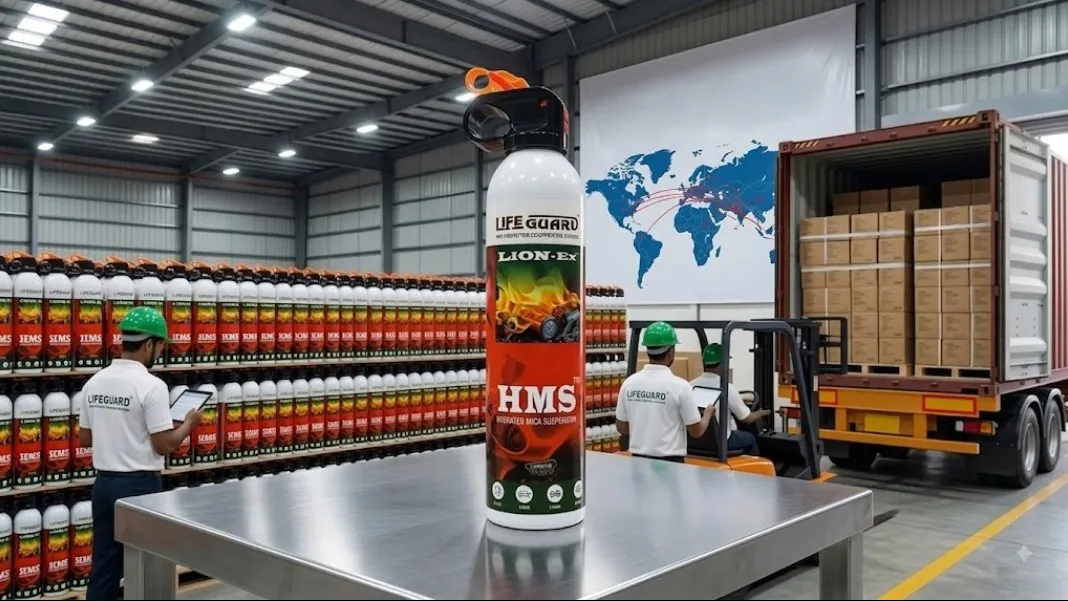
EV Battery Fire Safety OEM Manufacturer India – LIFEGUARD® Advanced Lithium-Ion Battery Fire Protection Systems
The rapid expansion of electric mobility in India has created a strong need for specialised fire safety systems capable of addressing the unique hazards associated with lithium-ion batteries. Electric cars, buses, trucks, commercial vehicles, battery swapping stations, charging facilities, industrial EVs, and Battery Energy Storage Systems all rely on high-energy battery technologies that require carefully engineered fire protection.
LIFEGUARD® – United Fire Equipments Pvt. Ltd. provides customised fire detection, suppression, thermal management, and battery protection solutions for electric vehicle applications.
As an experienced EV battery fire safety OEM manufacturer in India, LIFEGUARD® can work with electric vehicle manufacturers, battery pack manufacturers, system integrators, fleet operators, EPC companies, and engineering consultants to develop fire protection systems that can be integrated directly into the vehicle or battery system design.
Our approach focuses on early detection, automatic fire suppression, battery cooling, thermal runaway risk mitigation, alarm generation, control integration, and application-specific engineering.
What Is an EV Battery Fire Safety System?
An EV battery fire safety system is an engineered combination of detection, alarm, suppression, cooling, and control technologies designed to identify and respond to abnormal conditions within lithium-ion battery installations.
Depending upon the vehicle and battery design, a system may include:
- Linear heat detection
- Temperature sensors
- Smoke detection
- Gas detection
- Multi-criteria fire detection
- Automatic fire suppression
- Battery cooling arrangements
- Suppression cylinders
- Distribution tubing or piping
- Specially positioned nozzles
- Manual activation devices
- Audible and visual alarms
- Vehicle control interfaces
- Emergency electrical shutdown
- Fault monitoring
- Fire suppression control panels
The final configuration should always be selected after assessing the actual battery chemistry, energy capacity, enclosure configuration, operating environment, ventilation, and fire risk.
LIFEGUARD® – EV Battery Fire Safety OEM Manufacturer India
OEM integration requires more than supplying individual fire protection components.
The detection devices, suppression system, piping, nozzles, controls, and vehicle interfaces should work together as a coordinated system.
LIFEGUARD® can support OEM customers with:
- Fire hazard assessment
- Battery compartment evaluation
- Detection technology selection
- Suppression system engineering
- Cylinder capacity selection
- Detector positioning
- Nozzle quantity and positioning
- Tubing and piping routing
- Electrical interface design
- Alarm logic
- Manual release arrangements
- Shutdown integration
- Installation recommendations
- Testing support
- Technical documentation
- Maintenance planning
This engineering approach makes LIFEGUARD® a suitable partner for organisations searching for an EV battery fire safety OEM manufacturer in India.
Why Lithium-Ion Batteries Need Specialised Fire Safety
Lithium-ion batteries store substantial electrical energy within compact battery packs.
Battery failure can occur due to several causes, including:
- Internal short circuit
- External short circuit
- Overcharging
- Mechanical impact
- Road collision
- Cell damage
- Manufacturing defects
- High operating temperature
- Battery ageing
- Charging malfunction
- Electrical insulation faults
- Battery Management System failure
- External fire exposure
- Inadequate thermal management
Under severe abnormal conditions, a lithium-ion cell may enter a condition called thermal runaway.
Understanding Thermal Runaway in EV Batteries
Thermal runaway is one of the primary concerns associated with lithium-ion battery fire safety.
It occurs when internal heat-generating reactions become self-sustaining and cause the battery cell temperature to increase rapidly.
A simplified thermal runaway sequence may be:
Battery Fault → Cell Heating → Gas Generation → Cell Venting → Ignition → Thermal Runaway → Heat Transfer → Adjacent Cell Propagation
A single affected cell can potentially expose surrounding cells to significant heat.
This creates the possibility of thermal propagation, where multiple battery cells or modules become involved.
For this reason, EV fire safety engineering should consider:
- Early warning
- Abnormal temperature detection
- Fire detection
- Automatic suppression
- Cooling
- Thermal propagation mitigation
- Electrical isolation
- Emergency warning
- Continued monitoring
Early Detection – The First Layer of EV Battery Fire Safety
Detecting abnormal conditions at an early stage can provide valuable additional time for corrective actions.
LIFEGUARD® EV battery fire safety systems can incorporate several detection technologies depending on application requirements.
Linear Heat Sensing Cable
Linear Heat Sensing cable can provide continuous temperature-based monitoring around:
- Battery modules
- Battery enclosures
- Cable routes
- Electrical cabinets
- Battery racks
- High-risk equipment areas
It is particularly useful where multiple potential heat sources are distributed across a larger protected area.
Temperature Detection
Temperature sensors can be positioned near battery modules or identified risk areas.
They can provide alarms when temperatures exceed predetermined system thresholds.
Smoke Detection
Smoke detectors can assist in identifying combustion within battery enclosures, electrical compartments, charging installations, and battery rooms.
Gas Detection
Certain battery failure conditions may be accompanied by gas release during the early stages of cell degradation or venting.
Where appropriate, specialised gas monitoring may provide another layer of early warning.
Multi-Criteria Detection
Advanced applications may combine multiple detector types to create a more comprehensive monitoring strategy.
Automatic EV Battery Fire Suppression
Automatic suppression is particularly important where fire development may occur rapidly or where immediate manual intervention is not possible.
A typical operating sequence may be:
Battery Monitoring → Abnormal Condition → Alarm → Fire Confirmation → Suppression Activation → Agent Distribution → Fire Control → Continued Monitoring
Automatic activation can reduce dependence on human reaction and provide faster response to developing fire conditions.
Typical EV Battery Fire Suppression Components
A customised OEM system may include:
Detection Components
- Linear Heat Sensing cable
- Heat detectors
- Temperature sensors
- Smoke detectors
- Gas sensors
- Multi-criteria detectors
Suppression Components
- Fire suppression cylinder
- Cylinder valve
- Automatic actuator
- Distribution tubing
- Distribution piping
- Flexible hoses
- Discharge nozzles
- Pressure monitoring devices
Control Components
- Fire suppression control panel
- Vehicle interface module
- Manual release switch
- Audible alarm
- Visual warning indicator
- Fault monitoring circuit
- Emergency electrical shutdown interface
Battery Cooling for Thermal Runaway Risk Management
Lithium-ion battery incidents are different from many conventional fires because internal chemical reactions may continue producing heat after visible flames have been controlled.
Therefore, battery cooling can be an important consideration within an overall EV fire safety strategy.
Cooling can assist with:
- Reducing battery temperature
- Absorbing heat
- Limiting heat transfer
- Protecting adjacent battery modules
- Reducing fire escalation
- Supporting continued incident control
The suitable suppression and cooling strategy depends upon battery chemistry, configuration, enclosure design, and project requirements.
EV Battery Fire Safety OEM Solutions for Electric Buses
Electric buses commonly use high-capacity battery packs and carry passengers, making fire safety particularly important.
LIFEGUARD® can develop OEM fire safety systems for:
- Electric city buses
- Electric coaches
- Electric school buses
- Airport buses
- Staff transportation buses
- Commercial passenger buses
- Public transport fleets
Potential protected areas include:
- Battery compartments
- Battery packs
- Electrical cabinets
- Motor compartments
- Power electronics
- Auxiliary electrical equipment
The suppression system can be integrated into the bus during manufacturing, allowing detector positions, cylinder mounting, tubing routes, and nozzle locations to be optimised.
EV Battery Fire Safety OEM Solutions for Electric Trucks
Commercial EVs may contain large battery capacities and operate under demanding environmental conditions.
Applications may include:
- Electric logistics trucks
- Delivery vehicles
- Electric vans
- Municipal vehicles
- Utility vehicles
- Mining trucks
- Construction vehicles
- Heavy commercial EVs
The fire protection design can consider vehicle vibration, dust exposure, temperature variations, available installation space, and battery enclosure geometry.
EV Battery Fire Safety for Electric Cars
Electric passenger cars generally contain compact high-energy battery packs integrated into the vehicle chassis or floor.
Fire protection may be considered for:
- Battery pack
- Battery enclosure
- High-voltage system
- Charging components
- Electrical distribution system
- Power electronics
- Auxiliary batteries
OEM-level integration allows the fire protection arrangement to be considered alongside the vehicle design rather than added after manufacturing.
Electric Two-Wheeler and Three-Wheeler Battery Fire Safety
Electric scooters, motorcycles, rickshaws, and three-wheelers form an important part of India's EV market.
LIFEGUARD® can support fire protection requirements associated with:
- Battery manufacturing
- Battery assembly
- Battery storage
- Battery swapping stations
- Charging facilities
- EV dealerships
- Service centres
- Fleet charging areas
Facilities containing multiple removable lithium-ion batteries may require particular attention to early detection and thermal propagation control.
Battery Swapping Station Fire Safety
Battery swapping stations can contain many battery packs being stored or charged simultaneously.
A fire safety solution can include:
- Battery rack heat detection
- Linear Heat Sensing
- Smoke detection
- Gas detection
- Automatic suppression
- Battery cooling
- Alarm systems
- Electrical isolation
- Emergency shutdown
- Ventilation integration
System design should consider battery quantity, battery spacing, charging arrangement, ventilation, enclosure configuration, and possible propagation between batteries.
EV Charging Station Fire Safety
EV charging infrastructure also requires appropriate fire risk assessment.
LIFEGUARD® can provide solutions for:
- Public charging stations
- Fast-charging stations
- Commercial charging hubs
- Bus charging depots
- Fleet charging areas
- Underground parking installations
- EV dealerships
- Industrial charging stations
- Charging electrical panels
- Power distribution equipment
The fire safety system may be integrated with detection, alarm, automatic suppression, and electrical shutdown functions.
BESS Fire Safety OEM Manufacturer India
Battery Energy Storage Systems, or BESS, can contain substantial numbers of interconnected lithium-ion battery cells.
BESS projects therefore require carefully engineered fire detection and protection strategies.
LIFEGUARD® can provide solutions for:
- BESS containers
- Battery rooms
- Solar energy storage projects
- Utility-scale energy storage
- Renewable energy installations
- Industrial energy storage
- Data centre battery systems
- Power utility projects
Depending upon project requirements, BESS fire protection may incorporate:
- Very early warning detection
- Smoke detection
- Heat detection
- Gas detection
- Temperature monitoring
- Automatic suppression
- Battery cooling
- Fire alarm
- Equipment shutdown
- Ventilation coordination
- Emergency response interfaces
Lithium-Ion Battery Warehouse Fire Safety
Large battery storage areas need carefully planned fire safety strategies.
Important design factors include:
- Battery chemistry
- Battery quantity
- State of charge
- Storage density
- Rack arrangement
- Separation between batteries
- Ventilation
- Fire load
- Building configuration
- Detection method
- Suppression strategy
Applications may include:
- Lithium battery warehouses
- Battery manufacturing plants
- EV factories
- Battery assembly facilities
- Battery testing laboratories
- Logistics facilities
- Charging rooms
- Battery distribution centres
Customised OEM Fire Safety Engineering
An EV battery fire safety system should not be selected using a one-size-fits-all approach.
Important engineering parameters include:
Battery Chemistry
Different battery chemistries may exhibit different thermal and fire behaviour.
Battery Capacity
The stored electrical energy should be considered during hazard assessment.
Number of Battery Modules
Battery arrangement can influence potential heat transfer and propagation.
Battery Enclosure Size
The enclosure geometry affects detector placement and suppression distribution.
Ventilation
Air movement can influence smoke, heat, gas concentration, and suppression effectiveness.
Normal Operating Temperature
Fire detection thresholds should be compatible with normal battery operating conditions.
Maximum Expected Temperature
The system should distinguish between normal operation and abnormal heating.
Vehicle Vibration
Mobile applications require components suitable for movement and vibration.
Environmental Exposure
Dust, moisture, temperature variation, and operating conditions can influence equipment selection.
Nozzle Positioning
Effective nozzle placement is essential for proper distribution of the selected suppression medium.
Maintenance Access
System components should remain accessible for inspection, servicing, and maintenance.
OEM Integration Advantages
Integrating an EV battery fire protection system during the original vehicle or battery design stage can provide several benefits.
It enables better planning of:
- Detector locations
- Cylinder mounting
- Nozzle positioning
- Tubing routes
- Electrical connections
- Control interfaces
- Warning systems
- Shutdown logic
- Maintenance access
OEM integration can also help reduce space conflicts and improve the overall system installation.
EV Battery Fire Safety for Battery Pack Manufacturers
Battery pack manufacturers can integrate fire safety systems into battery enclosures at the product development stage.
LIFEGUARD® can provide engineering support for:
- Battery module monitoring
- Heat detection
- Linear Heat Sensing
- Suppression system integration
- Nozzle arrangement
- Control interfaces
- Alarm systems
- Thermal propagation mitigation
- Documentation support
EV Battery Fire Safety for Fleet Operators
Fleet operators managing large numbers of electric vehicles may require fire protection for both vehicles and associated infrastructure.
Applications include:
- Electric bus fleets
- Logistics fleets
- Electric delivery vehicles
- Airport fleets
- Municipal fleets
- Corporate transport fleets
- Warehouse vehicles
- Mining vehicles
Fire safety planning can also include charging areas, battery storage, inspection, maintenance, and emergency response.
Industrial EV Battery Fire Safety Applications
Lithium-ion battery technology is increasingly used in industrial equipment.
Applications include:
- Electric forklifts
- Automated Guided Vehicles
- Warehouse robots
- Material-handling equipment
- Mining equipment
- Industrial EVs
- Battery-powered machinery
- Automated warehouse systems
LIFEGUARD® can develop application-specific detection and suppression arrangements for these environments.
Why Choose LIFEGUARD® as an EV Battery Fire Safety OEM Manufacturer India?
LIFEGUARD® focuses on complete fire safety engineering rather than supplying isolated components.
Our capabilities can include:
- Fire hazard assessment
- EV battery fire protection engineering
- Detection system selection
- Linear Heat Sensing solutions
- Automatic fire suppression engineering
- Battery cooling solutions
- Thermal runaway risk mitigation
- Cylinder selection
- Nozzle positioning
- Piping and tubing layout
- Vehicle interface engineering
- Control panel integration
- Alarm integration
- Installation guidance
- Testing and commissioning support
- Technical documentation
- Maintenance recommendations
- After-sales technical assistance
Our objective is to provide a reliable and practical fire safety system designed around the actual EV, battery pack, or energy storage application.
EV Battery Fire Safety OEM Manufacturer & Supplier India
Customers searching for:
EV battery fire safety OEM manufacturer India
EV battery fire safety manufacturer India
EV battery fire protection OEM manufacturer India
EV battery fire suppression OEM manufacturer India
lithium-ion battery fire safety OEM India
electric vehicle fire suppression OEM India
EV thermal runaway protection manufacturer India
EV battery cooling system manufacturer India
BESS fire safety OEM manufacturer India
can contact LIFEGUARD® – United Fire Equipments Pvt. Ltd. for customised fire safety system engineering.
Applications of LIFEGUARD® EV Battery Fire Safety Systems
Our solutions can be developed for:
- Electric cars
- Electric buses
- Electric trucks
- Electric vans
- Electric scooters
- Electric motorcycles
- Electric three-wheelers
- Electric forklifts
- Automated Guided Vehicles
- Commercial EVs
- Mining equipment
- Material-handling equipment
- Battery swapping stations
- EV charging stations
- Battery manufacturing facilities
- Lithium-ion battery warehouses
- Battery testing facilities
- BESS installations
- Solar battery storage
- Renewable energy storage
- Data centre battery rooms
Industries Served
LIFEGUARD® can support:
- Automobile manufacturers
- EV OEMs
- Battery manufacturers
- Battery pack manufacturers
- Electric bus manufacturers
- Electric commercial vehicle manufacturers
- Fleet operators
- Logistics companies
- Warehouses
- EV charging infrastructure companies
- Renewable energy companies
- Solar power projects
- Data centres
- Power utilities
- Industrial plants
- Mining organisations
- EPC contractors
- Engineering consultants
- Infrastructure developers
- Government organisations
Frequently Asked Questions
What does an EV battery fire safety OEM manufacturer do?
An EV battery fire safety OEM manufacturer develops and supplies fire detection, suppression, control, and associated protection systems that can be integrated into an electric vehicle, battery pack, or related equipment during manufacturing.
Why is OEM integration beneficial?
OEM integration enables detector locations, suppression cylinders, tubing, nozzles, alarms, and electrical interfaces to be considered during the original vehicle or battery design.
What is thermal runaway?
Thermal runaway is a condition where internal battery reactions generate increasing heat. This heat can potentially spread to adjacent cells and result in thermal propagation.
Can EV battery fire protection operate automatically?
Yes. Suitable detection devices can be integrated with an automatic suppression system so that predetermined fire conditions initiate alarm and protective actions.
Can one fire suppression design be used for all EVs?
No. Battery chemistry, energy capacity, enclosure geometry, operating environment, ventilation, and vehicle configuration vary considerably. The system should be designed for the specific application.
Can lithium-ion battery fires reignite?
Lithium-ion cells can retain or continue generating significant heat after visible flames are controlled. Continued monitoring, cooling, isolation, and emergency response may therefore be necessary.
Does a fire suppression system completely stop thermal runaway?
Fire suppression can help control flames and reduce fire escalation, but thermal runaway is a complex electrochemical process. A complete safety strategy may also require early detection, cooling, electrical isolation, monitoring, ventilation, and emergency response measures.
LIFEGUARD® – EV Battery Fire Safety OEM Manufacturer India
As India continues to expand its electric vehicle and battery energy storage ecosystem, fire safety is becoming an increasingly important part of vehicle and battery system engineering.
LIFEGUARD® – United Fire Equipments Pvt. Ltd. provides customised EV battery fire safety systems in India for electric vehicle OEMs, battery manufacturers, charging infrastructure, battery storage facilities, and BESS projects.
From hazard assessment and design engineering to equipment supply, OEM integration support, installation guidance, testing, commissioning assistance, and technical support, LIFEGUARD® provides comprehensive solutions for organisations searching for an experienced EV battery fire safety OEM manufacturer in India.
Contact LIFEGUARD®
United Fire Equipments Pvt. Ltd.
Manufacturer of ISI Certified Fire Safety Equipment
📞 8048034226
📧 ufe126@gmail.com | info@lifeguardindia.in
Contact LIFEGUARD® for requirements related to EV battery fire safety, lithium-ion battery fire protection, EV automatic fire suppression, battery cooling systems, thermal runaway mitigation, charging station fire protection, battery swapping station safety, and BESS fire protection solutions.
Suggested SEO Meta Title
EV Battery Fire Safety OEM Manufacturer India | LIFEGUARD®
Suggested SEO Meta Description
LIFEGUARD® is an EV battery fire safety OEM manufacturer in India providing customised lithium-ion battery fire detection, automatic suppression, cooling and thermal runaway protection systems for EVs, battery OEMs and BESS applications.
Suggested URL Slug
/ev-battery-fire-safety-oem-manufacturer-india/
Primary SEO Keywords
EV battery fire safety OEM manufacturer India, EV battery fire safety manufacturer India, EV battery fire protection OEM manufacturer India, EV battery fire suppression OEM India, lithium-ion battery fire safety OEM India, electric vehicle fire protection manufacturer India, EV thermal runaway protection manufacturer India, EV battery cooling system manufacturer India, EV fire suppression OEM India, BESS fire safety OEM manufacturer India.
Secondary SEO Keywords
EV battery safety system manufacturer India, electric bus battery fire safety OEM India, electric truck fire protection manufacturer India, EV charging station fire safety India, battery swapping station fire protection India, lithium battery thermal runaway protection India, automatic EV battery fire suppression India, EV battery heat detection system India, lithium-ion battery cooling system India, EV OEM fire safety solutions India.
Keywords






