
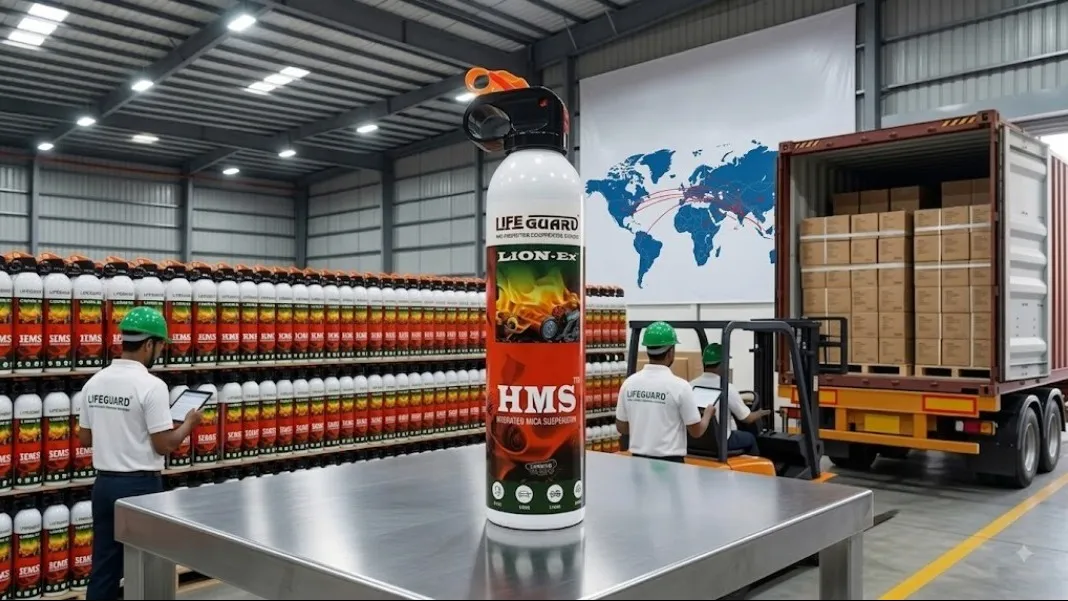
EV Battery Fire Safety Solutions India
Advanced Lithium-Ion Battery Fire Protection & Thermal Runaway Safety Solutions by LIFEGUARD®
India’s electric mobility ecosystem is expanding rapidly with increasing adoption of electric cars, electric buses, electric trucks, electric two-wheelers, three-wheelers, battery swapping stations, EV charging infrastructure, lithium-ion battery manufacturing facilities and battery energy storage applications.
With this rapid growth, EV battery fire safety has become an essential requirement for vehicle manufacturers, battery OEMs, fleet operators, charging infrastructure companies, logistics providers and industrial users.
Lithium-ion battery fires are different from many conventional fires because an internal battery fault can result in rapid heat generation, smoke, flammable gases, thermal runaway, cell-to-cell propagation and possible re-ignition.
LIFEGUARD® – United Fire Equipments Pvt. Ltd. provides engineered EV Battery Fire Safety Solutions in India, combining early detection, automatic suppression, cooling, alarm, emergency shutdown and customized system integration for electric vehicle and lithium-ion battery applications.
EV Battery Fire Safety Solutions India
A reliable EV battery fire safety solution should be designed around the actual battery configuration and associated risk.
Important design considerations include:
- Battery chemistry
- Battery capacity
- Battery voltage
- Number of battery modules
- Cell configuration
- Enclosure dimensions
- Operating temperature
- Charging method
- Ventilation
- Environmental conditions
- Vehicle architecture
- Available installation space
- Detection requirement
- Suppression requirement
- Cooling requirement
- Thermal runaway propagation risk
- Emergency isolation strategy
LIFEGUARD® can develop application-specific solutions incorporating:
- Early heat detection
- Linear heat sensing
- Smoke detection
- Gas detection
- Multi-criteria detection
- Thermal runaway monitoring
- Automatic fire suppression
- Local application protection
- Battery compartment suppression
- Cooling arrangements
- Manual emergency activation
- Fire alarm control systems
- Audible and visual alarms
- Electrical isolation interfaces
- Battery Management System integration
- Customized piping and tubing
- Engineered nozzle placement
- Remote monitoring interfaces
Why EV Battery Fire Safety Is Important
Lithium-ion batteries are widely used in electric vehicles because they provide high energy density, rechargeable performance, relatively low weight and compact construction.
However, battery cells can become unstable due to several conditions, including:
- Internal short circuit
- Overcharging
- Excessive heating
- Mechanical impact
- Vehicle collision
- Manufacturing defects
- Electrical faults
- Improper charging
- Battery cooling system failure
- Physical deformation
- External fire exposure
- Battery Management System failure
If the battery reaches a critical condition, it may enter thermal runaway.
Thermal runaway can rapidly transform a localized battery fault into a major fire event.
What Is Thermal Runaway?
Thermal runaway is an uncontrolled self-heating process inside a lithium-ion battery cell.
When heat generation exceeds the cell’s ability to dissipate heat, internal chemical reactions may accelerate and generate additional energy.
The event can result in:
- Rapid temperature escalation
- Battery venting
- Smoke generation
- Flammable gas release
- Toxic gas release
- Cell rupture
- Fire
- Cell-to-cell propagation
- Module-to-module propagation
- Damage to surrounding components
- Re-ignition
Therefore, an effective battery fire safety strategy should focus on:
Detection + Suppression + Cooling + Isolation + Propagation Control
Early Detection for EV Battery Safety
Early detection is one of the most important components of an EV battery fire protection strategy.
A developing battery fault may produce warning signals before major flames appear.
These may include:
- Abnormal temperature rise
- Localized overheating
- Smoke
- Gas release
- Electrical abnormalities
- BMS warning signals
- Changes in battery operating parameters
Suitable detection technologies can provide valuable time for alarms, automatic suppression and emergency isolation.
Heat Detection
Heat detectors and temperature sensors can monitor battery packs and identify abnormal temperature rise.
Applications may include:
- EV battery compartments
- Battery cabinets
- Battery racks
- Charging equipment
- Battery storage installations
Linear Heat Detection
Linear Heat Sensing systems can provide continuous temperature monitoring along battery installations.
They may be considered for:
- Electric bus battery compartments
- Battery racks
- Battery cabinets
- Lithium-ion battery warehouses
- Charging facilities
- Battery manufacturing areas
Linear sensing can be particularly beneficial where distributed temperature monitoring is required across an extended hazard area.
Smoke Detection
Smoke detectors can be used in suitable enclosed battery applications, including:
- Battery rooms
- Charging rooms
- Warehouses
- Manufacturing plants
- Testing laboratories
Detector selection should consider the environmental conditions of the protected area.
Aspirating Smoke Detection
High-sensitivity aspirating smoke detection systems can provide very early warning in critical environments.
Applications can include:
- Battery testing laboratories
- Battery storage rooms
- High-value installations
- Industrial battery rooms
- Research facilities
Gas Detection
Certain stages of lithium-ion battery failure can involve gas release.
Suitable gas detection may therefore be incorporated as part of an early-warning strategy where technically appropriate.
Automatic EV Battery Fire Suppression Solutions
Automatic suppression systems can provide rapid response where manual intervention may be delayed or difficult.
A typical engineered solution can include:
- Detection sensors
- Fire releasing control unit
- Suppression agent storage cylinder
- Cylinder valve
- Solenoid actuator
- Distribution piping
- Flexible tubing
- Discharge nozzles
- Pressure monitoring
- Manual release arrangement
- Alarm outputs
- Emergency shutdown signals
- BMS or vehicle control interfaces
The final arrangement depends on the protected battery system and project requirements.
EV Battery Cooling Solutions
Cooling can play an important role in managing lithium-ion battery incidents.
Extinguishing visible flames may not necessarily mean that all damaged cells have stabilized.
Residual heat can contribute to:
- Re-ignition
- Continued cell degradation
- Heat transfer
- Thermal propagation
- Damage to nearby equipment
Cooling can help:
- Reduce battery temperature
- Limit heat transfer
- Slow propagation
- Protect adjacent cells
- Protect surrounding components
- Reduce the likelihood of re-ignition
The required cooling strategy should be selected according to the battery design and intended safety objective.
EV Battery Compartment Fire Safety Solutions
Battery compartments can be difficult to protect because they often contain:
- Limited internal volume
- Restricted access
- Multiple battery modules
- Internal obstructions
- Ventilation openings
- Complex geometry
A customized fire protection design should evaluate:
- Battery module configuration
- Enclosure dimensions
- Detector locations
- Nozzle positions
- Piping and tubing routes
- Ventilation
- Agent distribution
- Cooling requirements
- Potential fire propagation paths
Accurate system engineering helps direct protection toward the actual hazard.
EV Battery Fire Safety for Electric Cars
Electric passenger cars commonly contain lithium-ion battery packs positioned beneath the vehicle floor or within structural enclosures.
Fire safety solutions can include:
- Battery temperature monitoring
- Gas monitoring
- Automatic fire detection
- Local suppression
- Cooling
- Driver warning
- Manual emergency activation
- Battery isolation
- Vehicle shutdown interface
LIFEGUARD® can support EV manufacturers and system integrators requiring customized fire protection solutions.
Electric Bus Battery Fire Safety Solutions
Electric buses can contain several high-capacity battery packs positioned:
- On the roof
- Under the floor
- At the rear
- Within side compartments
Because of the number and size of battery packs, multiple detection and suppression zones may be required.
Important design considerations include:
- Battery capacity
- Battery location
- Number of battery packs
- Vehicle length
- Compartment dimensions
- Operating temperature
- Dust exposure
- Vibration
- Ventilation
- Available mounting space
LIFEGUARD® can develop customized fire safety arrangements for electric bus applications.
Electric Truck Battery Fire Safety
Commercial electric trucks may operate under demanding conditions involving:
- High vehicle loads
- Long operating hours
- High ambient temperatures
- Dust
- Vibration
- Mechanical impact
- Multiple battery compartments
Fire safety solutions can be engineered around these operating conditions and battery configurations.
Electric Two-Wheeler Battery Fire Safety
Electric scooters and motorcycles are an important part of India’s EV market.
Their compact battery packs may be installed:
- Under the seat
- Beneath the floorboard
- Inside the frame
- Within removable battery compartments
Because available space is limited, these applications may require compact fire detection and suppression arrangements.
LIFEGUARD® can support EV two-wheeler OEMs with customized system concepts.
Electric Three-Wheeler Battery Fire Safety
Electric rickshaws and commercial electric three-wheelers are widely used for passenger and logistics applications.
Fire safety arrangements can include:
- Battery temperature monitoring
- Battery enclosure protection
- Charging safety
- Automatic suppression
- Manual emergency activation
- Alarm indication
System configuration can be customized according to battery location and vehicle architecture.
EV Charging Station Fire Safety Solutions
EV charging stations combine electrical infrastructure with lithium-ion battery risks.
Potential hazards may involve:
- EV chargers
- Charging connectors
- Electrical panels
- Distribution boards
- Charging cables
- Power conversion systems
- Transformers
- Vehicles under charge
A suitable fire safety arrangement may include:
- Heat detection
- Smoke detection
- Fire alarm systems
- Automatic suppression
- Portable firefighting equipment
- Electrical isolation
- Emergency shutdown
- Charger shutdown interface
LIFEGUARD® can support public, commercial, fleet and industrial EV charging facilities.
Battery Swapping Station Fire Safety
Battery swapping stations may store and charge multiple lithium-ion battery packs simultaneously.
This can create a concentrated fire risk.
Suitable protection measures can include:
- Temperature monitoring
- Battery rack detection
- Smoke detection
- Gas monitoring
- Automatic suppression
- Cooling
- Fire alarm systems
- Emergency shutdown
- Manual fire protection equipment
The system should be designed according to battery quantity, capacity, charging arrangement and storage configuration.
Lithium-Ion Battery Warehouse Fire Safety
Battery warehouses require specialized fire safety planning because a single battery failure can potentially affect adjacent batteries.
Important factors include:
- Battery chemistry
- Battery quantity
- State of charge
- Storage arrangement
- Rack configuration
- Battery spacing
- Detection sensitivity
- Fire compartmentation
- Suppression coverage
- Cooling
- Emergency access
- Damaged battery isolation
Early warning and propagation control should be central to the fire safety strategy.
Battery Manufacturing Plant Fire Safety Solutions
Lithium-ion battery manufacturing facilities can contain several distinct risk zones.
These may include:
- Cell storage
- Cell assembly
- Battery module assembly
- Battery pack assembly
- Formation areas
- Charging areas
- Battery testing
- R&D laboratories
- Finished product storage
- Electrical rooms
- Utility areas
LIFEGUARD® can support integrated fire detection, alarm and suppression requirements according to individual process risks.
Battery Testing Laboratory Fire Safety
Battery testing facilities can expose cells and battery packs to high electrical, thermal or mechanical stress.
Suitable fire safety measures may include:
- High-temperature monitoring
- Gas detection
- Smoke detection
- Automatic suppression
- Local application systems
- Emergency shutdown
- Audible and visual warnings
- Remote monitoring
The system should be designed around the actual testing process and battery configuration.
Battery Recycling Facility Fire Safety
Battery recycling facilities may handle batteries in varying physical and electrical conditions.
These may include:
- Damaged battery packs
- Used batteries
- Defective cells
- Partially charged batteries
- Mechanically compromised batteries
Fire safety measures can include:
- Battery segregation
- Temperature monitoring
- Early fire detection
- Cooling
- Automatic suppression
- Emergency response arrangements
EV Fleet Charging Depot Fire Safety
Fleet depots may simultaneously accommodate multiple EVs, chargers and electrical systems.
Fire safety planning can cover:
- Electric buses
- Commercial electric vehicles
- Charging bays
- Electrical panels
- Transformers
- Battery storage
- Maintenance areas
- Control rooms
A coordinated fire protection approach can address both vehicle and infrastructure risks.
Local Application Battery Fire Protection
Local application systems provide targeted protection for specific hazards.
Possible protected areas include:
- Battery packs
- Battery cabinets
- Battery compartments
- Battery racks
- Charging cabinets
- Electrical panels
- Power electronics
- Battery testing equipment
Detector and nozzle positioning can be engineered directly around the identified hazard zone.
Integration with Battery Management System
Where technically compatible, EV battery fire safety systems can interface with the Battery Management System (BMS) or vehicle control architecture.
Possible functions include:
- High-temperature alarm
- Fire warning
- Battery isolation
- Charger shutdown
- Main power isolation
- Ventilation shutdown
- Vehicle controller notification
- Remote monitoring
- Central alarm integration
The exact interface depends on the customer's control architecture.
EV Battery Fire Safety Solutions for OEM Manufacturers
LIFEGUARD® can support EV OEMs and battery manufacturers during product development.
OEM support can include:
- Battery hazard assessment
- Fire protection concept
- Detector selection
- Suppression system configuration
- Cylinder selection
- Nozzle positioning
- Tubing and piping layout
- Mounting arrangements
- Control logic
- Prototype integration
- Technical documentation
- Functional testing support
This allows fire safety to be integrated into the vehicle or battery system from the design stage.
Customized EV Battery Fire Safety Systems
Different EV platforms have different space, weight, electrical and mechanical requirements.
Customization may include:
- Cylinder capacity
- Valve configuration
- Cylinder mounting
- Nozzle quantity
- Nozzle orientation
- Tubing length
- Piping layout
- Detector configuration
- Control logic
- Wiring
- System labels
- Mounting brackets
- Installation drawings
Customized solutions can be particularly valuable for OEM manufacturers requiring repeatable systems across multiple vehicles.
Applications of LIFEGUARD® EV Battery Fire Safety Solutions
Our solutions can be considered for:
- Electric cars
- Electric buses
- Electric trucks
- Electric scooters
- Electric motorcycles
- Electric three-wheelers
- Electric forklifts
- Electric mining vehicles
- Electric construction equipment
- Commercial EV fleets
- EV charging stations
- Battery swapping stations
- Fleet charging depots
- Lithium-ion battery warehouses
- Battery manufacturing plants
- Battery assembly units
- Battery testing laboratories
- Battery recycling facilities
- Battery cabinets
- Industrial lithium-ion battery installations
Industries We Serve
LIFEGUARD® can support organizations involved in:
- Electric vehicle manufacturing
- Automobile manufacturing
- Battery cell manufacturing
- Battery pack assembly
- Electric bus manufacturing
- Electric truck manufacturing
- Electric two-wheeler manufacturing
- Electric three-wheeler manufacturing
- EV component manufacturing
- Charging infrastructure
- Battery swapping
- Logistics and fleet operations
- Public transportation
- Battery warehousing
- Battery research and development
- Industrial manufacturing
- Renewable energy
- Government and institutional projects
EV Battery Fire Safety Solutions in Delhi NCR
LIFEGUARD® can support suitable EV battery projects across:
- Delhi
- Gurugram
- Manesar
- Noida
- Greater Noida
- Faridabad
- Ghaziabad
EV Battery Fire Safety Solutions in Maharashtra
Suitable requirements can be supported across major industrial regions including:
- Mumbai
- Navi Mumbai
- Pune
- Nashik
- Nagpur
- Chhatrapati Sambhajinagar
EV Battery Fire Safety Solutions in Gujarat
LIFEGUARD® can support projects across:
- Ahmedabad
- Vadodara
- Surat
- Rajkot
- Gandhinagar
- Sanand
- Dholera
EV Battery Fire Safety Solutions in South India
Suitable EV and battery fire safety projects can also be supported in:
- Bengaluru
- Chennai
- Hyderabad
- Hosur
- Coimbatore
- Kochi
Pan-India EV Battery Fire Safety Solutions
LIFEGUARD® can support suitable projects across major EV, automotive and industrial regions of India.
Our approach focuses on providing application-specific fire safety engineering from initial hazard assessment through system design, equipment selection, installation guidance and testing support.
Why Choose LIFEGUARD® for EV Battery Fire Safety Solutions in India?
Specialized Fire Protection Expertise
LIFEGUARD® provides engineered fire safety solutions for specialized and high-risk applications.
Customized Engineering
Battery configuration, chemistry, enclosure design and operating conditions vary significantly. Fire safety solutions can therefore be tailored to actual project requirements.
Integrated Detection & Suppression
Solutions can combine:
- Detection
- Alarm
- Suppression
- Cooling
- Controls
- Cylinders
- Piping
- Tubing
- Nozzles
- Manual activation
- Emergency interfaces
OEM Support
LIFEGUARD® can work with vehicle manufacturers, battery OEMs and system integrators during prototype and production development.
Technical Support
Our project support can include:
- Application review
- Fire risk assessment
- Technical concept development
- Equipment selection
- System drawings
- Installation layouts
- Integration support
- Testing assistance
Pan-India Coverage
Suitable EV battery fire safety requirements can be supported across major industrial and automotive regions throughout India.
EV Battery Fire Safety Solution Development Process
Step 1 – Application Assessment
The vehicle, battery pack, charging facility or protected installation is studied.
Step 2 – Battery Technical Data Review
Battery chemistry, voltage, capacity, dimensions and module arrangement are reviewed.
Step 3 – Hazard Assessment
Potential overheating, electrical faults and thermal runaway scenarios are evaluated.
Step 4 – Detection Strategy
Suitable heat, smoke, gas or multi-criteria detection methods are considered.
Step 5 – Suppression & Cooling Strategy
An appropriate fire control concept is developed according to the identified risk.
Step 6 – System Engineering
Detector positions, nozzles, cylinders, piping and controls are configured.
Step 7 – System Integration
Required alarm, release, shutdown and monitoring interfaces are incorporated.
Step 8 – Testing & Commissioning
Detection logic, alarms, manual release, automatic activation and system interfaces are functionally checked.
Frequently Asked Questions
What are EV battery fire safety solutions?
EV battery fire safety solutions combine suitable detection, suppression, cooling, alarm and control measures to help manage fire and thermal runaway risks associated with lithium-ion batteries.
Why are EV battery fires different from conventional fires?
Lithium-ion batteries can generate internal heat during thermal runaway, creating the potential for cell-to-cell propagation and re-ignition even after visible flames have been initially controlled.
Can EV battery fire safety systems operate automatically?
Yes. Depending on the application and system design, suitable detection technologies can initiate alarms, suppression and emergency shutdown functions.
Can EV battery fire safety systems be customized?
Yes. Systems can be configured according to battery chemistry, battery layout, enclosure dimensions, vehicle architecture and project requirements.
Can LIFEGUARD® provide fire safety solutions for electric buses?
Yes. Customized solutions can be developed for electric bus battery compartments and other identified high-risk areas.
Can EV charging stations be protected?
Yes. Charging infrastructure can be evaluated for suitable detection, alarm, suppression and emergency electrical isolation arrangements.
Can lithium-ion battery warehouses be protected?
Yes. Fire protection strategies can be developed according to battery chemistry, quantity, storage arrangement, state of charge and project-specific risks.
Can LIFEGUARD® support EV battery manufacturers?
Yes. LIFEGUARD® can support battery and EV OEMs with customized fire safety concepts, system engineering, component selection and integration assistance.
Does LIFEGUARD® support projects across India?
Yes. Suitable EV and lithium-ion battery fire safety projects can be supported across major industrial regions of India.
LIFEGUARD® – EV Battery Fire Safety Solutions India
The rapid growth of electric mobility in India requires fire protection systems designed specifically around the challenges of lithium-ion batteries.
LIFEGUARD® – United Fire Equipments Pvt. Ltd. provides engineered EV Battery Fire Safety Solutions in India, combining early detection, automatic suppression, cooling, alarms, emergency isolation and customized system integration.
Whether your requirement is for an electric car, electric bus, electric truck, two-wheeler, three-wheeler, EV charging station, battery swapping facility, lithium-ion battery warehouse, battery manufacturing plant or testing laboratory, LIFEGUARD® can support the development of an application-specific fire safety solution.
Contact LIFEGUARD®
United Fire Equipments Pvt. Ltd.
Manufacturer of ISI Certified Fire Safety Equipment
📞 8048034226
📧 ufe126@gmail.com | info@lifeguardindia.in
SEO Meta Title
EV Battery Fire Safety Solutions India | LIFEGUARD®
SEO Meta Description
Looking for EV Battery Fire Safety Solutions in India? LIFEGUARD® provides customized lithium-ion battery fire detection, suppression, cooling and thermal runaway protection solutions for EVs, charging stations, battery storage and manufacturing facilities.
Suggested URL Slug
/ev-battery-fire-safety-solutions-india/
Primary SEO Keyword
EV battery fire safety solutions India
Secondary SEO Keywords
EV battery fire safety India, EV battery fire protection solutions India, lithium-ion battery fire safety solutions India, electric vehicle battery fire protection, EV battery fire suppression system India, thermal runaway protection solutions India, EV battery cooling solutions India, electric bus battery fire safety solutions, EV charging station fire safety India, lithium battery fire suppression India, battery fire protection solutions India, EV battery thermal runaway suppression system.
Suggested Long-Tail Keywords
best EV battery fire safety solutions in India, lithium-ion battery thermal runaway protection solutions India, automatic EV battery fire suppression solutions India, electric bus battery fire protection solutions India, EV battery compartment fire suppression system India, battery swapping station fire safety solutions India, EV charging station fire suppression solutions India, customized lithium-ion battery fire protection solutions India.
Keywords






