
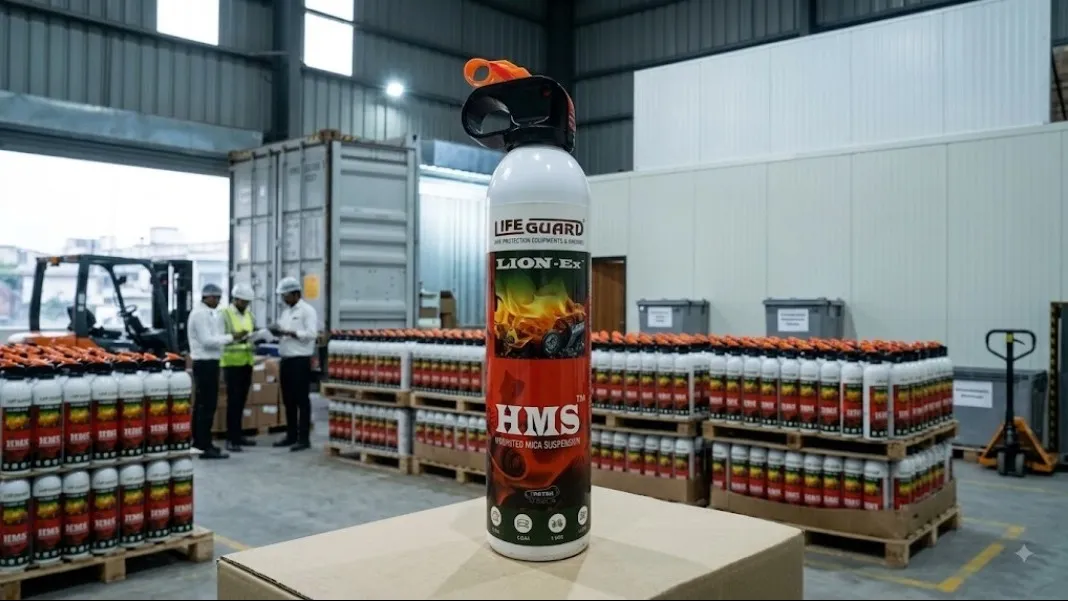
EV Battery Fire Suppression System Exporter Germany – LIFEGUARD®
Advanced Lithium-Ion Battery Fire Suppression Solutions for the German EV Market
Germany is one of the world's most important automotive and industrial markets, with electric vehicles, lithium-ion battery manufacturing, charging infrastructure, renewable energy storage and advanced mobility technologies becoming increasingly important across the country.
With this rapid growth comes a critical fire safety challenge: lithium-ion battery thermal runaway.
Electric vehicle batteries can behave very differently from conventional fuel-related fires. A damaged, defective or overheated lithium-ion cell may generate extreme heat, release combustible gases, propagate fire from cell to cell and potentially reignite after visible flames have been controlled.
LIFEGUARD® – United Fire Equipments Pvt. Ltd. provides engineered fire detection, suppression, cooling and thermal runaway protection solutions for electric vehicle and lithium battery applications. As an EV battery fire suppression system exporter to Germany, LIFEGUARD® supports EV manufacturers, charging infrastructure companies, automobile workshops, battery storage facilities, electric bus depots, industrial facilities and energy storage projects with application-specific fire protection systems.
Our objective is to provide a coordinated fire safety approach incorporating early detection, alarm, automatic suppression, cooling, thermal propagation control, shutdown interfaces and emergency response support.
Why EV Battery Fires Require Specialized Suppression Systems
Electric vehicle battery packs consist of multiple lithium-ion cells and modules connected to deliver high levels of stored electrical energy.
Under abnormal conditions, a battery cell may become unstable and begin producing heat internally.
Potential initiating factors include:
- Internal short circuit
- External short circuit
- Battery overcharging
- Mechanical impact
- Vehicle collision
- Cell manufacturing defects
- Battery penetration or crushing
- Charging system malfunction
- Excessive operating temperatures
- Electrical faults
- Improper handling
- External fire exposure
If the cell cannot dissipate the generated heat, its temperature can continue increasing until it enters thermal runaway.
Once thermal runaway begins, heat can transfer to neighbouring cells, potentially creating a cascading fire event across the battery pack.
For this reason, an EV battery suppression strategy should address more than visible flame control. The system may also need to provide:
- Rapid detection
- Heat reduction
- Cooling
- Cell-to-cell propagation control
- Electrical isolation
- Alarm generation
- Continuous monitoring
- Protection against re-ignition
LIFEGUARD® – EV Battery Fire Suppression System Exporter Germany
LIFEGUARD® provides EV battery fire suppression solutions for a wide range of electric mobility and lithium battery applications.
Our solutions can be considered for:
- Electric cars
- Electric buses
- Electric trucks
- Commercial EV fleets
- EV charging stations
- Electric vehicle workshops
- Battery testing laboratories
- Battery assembly facilities
- EV manufacturing plants
- Battery warehouses
- Parking structures
- Battery Energy Storage Systems
- Renewable energy storage projects
- Industrial lithium-ion battery installations
Each system is selected and engineered according to the battery chemistry, capacity, enclosure configuration, operating conditions, ventilation, available space and required protection philosophy.
What Is an EV Battery Fire Suppression System?
An EV battery fire suppression system is an engineered fire safety arrangement designed to detect and respond to dangerous conditions involving lithium-ion batteries.
Depending upon the application, a system may combine:
- Heat detection
- Smoke detection
- Gas detection
- Linear Heat Sensing
- Flame detection
- Fire alarm control
- Automatic suppression
- Battery cooling
- Alarm and shutdown interfaces
- Remote monitoring
The suppression system may be designed to control fire growth, reduce heat, protect adjacent battery modules and assist in preventing thermal runaway propagation.
Understanding Thermal Runaway in Electric Vehicle Batteries
Thermal runaway occurs when a battery cell begins generating more heat than it can release.
The process can develop rapidly.
A simplified sequence may be:
Battery fault
↓
Internal cell temperature increases
↓
Battery materials begin to decompose
↓
Heat and gases are released
↓
Cell temperature rises further
↓
Thermal runaway develops
↓
Heat spreads to adjacent cells
↓
Additional cells may enter thermal runaway
This chain reaction is one of the principal reasons conventional fire extinguishing methods alone may not provide sufficient protection for large lithium-ion battery incidents.
Importance of Battery Cooling
Cooling is a critical consideration in lithium-ion battery fire protection.
Visible flames may be controlled while substantial heat remains trapped within the battery pack.
This remaining heat can:
- Continue damaging cells
- Transfer to adjacent modules
- Restart thermal runaway
- Cause delayed fire propagation
- Lead to re-ignition
A suitable EV battery suppression system should therefore consider both fire control and heat removal.
Depending upon the application, the protection strategy may incorporate:
- Localized cooling
- Battery pack cooling
- Adjacent module protection
- Continuous temperature monitoring
- Extended post-incident observation
Automatic EV Battery Fire Suppression Systems
Automatic suppression is particularly valuable in enclosed, high-value or unattended applications where immediate human intervention may not be possible.
A typical automatic system may include:
- Fire detection sensors
- Linear Heat Sensing cable
- Smoke detectors
- Gas detectors
- Control or releasing panel
- Suppression cylinders or agent storage
- Distribution piping
- Flexible hoses
- Discharge nozzles
- Manual release switch
- Audible alarm
- Visual alarm
- Pressure monitoring
- Electrical shutdown interfaces
- BMS integration
Once a confirmed fire or thermal condition is detected, the control system can initiate the programmed emergency sequence.
Typical EV Battery Fire Suppression Sequence
A properly integrated system may operate according to the following sequence:
Abnormal battery condition detected
↓
Heat / Smoke / Gas signal generated
↓
Pre-alarm initiated
↓
Fire alarm confirmed
↓
EV charging or battery operation interrupted
↓
Electrical isolation signal generated
↓
Suppression system activated
↓
Cooling or additional protection initiated
↓
Emergency team notified
↓
Continuous temperature monitoring
The final control logic should always be customized according to the battery installation and site requirements.
Early Detection for EV Battery Thermal Runaway
An effective suppression system becomes significantly more valuable when hazardous battery conditions are identified at an early stage.
Before visible flames appear, a developing lithium-ion battery failure may be associated with:
- Abnormal temperature rise
- Smoke
- Vapours
- Off-gases
- Localized heating
Depending upon project requirements, suitable early detection technologies can include:
- Linear Heat Sensing
- Point heat detectors
- Aspirating smoke detection
- Gas detectors
- Multi-criteria detectors
- Flame detectors
- Temperature sensors
Early warning can provide additional time to isolate the battery, shut down charging and activate fire protection systems.
Linear Heat Sensing for EV Battery Protection
Linear Heat Sensing provides continuous temperature-sensitive detection along critical areas of an EV battery installation.
The cable can be routed around:
- Battery modules
- Battery racks
- Charging equipment
- Cable routes
- Battery cabinets
- Electric bus compartments
- Industrial battery installations
Benefits can include:
- Continuous heat monitoring
- Flexible routing
- Protection of difficult-to-access areas
- Early warning of abnormal heat
- Integration with alarm or suppression systems
The appropriate detection temperature and cable configuration should be selected according to ambient temperature and the application risk.
Gas Detection for Lithium-Ion Battery Systems
Lithium-ion batteries can release gases and vapours during abnormal heating and decomposition.
Gas monitoring may therefore provide an additional layer of early warning, particularly inside enclosed battery rooms, cabinets, vehicles or storage containers.
Depending on system requirements, gas detection can be interfaced with:
- Fire alarm panels
- Battery Management Systems
- Building Management Systems
- Ventilation systems
- Emergency shutdown circuits
- Suppression systems
- Remote monitoring systems
This can help initiate preventive actions before a developing battery incident escalates.
EV Battery Fire Suppression for Charging Stations
Germany has extensive and growing EV charging infrastructure, including public, commercial, residential and fleet charging locations.
Charging facilities can involve risks associated with:
- Battery overheating
- Charger malfunction
- Damaged charging equipment
- Electrical faults
- Vehicle impact
- Defective battery packs
- High charging loads
LIFEGUARD® fire suppression solutions can be considered for:
- Public EV charging stations
- Highway charging facilities
- Shopping centre charging areas
- Hotel charging stations
- Corporate parking
- Residential EV charging areas
- Fleet charging depots
- Electric bus charging stations
- Logistics vehicle charging facilities
The protection design can combine detection, alarm, suppression, shutdown and cooling depending on the project requirements.
EV Battery Fire Suppression for Parking Facilities
Electric vehicles are increasingly located inside underground and multilevel parking structures.
A battery fire in an enclosed parking facility can create significant challenges involving:
- High heat output
- Dense smoke
- Toxic gases
- Fire spread to nearby vehicles
- Reduced visibility
- Difficult firefighting access
A comprehensive EV fire protection arrangement can incorporate:
- Heat detection
- Smoke detection
- Gas monitoring
- Flame detection
- Automatic suppression
- Water-based cooling where applicable
- Fire alarm integration
- Emergency ventilation
- Electrical isolation
- Emergency response procedures
Electric Bus Fire Suppression Systems
Electric buses use high-capacity lithium battery packs and require carefully planned fire protection.
LIFEGUARD® solutions can support:
- Electric city buses
- Electric school buses
- Electric airport buses
- Electric staff buses
- Public transportation fleets
- Commercial electric buses
Protection may be required around:
- Battery packs
- Propulsion compartments
- Charging systems
- Bus depots
- Workshops
- Battery service areas
- Storage facilities
Automatic detection and suppression can provide an important additional layer of protection for electric transport fleets.
EV Battery Fire Suppression for Workshops
EV service facilities and workshops require specialized fire safety planning because personnel may work directly on high-voltage battery packs.
Important risk zones include:
- Damaged EVs
- Accident vehicles
- Battery removal areas
- Battery repair stations
- Charging bays
- Battery diagnostic areas
- Damaged battery storage
- Battery quarantine areas
LIFEGUARD® can provide fire suppression, detection and emergency response solutions for these applications.
Fire Protection for Damaged EV Batteries
A mechanically damaged lithium-ion battery may develop an internal fault without immediately showing visible signs of fire.
For this reason, accident-damaged electric vehicles may require:
- Isolation from other vehicles
- Dedicated quarantine locations
- Temperature monitoring
- Appropriate fire suppression equipment
- Emergency cooling capability
- Continuous observation
- Restricted access
- Defined emergency response procedures
The possibility of delayed thermal runaway should be included in the fire safety planning process.
EV Battery Warehouse Fire Suppression
Battery warehouses can contain substantial quantities of lithium-ion cells, modules and battery packs.
A fire suppression strategy should consider:
- Battery chemistry
- State of charge
- Battery quantity
- Packaging
- Storage density
- Rack height
- Separation distances
- Charging activities
- Ventilation
- Damaged battery storage
- Emergency access
LIFEGUARD® can develop fire protection arrangements combining detection, alarms and suppression for battery storage facilities.
EV Battery Manufacturing Facility Fire Protection
Electric vehicle and lithium battery manufacturing facilities may include several high-risk production and storage areas.
Examples include:
- Cell storage areas
- Module assembly stations
- Battery pack assembly
- Battery charging areas
- Testing facilities
- Quality control laboratories
- Finished battery warehouses
- Scrap battery storage
- Damaged battery quarantine areas
The protection system should be designed according to the individual process and battery risk.
LIFEGUARD® can assist with equipment selection, suppression system engineering, detector layout, alarm philosophy and technical documentation.
EV Battery Fire Suppression for BESS Applications
Battery Energy Storage Systems contain large numbers of lithium-ion batteries and require carefully engineered fire protection.
A typical BESS fire safety solution can incorporate:
- Early gas detection
- Heat detection
- Aspirating smoke detection
- Linear Heat Sensing
- Fire alarm systems
- Automatic suppression
- Cooling
- Ventilation interfaces
- Emergency shutdown
- Remote monitoring
LIFEGUARD® can support lithium battery and BESS projects requiring integrated protection solutions.
Integrated Battery Management and Fire Alarm Interfaces
Modern EV battery fire suppression systems can be integrated with other building and battery management systems.
Potential interfaces include:
- Battery Management System
- Building Management System
- Fire alarm control panel
- EV charging control system
- Ventilation system
- Emergency shutdown system
- Electrical isolation system
- Remote monitoring platform
- Alarm notification system
This coordinated approach helps create a faster and more controlled response during abnormal battery conditions.
Customized EV Battery Fire Suppression Engineering
Every lithium-ion battery installation is different.
Before recommending a system, important information should be reviewed.
Battery Information
- Battery chemistry
- Capacity
- Voltage
- Number of cells
- Number of modules
- Battery configuration
- Enclosure design
- State of charge
Installation Information
- Vehicle type
- Indoor or outdoor location
- Room dimensions
- Ventilation
- Ambient conditions
- Charging infrastructure
- Available equipment space
- Maintenance access
Fire Protection Requirements
- Detection philosophy
- Suppression requirements
- Cooling requirements
- Alarm sequence
- Electrical shutdown logic
- BMS integration
- Ventilation control
- Emergency response procedure
This approach helps ensure the fire protection solution is aligned with the actual project risk.
EV Battery Fire Suppression System Export Solutions from India to Germany
LIFEGUARD® supports international customers requiring engineered fire suppression equipment and solutions for electric vehicle and lithium battery applications.
Export support can include:
- Technical product selection
- Fire protection system concept
- Bill of quantities
- Technical data sheets
- Equipment specifications
- System drawings
- Detection layout
- Suppression layout
- Nozzle arrangement
- Piping requirements
- Control philosophy
- Product documentation
- Installation guidance
- Testing and commissioning guidance
Solutions can be developed according to project specifications and buyer requirements.
Applications Served in Germany
LIFEGUARD® EV battery fire suppression systems can be considered for:
- Electric vehicle manufacturing
- Automobile plants
- EV charging stations
- Battery manufacturing facilities
- Battery warehouses
- Electric bus depots
- Fleet charging facilities
- Logistics centres
- Vehicle workshops
- Commercial parking structures
- Airports
- Industrial facilities
- Renewable energy projects
- Battery Energy Storage Systems
- Research and testing laboratories
- Data centres with lithium battery installations
Why Choose LIFEGUARD® as an EV Battery Fire Suppression System Exporter to Germany?
Specialized Lithium Battery Fire Protection
Our solutions are focused on the specific challenges associated with lithium-ion batteries, including thermal runaway, propagation and re-ignition.
Application-Specific Engineering
Each project is evaluated according to battery configuration, enclosure conditions and fire risk.
Early Detection and Automatic Suppression
Detection, alarm and suppression technologies can be combined to provide coordinated protection.
Cooling-Focused Strategy
The importance of heat removal is considered when developing lithium battery fire protection solutions.
System Integration
Fire protection systems can be interfaced with BMS, fire alarm, ventilation, electrical isolation and emergency shutdown systems.
Technical Documentation Support
Customers can receive engineering documentation and technical information required for project evaluation and installation.
Export Support
LIFEGUARD® can support international enquiries for EV battery fire suppression and lithium-ion battery fire protection projects in Germany.
EV Battery Fire Suppression Solutions for Major German Industrial Locations
LIFEGUARD® can support project enquiries from major industrial, automotive and commercial locations across Germany, including:
Berlin, Munich, Hamburg, Frankfurt, Stuttgart, Cologne, Düsseldorf, Leipzig, Dresden, Hanover, Bremen, Nuremberg and other regions across Germany.
Our fire suppression solutions can be evaluated for individual charging stations as well as large automotive factories, battery facilities, transportation projects and energy storage installations.
Complete EV Battery Fire Safety Strategy
A robust EV battery fire protection strategy should ideally use multiple layers of protection.
Layer 1 – Prevention
Battery management, electrical protection, proper charging, thermal management and preventive maintenance.
Layer 2 – Early Detection
Monitoring of heat, smoke, gases and abnormal battery behaviour.
Layer 3 – Alarm and Shutdown
Activation of alarms, charging interruption and electrical isolation.
Layer 4 – Automatic Suppression
Rapid activation of an engineered suppression system when specified detection conditions are confirmed.
Layer 5 – Cooling
Removal of heat from affected batteries to help limit thermal propagation.
Layer 6 – Post-Incident Monitoring
Continuous observation and temperature monitoring to address possible re-ignition.
This layered approach provides a more comprehensive response than relying on a single fire suppression component.
Frequently Asked Questions
What type of fire suppression system is suitable for EV batteries?
There is no single suppression technology suitable for every EV battery application. The correct system depends on battery chemistry, battery capacity, enclosure configuration, location, ventilation and the expected fire scenario.
Why is cooling important in an EV battery fire?
Lithium-ion cells can continue generating substantial heat after visible flames have been reduced. Cooling helps remove this heat and can reduce the risk of thermal propagation and re-ignition.
Can lithium-ion batteries reignite after suppression?
Yes. Damaged battery cells may retain significant heat and stored energy. Continued cooling and monitoring may therefore be necessary after an incident.
Can EV battery suppression systems operate automatically?
Yes. Automatic systems can be configured to receive signals from suitable heat, smoke, gas or other detectors and initiate programmed alarms, shutdown functions and suppression.
Can the system be integrated with a Battery Management System?
Depending on the project architecture, fire alarm and suppression signals can be interfaced with Battery Management Systems, charging controls, ventilation systems and emergency shutdown systems.
Does LIFEGUARD® export EV battery fire suppression systems to Germany?
LIFEGUARD® supports international project enquiries and can provide engineered lithium-ion battery and EV fire protection solutions for customers and projects in Germany, subject to project specifications and applicable requirements.
Partner with LIFEGUARD® for EV Battery Fire Suppression Systems in Germany
Electric mobility is transforming the automotive, energy and transportation industries. As lithium-ion batteries become more widely used, specialized fire protection is essential for protecting personnel, vehicles, buildings, equipment and business operations.
LIFEGUARD® – United Fire Equipments Pvt. Ltd. provides engineered solutions for EV battery fire suppression, lithium-ion battery thermal runaway protection, battery cooling, early fire detection, alarm integration and automatic suppression systems.
Whether the requirement is for an EV charging facility, electric bus depot, vehicle workshop, battery warehouse, EV manufacturing plant or Battery Energy Storage System, our technical team can assist in developing an application-specific fire protection concept.
Contact LIFEGUARD®
United Fire Equipments Pvt. Ltd.
Manufacturer of ISI Certified Fire Safety Equipment
📞 8048034226
For enquiries regarding EV battery fire suppression systems for Germany, lithium battery fire protection, thermal runaway suppression, electric vehicle fire detection, EV charging station protection, battery cooling systems or BESS fire suppression solutions, contact LIFEGUARD® with your project specifications.
Suggested SEO Meta Title
EV Battery Fire Suppression System Exporter Germany | LIFEGUARD®
Suggested SEO Meta Description
LIFEGUARD® is an EV battery fire suppression system exporter for Germany, offering lithium-ion battery thermal runaway protection, early detection, cooling and automatic suppression solutions for EV charging stations, workshops, battery facilities and BESS projects.
Primary SEO Keyword
EV Battery Fire Suppression System Exporter Germany
Related SEO Keywords
EV battery fire suppression system Germany, EV fire suppression exporter Germany, lithium battery fire suppression Germany, electric vehicle battery fire protection Germany, EV thermal runaway suppression Germany, EV charging station fire protection Germany, lithium-ion battery suppression system Germany, electric bus fire suppression Germany, EV battery cooling system Germany, battery fire detection system Germany, BESS fire suppression Germany, lithium battery fire protection exporter Germany.
Keywords






