
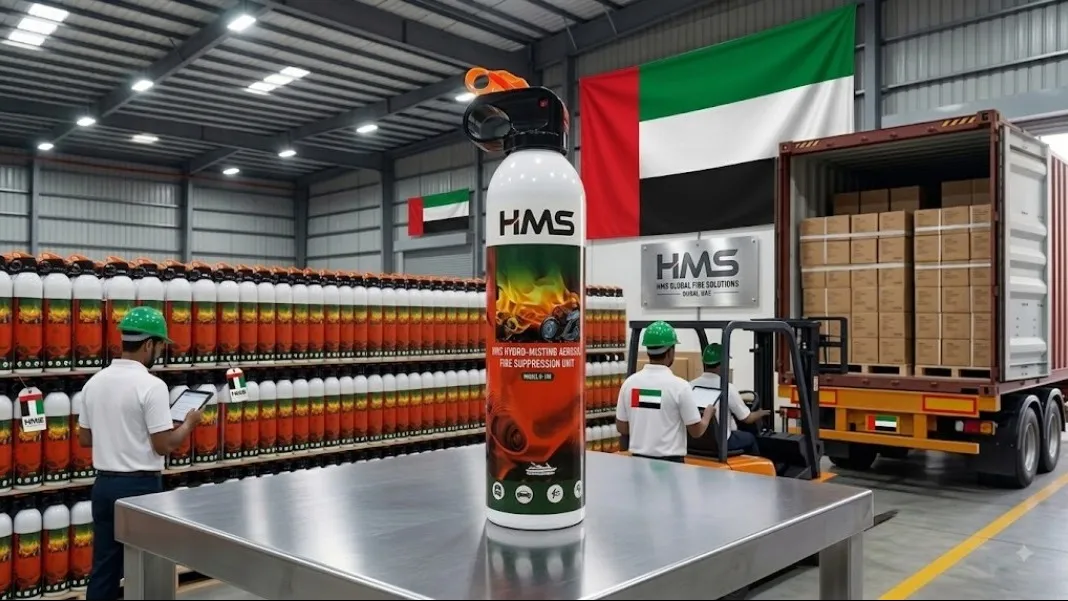
EV Battery Fire Suppression System Exporter UAE – Advanced Lithium-Ion Battery Fire Protection by LIFEGUARD®
The rapid expansion of electric vehicles, EV charging infrastructure, battery storage systems and lithium-ion battery technologies across the UAE has created an increasing requirement for specialised fire protection solutions. Electric cars, electric buses, commercial EV fleets, battery swapping facilities, battery storage areas and charging stations all depend heavily on lithium-ion batteries, which can present unique fire hazards when damaged, overheated or subjected to electrical or mechanical failure.
LIFEGUARD® is an EV battery fire suppression system exporter to the UAE, providing engineered solutions for lithium-ion battery fire risks, thermal runaway, battery overheating and fire propagation.
Our systems can be developed for applications requiring a combination of early detection, automatic fire suppression, cooling, alarm, monitoring and emergency shutdown.
For organisations looking for a dependable EV battery fire suppression system exporter UAE, LIFEGUARD® provides application-specific solutions for electric vehicle manufacturers, EV charging facilities, fleet depots, battery manufacturers, workshops, parking facilities, battery storage areas and related infrastructure.
Why EV Battery Fire Suppression Is Important in the UAE
The UAE continues to expand electric mobility and sustainable transportation infrastructure. As the number of electric vehicles and lithium-ion battery installations increases, the importance of effective battery fire protection also grows.
Lithium-ion batteries offer several advantages, including:
- High energy density
- Rechargeability
- Compact design
- Long operating life
- High power output
- Fast charging capability
However, lithium-ion batteries can experience abnormal thermal events under certain conditions.
Potential causes of battery failure may include:
- Internal short circuit
- External short circuit
- Overcharging
- Mechanical impact
- Collision damage
- Excessive temperature
- Battery Management System malfunction
- Charging equipment failure
- Manufacturing defect
- Battery ageing
- Improper handling
- Exposure to external fire
A serious battery failure can initiate thermal runaway, which may result in rapid heat generation and fire propagation.
This makes an appropriately engineered EV battery fire suppression system an important part of the overall safety strategy for electric mobility infrastructure.
What Is Thermal Runaway in an EV Battery?
Thermal runaway is a self-accelerating process in which heat generated inside a lithium-ion cell causes further internal reactions and additional heat generation.
Once the process becomes severe, the battery cell may generate:
- Extremely high temperatures
- Smoke
- Flammable gases
- Toxic decomposition products
- Electrolyte vapours
- Cell venting
- Flames
- Heat transfer to adjacent cells
- Re-ignition after initial flame control
The heat generated from one cell may affect neighbouring cells and lead to cell-to-cell thermal propagation.
For this reason, effective EV battery protection should address not only visible flames but also heat reduction, cooling and propagation control.
LIFEGUARD® EV Battery Fire Suppression Systems for UAE Projects
LIFEGUARD® provides specialised EV battery fire suppression solutions that can be configured according to the battery chemistry, vehicle type, battery size and fire hazard.
Systems can be considered for:
- Electric cars
- Electric buses
- Electric trucks
- Electric commercial vehicles
- Electric two-wheelers
- EV charging stations
- EV fleet depots
- Battery swapping stations
- Battery storage facilities
- EV workshops
- Battery manufacturing plants
- Battery testing laboratories
- Vehicle parking areas
- Electric mobility infrastructure
Each project can require a different fire protection philosophy depending on the specific hazard.
Automatic EV Battery Fire Suppression System
An automatic fire suppression system provides continuous protection without relying entirely on manual intervention.
A typical system may consist of:
- Fire detection
- Temperature monitoring
- Linear heat detection
- Control panel
- Suppression agent storage
- Distribution piping
- Discharge nozzles
- Automatic activation
- Manual activation
- Audible and visual alarm
- Emergency shutdown interface
Upon detection of a confirmed fire condition, the suppression system can activate according to its programmed sequence.
For critical EV and battery installations, automatic activation can provide faster response during the early stages of an incident.
EV Battery Fire Detection and Early Warning
Early detection plays an important role in lithium battery fire protection.
Depending upon the application, detection systems can include:
Smoke Detection
Smoke detection can provide warning when combustion products are produced.
Heat Detection
Fixed-temperature or rate-of-rise heat detectors can identify abnormal temperature conditions.
Linear Heat Detection
Linear heat sensing can be installed around battery compartments, battery racks or charging infrastructure where localised temperature monitoring is required.
Gas Detection
Lithium battery cells may release gases during abnormal conditions. Suitable gas monitoring can provide an additional layer of early warning depending upon the battery chemistry and enclosure design.
Temperature Monitoring
Continuous monitoring of battery or enclosure temperature can help identify unusual heat buildup.
Combining multiple detection technologies can improve overall system response.
EV Battery Fire Suppression and Cooling
Cooling is one of the key considerations in lithium-ion battery fire protection.
A lithium battery may continue generating heat after visible flames have been controlled.
Residual heat can potentially:
- Restart fire activity
- Affect neighbouring cells
- Cause thermal propagation
- Damage adjacent vehicle components
- Increase the risk of re-ignition
An effective fire suppression strategy should therefore consider both:
Flame Control + Heat Removal
Depending upon the hazard, cooling can help:
- Reduce battery temperature
- Absorb heat
- Limit cell-to-cell propagation
- Protect adjacent battery modules
- Reduce the likelihood of re-ignition
The appropriate suppression and cooling arrangement should be determined through a project-specific engineering assessment.
EV Battery Fire Suppression System for Electric Cars
Electric passenger vehicles generally contain large lithium-ion battery packs mounted beneath the vehicle floor or integrated into the chassis.
Potential fire scenarios may involve:
- Battery collision damage
- Electrical malfunction
- Charging failure
- Internal cell defect
- External fire exposure
- Thermal management system failure
LIFEGUARD® EV battery fire suppression solutions can support applications such as:
- EV dealerships
- Service centres
- Electric vehicle workshops
- Vehicle testing centres
- Fleet parking areas
- Charging facilities
- Automotive manufacturing plants
- Battery repair facilities
EV Battery Fire Suppression System for Electric Buses
Electric buses contain comparatively high-capacity battery systems.
Battery packs may be located:
- On the roof
- Beneath the chassis
- At the rear of the vehicle
- Inside dedicated battery compartments
Because of their battery capacity and passenger-carrying application, electric buses require careful fire risk assessment.
Protection may include:
- Linear heat detection
- Automatic fire detection
- Automatic suppression
- Alarm activation
- Battery cooling
- Driver warning
- Emergency shutdown
- Manual release provision
LIFEGUARD® can provide engineered EV fire suppression solutions suitable for public transport, private fleet and electric bus applications.
EV Battery Fire Suppression for Charging Stations in UAE
EV charging stations are increasingly being installed at commercial, residential and public locations.
Applications include:
- Public EV charging hubs
- Shopping malls
- Hotels
- Office complexes
- Residential developments
- Parking garages
- Fleet depots
- Airports
- Commercial facilities
- Highway charging stations
Potential hazards can involve both the electric vehicle battery and the charging equipment.
A charging station fire protection strategy may include:
- Fire detection
- Heat monitoring
- Fire extinguishing equipment
- Automatic suppression where required
- Electrical isolation
- Emergency shutdown
- Alarm notification
The final arrangement should be based on site-specific risks and applicable project requirements.
Battery Swapping Station Fire Suppression
Battery swapping stations can store multiple lithium-ion battery packs in a relatively concentrated area.
Batteries may simultaneously be:
- Charged
- Stored
- Removed from vehicles
- Installed into vehicles
- Inspected
- Maintained
A thermal runaway event involving one battery could expose adjacent batteries to heat.
A suitable fire protection concept can include:
- Battery segregation
- Smoke detection
- Heat detection
- Temperature monitoring
- Automatic suppression
- Cooling
- Emergency power isolation
- Alarm systems
- Ventilation
- Safe storage procedures
EV Workshop Fire Suppression Solutions
EV maintenance workshops can present additional risks because technicians may handle damaged, defective or partially disassembled batteries.
Fire protection solutions can be considered for:
- EV service centres
- Accident repair workshops
- Battery repair facilities
- Diagnostic centres
- Battery charging locations
- Vehicle maintenance depots
Special attention should be given to batteries that have been involved in collisions or show signs of:
- Swelling
- Overheating
- Smoke
- Physical damage
- Leakage
- Abnormal odour
- Unusual temperature increase
Such batteries should be managed according to appropriate safety procedures.
Fire Suppression for EV Battery Manufacturing Facilities
Battery and electric vehicle manufacturing facilities may contain significant quantities of lithium-ion cells and modules.
Fire protection may be required for:
- Cell storage
- Module assembly
- Battery pack assembly
- Battery charging
- Battery testing
- R&D laboratories
- Finished battery storage
- EV assembly lines
- Battery inspection areas
An integrated fire safety system can combine:
- Early detection
- Alarm
- Automatic suppression
- Cooling
- Equipment shutdown
- Emergency response controls
EV Battery Warehouse Fire Protection
Warehouses storing lithium-ion batteries require careful engineering because battery quantity and storage configuration can significantly influence the fire hazard.
Important factors include:
- Battery chemistry
- Battery capacity
- State of charge
- Storage quantity
- Rack height
- Packaging
- Separation distance
- Ventilation
- Fire compartmentation
- Detection system
- Emergency access
LIFEGUARD® can support the development of fire protection concepts for lithium battery storage and logistics facilities.
Components of an EV Battery Fire Suppression System
Depending upon project requirements, an EV battery fire suppression arrangement can include:
Fire Detection Devices
For detecting smoke, heat or abnormal conditions.
Linear Heat Sensing
For continuous heat monitoring around battery compartments or enclosures.
Suppression Agent Cylinder
Stores the extinguishing or suppression medium.
Distribution Piping
Carries the suppression medium from the storage cylinder to the protected hazard.
Discharge Nozzles
Distribute the agent within the protected area.
Control Panel
Receives detection signals and controls the suppression sequence.
Manual Release Device
Allows authorised personnel to manually activate the system where designed.
Audible and Visual Alarm
Provides warning to occupants or operators.
Emergency Shutdown Interface
Can be used to isolate charging or electrical equipment according to the system design.
Multi-Layer EV Battery Fire Protection Philosophy
A high-quality EV battery fire protection strategy should not depend upon one protective measure alone.
A multi-layer approach can include:
Battery Monitoring → Early Warning → Fire Detection → Alarm → Electrical Isolation → Suppression → Cooling → Temperature Monitoring → Emergency Response
This approach improves overall safety and provides multiple opportunities to detect and control abnormal battery conditions.
Applications of LIFEGUARD® EV Battery Fire Suppression Systems
Our EV and lithium battery fire protection solutions can be considered for:
- Electric vehicle manufacturers
- Electric bus manufacturers
- EV fleet operators
- EV charging station operators
- Battery manufacturers
- Battery pack assemblers
- Battery swapping companies
- Automobile dealerships
- EV service centres
- Logistics companies
- Government transportation facilities
- Airports
- Shopping malls
- Hotels
- Commercial buildings
- Parking garages
- Warehouses
- Research laboratories
- Battery testing facilities
- Industrial plants
EV Battery Fire Suppression System Exporter from India to UAE
LIFEGUARD® supports customers requiring EV battery fire suppression systems for UAE projects.
Export-oriented project support can include:
- Technical evaluation
- Product selection
- System engineering
- Preparation of technical documentation
- System configuration
- Packaging for export
- Project coordination
- Installation guidance
- Testing and commissioning support as applicable
The exact scope can be defined according to project specifications and commercial requirements.
EV Battery Fire Protection Solutions Across the UAE
LIFEGUARD® can support EV and lithium battery fire protection requirements for projects throughout the United Arab Emirates, including:
Dubai, Abu Dhabi, Sharjah, Ajman, Ras Al Khaimah, Fujairah, Umm Al Quwain, Al Ain and other locations across the UAE.
Our solutions can be considered for new EV infrastructure as well as fire safety upgrades to existing installations.
Why Choose LIFEGUARD® as an EV Battery Fire Suppression System Exporter UAE?
Specialised Lithium Battery Fire Safety Solutions
Our approach considers the particular challenges associated with lithium-ion battery thermal runaway, heat generation and re-ignition.
Application-Specific Engineering
Different EV applications require different protection strategies.
Systems can be evaluated according to:
- Battery chemistry
- Battery size
- Cell arrangement
- Vehicle configuration
- Enclosure volume
- Installation environment
- Detection requirements
- Cooling requirements
- Required system response
Integrated Detection and Suppression
LIFEGUARD® can provide solutions combining fire detection, suppression, cooling, alarm and control.
Solutions for Multiple EV Applications
Fire protection systems can be developed for electric cars, electric buses, charging infrastructure, workshops and battery facilities.
Export Support
We can support project documentation, system configuration and commercial supply for overseas requirements.
Technical Assistance
Our technical team can help evaluate the protected hazard and determine an appropriate fire protection concept.
Benefits of an Engineered EV Battery Fire Suppression System
A properly engineered fire suppression system can help provide:
- Early detection of abnormal conditions
- Faster response to fire
- Automatic system activation
- Improved fire control
- Reduced fire propagation
- Enhanced battery cooling
- Protection of adjacent equipment
- Reduced potential for re-ignition
- Improved personnel safety
- Better emergency preparedness
- Reduced potential property loss
Why Proper System Design Is Essential
EV battery fire suppression should not be treated as a standard one-size-fits-all application.
System design should consider:
- Battery chemistry
- Total battery energy
- Battery arrangement
- Cell and module configuration
- Vehicle or enclosure dimensions
- Ventilation
- Detection methodology
- Fire propagation risk
- Suppression agent characteristics
- Cooling requirement
- Discharge arrangement
- Emergency response procedure
The final system should be selected and engineered according to the specific project conditions and applicable technical requirements.
Looking for an EV Battery Fire Suppression System Exporter in UAE?
If you are searching for a reliable EV battery fire suppression system exporter UAE, LIFEGUARD® can support your requirement with specialised fire protection solutions for electric vehicles and lithium-ion battery applications.
Solutions can be developed for:
- Electric cars
- Electric buses
- Commercial EV fleets
- EV charging stations
- Battery swapping stations
- EV workshops
- Battery manufacturing facilities
- Battery warehouses
- Parking garages
- Electric mobility infrastructure
Our engineering approach can incorporate early detection, automatic suppression, battery cooling, alarm and system control according to the project requirements.
Frequently Asked Questions
What is an EV battery fire suppression system?
An EV battery fire suppression system is a fire protection arrangement developed to detect and control fire conditions associated with electric vehicle batteries and related lithium-ion battery hazards. Depending upon the application, it can include detection, alarm, suppression, cooling and emergency shutdown.
Why is cooling important during an EV battery fire?
Lithium-ion cells may continue generating heat even after visible flames have been reduced. Cooling helps remove heat and can reduce the potential for thermal propagation and re-ignition.
Can an EV battery fire suppression system operate automatically?
Yes. Where designed for automatic operation, the system can receive signals from appropriate detection devices and activate suppression according to a defined sequence.
Can LIFEGUARD® supply EV fire suppression systems for Dubai and Abu Dhabi?
LIFEGUARD® can support EV battery fire protection requirements for projects across the UAE, including Dubai, Abu Dhabi, Sharjah and other Emirates, subject to project specifications and applicable requirements.
Can the suppression system be integrated with EV charging equipment?
Depending on the project design, control outputs can be used for functions such as alarm, emergency shutdown and isolation of associated equipment.
Does one suppression system suit every EV battery?
No. Battery chemistry, capacity, arrangement, installation and fire risk vary significantly. The system should therefore be selected according to the specific application.
SEO Keywords
EV battery fire suppression system exporter UAE, EV battery fire suppression UAE, EV fire suppression system Dubai, EV fire suppression system Abu Dhabi, lithium battery fire suppression system UAE, lithium-ion battery fire suppression UAE, electric vehicle fire suppression system UAE, EV battery fire protection UAE, EV battery thermal runaway suppression UAE, lithium battery thermal runaway protection Dubai, EV charging station fire suppression UAE, EV charging station fire protection Dubai, electric bus fire suppression UAE, EV battery fire suppression exporter Dubai, lithium battery fire protection company UAE, battery fire suppression system supplier UAE, EV fire protection exporter UAE, electric car battery fire suppression UAE, battery swapping station fire suppression UAE, lithium battery cooling system UAE, EV battery fire safety UAE.
Suggested SEO Meta Title
EV Battery Fire Suppression System Exporter UAE | LIFEGUARD®
Suggested Meta Description
LIFEGUARD® is an EV battery fire suppression system exporter to the UAE, providing engineered lithium-ion battery fire detection, automatic suppression, cooling and thermal runaway protection solutions for electric vehicles, charging stations, buses and battery facilities.
Suggested URL Slug
/ev-battery-fire-suppression-system-exporter-uae/
Suggested H1
EV Battery Fire Suppression System Exporter UAE
Suggested Image ALT Text
LIFEGUARD EV battery fire suppression system exporter UAE for lithium-ion battery thermal runaway protection
Suggested Secondary Keywords
- EV battery fire protection system UAE
- EV fire suppression system supplier Dubai
- Lithium battery suppression system Abu Dhabi
- EV battery thermal runaway suppression Dubai
- Electric vehicle fire protection UAE
- Electric bus fire suppression Dubai
- EV charging station fire safety UAE
- Lithium-ion battery fire suppression exporter UAE
- EV battery cooling system Dubai
- Automatic EV fire suppression system UAE
Keywords






