
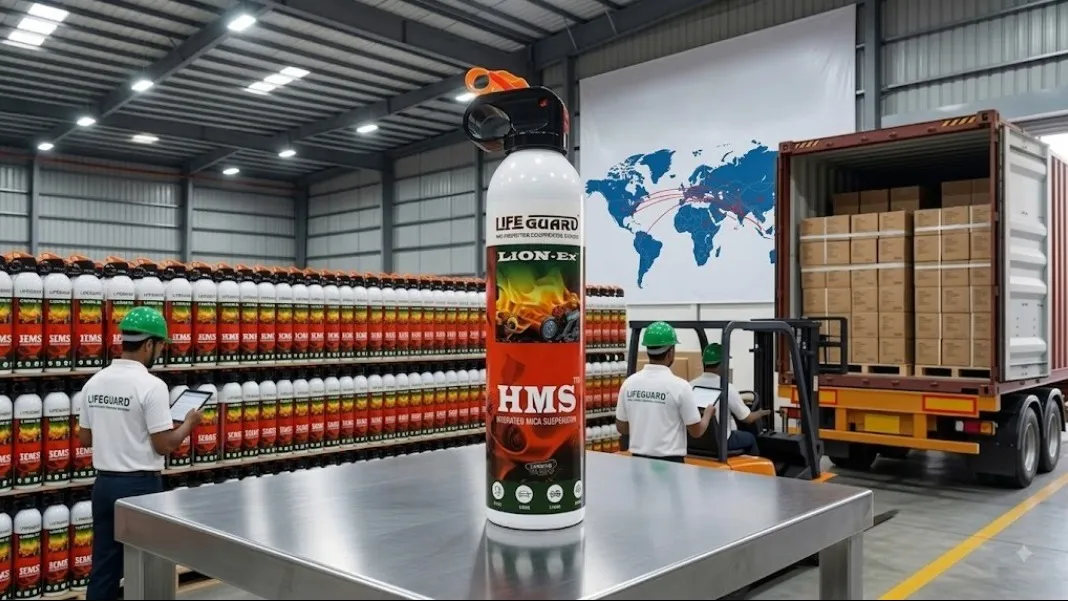
EV Battery Fire Suppression System Provider India – LIFEGUARD®
With the rapid expansion of electric mobility across India, the need for reliable and engineered EV battery fire suppression systems has become increasingly important. Lithium-ion batteries used in electric vehicles can present a unique fire hazard because battery failures may involve overheating, internal short circuits, thermal runaway, flammable gases, and the possibility of fire spreading from one cell or module to another.
LIFEGUARD® – United Fire Equipments Pvt. Ltd. provides engineered fire protection solutions for electric vehicle battery applications. As an EV Battery Fire Suppression System Provider in India, LIFEGUARD® focuses on early detection, rapid activation, controlled discharge, battery cooling, and suppression strategies suitable for EV battery packs, electric buses, commercial vehicles, battery enclosures, charging installations, and other lithium-ion battery applications.
EV Battery Fire Risks in Electric Vehicles
Electric vehicles depend on high-energy lithium-ion battery packs containing multiple cells, modules, electrical connections, cooling components, and battery management systems. Under abnormal operating conditions, damage or failure within the battery may result in excessive heat generation.
Possible causes of EV battery incidents include:
- Internal short circuits
- Electrical faults
- Mechanical impact or collision damage
- Overcharging
- Excessive operating temperature
- Manufacturing defects
- Battery ageing
- Cooling system failure
- Thermal propagation between adjacent cells
- External fire exposure
A conventional fire extinguisher alone may not always provide adequate protection for a developing battery thermal event. EV applications therefore require a fire protection strategy specifically designed around the battery configuration, enclosure, vehicle architecture, heat generation, detection requirements, and suppression objectives.
What Is an EV Battery Fire Suppression System?
An EV battery fire suppression system is an integrated protection arrangement designed to detect abnormal conditions associated with a battery fire or thermal runaway event and automatically initiate a suppression or cooling response.
Depending on the application, an engineered system may include:
- Heat detection
- Linear heat sensing
- Smoke or gas detection
- Thermal runaway detection
- Control and releasing unit
- Suppression agent storage cylinder
- Valve and actuation mechanism
- Distribution piping or tubing
- Discharge nozzles
- Local application discharge points
- Manual activation facility
- Alarm and warning devices
- Interface with the vehicle or battery management system
The objective is to identify a hazardous condition at the earliest practical stage and initiate an appropriate response before the event spreads to additional battery modules or surrounding components.
LIFEGUARD® EV Battery Fire Suppression Solutions
As an experienced EV Battery Fire Suppression System Provider India, LIFEGUARD® can develop application-specific fire protection concepts based on the vehicle type, battery layout, fire risk, enclosure geometry, environmental conditions, and installation limitations.
Our EV fire protection approach may incorporate a combination of:
1. Early Fire Detection
Detection is one of the most important elements of battery fire protection.
Depending on the project requirement, detection technologies can include:
- Linear heat sensing cable
- Temperature-based detection
- Smoke detection
- Gas detection
- Multi-criteria detection
- Flame detection
- Thermal monitoring
Early detection provides valuable time for alarms, electrical isolation, vehicle shutdown, suppression activation, and evacuation procedures.
2. Automatic Fire Suppression
The suppression arrangement can be configured for automatic operation when predetermined fire or temperature conditions are detected.
An automatic system reduces dependency on manual intervention and can be especially valuable in:
- Electric buses
- Commercial EVs
- Battery compartments
- Enclosed battery cabinets
- Unattended equipment
- Charging installations
- Industrial electric vehicles
3. Direct Battery Pack Protection
Where required, discharge points can be positioned near identified high-risk zones within or around the battery enclosure.
A properly engineered system considers:
- Battery pack dimensions
- Module arrangement
- Expected fire locations
- Available installation space
- Nozzle positioning
- Agent distribution
- Pipe or tube routing
- Vehicle vibration
- Ambient operating conditions
- Maintenance accessibility
4. Battery Cooling and Thermal Runaway Control
In lithium-ion battery incidents, simply extinguishing visible flames may not eliminate the underlying heat generated inside affected cells.
For this reason, an EV battery protection strategy may require significant emphasis on cooling and heat absorption.
Effective cooling can help:
- Reduce battery surface temperature
- Limit heat transfer to nearby modules
- Reduce the possibility of thermal propagation
- Control secondary ignition
- Protect adjacent equipment
The final suppression and cooling approach should always be selected according to the specific battery chemistry and application.
Understanding EV Battery Thermal Runaway
Thermal runaway is a self-accelerating process in which the internal temperature of a battery cell rises and initiates chemical reactions that generate additional heat.
If this heat is not controlled, the process may continue and affect adjacent battery cells.
Typical development of a lithium-ion battery incident may involve:
Battery abnormality → Temperature rise → Internal decomposition → Gas generation → Venting → Thermal runaway → Fire → Cell-to-cell propagation
Because the process can develop rapidly, early warning and correctly positioned suppression equipment are essential parts of an EV fire protection strategy.
Why Conventional Vehicle Fire Protection May Not Be Enough
Traditional vehicle fires generally involve fuels, lubricants, plastics, electrical components, rubber, or upholstery.
Lithium-ion battery incidents present additional challenges because:
- Heat may originate inside the battery cell.
- A damaged cell can continue producing heat.
- Fire can propagate between battery modules.
- Flammable gases may be released.
- Re-ignition can occur after the visible flames are controlled.
- Battery packs may be enclosed or difficult to access.
- High-voltage electrical equipment creates additional hazards.
This is why an engineered EV Battery Fire Suppression System in India should be selected specifically for lithium-ion battery hazards rather than relying only on conventional vehicle extinguishing arrangements.
Applications of EV Battery Fire Suppression Systems
LIFEGUARD® fire suppression solutions can be considered for different electric mobility and battery applications.
Electric Buses
Electric buses contain high-capacity battery systems that may be installed on the roof, beneath the floor, at the rear of the vehicle, or within dedicated battery compartments.
An automatic fire protection system can provide detection and suppression coverage around critical battery areas.
Electric Cars
Battery packs in passenger EVs are normally integrated into compact vehicle structures. Protection requirements depend heavily on the battery design and OEM architecture.
Electric Trucks
Electric commercial vehicles may operate for extended periods under demanding road, load, and environmental conditions. Battery protection can therefore form part of the vehicle's overall fire risk management strategy.
Electric Two-Wheelers and Three-Wheelers
Compact battery packs used in scooters, motorcycles, e-rickshaws, and other light electric vehicles can also experience thermal runaway conditions.
Suitable protection concepts may be developed according to available space and battery arrangement.
Electric Construction and Material-Handling Equipment
Battery-powered machinery such as forklifts and industrial vehicles increasingly use lithium-ion technology.
Fire protection may be required for:
- Forklifts
- AGVs
- Mining vehicles
- Warehouse vehicles
- Construction equipment
- Industrial transport systems
EV Battery Charging Areas
EV charging stations and dedicated battery charging facilities may require an overall fire protection strategy incorporating detection, alarm, isolation, and suitable firefighting equipment.
Key Components of an EV Battery Fire Suppression System
A complete installation may include the following components depending on the project design.
Detection System
The detection arrangement continuously monitors selected areas for indications of fire, temperature rise, smoke, or other abnormal conditions.
Fire Suppression Cylinder
The suppression agent is stored in an appropriately sized cylinder or container and released following activation.
Control and Releasing System
The controller receives signals from detection equipment and initiates programmed actions such as:
- Alarm activation
- Suppression release
- Battery isolation signal
- Vehicle shutdown interface
- Fan shutdown
- Warning indication
Distribution Network
Pipes or tubes carry the suppression medium from the cylinder to protected locations.
The distribution network must be engineered to withstand vehicle operating conditions including:
- Vibration
- Mechanical movement
- Temperature variation
- Dust
- Moisture
- Restricted installation space
Discharge Nozzles
Nozzles are positioned to achieve the required discharge pattern around critical battery or vehicle areas.
Correct nozzle positioning is essential for effective agent distribution.
Manual Activation Device
A manual release option may be provided where required so the driver, operator, or trained personnel can activate the system.
Engineering Approach for EV Battery Fire Suppression
Every EV battery installation is different. A suppression system should therefore be engineered based on actual project information rather than using a single standard configuration.
LIFEGUARD® evaluates factors such as:
- Type of electric vehicle
- Battery chemistry
- Battery pack capacity
- Number of battery modules
- Battery enclosure dimensions
- Location of battery packs
- Expected operating temperature
- Ventilation arrangement
- Vehicle movement and vibration
- Fire detection requirement
- Suppression agent selection
- Discharge duration
- Number and position of nozzles
- Piping or tubing arrangement
- Control logic
- Manual release requirement
- Integration requirements
This engineering approach helps provide a more practical and application-oriented EV fire safety solution.
EV Bus Battery Fire Suppression System Provider India
The increasing deployment of electric buses in Indian cities has created a growing requirement for specialized vehicle fire safety systems.
Electric buses may contain large battery banks distributed across several vehicle locations. A fire in one battery compartment can create a significant operational and passenger safety concern.
LIFEGUARD® can support electric bus projects with engineered arrangements incorporating:
- Automatic detection
- Battery compartment monitoring
- Local suppression
- Multiple discharge points
- Manual activation
- Visual and audible warning
- Control-panel integration
- Vehicle shutdown/interface provisions
- Engine or auxiliary compartment protection where required
The exact protection philosophy should be finalized after studying the bus and battery architecture.
EV Battery Fire Suppression for OEMs
LIFEGUARD® works with projects requiring customized fire protection solutions suitable for integration into OEM equipment and vehicles.
Support can include:
Risk Assessment → System Selection → Engineering → Component Selection → Layout Development → Installation Support → Testing → Documentation
OEM applications may require special consideration regarding:
- Space constraints
- Component weight
- Vehicle vibration
- Mounting arrangements
- Electrical interface
- Environmental exposure
- Service accessibility
- Repeatability for series production
Customized EV Battery Fire Protection Solutions
A successful EV battery fire suppression system should match the actual battery risk rather than applying a generic suppression arrangement.
LIFEGUARD® can develop customized fire protection concepts for:
- Battery modules
- Battery packs
- Battery enclosures
- EV buses
- Electric trucks
- EV charging facilities
- Industrial battery systems
- Battery testing facilities
- Electric material-handling equipment
- Special-purpose electric vehicles
Benefits of an Automatic EV Battery Fire Suppression System
An engineered automatic suppression system can contribute to:
- Early identification of abnormal heat or fire conditions
- Rapid system response
- Reduced dependence on manual intervention
- Localized protection of battery compartments
- Improved protection of nearby components
- Reduction in fire propagation risk
- Improved emergency response capability
- Additional protection for passengers and operators
- Integration with vehicle safety systems
- Protection of high-value EV assets
No suppression technology should, however, be treated as a substitute for proper battery design, battery management, electrical protection, maintenance, emergency planning, and vehicle safety procedures.
Why Choose LIFEGUARD® as an EV Battery Fire Suppression System Provider in India?
Fire Protection Engineering Experience
LIFEGUARD® – United Fire Equipments Pvt. Ltd. has experience in fire protection equipment and engineered suppression applications.
Customized System Design
We understand that battery configuration and vehicle architecture differ between manufacturers. Our solutions can therefore be developed according to actual application requirements.
Detection and Suppression Integration
Effective EV battery protection requires coordination between detection, control, activation, and suppression equipment.
Application-Specific Nozzle Arrangement
Discharge locations can be planned around identified battery hazards and installation constraints.
OEM Support
We can work with vehicle manufacturers, system integrators, battery manufacturers, engineering consultants, fleet operators, and project contractors for customized requirements.
Technical Documentation
Depending on project scope, technical support can include system concepts, drawings, component specifications, layouts, and associated project documentation.
Industries We Serve
Our EV Battery Fire Suppression Solutions in India are relevant to:
- Electric vehicle manufacturers
- Electric bus manufacturers
- Electric truck manufacturers
- Battery pack manufacturers
- Lithium-ion battery manufacturers
- EV fleet operators
- Public transport organizations
- Charging infrastructure developers
- Automobile engineering companies
- Warehousing and logistics operators
- Industrial vehicle manufacturers
- Battery testing facilities
- Engineering consultants
- EPC contractors
EV Battery Fire Suppression System Supplier Across India
LIFEGUARD® can support EV and lithium-ion battery fire protection requirements for projects across major Indian industrial and automotive markets, including:
Delhi NCR, Noida, Greater Noida, Gurugram, Faridabad, Manesar, Mumbai, Pune, Ahmedabad, Vadodara, Surat, Bengaluru, Chennai, Hyderabad, Kolkata, Jaipur and other locations across India.
Frequently Asked Questions
What is an EV battery fire suppression system?
An EV battery fire suppression system is an engineered arrangement designed to detect abnormal fire or thermal conditions around an electric vehicle battery and initiate an appropriate suppression or cooling response.
Can lithium-ion battery fires re-ignite?
Lithium-ion cells can retain or regenerate significant heat following an incident. Depending on the nature and extent of cell damage, additional heating or re-ignition may therefore remain possible. This makes continued monitoring and cooling important.
Can an EV battery fire suppression system operate automatically?
Yes. Depending on the system design, detection devices can automatically trigger alarms, control functions, and suppression discharge when defined activation conditions are reached.
Where are suppression nozzles installed in an EV?
Nozzle locations depend on the vehicle design and battery configuration. They may be installed near battery packs, battery enclosures, electrical compartments, or other identified risk locations.
Can the system be customized for an electric bus?
Yes. Electric bus battery layouts vary significantly, so systems should be designed according to actual battery locations, compartment dimensions, detection requirements, and vehicle architecture.
Does an EV battery suppression system prevent thermal runaway completely?
No fire suppression system can guarantee prevention of every battery thermal runaway event. The objective is to provide early detection and an engineered response that helps control fire, heat, and potential propagation according to the specific application.
Does LIFEGUARD® provide customized EV battery fire protection solutions?
Yes. LIFEGUARD® can develop application-specific fire protection concepts based on battery configuration, vehicle type, available installation space, hazard assessment, and project requirements.
LIFEGUARD® – EV Battery Fire Suppression System Provider India
As electric mobility continues to develop across India, fire protection must evolve alongside advances in battery technology.
LIFEGUARD® is focused on providing engineered EV battery fire suppression solutions combining appropriate detection, control, suppression, cooling strategy, and application-specific system design.
Whether the requirement is for an electric bus, electric truck, EV battery enclosure, commercial electric vehicle, industrial EV, battery charging facility, or specialized battery application, our team can assist in developing a suitable fire protection solution based on the actual project conditions.
Contact LIFEGUARD®
United Fire Equipments Pvt. Ltd.
LIFEGUARD® – Manufacturer & Provider of Fire Safety and Fire Suppression Solutions
For requirements related to:
- EV Battery Fire Suppression Systems
- Lithium-Ion Battery Fire Protection
- EV Bus Fire Suppression Systems
- Battery Thermal Runaway Protection
- Automatic Vehicle Fire Suppression Systems
- Battery Cooling & Fire Protection Solutions
contact LIFEGUARD® – United Fire Equipments Pvt. Ltd., India.
SEO Meta Title
EV Battery Fire Suppression System Provider India | LIFEGUARD®
SEO Meta Description
Looking for an EV Battery Fire Suppression System Provider in India? LIFEGUARD® provides engineered lithium-ion battery fire detection, suppression and thermal runaway protection solutions for EV buses, trucks and battery applications.
Suggested SEO Keywords
Primary Keyword: EV Battery Fire Suppression System Provider India
Secondary Keywords: EV battery fire suppression system India, EV battery fire protection system provider India, electric vehicle battery fire suppression system, EV bus fire suppression system India, lithium-ion battery fire suppression system India, battery thermal runaway suppression system, EV battery fire protection solutions India, automatic EV fire suppression system, EV battery fire extinguisher system, lithium battery thermal runaway protection, EV fire suppression system manufacturer India, EV battery suppression system supplier India, electric bus battery fire protection system, battery cooling fire suppression system India.
Keywords






