
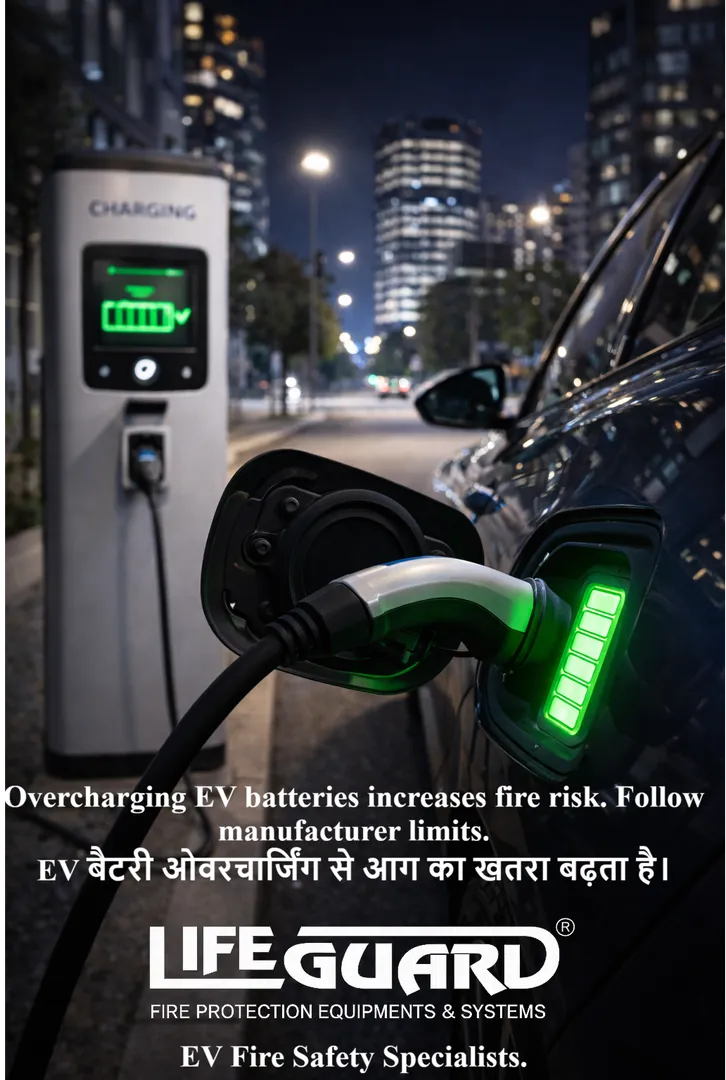
Overcharging EV Batteries Increases Fire Risk
Follow Manufacturer Limits
Electric Vehicles (EVs) are transforming mobility across high-rise buildings, buses, railways, hospitals, commercial fleets and public infrastructure. However, with this transformation comes a new and critical fire risk—overcharging lithium-ion batteries.
Unlike conventional fuel systems, lithium batteries store enormous energy in compact spaces. When charging limits are ignored, that energy can turn into a fire hazard capable of rapid escalation and re-ignition.
At LIFEGUARD® (United Fire Equipments Pvt. Ltd.), we emphasize a non-negotiable EV safety principle:
Overcharging EV batteries increases fire risk. Always follow manufacturer-specified limits.
Why Overcharging Is Dangerous for EV Batteries
Lithium-ion batteries are designed to operate within strict voltage, current and temperature limits. Overcharging disrupts this balance and can lead to:
- Excessive heat generation
- Degradation of battery separators
- Internal short circuits
- Gas generation and cell swelling
- Thermal runaway
Once thermal runaway begins, the battery can ignite suddenly, release toxic gases and re-ignite hours later, even after initial suppression.
What Is Overcharging in EVs?
Overcharging can occur due to:
- Using non-approved or counterfeit chargers
- Ignoring charging cut-off limits
- Faulty charging infrastructure
- Modified or bypassed Battery Management Systems (BMS)
- Continuous fast-charging beyond recommended cycles
- Charging in high-temperature environments
Overcharging is often silent and invisible—until failure occurs.
Where Overcharging Fire Risks Are Most Common
🏢 High-Rise Buildings
- Basement EV parking and charging stations
- Residential overnight charging
- Shared charging points without monitoring
Fires here pose extreme evacuation challenges due to smoke spread.
🚌 Electric Buses & Fleet Depots
- High-capacity battery packs
- Opportunity charging and fast chargers
- Continuous duty cycles
Battery fires in buses can threaten passenger lives and fleet operations.
🚆 Railways & Metro Systems
- Battery-powered rolling stock
- Signalling and backup battery systems
- Station EV infrastructure
Confined spaces amplify lithium fire hazards.
🏥 Hospitals & Healthcare Facilities
- EV ambulances
- Backup battery systems
- Public and staff EV charging
Hospitals require zero tolerance for fire escalation.
🏟️ Public Gathering Places
- Malls, airports, stadiums
- Public EV charging hubs
- Commercial parking facilities
High footfall means higher life risk during battery incidents.
Why Manufacturer Limits Must Never Be Ignored
Battery manufacturers specify:
- Maximum charging voltage
- Safe current limits
- Temperature operating range
- Recommended charging cycles
- Compatible charger specifications
These limits are not conservative suggestions—they are safety boundaries.
Ignoring them:
❌ Reduces battery life
❌ Increases fire probability
❌ Voids warranties
❌ Raises liability in case of incident
Overcharging + Delay = Thermal Runaway
EV battery fires caused by overcharging often:
- Start during or after charging
- Occur at night or low-occupancy hours
- Re-ignite after initial cooling
- Spread to adjacent vehicles or structures
Water alone cannot stop these fires—specialized suppression is required.
Fire Safety Best Practices for EV Charging
✔ Do This
- Use manufacturer-approved chargers only
- Follow recommended charge levels (avoid 100% continuous charging)
- Ensure functional BMS and thermal monitoring
- Maintain proper ventilation in charging areas
- Train staff and occupants on EV fire risks
✘ Never Do This
- Use damaged or uncertified chargers
- Bypass charging limits
- Ignore heating, odor or warning alerts
- Charge in enclosed, unventilated spaces
Special Fire Protection Required for EV Batteries
Traditional firefighting methods are not sufficient for lithium battery fires.
Effective EV fire protection requires:
- Rapid cooling
- Electrical insulation
- Encapsulation of battery surfaces
- Re-ignition resistance
🔹 HMS – Hydrated Mica Suspension
LIFEGUARD’s HMS technology is specifically engineered for lithium-ion battery fires, providing:
- Superior heat absorption
- Formation of a mica barrier
- Electrical insulation
- Reduced re-ignition risk
Layered EV Fire Safety Strategy (Recommended)
Risk Zone
Fire Protection
EV Charging Areas
HMS extinguishers / fixed systems
Parking Basements
Detection + Watermist + HMS
Electric Buses
Automatic detection & suppression
Battery Rooms
Localized lithium fire systems
This approach ensures early control and life safety.
Compliance & Safety Expectations
EV fire safety should align with:
- National Building Code (NBC) principles
- EV charging infrastructure guidelines
- Transport authority safety norms
- Global lithium fire best practices (NFPA / UL references)
LIFEGUARD supports technical documentation and compliance readiness.
How LIFEGUARD® Helps Reduce EV Fire Risk
LIFEGUARD provides:
- Lithium Battery Fire Extinguishers (HMS-based)
- Fixed EV battery suppression systems
- Fire detection & alarm integration
- EV fire risk assessments
- Training and emergency SOPs
We help organizations adapt fire safety to the EV era.
A Safety Message That Must Be Followed
Overcharging EV batteries increases fire risk.
Follow manufacturer limits—every time.
EV safety begins with discipline, not assumptions.
SEO Keyword Bank
Primary Keywords
- Overcharging EV batteries fire risk
- EV battery fire safety
Secondary Keywords
- Lithium battery overcharging fire
- EV charging fire prevention
- Electric vehicle fire protection
Long-Tail Keywords
- Why overcharging EV batteries causes fire
- EV battery fire risk in parking buildings
- Fire safety for electric vehicle charging stations
- Lithium battery fire protection for EVs
Meta Title & Meta Description (SEO Optimized)
Meta Title:
Overcharging EV Batteries Increases Fire Risk | EV Fire Safety – LIFEGUARD
Meta Description:
Overcharging EV batteries increases fire risk. Learn why following manufacturer charging limits is critical for EV fire safety in buildings, buses, hospitals, railways and public charging areas.
Protect EV Infrastructure Before an Incident Occurs
United Fire Equipments Pvt. Ltd.
Manufacturer of ISI Certified Fire Safety Equipment
📞 8048034226
📧 ufe126@gmail.com, info@lifeguardindia.in
📌 Upgrade EV Fire Protection | Install HMS Systems | Conduct EV Fire Risk Audit
Keywords






