
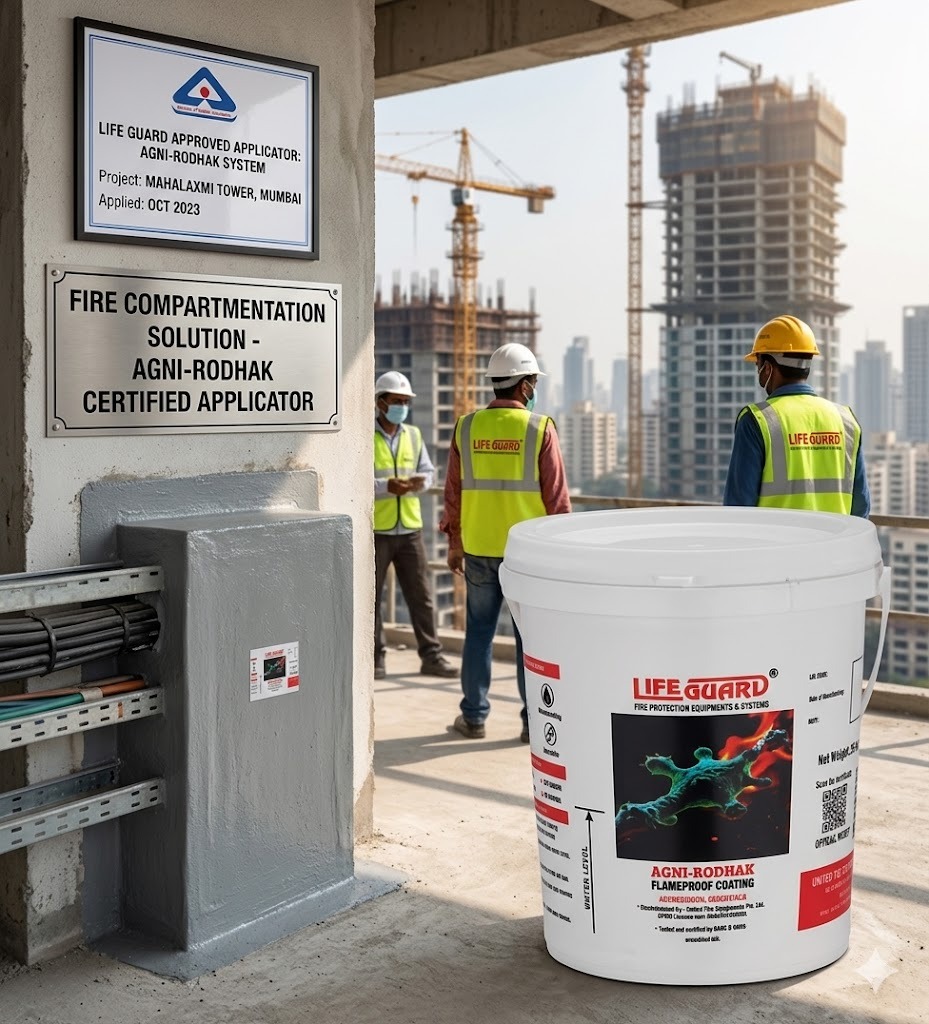
Fire Compartmentation Solution India
Fire safety has become a critical priority in modern infrastructure, industrial facilities, commercial buildings, and high-rise developments across India. Among the most important elements of passive fire protection systems is fire compartmentation — a highly effective strategy designed to contain fire, smoke, and heat within a specific area and prevent rapid fire spread throughout a building or facility.
With increasing awareness of fire safety regulations and NBC (National Building Code) compliance requirements, the demand for advanced fire compartmentation solutions in India is growing rapidly. These systems play a vital role in protecting lives, critical assets, structural integrity, and operational continuity during fire emergencies.
What is Fire Compartmentation?
Fire compartmentation is a passive fire protection technique that divides a building or industrial facility into multiple fire-resistant compartments using specialized fire-rated barriers and sealing systems.
The primary purpose of fire compartmentation is to:
- Prevent the spread of fire and smoke
- Contain heat within a designated area
- Protect escape routes
- Improve evacuation safety
- Minimize structural damage
- Enhance fire control efficiency
Fire compartmentation systems are designed to maintain fire resistance for a specified duration, allowing occupants and emergency responders valuable time during fire incidents.
Importance of Fire Compartmentation in India
As urban infrastructure expands rapidly in India, buildings are becoming more complex, taller, and densely occupied. Fire incidents in commercial and industrial spaces can lead to:
- Massive property damage
- Operational disruption
- Structural collapse
- Safety hazards
- Business losses
Fire compartmentation solutions help reduce these risks significantly by limiting fire spread and protecting critical building sections.
These systems are especially important for:
- High-rise commercial buildings
- Industrial plants
- Data centres
- Hospitals
- Shopping malls
- Warehouses
- Power plants
- Battery Energy Storage Systems (BESS)
- Transportation infrastructure
How Fire Compartmentation Works
Fire compartmentation systems create physical fire-resistant barriers between different building zones. These barriers are engineered to resist fire, smoke, and heat transfer for specific time periods such as:
- 30 minutes
- 60 minutes
- 120 minutes
- 240 minutes
The system works by sealing openings, penetrations, joints, ducts, cable pathways, and structural gaps that could otherwise allow fire spread.
Key Components of Fire Compartmentation Systems
Fire-Rated Walls & Partitions
Fire-resistant walls separate different compartments within buildings and industrial facilities.
Firestop Sealants
Specialized firestop sealants prevent the spread of fire and smoke through joints and penetrations.
Fire Barriers
Fire barriers are installed around critical areas such as:
- Electrical rooms
- Control rooms
- Transformer zones
- Battery storage areas
Fire-Rated Doors
Fire doors help maintain compartment integrity during fire exposure.
Cable & Pipe Penetration Sealing
Cable trays, conduits, and piping openings are sealed using fire-resistant systems to prevent fire migration.
Structural Fireproofing
Fire-resistant coatings and thermal barriers protect structural steel and support systems.
Intumescent Materials
Intumescent materials expand under heat exposure, sealing gaps and blocking fire spread automatically.
Applications of Fire Compartmentation Solutions
Commercial Buildings
Office towers, malls, hotels, and business complexes require fire compartmentation for occupant safety and NBC compliance.
Industrial Facilities
Factories, manufacturing plants, and chemical industries use fire compartmentation to isolate high-risk operational areas.
Data Centres
Mission-critical data centres require advanced compartmentation systems to protect servers and electrical infrastructure.
Hospitals & Healthcare Facilities
Hospitals require compartmentation to maintain safe evacuation routes and protect critical care areas.
Battery Energy Storage Systems (BESS)
Lithium-ion battery facilities use fire compartmentation to reduce thermal runaway propagation and improve fire containment.
Power Plants & Electrical Infrastructure
Fire compartmentation protects transformers, substations, electrical rooms, and cable networks.
Transportation Infrastructure
Airports, tunnels, metro rail systems, and railway stations rely heavily on fire-rated compartmentation systems.
Benefits of Fire Compartmentation Solutions
Enhanced Life Safety
Contains fire and smoke, improving occupant evacuation safety.
Reduced Fire Spread
Limits fire progression and minimizes damage to adjacent areas.
Structural Protection
Helps maintain structural integrity during fire incidents.
Improved Emergency Response
Creates controlled fire zones for more effective firefighting operations.
Business Continuity
Reduces operational disruption and helps minimize downtime after fire incidents.
NBC & Regulatory Compliance
Supports compliance with:
- NBC Part 4 Fire & Life Safety
- Industrial fire safety standards
- Commercial building regulations
- Infrastructure fire safety specifications
Protection of Critical Assets
Safeguards electrical systems, machinery, data infrastructure, and operational equipment.
Fire Compartmentation for Modern Industrial Risks
Thermal Runaway Protection
Battery facilities and BESS installations require compartmentation systems capable of controlling thermal runaway events.
Cable Fire Protection
Electrical cable pathways are common fire spread routes. Compartmentation systems help isolate cable-related fire hazards.
High-Risk Industrial Areas
Industrial fire compartments are essential in:
- Oil & gas plants
- Chemical processing units
- Power generation facilities
- Heavy engineering industries
Features of Advanced Fire Compartmentation Systems
Modern fire compartmentation systems offer:
- High fire resistance ratings
- Low smoke generation
- Thermal insulation
- Waterproofing capability
- Corrosion resistance
- Long-term durability
- Easy maintenance
- Compatibility with modern infrastructure systems
Why Passive Fire Protection Matters
Fire compartmentation is one of the most effective passive fire protection solutions because it functions continuously without requiring external activation.
Unlike active systems such as sprinklers or extinguishers, passive systems:
- Remain permanently operational
- Automatically resist fire spread
- Improve structural resilience
- Enhance evacuation safety
- Support firefighting operations
This makes passive fire protection essential for modern fire safety strategies.
LIFEGUARD® Fire Compartmentation Solutions India
LIFEGUARD® provides advanced fire compartmentation solutions for commercial, industrial, and infrastructure projects across India.
Our passive fire protection solutions include:
- Fire compartmentation systems
- Firestop sealing solutions
- Cable tray fire protection
- Structural steel fireproofing
- Fire retardant coatings
- Thermal runaway protection systems
- Fire-resistant thermal barriers
- Waterproof passive fire protection systems
We serve:
- Commercial buildings
- Data centres
- Industrial facilities
- Power plants
- Battery Energy Storage Systems (BESS)
- Oil & gas industries
- Infrastructure projects
- Healthcare and institutional facilities
Conclusion
Fire compartmentation solutions are an essential component of modern fire safety infrastructure in India. By effectively containing fire, smoke, and heat within designated zones, these passive fire protection systems significantly improve life safety, structural resilience, and operational continuity.
As fire safety regulations continue to evolve and infrastructure becomes more advanced, investing in high-performance fire compartmentation systems is critical for creating safer, more resilient commercial and industrial environments.
Contact LIFEGUARD®
United Fire Equipments Pvt. Ltd.
Manufacturer of ISI Certified Fire Safety Equipment
📞 8048034226
📧 ufe126@gmail.com | info@lifeguardindia.in